Sag Harbor Basements Don't Get a Second Chance After a Flood
Mold starts in 24 hours. In a coastal village where humidity never really lets up, that clock moves fast and your historic home deserves more than a crew with a shop vac and good intentions.
I needed a professional consultation explanation of procedure for safe removal of Asbestos in my apartment complex. Without having an account yet, I was very impressed with the caring, knowledgeable and generous advice offered by Jessica, and will look forward to doing business in the future. Thank you so much! I feel much more informed about a sometimes scary endeavor. Peace. Nancy Silva Mineola, NY.
Mia Munoz
Used this company to clean up some water flood in my house. They were fast and easy to work with.very professional, Would recommend to anyone!
Nini Valle
Great company, had a flood and they responded quickly and efficiently. Billed my insurance company directly. I highly recommend this company!
joe colapietro, jr
I had pipe freeze in my basement right before a snow storm and they made to within an hour to help start the clean up process. They we by our side throughout the entire process and even helped with the insurance company. They did such a great job with the cleanup, repair, remidiation, I contracted them to perform the repairs and finishes in the basement. They came with enough manpower and material to get the job done. Leo and Jessica were nothing but a pleasure to deal with!!
Cristian Arredondo c
I had some water damage in my home and Green Island was able to take care of my issue quickly and effectively. I am very pleased with the work they did. They responded quickly and were very professional.
Michael M
Outstanding service! From the office to the field crew everyone was friendly, helpful and responsive. I highly recommend Green Island Group.
What Gets Saved in Your Sag Harbor Home Depends on Who Shows Up First
When your basement floods, the damage you can see is rarely the whole story. Water moves into wall cavities, under original hardwood floors, and behind plaster the kind of materials that make up nearly 900 homes in Sag Harbor’s Historic District alone. By the time it looks dry, the conditions for mold are already in place.
That’s the part most homeowners don’t find out until weeks later. In a village sitting at the edge of Gardiners Bay, where ambient humidity stays elevated year-round and older foundations were never built with modern waterproofing in mind, a flood event doesn’t just wet your floor it creates a slow-moving problem inside your walls.
What changes when we do the cleanup right is simple: you get documented drying to industry-standard moisture levels, not a visual check. You get a basement that’s actually safe, not just one that smells better. And if you’re managing a seasonal property on Sag Harbor’s Main Street or out near Bay Point from a distance, you get a clear record of everything that was done photos, readings, and documentation your insurance adjuster can actually use.
Every License This Work Actually Requires Under One Roof
We hold a Suffolk County General Contractor license, a NYS DOL Mold license, a NYS DOL Asbestos license, and USEPA Lead and RRP certifications. That’s not a list of credentials to impress you it’s what this work legally requires in Sag Harbor, where a significant portion of the housing stock was built before asbestos was banned and before lead paint was regulated. Disturbing those materials without the right licenses isn’t just risky. It’s illegal.
Beyond the licensing, we’re an approved emergency response contractor for the NYS Office of General Services a credential that requires independent state-level vetting that no local franchise competitor holds. We’ve completed more than 5,000 restoration projects across New York State over 12-plus years, including coastal properties, historic homes, and high-value second homes throughout Suffolk County.
CEO Jessica Dussan and VP Leo Torres lead every project with direct accountability. When you call, you’re not reaching a national dispatch center you’re reaching people whose names are on the work.
From Standing Water to Dry and Documented Here's How We Work in Sag Harbor
The first call triggers an immediate response. We arrive with industrial extraction equipment not consumer-grade gear and begin removing standing water while assessing what category of flooding you’re dealing with. In Sag Harbor, where storm surge events and tidal flooding along the cove are documented history, that assessment matters. Outside floodwater and sewage backups are Category 3 situations that require full containment and OSHA-compliant handling, not just a wet-dry vacuum.
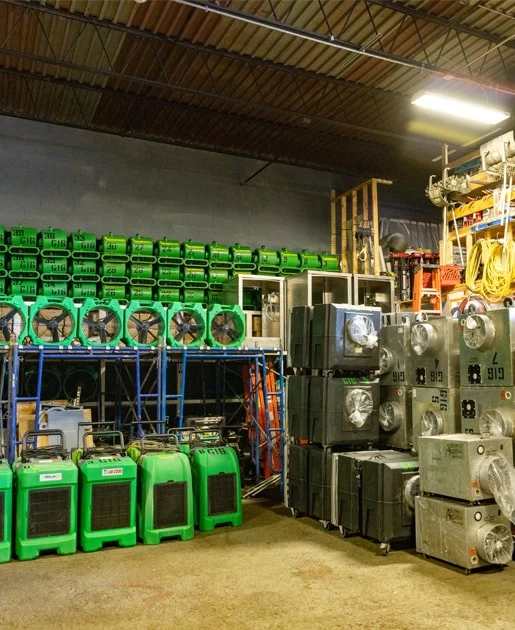
Once the water is out, the real work starts. We position commercial dehumidifiers and air movers based on moisture readings, not guesswork. Thermal imaging identifies water that’s migrated behind walls or under flooring the kind that causes mold weeks after a basement looks dry. Every reading is logged and documented throughout the drying process.
If the flooding disturbed older building materials pipe insulation, floor tiles, wall compounds and there’s any reason to suspect asbestos or lead content, our licensed environmental team handles it on-site without subcontracting. For properties in Sag Harbor’s FEMA-designated flood zones, any substantial repair work also requires a floodplain development permit from the Village Building Inspector, and we coordinate that as part of how we operate not an afterthought.
Basement Flooding Remediation Services Sag Harbor NY
Full-Scope Flood Response Built for What Sag Harbor Homes Actually Face
Flooded basement cleanup in Sag Harbor isn’t a single-step job. We cover the full scope: emergency water extraction, structural drying, antimicrobial treatment, mold prevention, hazardous material handling, and complete reconstruction all under one Suffolk County licensed contractor. You don’t get handed off to a separate mold company or a different GC for the rebuild. One team, one contract, one point of accountability from start to finish.
For seasonal and second-home owners and there are a lot of them in Sag Harbor we’ve built our service to run without you being on-site. We can respond to your property, assess the damage, begin remediation, and communicate with you remotely while handling documentation directly with your insurance carrier. Direct insurance billing isn’t a promise we make in the pitch it’s something multiple customers have named specifically as the reason they called us.
For properties in the Historic District, Sag Harbor Hills, Azurest, Ninevah Beach, or anywhere near the cove, our work accounts for what older construction actually contains. Pre-1980 homes throughout the village regularly turn up asbestos pipe insulation, asbestos floor tiles, and lead paint once flood damage opens up walls and floors. Our environmental licensing means those materials are identified, handled correctly, and disposed of legally not ignored because the crew isn’t equipped to deal with them.
Does homeowners insurance cover flooded basement cleanup in Sag Harbor, NY?
It depends on the source of the water and in Sag Harbor, that distinction matters more than in most places. Standard homeowners insurance typically covers sudden, internal water damage like a burst pipe or a failed water heater. It does not cover flooding from outside sources, which includes storm surge from Gardiners Bay, tidal flooding along the cove, or groundwater intrusion after a major nor’easter. For that, you need a separate flood insurance policy through FEMA’s National Flood Insurance Program.
Many Sag Harbor homeowners carry both, and the documentation requirements for each policy are different. We handle the documentation process and bill insurance carriers directly, which means you’re not left trying to figure out which policy covers which portion of the damage while water is still in your basement. Getting the paperwork right from the start protects your claim and keeps the process moving.
How quickly does mold start growing after a basement floods?
Mold can begin colonizing within 24 to 48 hours of a flood event under normal conditions. In a coastal environment like Sag Harbor where ambient humidity is consistently higher than inland Long Island communities and older homes often lack modern vapor barriers the conditions for mold growth are more favorable than average. That window can close faster than most homeowners expect.
The critical mistake is assuming a basement is fine once it looks dry. Water migrates into wall cavities, under flooring, and behind insulation. Without moisture meters and thermal imaging, hidden saturation goes undetected until mold is already established. By that point, what could have been a $3,000 to $5,000 extraction and drying job has grown into a $10,000-plus mold remediation project. Speed of response is the single biggest variable in controlling total damage cost and it’s the reason our 24/7 availability isn’t just a marketing line.
My Sag Harbor home was built in the 1800s is that a problem for flood cleanup?
It’s not a problem if the contractor you hire is licensed to handle what older homes contain. Homes built before 1980 and Sag Harbor’s Historic District has nearly 900 of them, many dating to the mid-1700s commonly contain asbestos in pipe insulation, floor tiles, and joint compounds, as well as lead paint on walls, trim, and windows. When flooding opens up those materials, disturbing them without proper licensing is a health risk and a legal violation.
Most water damage companies operating on the East End are not licensed for environmental hazmat work. They can extract water and run drying equipment, but if they encounter asbestos or lead during the cleanup, they’re not authorized to handle it and you’re left with an unresolved liability in a home worth well over a million dollars. We hold the NYS DOL Asbestos license, USEPA Lead certification, and USEPA RRP certification, which means we can identify and handle those materials on-site, legally, without stopping the job to bring in a separate contractor.
Do I need a permit to repair flood damage in Sag Harbor Village?
In many cases, yes. Sag Harbor has formally adopted a Tidal Flood Hazard Overlay District ordinance, and the Village Building Inspector serves as the local floodplain administrator. Any construction or substantial repair within a FEMA-designated Special Flood Hazard Area requires a floodplain development permit from the village before work begins. “Substantial improvement” is defined as work valued at 50 percent or more of the structure’s pre-damage market value a threshold that can be triggered by extensive flood remediation and reconstruction in Sag Harbor’s high-value housing market.
This is one area where hiring a fully licensed General Contractor matters. Contractors who aren’t familiar with Sag Harbor’s specific floodplain permit requirements or who operate without a Suffolk County GC license may skip this step entirely, which can create compliance violations that affect your insurance coverage, your ability to sell the property, and your future NFIP flood insurance eligibility. We hold a Suffolk County General Contractor license and are familiar with East End permitting, which means this is handled correctly from the start.
I don't live in Sag Harbor full-time can you respond and start cleanup without me being there?
Yes, and this is one of the most common situations we handle on the East End. A significant share of Sag Harbor properties are seasonal second homes or vacation rentals, and flooding discovered by a neighbor, a property manager, or a smart home alert often means the owner is in Manhattan or further away when the call comes in. Waiting until you can physically get to the property is not an option the mold clock doesn’t pause while you arrange travel.
We can respond to your Sag Harbor property without you on-site, conduct a full damage assessment, begin water extraction and drying, and document everything with photos and moisture readings for your insurance claim. Throughout the process, communication happens remotely you stay informed without needing to be standing in your basement. The insurance documentation and adjuster coordination are handled on your behalf, which is exactly what absentee property owners need when managing a flood crisis from a distance.
How much does flooded basement cleanup typically cost in Sag Harbor?
Most residential flooded basement cleanups fall somewhere between $2,000 and $8,000, with the average job landing around $5,000. Where your job falls within that range depends on how much water came in, how long it sat before cleanup started, what category of water you’re dealing with, and whether any hazardous materials were disturbed in the process. In Sag Harbor specifically, older construction and coastal conditions can push jobs toward the higher end not because the work is overpriced, but because older homes genuinely require more careful handling.
Delaying cleanup is where costs escalate significantly. A job that starts within a few hours of flooding is a very different scope than one that starts three days later after mold has begun to establish behind walls. That delay alone can add $2,000 to $8,000 or more in mold remediation costs on top of the original cleanup. For homeowners in Sag Harbor’s Historic District or the waterfront neighborhoods near the cove, where property values regularly exceed $1 million to $2 million, the cost of getting this wrong far outweighs the cost of getting it right the first time.