When Sagg Pond Rises, Your Basement Pays the Price
Sagaponack’s coastal water table doesn’t care about your schedule. When the ground is saturated and the water has nowhere to go, it finds your basement. We respond fast, handle the full job, and work directly with your insurance so you don’t have to.
I needed a professional consultation explanation of procedure for safe removal of Asbestos in my apartment complex. Without having an account yet, I was very impressed with the caring, knowledgeable and generous advice offered by Jessica, and will look forward to doing business in the future. Thank you so much! I feel much more informed about a sometimes scary endeavor. Peace. Nancy Silva Mineola, NY.
Mia Munoz
Used this company to clean up some water flood in my house. They were fast and easy to work with.very professional, Would recommend to anyone!
Nini Valle
Great company, had a flood and they responded quickly and efficiently. Billed my insurance company directly. I highly recommend this company!
joe colapietro, jr
I had pipe freeze in my basement right before a snow storm and they made to within an hour to help start the clean up process. They we by our side throughout the entire process and even helped with the insurance company. They did such a great job with the cleanup, repair, remidiation, I contracted them to perform the repairs and finishes in the basement. They came with enough manpower and material to get the job done. Leo and Jessica were nothing but a pleasure to deal with!!
Cristian Arredondo c
I had some water damage in my home and Green Island was able to take care of my issue quickly and effectively. I am very pleased with the work they did. They responded quickly and were very professional.
Michael M
Outstanding service! From the office to the field crew everyone was friendly, helpful and responsive. I highly recommend Green Island Group.
The clock starts the moment water enters your Sagaponack basement. Within 24 to 48 hours, mold can begin colonizing finished walls, custom woodwork, and upholstered surfaces. In a Sagaponack estate with a finished lower level, that’s not just a health issue it’s a six-figure restoration problem that a fast response could have prevented.
What you get on the other side of this isn’t just a dry basement. It’s a fully documented, professionally remediated space that your insurance adjuster can work with and your property manager can sign off on. Every moisture reading, every affected surface, every step of the drying process gets recorded. That matters enormously when you’re filing a claim on a high-value policy.
Sagaponack’s flooding risk isn’t the same as the rest of Long Island. The shallow sandy water table on the South Fork, the proximity to Sagg Pond, and the direct ocean exposure along corridors like Hedges Lane and Seascape Lane create conditions where basements flood without a storm even making landfall. We understand why the water is there, and that knowledge changes how the job gets done.
We’ve been handling environmental restoration and water damage cleanup across Long Island and New York City for over 12 years, with more than 5,000 completed projects. That includes complex, large-footprint properties in Sagaponack and surrounding Suffolk County where the stakes are high and cutting corners isn’t an option.
What sets us apart in a market like Sagaponack isn’t just experience it’s the licensing stack. NYS DOL Mold, NYS DOL Asbestos, USEPA Lead, Suffolk County General Contractor, and approval as an emergency response contractor through the NYS Office of General Services. That last one isn’t self-declared. New York State independently vetted and approved us. When a flooded basement in a Sagaponack estate uncovers older pipe insulation or disturbed wall materials, you need a contractor who is legally authorized to handle what’s behind those walls not one who has to stop the job and call someone else.
CEO Jessica Dussan and VP Leo Torres lead every project with personal accountability. You’ll know who’s responsible, and so will they.
What Actually Happens From First Call to Final Walkthrough
The first call triggers an emergency response. We operate 24 hours a day, every day, and our customer reviews confirm arrival times under an hour including during major weather events. For Sagaponack homeowners who aren’t on-site year-round, that response speed matters even more. A pipe that bursts in a vacant estate in January can flood a finished lower level for hours before anyone notices. The faster the call goes out, the less damage there is to reverse.
On arrival, our team assesses the full scope before touching anything. Moisture meters and thermal imaging identify water that has migrated into walls, subfloors, and structural cavities that aren’t visible to the eye. This step is where most cheaper operators fail they dry what they can see and miss what they can’t. In Sagaponack’s older estate properties, that hidden moisture becomes a mold problem within days.
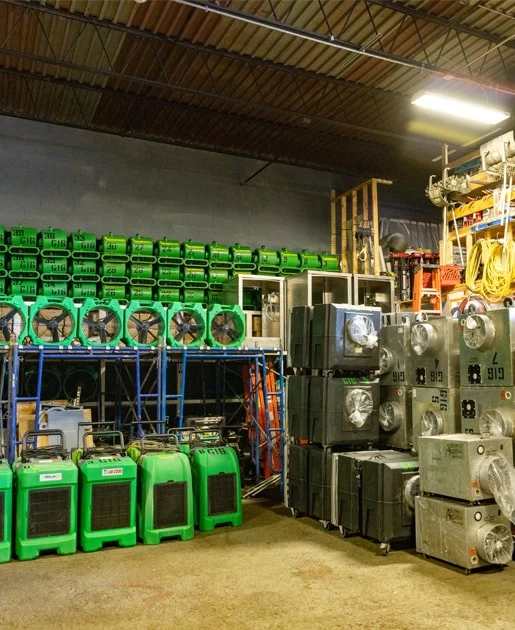
From there, industrial extraction equipment removes standing water, followed by a structured drying phase using commercial-grade dehumidifiers and air movers calibrated to the specific conditions of the space. If the job involves hazardous materials asbestos in older insulation, lead paint in disturbed walls we handle those in-house under the appropriate licenses, without stopping the job to bring in a separate subcontractor. Once the space meets verified dryness standards, we document everything for your insurance claim and walk you through what reconstruction, if needed, looks like next.
Flooded basement cleanup in Sagaponack isn’t a single-service job. Depending on what the water touched, what it brought with it, and how long it sat, the scope can expand quickly. We handle the full range in-house: emergency water extraction, structural drying, mold remediation, sewage decontamination, asbestos abatement, lead abatement, and complete reconstruction when the space needs to be rebuilt after drying. You don’t coordinate multiple vendors. One company carries the job from first call to finished space.
Because Sagaponack relies entirely on private wells and septic systems there’s no municipal sewer infrastructure in the village a flooding event that overwhelms a septic system can introduce Category 3 sewage contamination into a basement. That’s blackwater. It requires licensed environmental remediation, not standard cleanup, and it’s a scenario that generic water damage franchises are often not equipped or licensed to handle properly.
The Village of Sagaponack has its own building department, and any structural repairs following water damage may require permits through the village as well as contractor licensing through Southampton Town. Our Suffolk County General Contractor license covers both. Every repair we do is done to code, properly documented, and ready for inspection which matters whether you’re filing an insurance claim, preparing the property for sale, or simply making sure the job was done right.
Why does my Sagaponack basement keep flooding even without a major storm?
This is one of the most common questions from Sagaponack homeowners, and the answer is specific to this village’s hydrology. Sagg Pond, the brackish coastal lagoon that sits at the heart of Sagaponack, has a direct relationship with the local water table. When the pond’s water level rises from heavy rainfall, seasonal conditions, or partial storm surge intrusion the water table beneath surrounding properties rises with it. Basements in the area begin to flood not from surface water coming in, but from groundwater pushing up through foundations and floor slabs under hydrostatic pressure.
This is why the village periodically “cuts” Sagg Pond opening it to the ocean to relieve that pressure. Until that happens, or during periods of sustained rainfall, homes near the pond corridor are genuinely vulnerable to basement flooding with no storm in sight. The fix isn’t just pumping the water out. It requires understanding the source, drying to verified moisture standards, and addressing any mold risk that builds up in repeatedly wet spaces over time.
How quickly does mold actually start growing after a basement floods?
Mold can begin colonizing within 24 to 48 hours of a flooding event under the right conditions and Sagaponack’s coastal environment provides exactly those conditions. High ambient humidity, warm seasonal temperatures, and the brackish groundwater that sometimes enters basements near Sagg Pond all accelerate mold growth compared to drier inland environments. By the time visible mold appears on a surface, it has typically already spread into the wall cavity behind it.
This is why the drying timeline matters so much. A basement that gets professionally extracted and dried within the first few hours has a very different outcome than one that sits for two days while someone waits for a contractor to become available. In a finished Sagaponack lower level with custom millwork, fabric surfaces, or stored valuables, the difference between a fast response and a delayed one isn’t measured in inconvenience it’s measured in the scope and cost of what has to be torn out and rebuilt afterward.
Does homeowners insurance typically cover flooded basement cleanup in Sagaponack?
It depends on the cause of the flooding, and this is where many homeowners get caught off guard. Standard homeowners insurance generally covers sudden and accidental water damage a burst pipe, a failed water heater, or an appliance leak. It typically does not cover flooding caused by rising groundwater or surface water intrusion from outside the home, which is classified as flood damage and requires a separate flood insurance policy through the NFIP or a private carrier.
For Sagaponack homeowners, this distinction matters significantly. Many of the flooding scenarios specific to this village Sagg Pond groundwater rise, coastal storm surge, compound flooding during nor’easters fall into the flood category rather than the standard homeowners category. Many properties in Sagaponack, particularly those near the oceanfront and pond corridors, sit in FEMA-designated flood zones where flood insurance is either required or strongly advisable. We work directly with insurance carriers, including high-value and specialty policy carriers common in this market, and produce the documentation adjusters need to process claims accurately and efficiently.
What happens if the flooding disturbed asbestos or lead paint in my home?
This is a real risk in Sagaponack’s older estate properties, and it’s one that many water damage companies are not equipped to handle legally. Homes built before the 1980s and there are many in Sagaponack’s historic estate stock may contain asbestos in pipe insulation, floor tiles, or ceiling materials, and lead paint in walls or trim. When flooding disturbs these materials, they become an environmental hazard that cannot legally be removed or disposed of without specific state and federal licenses.
We hold NYS DOL Asbestos, USEPA Lead, and USEPA RRP certifications. If the remediation process uncovers regulated materials, the job doesn’t stop. Our team is already authorized and equipped to handle abatement in-house, document it properly, and continue the restoration without bringing in a separate environmental contractor. For a homeowner managing a large Sagaponack property especially one not on-site this continuity is critical. You don’t want a job that stalls for two weeks because a subcontractor has to be sourced mid-project.
My Sagaponack home is vacant most of the year what should I know about basement flooding risk?
Vacant or seasonally occupied properties carry a specific and often underappreciated flooding risk. A pipe that freezes and bursts in January, a sump pump that fails during a March snowmelt, or a slow foundation seep that goes unnoticed for weeks in a home that isn’t checked regularly, any of these can result in a basement that has been wet for days or longer before anyone discovers it. By that point, mold is almost certainly present, and the structural drying process is significantly more involved than it would have been with an immediate response.
For Sagaponack estates managed by a property caretaker or manager, the most important thing is having a contractor already identified before an emergency happens. We respond 24 hours a day, every day, and can coordinate directly with a property manager or caretaker on-site when the homeowner is not available. Our team documents everything thoroughly moisture readings, affected areas, remediation steps, and reconstruction scope so the homeowner has a complete record regardless of whether they were present during the work.
Do I need permits for basement water damage repairs in Sagaponack, NY?
Yes, depending on the scope of the repairs. The Village of Sagaponack operates its own building department, and structural repairs or reconstruction following water damage may require a building permit through the village. In addition, contractors performing construction work in Sagaponack are generally required to hold contractor licensing through Southampton Town. This dual-layer requirement village permits plus town licensing catches some out-of-area contractors off guard, and the result can be unpermitted work that creates compliance problems for the homeowner down the road.
We hold a Suffolk County General Contractor license that satisfies Southampton Town’s licensing requirements, and our team is familiar with the Village of Sagaponack’s permitting process. Any reconstruction work following water damage remediation is done to code, properly permitted where required, and documented in a way that holds up to inspection. If you’re planning to sell the property or file an insurance claim that includes structural repairs, having that paper trail in order from the start makes the entire process significantly smoother.