When Water Rises in Wainscott, We Show Up Immediately
Wainscott properties flood and when yours does, you need someone who actually shows up. We respond 24/7 with the licensing, equipment, and experience to handle flooded basement cleanup from the first call to the final inspection.
I needed a professional consultation explanation of procedure for safe removal of Asbestos in my apartment complex. Without having an account yet, I was very impressed with the caring, knowledgeable and generous advice offered by Jessica, and will look forward to doing business in the future. Thank you so much! I feel much more informed about a sometimes scary endeavor. Peace. Nancy Silva Mineola, NY.
Mia Munoz
Used this company to clean up some water flood in my house. They were fast and easy to work with.very professional, Would recommend to anyone!
Nini Valle
Great company, had a flood and they responded quickly and efficiently. Billed my insurance company directly. I highly recommend this company!
joe colapietro, jr
I had pipe freeze in my basement right before a snow storm and they made to within an hour to help start the clean up process. They we by our side throughout the entire process and even helped with the insurance company. They did such a great job with the cleanup, repair, remidiation, I contracted them to perform the repairs and finishes in the basement. They came with enough manpower and material to get the job done. Leo and Jessica were nothing but a pleasure to deal with!!
Cristian Arredondo c
I had some water damage in my home and Green Island was able to take care of my issue quickly and effectively. I am very pleased with the work they did. They responded quickly and were very professional.
Michael M
Outstanding service! From the office to the field crew everyone was friendly, helpful and responsive. I highly recommend Green Island Group.
When water gets into your basement in Wainscott, the clock starts immediately. Within 24 to 48 hours, mold can establish itself inside wall cavities, under flooring, and behind insulation none of which is visible until it’s already a serious problem. The goal isn’t just to get the water out. It’s to make sure nothing is left behind that turns a one-day cleanup into a weeks-long remediation.
For properties near Georgica Pond or along Beach Lane areas the Town of East Hampton has specifically identified in its Coastal Assessment and Resiliency Plan as flood-prone this isn’t a fringe scenario. It’s a recurring one. The Georgica Pond watershed covers roughly 4,000 acres, and when that drainage system is under pressure from a storm, the water table across Wainscott rises with it. Basements feel that pressure whether or not there’s surface flooding on your street.
For second-home owners managing the situation remotely, the outcome you need is simple: the damage stops, the property gets properly dried and documented, insurance handles the billing, and you get a clear picture of exactly what happened and what was done. That’s what a complete flooded basement cleanup actually looks like.
Licensed, Accountable, and Ready for Wainscott's Unique Challenges
We’ve been handling restoration and environmental remediation across New York State for over 12 years, with more than 5,000 completed projects and an active Suffolk County General Contractor license that covers work in East Hampton Town the municipality that governs Wainscott. That means when a job requires permitted structural repairs after a flood, there’s no need to bring in a separate contractor. We handle it start to finish.
Beyond general contracting, we hold a NYS DOL Mold license, a NYS DOL Asbestos license, and USEPA Lead certification. In Wainscott, where historic farmhouses along Wainscott Main Street sit alongside newer luxury estates, that range of licensing isn’t a formality it’s a practical necessity. Flood water doesn’t know what decade your walls were built, and older materials require handling that most restoration companies aren’t legally authorized to perform.
We’re also an approved emergency response contractor for the NYS Office of General Services independently vetted by New York State, not self-certified. Our CEO Jessica Dussan and VP Leo Torres are named, reachable, and personally accountable for every project we take on.
Basement Flooding Remediation Process Wainscott NY
What Actually Happens From First Call to Finished Job
The first call triggers an immediate response. We operate 24 hours a day, every day, and emergency dispatch doesn’t require business hours or a callback window. When our crew arrives, the first priority is assessment not just what’s visible, but what the moisture meters and thermal imaging are showing inside the walls, under the subfloor, and along the foundation. In Wainscott, where properties near the Georgica Pond watershed sit on a high water table, that subsurface moisture reading often tells a more complete story than the surface water alone.
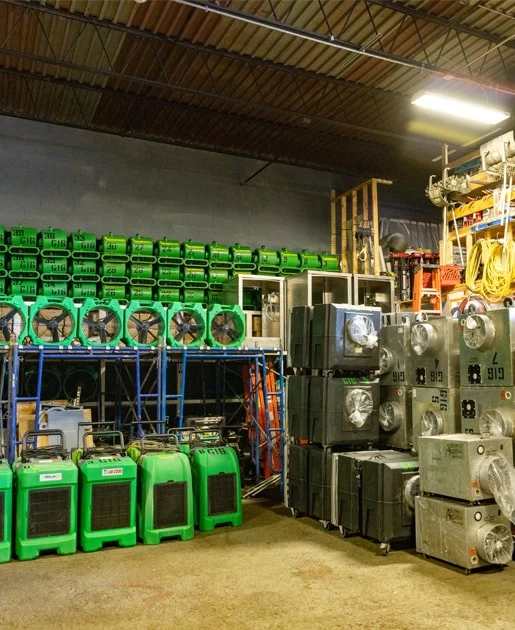
Once the scope is confirmed, water extraction begins immediately using commercial-grade equipment. Structural drying follows industrial air movers and dehumidifiers positioned based on the specific layout and material composition of your basement, not a generic setup. If the assessment reveals older building materials that may contain asbestos or lead, those areas are handled under the appropriate licensed protocols before any demolition or removal takes place. This matters in Wainscott, where housing stock spans multiple centuries.
Throughout the process, we document damage in the format insurance adjusters require. We bill carriers directly, handle adjuster communication, and keep you informed without requiring you to manage the paperwork from wherever you are. When the job is done, you get a completed project not a handoff to the next contractor.
Full Scope Coverage Built for Wainscott Properties
Flooded basement cleanup in Wainscott isn’t a single-step job, and the scope of what’s included matters more here than in most places. Our process covers emergency water extraction, structural drying, mold assessment and remediation, odor treatment, and full reconstruction where needed all under one Suffolk County General Contractor license. For properties in East Hampton Town, that means permits can be pulled and structural repairs can be completed legally and completely without bringing in a separate contractor after the restoration phase ends.
For properties in the Georgica Association or along the oceanfront south of Montauk Highway, storm surge and coastal groundwater intrusion present specific challenges that require more than a standard pump-out. The combination of salt-laden water, high-water-table pressure, and the potential for disturbed building materials in older structures means the cleanup needs to be thorough, documented, and handled by someone licensed to deal with whatever the water uncovered. We carry every license required to do that legally in Suffolk County.
Insurance coordination is built into every job. Damage documentation, adjuster communication, and direct billing to your carrier are handled by us not handed off to you. For seasonal property owners managing a Wainscott home remotely, that capability alone is often the deciding factor in who they call.
How quickly can mold grow after a basement floods in Wainscott?
Mold can begin developing within 24 to 48 hours of water intrusion and in Wainscott, that window is particularly unforgiving for properties that aren’t occupied year-round. If a storm event floods a basement in a seasonally closed home near Georgica Pond and no one discovers it for several days, the mold growth clock has already run well past the critical early window by the time cleanup begins. That doesn’t mean the situation is unrecoverable, but it does mean the scope of remediation is significantly larger than it would have been with an immediate response.
This is exactly why rapid mobilization matters so much in a second-home community like Wainscott. The longer moisture sits undisturbed in wall cavities, under flooring, and behind insulation, the deeper the remediation needs to go. We operate 24/7 emergency response specifically for situations where the flooding is discovered after the fact not just for homeowners who are standing in the water when they call.
Does homeowners insurance cover flooded basement cleanup in East Hampton Town?
It depends on the source of the water, and that distinction matters a lot. Standard homeowners insurance typically covers sudden and accidental water damage a burst pipe, a failed sump pump, or an appliance malfunction. What it generally does not cover is flooding caused by surface water, storm surge, or groundwater rising from outside the home. For Wainscott properties near Beach Lane or the Georgica Pond shoreline, where storm-related flooding is a documented and recurring risk, a separate flood insurance policy through the National Flood Insurance Program or a private flood insurer is what covers that category of damage.
The practical takeaway is that many Wainscott homeowners particularly those who purchased their properties as seasonal investments may have both a homeowners policy and a flood policy, and the cleanup claim may need to be filed under one or both depending on how the water entered the structure. We document damage in a way that clearly establishes the source and path of water intrusion, which is exactly what adjusters need to process claims correctly. We handle that communication directly so you’re not navigating it alone.
What happens if my flooded basement in Wainscott contains asbestos or lead?
This is a real concern in Wainscott, not a theoretical one. The hamlet has housing stock that spans centuries from historic farmhouses along Wainscott Main Street to mid-century structures that predate modern building material regulations. Asbestos was commonly used in insulation, floor tiles, pipe wrap, and joint compound in homes built before the 1980s. Lead paint is present in homes built before 1978. When flood water disturbs those materials, the cleanup cannot legally proceed as a standard water extraction job.
Most water damage companies are not licensed to assess or remediate asbestos or lead hazards. We hold a NYS DOL Asbestos license and USEPA Lead and RRP certifications, which means if those materials are identified during the initial assessment, the work continues under the appropriate licensed protocols contained, documented, and handled legally. You don’t need to pause the job, find a separate environmental contractor, and coordinate a handoff. It stays under one contract, one team, and one point of accountability.
My Wainscott home is a seasonal property what should I do if I'm not there when it floods?
Call immediately. The single most important thing a remote property owner can do is get a licensed contractor on-site as fast as possible, because every hour of delay increases the scope of damage. Our 24/7 emergency line connects you with a real person who can dispatch a crew to your Wainscott property without requiring you to be present. The team will assess, document, and begin extraction whether you’re in Manhattan, traveling, or simply unreachable for the first few hours.
From there, we handle the insurance documentation and adjuster communication on your behalf. You’ll receive a clear account of what was found, what was done, and what the next steps are without needing to manage the process from a distance. For properties in the Georgica Association or along the oceanfront where caretakers or property managers are the first point of contact, we work directly with whoever is on the ground so the response doesn’t stall waiting for the owner to get involved.
How do I know if my basement was fully dried after a flood cleanup in Wainscott?
The honest answer is that you can’t tell by looking. A basement can feel and smell dry while still holding moisture inside wall assemblies, beneath flooring, and within the structural framing especially in a coastal environment where ambient humidity is already elevated. The only way to confirm that a structure has been properly dried is through moisture meter readings and, where needed, thermal imaging that shows temperature differentials indicating trapped moisture behind surfaces.
We use professional-grade moisture detection equipment throughout the drying process and take readings at multiple points during and after structural drying to confirm that levels have returned to acceptable ranges. That documentation is part of the project record not just an internal note, but something you can reference if questions arise later with your insurance carrier or if you’re preparing the property for sale. In a market where Wainscott homes routinely transact at $3 million and above, having documented proof of a properly completed remediation is a legitimate asset.
Does Green Island Group handle the building permits required for basement repairs in East Hampton Town?
Yes. East Hampton Town requires building permits for structural alterations, drywall replacement, and reconstruction work following water damage and those permits must be pulled by a licensed contractor. We hold an active Suffolk County General Contractor license, which authorizes us to apply for and manage permits through the East Hampton Town Building Department. All work is performed in compliance with NY State Residential Codes and East Hampton Town Zoning requirements, including adherence to the NYStretch Energy Code-2020 supplement that took effect in January 2023.
For Wainscott homeowners, this matters because most restoration-only operators companies that specialize in water extraction and drying but don’t hold general contractor licensing cannot legally pull permits or perform the reconstruction phase of the job. That means you’d normally need to find, vet, and coordinate a separate licensed contractor after the restoration is complete. With us, the permitted reconstruction is part of the same scope, the same contract, and the same team. There’s no gap between the remediation phase and the rebuild.