When Yorktown's Old Homes Get Hit, You Need More Than a Wet Vac
Water damage in a 1958 split-level isn’t the same as water damage anywhere else. We handle the full picture — extraction, drying, mold, and what’s hiding inside your walls — so you’re not left guessing what got missed.
I needed a professional consultation explanation of procedure for safe removal of Asbestos in my apartment complex. Without having an account yet, I was very impressed with the caring, knowledgeable and generous advice offered by Jessica, and will look forward to doing business in the future. Thank you so much! I feel much more informed about a sometimes scary endeavor. Peace. Nancy Silva Mineola, NY.
Mia Munoz
Used this company to clean up some water flood in my house. They were fast and easy to work with.very professional, Would recommend to anyone!
Nini Valle
Great company, had a flood and they responded quickly and efficiently. Billed my insurance company directly. I highly recommend this company!
joe colapietro, jr
I had pipe freeze in my basement right before a snow storm and they made to within an hour to help start the clean up process. They we by our side throughout the entire process and even helped with the insurance company. They did such a great job with the cleanup, repair, remidiation, I contracted them to perform the repairs and finishes in the basement. They came with enough manpower and material to get the job done. Leo and Jessica were nothing but a pleasure to deal with!!
Cristian Arredondo c
I had some water damage in my home and Green Island was able to take care of my issue quickly and effectively. I am very pleased with the work they did. They responded quickly and were very professional.
Michael M
Outstanding service! From the office to the field crew everyone was friendly, helpful and responsive. I highly recommend Green Island Group.
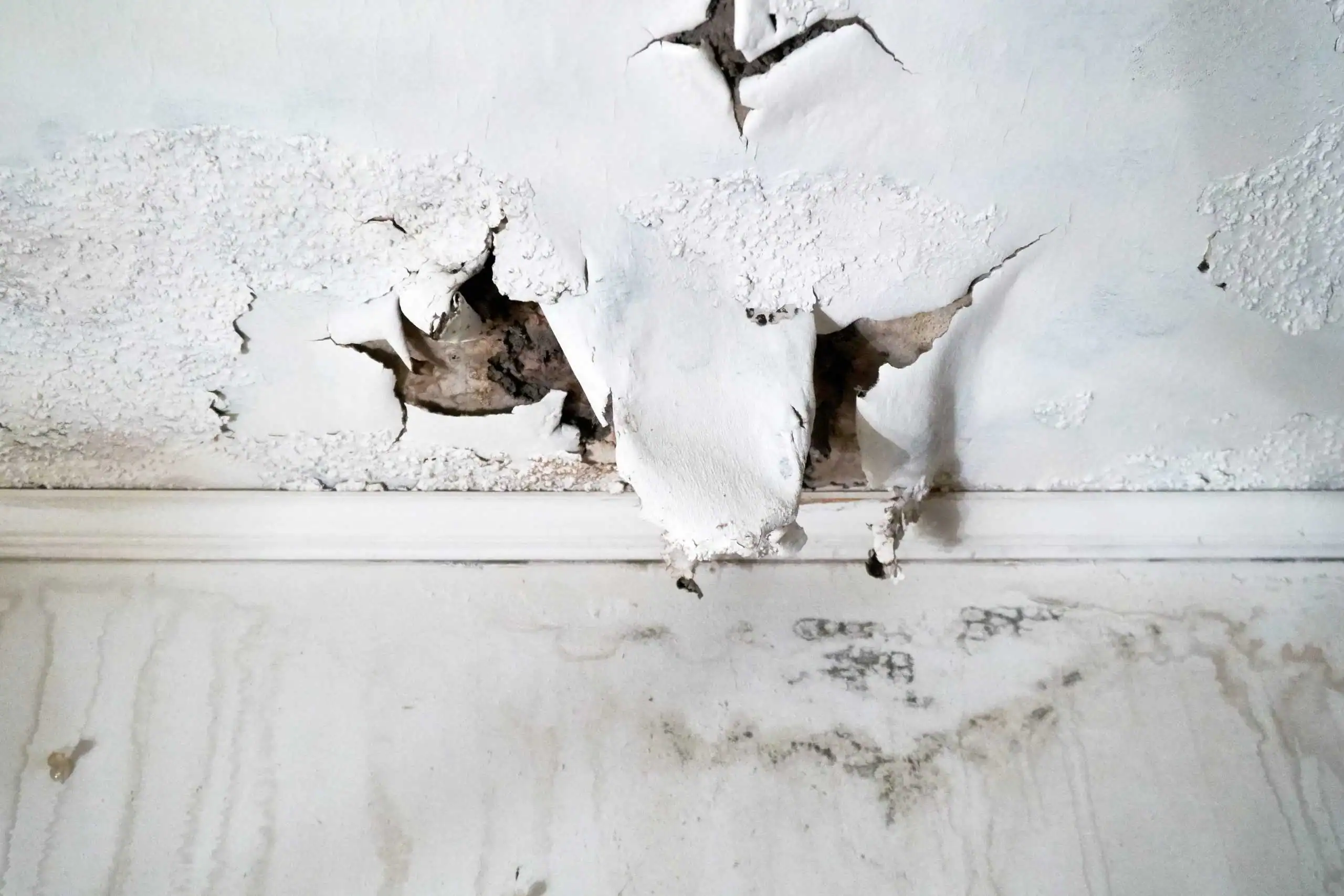
Here’s what most homeowners don’t realize until it’s too late: the water you can see is rarely the problem. It’s the moisture that soaks into plaster walls, original wood subfloors, and fiberglass insulation — the stuff that never fully dries on its own — that turns a manageable situation into a mold problem three weeks later. In Yorktown’s older housing stock, where the median home was built around 1958, that’s not a hypothetical. It’s exactly what happens when the job stops at surface drying.
When the work is done correctly, you’re not just looking at dry floors. You’re looking at confirmed moisture readings inside wall cavities, a subfloor that’s actually stable, and documentation that protects your insurance claim and your home’s value. For a property worth $500,000 or more in northern Westchester, that’s not optional — it’s the whole point.
And if your home sits near one of the many streams that drain into the New Croton Reservoir watershed, or in a lower-lying area around Mohegan Lake or the Crompond corridor, you already know that one heavy storm can push water into places you didn’t expect. Getting it out completely — and keeping it out — is what real water damage restoration looks like.
We’ve been doing environmental restoration work across the New York metro area for over 12 years. That means we’ve been through Hurricane Irene, Superstorm Sandy, Tropical Storm Ida, and every nor’easter that sent Yorktown homeowners scrambling for a phone. We know what Yorktown’s winters do to older pipes. We know what a heavy spring rain does to basements near the Taconic corridor. That experience isn’t something you pick up from a franchise manual.
We’re NYS and NYC M/WBE Certified — which means the state of New York has verified our ownership, our operational history, and our compliance standards. We also carry full liability insurance and workers’ compensation, which matters more than most homeowners realize. If a contractor working in your home isn’t covered and something goes wrong, that liability can land on you. We’re fully insured so it doesn’t.
We work with the NYS Office of General Services and state agencies — the kind of institutional clients who don’t give second chances. That accountability carries over to every residential job we take in Yorktown.
What Actually Happens From the First Call to the Final Inspection
When you call, someone picks up — day or night. We ask a few quick questions to understand what you’re dealing with, and we get a crew moving. In a water damage situation, the first 24 hours matter more than anything that comes after, so we don’t make you wait for a callback window.
Once on-site, we assess the full scope before we touch anything. That means moisture meters, thermal imaging where needed, and a clear-eyed look at what’s wet, what’s at risk, and what might be hiding behind walls or under flooring. In Yorktown’s older homes — especially the Cape Cods and split-levels in Shrub Oak and Yorktown Heights — we’re also looking for anything that could complicate the job, including materials that were common in pre-1980 construction. If asbestos-containing materials are disturbed by the water damage, we handle abatement in-house. You don’t need to find a separate contractor and coordinate around their schedule.
From there, we extract standing water, set industrial drying equipment, and monitor moisture levels until everything reads dry — not just surface-dry, but confirmed dry inside the structure. If mold remediation is needed, we’re licensed under New York State’s Article 32 requirements to handle it legally and completely. We also handle structural repairs, drywall replacement, and reconstruction. One team, one point of contact, start to finish. The Town of Yorktown Building Department requires permits for structural repairs, and we handle that process as part of the job — not as an afterthought.
Full-Scope Restoration Built for Northern Westchester Homes
Water damage restoration isn’t one thing — it’s a sequence of decisions that either solve the problem completely or leave something behind to become the next problem. What we bring to a Yorktown job is the ability to handle that entire sequence without handing off to someone else halfway through.
That means water extraction and structural drying, mold remediation with full NYS Article 32 licensing, asbestos abatement for the significant share of Yorktown homes built before 1980, and reconstruction when walls, floors, or framing need to be replaced. We also work directly with your insurance company — billing them, communicating with adjusters, and helping you understand what your policy actually covers. The difference between sudden accidental damage and gradual seepage matters for your claim, and we know how to document it correctly.
For homeowners who are looking at a repair bill that exceeds what they want to pay out of pocket, we offer financing up to $200,000 at 0% APR. Whether you’re in a Jefferson Village condo dealing with a pipe that let go overnight, or a single-family home in Crompond with a basement that took on water during a storm, that financing option is there if you need it. And our 100% Satisfaction Guarantee means we don’t consider the job done until you do.
How quickly can mold grow after water damage in a Yorktown home?
Mold can begin growing within 24 to 48 hours of a water damage event — and that window doesn’t care how busy your schedule is. In Yorktown’s older housing stock, where plaster walls, original hardwood floors, and fiberglass insulation absorb and hold moisture far more readily than modern materials, the conditions for mold growth are often better than homeowners expect. Surface drying — fans, open windows, a dehumidifier from the hardware store — doesn’t reach inside wall cavities or under subfloors, which is exactly where mold colonies get their start.
The only way to know moisture has been fully removed is with professional equipment: moisture meters, thermal imaging, and commercial-grade dehumidification that pulls water vapor out of the structure itself. When we finish a job in Yorktown, we don’t leave based on how things look — we leave based on what the readings confirm. That’s the difference between a job that’s done and a mold problem that’s just getting started.
Does homeowners insurance cover basement flooding or water damage in Yorktown, NY?
It depends on the cause, and that distinction is where most homeowners get tripped up. Standard homeowners insurance policies typically cover sudden and accidental water damage — a pipe that bursts, a washing machine supply line that fails, a water heater that lets go. What they usually don’t cover is gradual seepage, ground flooding from heavy rain, or sump pump failure without a specific rider. For Yorktown homeowners near the Croton Reservoir watershed tributaries or in lower-lying areas around Mohegan Lake, where basement flooding from groundwater infiltration is a recurring risk, that distinction matters a great deal.
We work directly with your insurance company — billing them, communicating with adjusters, and documenting the damage in a way that supports your claim. We know how to present the cause and scope of damage clearly so you get the maximum legitimate coverage your policy allows. You shouldn’t have to become an expert in insurance language while you’re also dealing with a flooded basement.
What should I do in the first hour after discovering water damage in my home?
The most important thing you can do in that first hour is stop the source if it’s safe to do so — shut off the water supply, whether that’s the valve under the sink or the main shutoff — and then call a restoration company before you start moving things around or trying to dry anything yourself. Moving wet materials without proper containment can spread contamination, and running a household fan across standing water can actually push moisture deeper into porous surfaces.
If the water is coming from a sewage backup or a source that could involve contaminated water, don’t go in without protection. Sewage water carries pathogens that are a genuine health risk. In older Yorktown homes, a water event can also disturb materials in the floor, ceiling, or pipe insulation that may contain asbestos — particularly in homes built before 1980. The safest move is to get a professional assessment before you start any cleanup. We’re available 24/7, and a quick call can tell you exactly what’s safe to do while you wait for us to arrive.
Does water damage restoration in Yorktown require permits from the town?
For cosmetic repairs — replacing drywall on non-load-bearing walls, repainting, replacing flooring — you typically don’t need a permit from the Town of Yorktown Building Department. But once the work involves structural elements — subfloor replacement, framing repairs, drywall on load-bearing walls — a building permit is required, and the work needs to be inspected. This is something a lot of homeowners don’t find out until a contractor is already mid-job and has to stop.
We handle the permit process as part of the job. We know what the Town of Yorktown requires, we submit the documentation, and we schedule inspections so the project stays on track. For properties near wetlands or watercourse areas — which applies to a meaningful number of Yorktown homes given the town’s Freshwater Wetlands and Watercourse Protection Law — there may be additional regulatory considerations for any work that involves ground disturbance. We’re familiar with those requirements and factor them in from the start.
Should I be worried about asbestos if my Yorktown home has water damage?
If your home was built before 1980, it’s a fair question to ask — and one worth taking seriously. Asbestos-containing materials were common in residential construction through the late 1970s: floor tiles, pipe insulation, ceiling texture, and joint compound all had asbestos in them at various points during that era. The median construction year for homes in Yorktown Heights is 1958, which means a very large share of the town’s housing stock falls squarely in that window.
The issue with water damage is that it can disturb these materials — a burst pipe soaking into original floor tiles, or water intrusion warping a ceiling that contains asbestos texture. Once disturbed, those materials can release fibers that are a serious health risk. Most water damage contractors aren’t licensed to handle asbestos abatement, which means they’d have to stop work and bring in a separate contractor — adding time and coordination to an already stressful situation. We handle both in-house. If we find a concern during the assessment, we address it as part of the job, not as a separate project you have to manage on your own.
How much does water damage repair typically cost in Yorktown, NY?
The honest answer is that it varies significantly depending on what you’re dealing with. A straightforward pipe burst with limited spread and no mold involvement might run $3,000 to $6,000. A more serious event — a basement that took on significant water, with moisture that reached wall cavities and subfloor, and mold that had time to establish — can reach $10,000 to $16,000 or more. In Yorktown’s older homes, where the materials absorb moisture differently than modern construction and where asbestos abatement may be part of the picture, costs can reflect that complexity.
What we can tell you is that delaying the work almost always makes it more expensive. Every day moisture sits inside a wall or under a floor, the damage footprint grows and the mold risk increases. Getting a professional assessment quickly — even if you’re not sure you’re ready to commit — gives you a real number to work with and stops the clock on the damage. And if the cost is a concern, our financing goes up to $200,000 at 0% APR. That option exists specifically for situations where a homeowner is facing a significant unplanned expense on a property they’ve invested heavily in — which describes a lot of Yorktown homeowners.