When Harrison's Older Homes Take a Hit, You Need More Than a Fan and a Dehumidifier
We respond 24/7 to water damage in Harrison — handling everything from burst pipes in century-old plaster walls to flooded basements near Brentwood Brook, with direct insurance billing and financing up to $200,000 at 0% APR.
I needed a professional consultation explanation of procedure for safe removal of Asbestos in my apartment complex. Without having an account yet, I was very impressed with the caring, knowledgeable and generous advice offered by Jessica, and will look forward to doing business in the future. Thank you so much! I feel much more informed about a sometimes scary endeavor. Peace. Nancy Silva Mineola, NY.
Mia Munoz
Used this company to clean up some water flood in my house. They were fast and easy to work with.very professional, Would recommend to anyone!
Nini Valle
Great company, had a flood and they responded quickly and efficiently. Billed my insurance company directly. I highly recommend this company!
joe colapietro, jr
I had pipe freeze in my basement right before a snow storm and they made to within an hour to help start the clean up process. They we by our side throughout the entire process and even helped with the insurance company. They did such a great job with the cleanup, repair, remidiation, I contracted them to perform the repairs and finishes in the basement. They came with enough manpower and material to get the job done. Leo and Jessica were nothing but a pleasure to deal with!!
Cristian Arredondo c
I had some water damage in my home and Green Island was able to take care of my issue quickly and effectively. I am very pleased with the work they did. They responded quickly and were very professional.
Michael M
Outstanding service! From the office to the field crew everyone was friendly, helpful and responsive. I highly recommend Green Island Group.
What Changes When the Water Is Actually Gone for Good
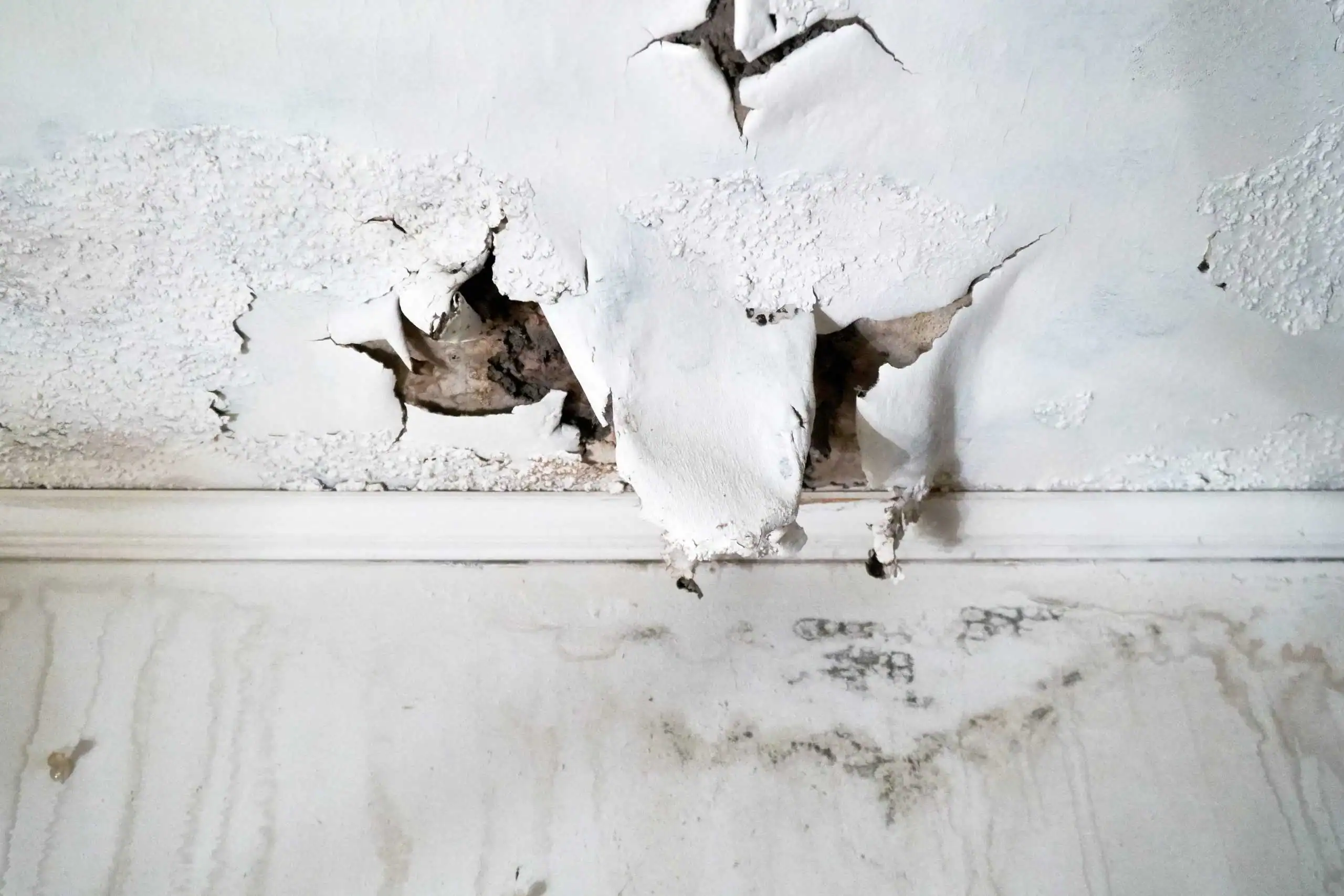
Water damage in Harrison isn’t the same as water damage anywhere else. More than half the homes here were built before 1970 — plaster walls, original hardwood subfloors, cast-iron pipes, and building materials that absorb moisture deeply and release it slowly. When water gets in, it doesn’t just sit on the surface. It moves through layers that a surface dry-out will never fully reach, and mold can start growing inside a wall cavity within 24 to 48 hours before you ever see a single spot.
The real outcome you’re after isn’t just a dry room. It’s verified dryness — confirmed with moisture meters and thermal imaging, not just a visual check. It’s knowing the original floors in your Brentwood-area home weren’t quietly harboring moisture for three weeks before you noticed a smell. It’s having documentation your insurance adjuster will actually accept, without you playing phone tag between two parties who don’t agree on scope.
For homes near the Brentwood Brook corridor or in low-lying areas around Silver Lake, groundwater flooding adds another layer. The Mamaroneck aquifer runs directly under parts of Harrison — which means basement flooding here can come from below, not just above. That changes how restoration needs to be approached, and it’s something a contractor unfamiliar with Harrison’s geography simply won’t account for.
Water Damage Restoration Company Serving Harrison, NY
12 Years In, and We Still Do the Work Right
Green Island Group has been operating in the New York metro area for over 12 years. We’re not a franchise dispatching crews from a call center two counties away. We’re a fully licensed, fully insured environmental restoration company — carrying both general liability and Workers’ Compensation coverage — that has been vetted and approved to work with New York State government agencies through the NYS Office of General Services. We also hold NYS and NYC M/WBE Certification, a credential that requires documented proof of qualifications and operational standards — not something you can just claim.
Harrison homeowners — whether in a Purchase estate, a Sterling Ridge colonial, or a West Harrison split-level near the I-287 corridor — tend to hold their contractors to a high standard. We think that’s exactly how it should be. You’re protecting a significant asset, and the work needs to be done completely, not just quickly. We bring the full scope: water damage mitigation, mold remediation, and asbestos abatement all under one roof, so you’re not coordinating three separate contractors during an already difficult situation.
No Guesswork — Here's Exactly What Happens From First Call to Final Clearance
When you call, we respond — day or night. The first thing we do on-site is assess the full extent of the damage, not just what’s visible. In Harrison’s older homes, that means using moisture meters and thermal imaging to find water that has migrated into wall cavities, subfloors, and structural framing. What looks like a contained leak on the surface can be a much larger problem two inches behind the drywall — or behind original plaster that’s been in place since the 1940s.
Once we have a clear picture, we extract standing water, set up industrial drying equipment, and begin the controlled drying process. This isn’t about pointing fans at a wet floor. It’s about managing airflow, humidity, and temperature across the specific materials in your home until moisture readings return to safe levels throughout — not just at the surface. If the damage is in a flood-zone area of Harrison — near Brentwood Brook or in a basement affected by groundwater from the Mamaroneck aquifer — we also account for the regulatory side. Harrison’s Flood Damage Prevention local law (Chapter 146) may require permits for certain repair and improvement work in designated flood hazard zones, and we know how to navigate that without it becoming your problem to figure out alone.
If water damage has disturbed original flooring, pipe insulation, or wall materials in a pre-1970 home, we assess for asbestos before any demolition or reconstruction begins. That step protects you legally and physically — and it’s one most water damage companies in the area simply can’t handle themselves. We document everything throughout the process for your insurance claim, and we bill your carrier directly.
Full-Scope Restoration Built for Harrison's Specific Conditions
Water damage restoration in Harrison covers a wider range of scenarios than most homeowners expect going in. Burst pipes during a January freeze in a Sunnyridge colonial. A sump pump failure during a spring storm near the East Branch of the Mamaroneck River. A slow roof leak that’s been feeding moisture into a plaster ceiling in a Purchase estate for longer than anyone realized. Each situation calls for a different approach, and the age and construction type of Harrison’s housing stock shapes every decision we make on-site.
Our service includes full water extraction, structural drying with industrial-grade equipment, moisture verification, mold assessment and remediation, and asbestos abatement when pre-1970 building materials are involved. We also provide complete documentation for your insurance claim and handle direct billing to your carrier — so you’re not spending your week chasing an adjuster. For larger losses, we offer financing up to $200,000 at 0% APR, because a $15,000 to $20,000 restoration in a high-value home shouldn’t require you to liquidate savings while you’re waiting on a settlement.
Harrison’s FEMA flood zone designations and the town’s adopted Flood Damage Prevention law add a layer of regulatory complexity that not every contractor is prepared for. We are. Whether you’re in a mapped flood hazard area near Brentwood Brook or dealing with groundwater intrusion tied to the Mamaroneck aquifer beneath West Harrison, we approach the work with the local knowledge that actually makes a difference in how the job gets done — and how it holds up over time.
Does homeowners insurance cover water damage from a burst pipe in Harrison, NY?
In most cases, yes — sudden and accidental water damage from a burst pipe is covered under a standard homeowners insurance policy. The key word is “sudden.” If the damage resulted from a slow leak that went unaddressed over time, insurers will often push back on coverage, arguing it was a maintenance issue rather than an unexpected event. That distinction matters a lot in Harrison, where older homes with original plumbing are more likely to have slow-developing issues that only become visible after significant damage has already occurred.
What also matters is how the claim is documented. Insurance adjusters look for moisture readings, photos taken at the time of discovery, a written scope of damage, and evidence that mitigation began promptly. When you call us, we begin building that documentation from the moment we arrive — and we bill your carrier directly, so you’re not caught between two parties arguing over scope while your home sits wet.
How quickly does mold start growing after water damage in an older home?
Mold can begin growing within 24 to 48 hours of water intrusion — and in Harrison’s older homes, that timeline is more consequential than it sounds. Plaster walls, original hardwood subfloors, and dense structural framing absorb moisture much more readily than modern materials. The moisture doesn’t stay on the surface where you can see it — it moves inward, and mold growth inside a wall cavity or beneath a floor can go undetected for weeks.
That’s why the response window matters so much. The longer water sits in a pre-war or mid-century home, the deeper it penetrates, and the more extensive the remediation becomes. Professional drying equipment and moisture verification aren’t optional steps — they’re what separates a clean resolution from a mold problem that shows up three months later. If you’ve had a water event in your Harrison home and you’re not sure whether it was dried completely, it’s worth having a moisture assessment done before you assume everything is fine.
What should I do immediately after my basement floods in Harrison?
The first priority is safety. Don’t enter a flooded basement if there’s any chance of electrical contact — water and live circuits are a serious hazard. Once it’s safe to enter, stop the source of water if you can, and call a restoration professional as quickly as possible. Every hour matters when it comes to limiting how far moisture spreads into structural materials.
In Harrison specifically, basement flooding can come from multiple sources — a sump pump failure, storm runoff overwhelming drainage near Brentwood Brook, or groundwater rising from the Mamaroneck aquifer beneath parts of West Harrison and the downtown area. The source affects how the remediation needs to be approached. Groundwater flooding, for example, carries different contamination risks than a clean-water pipe failure, and the drying strategy differs accordingly. Document everything with photos before anything is moved or removed — your insurance claim will depend on that record.
Could water damage in my Harrison home disturb asbestos-containing materials?
It’s a real possibility, and it’s one that’s easy to overlook in the middle of an emergency. Harrison has one of the older housing stocks in Westchester County — more than half of homes here were built before 1970, when asbestos was routinely used in floor tiles, ceiling tiles, pipe insulation, joint compound, and plaster textures. A burst pipe inside an original wall, or a flooded basement with pre-war tile floors, can disturb those materials.
The problem is that most water damage companies can’t legally or safely handle asbestos abatement. They’ll identify the risk, stop work, and refer you to a separate contractor — which means you’re now coordinating two separate timelines, two separate scopes, and two separate insurance interactions while your home sits in a partially remediated state. We handle both water damage restoration and asbestos abatement, so the entire job moves forward under one point of contact without the delay of waiting on a second crew.
How much does water damage restoration typically cost in Harrison, NY?
The range is wide, and the honest answer is that it depends heavily on the size of the home, how long the water was present, and what materials were affected. A contained pipe leak in a finished bathroom is a very different scope than a flooded basement in a 4,000-square-foot home in Brentwood or Sterling Ridge. National averages sit around $3,800 to $4,000 for moderate water damage — but in Harrison, where homes are larger, finishes are higher-end, and construction materials are older and more complex, costs for significant events regularly reach $10,000 to $20,000 or more once structural drying, mold remediation, and any necessary asbestos work are factored in.
Insurance covers a meaningful portion of most claims when the damage is sudden and well-documented, but out-of-pocket costs still arise — deductibles, items not covered under your specific policy, or restoration work that exceeds the adjuster’s initial estimate. We offer financing up to $200,000 at 0% APR, which means you can move forward with complete restoration immediately rather than waiting on a settlement or making partial repairs that end up costing more later.
Does water damage repair require a permit in Harrison, NY?
It depends on the scope of the work and where your property sits. Cosmetic repairs — replacing drywall, repainting, refinishing floors — generally don’t require a permit. But structural repairs, significant reconstruction, or any work performed on a property located within Harrison’s designated flood hazard zones may trigger permit requirements under the town’s Flood Damage Prevention local law, Chapter 146 of the Harrison Town Code.
Harrison has formally mapped FEMA flood hazard areas, and the town’s Engineering Department maintains Elevation Certificates for structures within those zones. If your home is near Brentwood Brook, Silver Lake, or in a low-lying area affected by the Mamaroneck River watershed, there’s a real possibility that restoration work — particularly anything involving structural improvement — falls under those regulations. Substantial improvements to structures in the floodplain may also require compliance with elevation and construction standards that affect how the repair is designed. We’re familiar with these requirements and can help you understand what applies to your specific property before work begins, so there are no surprises mid-project.