North Salem's Historic Homes Don't Get a Second Chance
When water gets into a century-old farmhouse or an equestrian estate off Hardscrabble Road, every hour you wait makes the damage harder — and more expensive — to fix. We respond 24/7 with the credentials and equipment to stop it fast.
I needed a professional consultation explanation of procedure for safe removal of Asbestos in my apartment complex. Without having an account yet, I was very impressed with the caring, knowledgeable and generous advice offered by Jessica, and will look forward to doing business in the future. Thank you so much! I feel much more informed about a sometimes scary endeavor. Peace. Nancy Silva Mineola, NY.
Mia Munoz
Used this company to clean up some water flood in my house. They were fast and easy to work with.very professional, Would recommend to anyone!
Nini Valle
Great company, had a flood and they responded quickly and efficiently. Billed my insurance company directly. I highly recommend this company!
joe colapietro, jr
I had pipe freeze in my basement right before a snow storm and they made to within an hour to help start the clean up process. They we by our side throughout the entire process and even helped with the insurance company. They did such a great job with the cleanup, repair, remidiation, I contracted them to perform the repairs and finishes in the basement. They came with enough manpower and material to get the job done. Leo and Jessica were nothing but a pleasure to deal with!!
Cristian Arredondo c
I had some water damage in my home and Green Island was able to take care of my issue quickly and effectively. I am very pleased with the work they did. They responded quickly and were very professional.
Michael M
Outstanding service! From the office to the field crew everyone was friendly, helpful and responsive. I highly recommend Green Island Group.
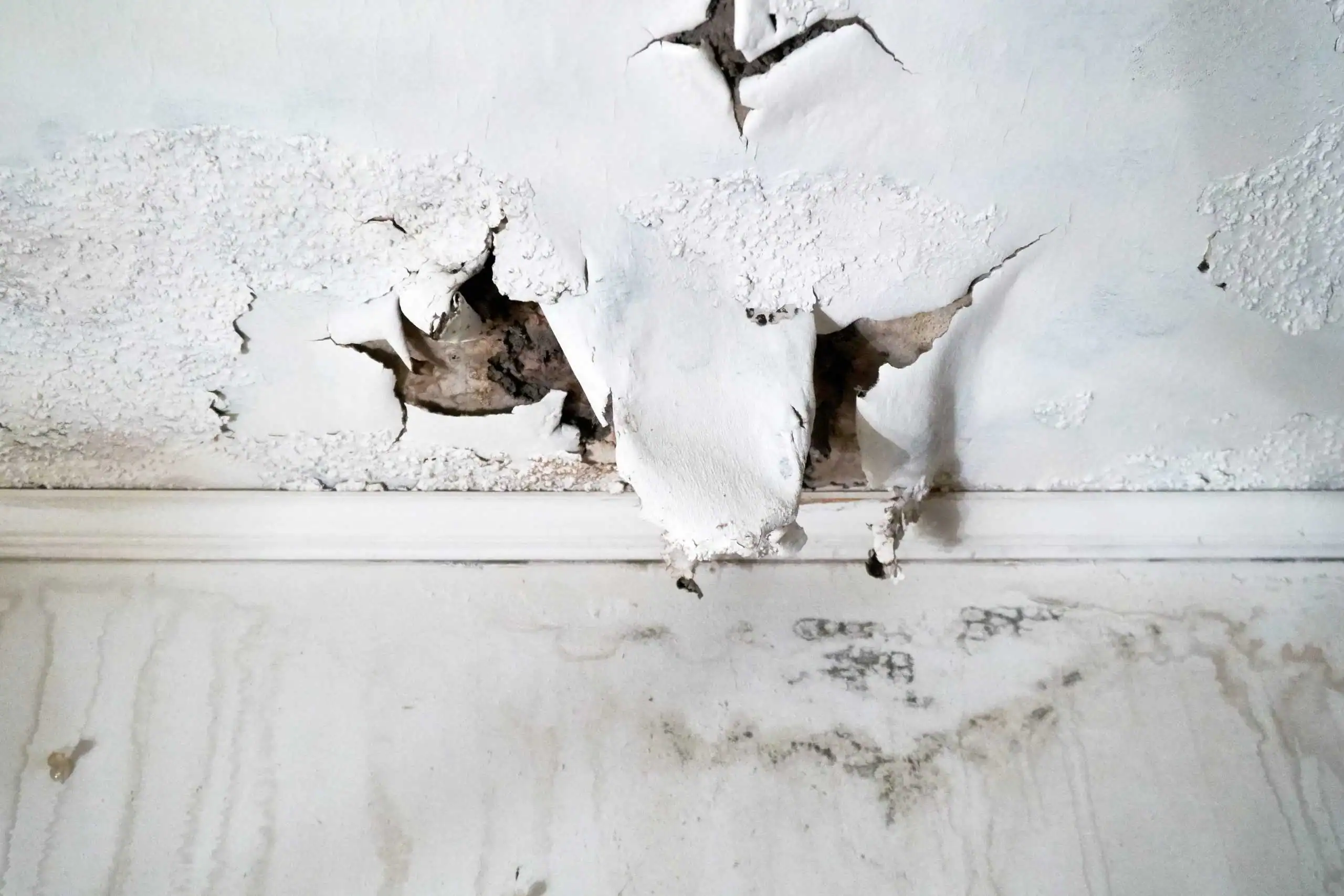
Water damage isn’t just about what’s wet — it’s about what you can’t see. Moisture that gets behind original plaster walls, into fieldstone foundations, or beneath wide-plank hardwood floors doesn’t announce itself. It just sits there, feeding mold and weakening structure until the problem is twice as expensive as it needed to be. In North Salem’s older housing stock, that hidden damage is the rule, not the exception.
When the job is done right, you get documented dryness — not just a visual once-over. You get moisture readings taken inside walls and subfloors. You get a home that’s actually dry, not one that looks dry until the mold shows up three weeks later. For a property worth $895,000 or more, that distinction matters enormously.
North Salem’s January lows regularly drop to around 17°F, and many homes here sit on large, exposed lots with detached guesthouses, barns, or outbuildings that are the first to take a hit when a pipe freezes. If you’re commuting into the city via the Croton Falls or Purdys Metro-North station when it happens, that pipe can run for hours before anyone notices. A fast, thorough response isn’t just convenient — it’s the difference between a manageable repair and a structural problem.
We’ve been doing environmental restoration work in the New York metro area for over 12 years. That’s not a franchise with rotating operators — it’s a company with a real track record, real credentials, and real accountability when the job is done.
The certifications aren’t just wall decorations. We hold NYS and NYC M/WBE Certified Contractor status, a NYS mold remediation license, and asbestos abatement credentials — the last of which matters more in North Salem than almost anywhere else in Westchester. A large portion of the homes here were built before 1980, and water damage in those homes can disturb asbestos-containing materials in pipe insulation, floor tiles, or wall systems. Most water damage contractors aren’t licensed to touch that. We handle both in a single engagement.
We’re also fully insured — liability and workers’ compensation — and have worked directly with the NYS Office of General Services. When you’re protecting a historic property near the Titicus Reservoir or a multi-structure estate in Chasmin Estates, that level of institutional credibility is exactly what you want behind the work.
The process starts the moment you call. Our 24/7 emergency response means someone is available whether it’s a Tuesday afternoon or a Saturday at 2 AM — which matters in a town where many residents are away from their properties during the workday. The first step on arrival is containment and extraction: stopping the water source if it’s still active, then removing standing water before it migrates further into the structure.
After extraction comes the part most contractors skip over too quickly — drying. Industrial air movers and dehumidifiers are placed throughout the affected area, and moisture readings are taken at multiple points inside walls, subfloors, and structural cavities. In North Salem’s older homes, this step requires more patience. Thick plaster walls, stone foundations, and original hardwood hold moisture differently than modern drywall and concrete. The equipment stays until the readings confirm the structure is genuinely dry — not just surface-dry.
If mold is found — or if the home was built before 1980 and water reached areas with potential asbestos-containing materials — those issues are addressed as part of the same job, not handed off to a separate contractor. Throughout the process, we work directly with your insurance company, handling the documentation and communication so you don’t have to manage a claims process on top of everything else. North Salem’s formal Flood Damage Prevention ordinance means some properties in flood-prone areas like Peach Lake or Croton Falls may have specific permit considerations — that’s navigated as part of the engagement, not left to you to figure out.
North Salem isn’t a typical residential market. Properties here often include multiple structures — a main residence, a guesthouse, a barn, riding facilities — and a water damage event can hit more than one of them at the same time. Our full-service model is built for exactly that kind of scope. Water extraction, structural drying, mold remediation, and asbestos abatement are all handled under one roof, by one team, without the coordination headaches of managing multiple contractors.
The insurance piece is handled directly. We bill your insurance company and manage the documentation, which means you’re not spending your evenings on the phone with an adjuster trying to explain what happened to your 1890s farmhouse. For jobs where coverage doesn’t fully apply — or where the scope exceeds what insurance will pay — we offer financing up to $200,000 at 0% APR. That’s not a teaser rate with conditions buried in the fine print. It’s a real financing option designed for restoration jobs that run into five figures, which is not uncommon on the larger properties in this part of northern Westchester.
Every job comes with a 100% satisfaction guarantee. The work isn’t considered done until the moisture readings confirm it — and until you’re confident the property is fully restored, not just visually cleaned up.
Does homeowners insurance cover water damage from a burst pipe in North Salem?
In most cases, yes — standard homeowners insurance covers sudden and accidental water damage, which includes burst pipes, appliance failures, and certain storm-related water intrusion. The key word is “sudden.” If the damage resulted from a slow leak that went unnoticed for weeks, insurers may push back on coverage. But a pipe that freezes and bursts overnight — which is a real and recurring scenario in North Salem given the town’s average January lows near 17°F — typically qualifies.
What most homeowners don’t realize is that the claims process itself can be the hardest part. Documenting the damage correctly, communicating with the adjuster, and making sure the full scope of the job is covered requires attention to detail that’s hard to manage when you’re also dealing with a flooded basement. We handle that process directly, billing your insurance company and managing the documentation so the claim reflects the actual scope of the damage — not just what’s visible on the surface.
How quickly does mold start growing after water damage occurs?
Mold can begin developing within 24 to 48 hours of water exposure — and in North Salem’s older homes, it has more places to take hold than in modern construction. Original plaster walls, stone foundations, and wood-framed structures with limited airflow create environments where moisture lingers long after the surface appears dry. A basement in a historic farmhouse near Croton Falls isn’t the same as a poured-concrete basement in a newer build — it holds moisture differently and needs to be treated accordingly.
This is why surface-level cleanup isn’t enough. If the drying process doesn’t reach inside wall cavities, subfloors, and structural framing, mold can establish itself in areas that won’t be visible until the damage is significant. Our process uses moisture meters and thermal tools to verify dryness at the structural level — not just the surface — before the job is considered complete. And because we hold a NYS mold remediation license, any mold that’s found gets addressed as part of the same engagement, not flagged and left for someone else.
What should I do immediately after discovering water damage in my home?
The first thing to do is stop the source if you can — shut off the main water supply if it’s a burst pipe, or get clear of the area if it’s a sewage backup or flood event. Don’t run fans on standing water thinking it’ll speed things up; that can push moisture further into walls and flooring. And don’t assume the damage is limited to what you can see — water travels fast and follows the path of least resistance through wall cavities, subfloors, and structural framing.
After that, call a restoration company before you call your insurance company. The reason: a professional assessment gives you accurate documentation of the damage from the start, which protects you during the claims process. We can be reached 24/7, which matters in a town like North Salem where many residents are commuting to the city during the day and may not discover a problem until they get home. The sooner the extraction and drying process starts, the more of the structure — and the irreplaceable materials in it — can be saved.
Can water damage in an older North Salem home expose asbestos?
Yes, and it’s more common than most homeowners expect. Asbestos-containing materials were standard in construction through the late 1970s — pipe insulation, floor tiles, ceiling tiles, and drywall joint compounds in homes built before 1980 frequently contain asbestos. North Salem’s housing stock skews heavily toward older construction: historic farmhouses, pre-Revolutionary estates, and mid-century properties are the norm here, not the exception.
When water damage disturbs those materials — soaking through a tiled floor, saturating pipe insulation, or compromising a plaster ceiling — it can release asbestos fibers into the air. New York State requires a separate asbestos abatement license to address this, which means most standard water damage contractors legally cannot handle it. They’ll complete the water restoration work and tell you to call someone else for the asbestos. We hold asbestos abatement credentials alongside our restoration capabilities, which means both issues are handled in a single engagement. One team, one timeline, no gap in the middle where the problem sits unaddressed.
How long does a full water damage restoration typically take?
The honest answer is that it depends on the scope of the damage and the type of structure — and in North Salem, both of those variables tend to run on the larger side. A straightforward burst-pipe event in a single room of a modern home might be resolved in three to five days. A flood event that affects multiple rooms, a finished basement, or a historic structure with thick plaster walls and a stone foundation can take one to two weeks or longer.
The drying phase alone — which is the most important part of the job — typically takes three to five days of continuous equipment operation before moisture readings confirm the structure is genuinely dry. Rushing that phase is one of the most common mistakes in this industry, and it’s how mold problems develop after a “completed” restoration. On larger North Salem properties with multiple affected structures — a main house and a guesthouse, for example, or a residence with a connected barn — the timeline extends accordingly. We provide a clear assessment and timeline after the initial inspection so you know what to expect from the start.
Is water damage restoration financing available for large properties in North Salem?
Yes. We offer financing up to $200,000 at 0% APR — which exists specifically because restoration jobs on properties like the ones in North Salem regularly exceed what most homeowners expect to pay out of pocket. A large equestrian estate, a historic multi-structure compound, or a home with extensive structural damage from a flood event near Peach Lake can generate restoration estimates well into five figures. Insurance covers a significant portion in many cases, but there’s often a gap — either because the policy has limits, because coverage is disputed, or simply because the reimbursement takes time to arrive.
The financing option bridges that gap without adding interest to the cost of an already expensive event. It also means you don’t have to make a partial restoration decision based on what’s immediately available in your account. The full scope of the job gets done correctly from the start — which, for a property worth $1 million or more, is almost always the more economical choice in the long run. Deferred or incomplete restoration on a high-value historic home creates structural and mold problems that cost significantly more to address later than they would have at the time of the original event.