When the Harlem Valley Floods, You Need Someone Who Actually Shows Up
Pawling has seen back-to-back summers of serious flooding — and if water has gotten into your home, the clock is already running. We respond 24/7 with licensed water damagerestoration services built for what this area actually throws at homeowners.
I needed a professional consultation explanation of procedure for safe removal of Asbestos in my apartment complex. Without having an account yet, I was very impressed with the caring, knowledgeable and generous advice offered by Jessica, and will look forward to doing business in the future. Thank you so much! I feel much more informed about a sometimes scary endeavor. Peace. Nancy Silva Mineola, NY.
Mia Munoz
Used this company to clean up some water flood in my house. They were fast and easy to work with.very professional, Would recommend to anyone!
Nini Valle
Great company, had a flood and they responded quickly and efficiently. Billed my insurance company directly. I highly recommend this company!
joe colapietro, jr
I had pipe freeze in my basement right before a snow storm and they made to within an hour to help start the clean up process. They we by our side throughout the entire process and even helped with the insurance company. They did such a great job with the cleanup, repair, remidiation, I contracted them to perform the repairs and finishes in the basement. They came with enough manpower and material to get the job done. Leo and Jessica were nothing but a pleasure to deal with!!
Cristian Arredondo c
I had some water damage in my home and Green Island was able to take care of my issue quickly and effectively. I am very pleased with the work they did. They responded quickly and were very professional.
Michael M
Outstanding service! From the office to the field crew everyone was friendly, helpful and responsive. I highly recommend Green Island Group.
When water gets into a home in Pawling — whether it’s from a flooded basement off Route 22, a burst pipe during a hard January freeze, or runoff from the Swamp River backing up after a summer storm — the damage rarely stays where you can see it. It moves into wall cavities, saturates subfloors, and soaks into insulation long before it shows up as a stain or a smell. By the time you notice something is wrong, the real problem is already hidden.
That’s what professional water damage restoration actually addresses. Not just the surface water you can mop up, but the moisture that’s working its way through your structure right now. Industrial extraction equipment, moisture meters, and commercial-grade drying systems reach what household fans never will. The result is a home that’s genuinely dry — not just dry on the surface.
For Pawling homeowners in older properties — especially in the Village, on Quaker Hill, or in Wingdale — there’s an added layer to consider. Water damage in a pre-1980 home can disturb asbestos-containing materials like pipe insulation, floor tiles, or plaster. Most restoration companies can’t touch that. We handle both water damage and asbestos abatement under one roof, so you’re not left coordinating between contractors while the damage sits.
12 Years Serving Pawling and the Harlem Valley, Still Doing It the Right Way
We’ve been doing environmental restoration work in New York for over 12 years. We were here before the 2022 and 2023 floods hit Pawling hard, and we’ll be here after the next one. This isn’t a franchise that appeared after a storm to collect jobs. We’re a certified, licensed, fully insured restoration company with real roots in this community.
We carry NYS and NYC M/WBE Certification — a designation awarded after formal government vetting, not self-reported. We work with the NYS Office of General Services and hold a dedicated New York State mold remediation license, which is a legal requirement in this state, not a marketing add-on. Liability insurance and workers’ compensation are both in place, which matters when our crew is working inside your home.
For Pawling and Dutchess County residents, that combination of credentials means you’re not taking a gamble on who shows up. You’re hiring a company that’s been vetted, licensed, and accountable — and one that knows the difference between a Harlem Valley flood event and a generic basement leak.
What Happens From Your First Call to a Fully Dry Home
When you call, someone picks up — any hour, any day. Our 24/7 emergency response covers Pawling, Wingdale, and the surrounding Harlem Valley area. The first priority is stopping the damage from spreading. That means getting extraction equipment on-site fast, because every hour of standing water increases the risk of mold taking hold inside your walls.
Once the visible water is out, the real assessment begins. Moisture meters map where water has traveled inside your structure — under floors, behind drywall, inside insulation. In Pawling’s older homes, especially those built before 1980, this step also includes checking whether water-affected materials contain asbestos before any demolition or removal begins. New York State requires this assessment, and skipping it isn’t just a risk to your health — it’s a code violation.
From there, commercial drying equipment runs until the structure reads dry throughout — not just on the surface. If mold is found, licensed remediation follows under the same contract. When structural repairs are needed, the Town of Pawling Building Department may require permits before work begins, and we navigate that process as part of the job. Throughout all of it, we handle communication with your insurance company directly, so you’re not stuck in the middle translating between your adjuster and your contractor.
Water Damage Restoration Services in Dutchess County
Full Restoration, Not Just a Dry-Out and a Wave Goodbye
Water damage restoration with us covers the full scope — emergency water extraction, structural drying, moisture mapping, mold assessment, licensed mold remediation if needed, and asbestos abatement for homes where disturbed materials require it. For Pawling homeowners, that last piece is more relevant than most people realize. The Village, Quaker Hill, and Wingdale all have significant pre-1980 housing stock where asbestos-containing materials are a realistic finding, not a remote possibility.
Beyond the physical work, we also handle the financial side in ways most restoration companies don’t. Insurance billing is managed directly, meaning we work with your carrier so you don’t have to. For larger jobs — and a serious flooding event in Pawling can easily run $10,000 to $16,000 or more — we offer financing up to $200,000 at 0% APR. That option doesn’t exist with SERVPRO or the other companies showing up in local search results. It’s a meaningful difference when you’re staring at a restoration bill after an already stressful event.
Every job also comes with a 100% satisfaction guarantee. The work isn’t considered complete until you say it is. In a town where word travels fast, that’s not just a policy — it’s how we intend to be known in this community.
How quickly can mold grow after flooding in a Pawling home?
Mold can begin growing within 24 to 48 hours of a water intrusion event — and in Pawling’s warm, humid summers, that window closes fast. When the Swamp River backs up or a summer storm drives water into a basement in July, conditions inside wall cavities and under subfloors are exactly what mold needs: moisture, warmth, and organic material like wood framing or drywall paper.
The critical thing to understand is that mold doesn’t wait for you to finish cleaning up the visible water. It starts in the places you can’t see — inside walls, under floors, in insulation — while the surface still looks manageable. That’s why professional extraction and drying equipment matters so much in the immediate aftermath. Getting the moisture out of the structure quickly is the only reliable way to cut off mold before it establishes itself. If you’re dealing with flooding in Pawling right now, or even if you had water in your home weeks ago and are noticing a musty smell, don’t wait to have it assessed.
Does homeowners insurance cover water damage repair in Pawling, NY?
It depends on the source of the water, and this distinction matters a lot for Pawling homeowners. Standard homeowners insurance typically covers sudden and accidental water damage — a burst pipe, an appliance failure, or a roof leak from a storm. What it generally does not cover is flooding from an external source, like the Swamp River overflowing or surface water entering through your foundation during a heavy rain event. For that type of damage, you’d need a separate flood insurance policy through the National Flood Insurance Program or a private carrier.
If you experienced flooding during the July 2023 storms or the 2022 events in Pawling and haven’t filed a claim yet, it’s worth reviewing your policy carefully before assuming you’re not covered. We work directly with insurance companies on your behalf, which means we handle the documentation, the adjuster communication, and the billing — so you’re not left translating between your contractor and your carrier during an already stressful time. That direct billing relationship is something most local restoration companies simply don’t offer.
What should I do immediately after finding water damage in my home?
The first thing is to stop the source if you can — shut off the water supply if it’s a burst pipe, or stop entry points if it’s storm-related and safe to do so. After that, the priority is getting professional extraction started as quickly as possible. Every hour of standing water increases structural damage and moves you closer to the mold growth window.
What you should avoid is relying on household fans and towels to handle the job. They address surface water, but they do nothing for moisture that has already wicked into walls, subfloors, and insulation — which happens faster than most people expect. In Pawling’s older homes, there’s an added reason to be cautious about DIY cleanup: disturbing water-damaged materials like floor tiles, plaster, or pipe insulation in a pre-1980 property can expose asbestos if those materials contain it. New York State takes this seriously, and so should you. Call a licensed restoration company before you start pulling up flooring or cutting into walls.
How much does water damage repair typically cost in Pawling, NY?
The honest answer is that it varies significantly depending on how much water entered the home, how long it sat, and what materials were affected. For a contained event — say, a washing machine overflow or a minor pipe leak caught quickly — costs can run in the $1,500 to $4,000 range. For a more serious flooding event, like the kind Pawling experienced in the summers of 2022 and 2023, where water entered basements and sat for an extended period, restoration costs can climb to $10,000, $16,000, or beyond — especially if mold remediation or structural repairs are involved.
For Pawling homeowners in older properties, there’s also the potential cost of asbestos testing and abatement if water-damaged materials require it. That’s a real factor in the Village and Quaker Hill, where a lot of the housing stock predates 1980. We offer financing up to $200,000 at 0% APR, which is something no other restoration company currently serving Pawling provides. If the cost of a major restoration job is a concern — and it reasonably would be — that financing option can make the difference between doing the job right and cutting corners you’ll regret later.
Can water damage in my basement lead to mold inside my walls or floors?
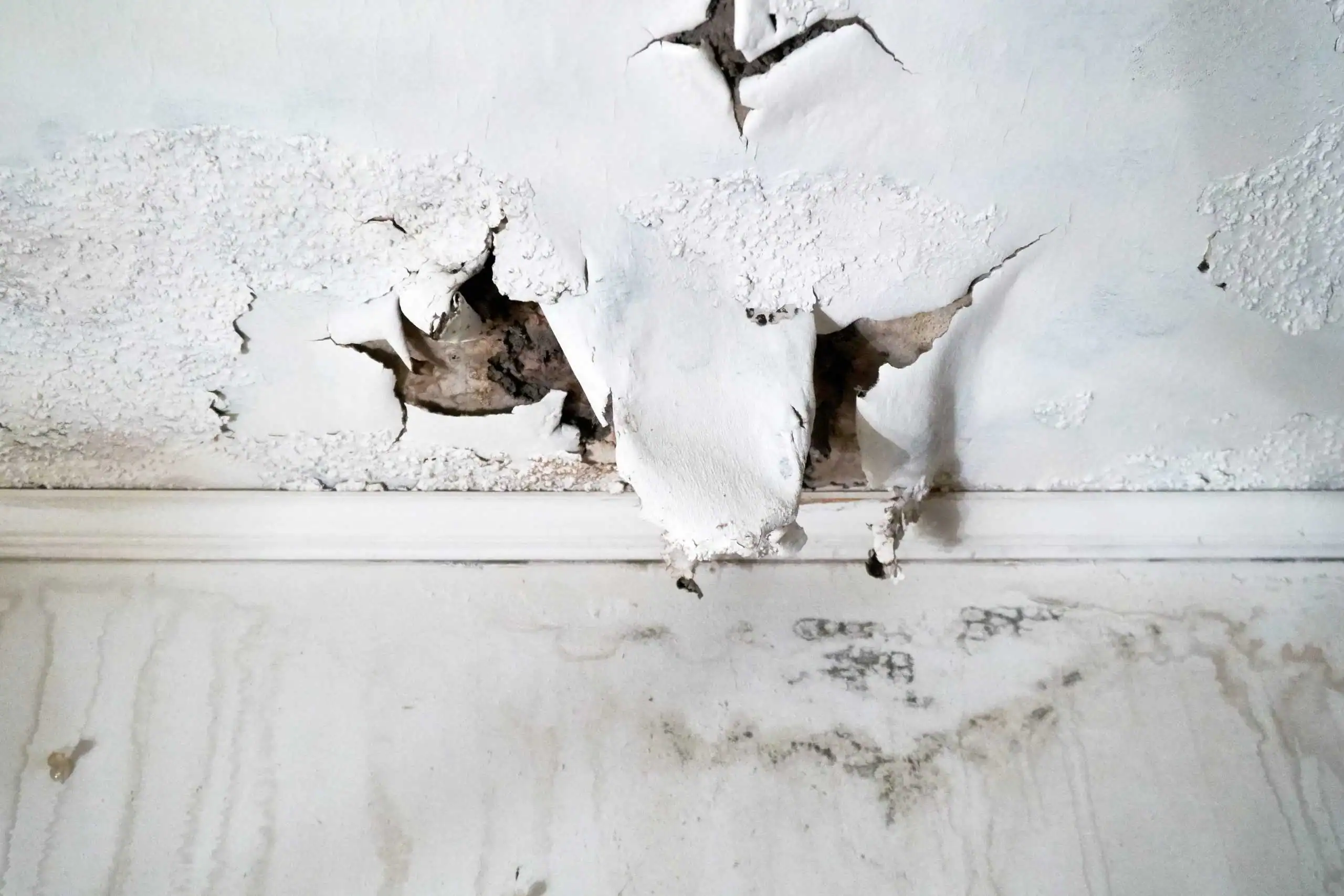
Yes, and this is one of the most common misunderstandings homeowners have after a flooding event. Basement water doesn’t stay in the basement. It wicks upward into wall framing, travels through subfloor materials, and saturates insulation — often without leaving any visible sign at the surface. By the time you see discoloration, peeling paint, or warped flooring, the mold has usually been growing inside the structure for days or weeks.
This is especially relevant for Pawling homeowners who dealt with the 2022 or 2023 flooding and handled cleanup on their own, or who had a contractor do a surface dry-out without using moisture meters to check inside the structure. If your basement flooded and you’re now noticing a persistent musty smell — even months later — that’s a sign worth taking seriously. A licensed mold assessment can tell you definitively whether mold is present and where. New York State requires a dedicated mold remediation license for contractors who perform this work, which means not every company you find online is legally qualified to do it. We hold that license and can assess and remediate in the same process.
Does Green Island Group serve Wingdale and other areas outside the Village of Pawling?
Yes. Our service area covers the full Town of Pawling — including the Village, Wingdale, Quaker Hill, Tompkins Corners, and the surrounding Harlem Valley area. Wingdale, with its Route 22 corridor and older residential stock, has the same flood exposure and pre-1980 housing concerns as the Village, and it’s an area we’re familiar with and equipped to serve.
The 24/7 emergency response commitment applies across all of these areas, not just the village center. Pawling sits about 1.5 hours from New York City, and residents in Wingdale and the more rural parts of town are rightfully skeptical about whether a metro-area contractor will actually make the drive at 2 a.m. after a storm. We do. The same licensed crew, the same equipment, and the same insurance billing process apply whether the call comes from a house on Quaker Hill Road or a property along Route 22 in Wingdale. If you’re outside the Village and wondering whether you’re in the service area, the answer is yes.