When Smoke Travels Through Your Building's Walls, Every Hour Counts
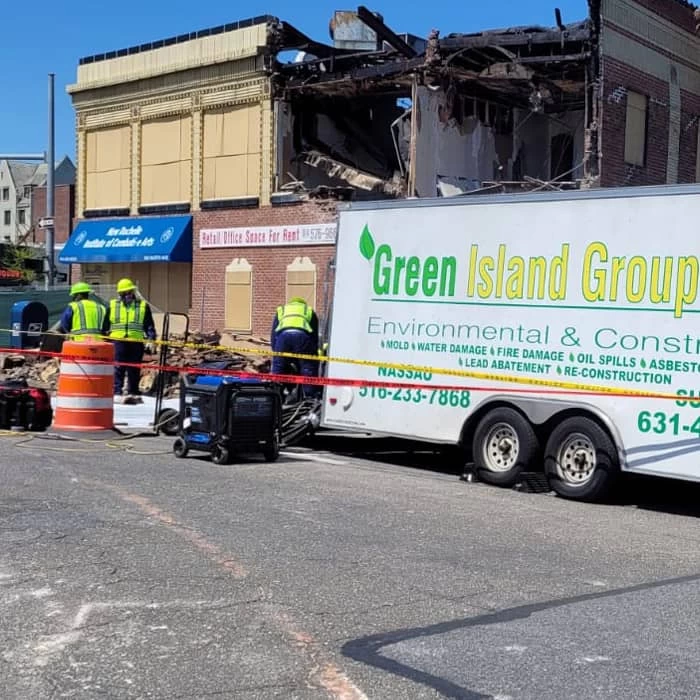
In Great Neck Plaza’s dense apartment buildings and pre-war co-ops, fire damage doesn’t stay in one unit. We arrive within one hour, handle everything from smoke removal to full reconstruction, and bill your insurance directly.
I needed a professional consultation explanation of procedure for safe removal of Asbestos in my apartment complex. Without having an account yet, I was very impressed with the caring, knowledgeable and generous advice offered by Jessica, and will look forward to doing business in the future. Thank you so much! I feel much more informed about a sometimes scary endeavor. Peace. Nancy Silva Mineola, NY.
Mia Munoz
Used this company to clean up some water flood in my house. They were fast and easy to work with.very professional, Would recommend to anyone!
Nini Valle
Great company, had a flood and they responded quickly and efficiently. Billed my insurance company directly. I highly recommend this company!
joe colapietro, jr
I had pipe freeze in my basement right before a snow storm and they made to within an hour to help start the clean up process. They we by our side throughout the entire process and even helped with the insurance company. They did such a great job with the cleanup, repair, remidiation, I contracted them to perform the repairs and finishes in the basement. They came with enough manpower and material to get the job done. Leo and Jessica were nothing but a pleasure to deal with!!
Cristian Arredondo c
I had some water damage in my home and Green Island was able to take care of my issue quickly and effectively. I am very pleased with the work they did. They responded quickly and were very professional.
Michael M
Outstanding service! From the office to the field crew everyone was friendly, helpful and responsive. I highly recommend Green Island Group.
Your Building Is Back. Your Insurance Claim Is Handled.
A fire in one of Great Neck Plaza’s apartment buildings doesn’t just damage the unit where it started. Smoke moves through shared HVAC systems, stairwells, and wall cavities — and in a building with 40 or 70 units, that means neighbors are affected, building management is involved, and the insurance picture gets complicated fast. What you need isn’t just a cleanup crew. You need someone who can document every layer of damage, communicate with your building board, and make sure your claim reflects what actually happened.
Great Neck Plaza’s housing stock adds another layer. Most of the buildings here were constructed between the 1930s and 1960s, which means asbestos-containing materials and lead paint are common. Fire disturbs both. Legally, that can’t be ignored — and it can’t be handled by a contractor who isn’t licensed to address it. We hold the NYS DOL Asbestos certification and USEPA Lead certification required to do this work legally in New York State, so nothing stops mid-job because something unexpected turned up in the walls.
When the work is done, you’re not looking at bare studs and a list of contractors to call. You’re looking at a restored, rebuilt space — handled start to finish by one licensed team that was there from the first hour.
Licensed Fire Restoration Company, Great Neck Plaza
5,000 Jobs In. Still Showing Up Like It's the First One.
We’re a locally owned restoration company based on Long Island, serving Great Neck Plaza and surrounding Nassau County communities alongside Suffolk County, Queens, and New York City. Over 5,000 completed restoration projects in New York State. Not a franchise. Not a national call center. A real local company with real owners who know what Great Neck Plaza’s housing stock actually looks like.
We hold a Nassau County General Contractor license — the same license Great Neck Plaza’s own Building Department requires for reconstruction work in the village. We’re IICRC-certified for both fire and water damage restoration, and we carry NYS DOL Asbestos, NYS DOL Mold, and USEPA Lead certifications. That combination matters in a community where the median building was constructed in 1960 and hazardous materials are a routine discovery during fire restoration work.
We also bill insurance directly and have done it hundreds of times across Nassau County. If your building board needs documentation, your adjuster needs a scope, or your insurer is pushing back — that’s not your problem to navigate alone.
From the First Hour to Move-Back-In Day — Here's What Happens
The call comes in and we’re on-site within one hour. That first visit isn’t a sales pitch — it’s an assessment. We secure the property, identify what’s structurally compromised, and start documenting damage in the format your insurance company needs. In Great Neck Plaza, that documentation often needs to account for shared building systems, multiple affected units, and the involvement of the Nassau County Fire Marshal’s Office, which responds to fires in the village and may have an active investigation underway before restoration work can begin. We know how to work within that process, not around it.
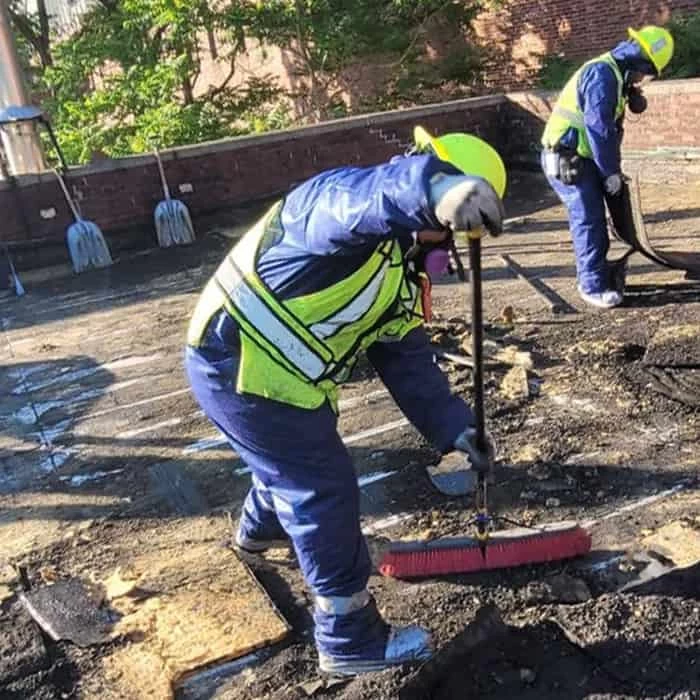
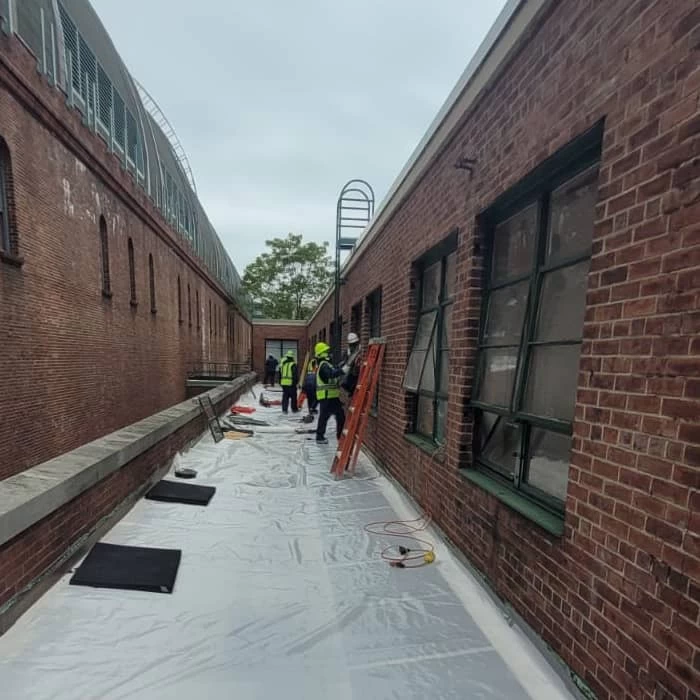
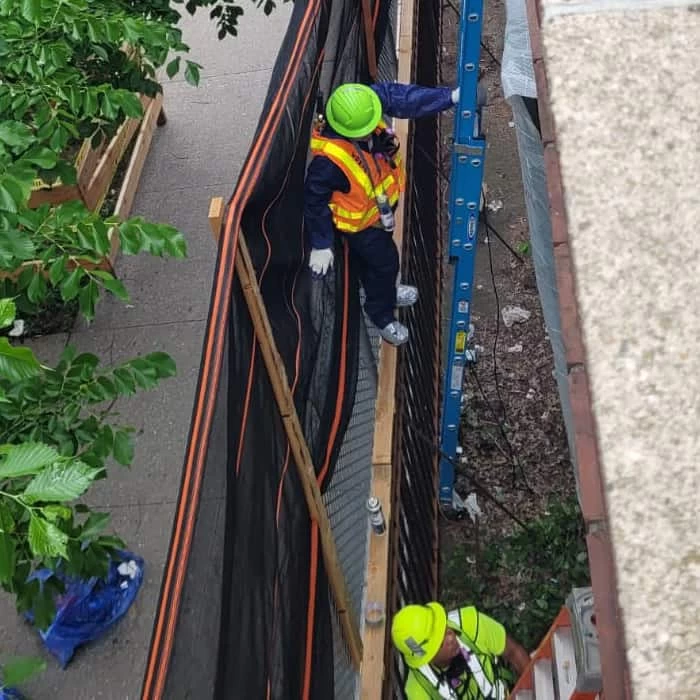
Once the property is cleared for work, the remediation phase begins. That means smoke and soot removal, water extraction from firefighting suppression, odor elimination using professional-grade air scrubbers and thermal fogging, and structural drying to prevent the mold growth that starts within 24 to 48 hours of water exposure. If asbestos or lead paint is disturbed — common in Great Neck Plaza’s older buildings — we handle that in-house under the appropriate state licenses, without stopping work to bring in a separate subcontractor.
From there, demolition of unsalvageable materials and full reconstruction follows. We pull permits through the village’s Building Department, schedule work within Great Neck Plaza’s permitted hours (Monday through Friday, 8 a.m. to 6 p.m.; Saturday, 9 a.m. to 5 p.m.), and the job doesn’t close until the space is fully restored and code-compliant.
Fire and Smoke Restoration Services, Great Neck Plaza NY
Everything Fire Damage Leaves Behind — Handled Under One License
Fire damage restoration in Great Neck Plaza covers more ground than most people expect when they first make the call. The visible burn damage is only part of it. Smoke penetrates porous surfaces — drywall, insulation, wood framing, upholstery — at a molecular level that surface cleaning doesn’t reach. Soot from a grease fire behaves differently than soot from an electrical fire or a structure fire, and treating them the same way produces incomplete results. Our IICRC-certified technicians know the difference and approach each job accordingly.
For Great Neck Plaza’s commercial properties along Middle Neck Road and Grace Avenue — restaurants, retail storefronts, offices above the shops — commercial-scale fire restoration requires equipment and licensing that residential-focused companies typically don’t carry. We hold NAICS classifications for both residential and commercial restoration and have the capacity to handle a restaurant kitchen fire or a multi-floor office smoke event at the same standard as a residential job.
Oil heat is still common in the village’s older apartment buildings, and oil burner puff-backs — where a furnace backfires and coats an interior in soot — are a frequent call that doesn’t involve a structural fire but demands the same professional remediation. If you’re dealing with soot throughout your unit from a puff-back, that’s a job we handle regularly across Nassau County, and it’s fully covered under most homeowner and renter policies.
What should I do immediately after a fire in my Great Neck Plaza apartment?
The first thing to do is not re-enter the unit until the Great Neck Vigilant Fire Department or the responding fire company has cleared it as structurally safe. Once it’s cleared, call a restoration company before you call anyone else — including your insurance company. The reason is simple: the documentation a professional produces in the first hours after a fire is the foundation of your entire insurance claim. If you start cleaning up on your own or let building management handle it informally, you risk losing documentation of damage that your policy would otherwise cover.
In a multi-family building like those throughout Great Neck Plaza, you also need to act quickly because smoke damage to shared systems — hallways, HVAC ducts, stairwells — can affect neighboring units and create liability exposure if it’s not addressed promptly. We can be on-site within one hour, document everything in insurance-standard format, and begin emergency stabilization the same day. That timeline matters in a building where dozens of other residents may be affected by what happens in your unit.
How does fire damage restoration work in a co-op or condo building?
It’s more layered than a single-family home, and that’s worth understanding before the work starts. In a co-op or condo, you typically have your own HO-6 policy covering the interior of your unit, and the building has a master policy covering the structure and shared systems. If the fire started in your unit, your policy may be primary. If it started elsewhere and smoke damaged your unit, the building’s policy may be involved. In some cases, both policies are triggered simultaneously.
We bill insurance directly and have worked through exactly this kind of multi-policy situation many times across Nassau County’s co-op and condo buildings. We document the scope of damage in a way that satisfies both individual unit policies and building master policies, and we communicate directly with property management and building boards throughout the process. You don’t have to be the translator between your contractor and your building — that’s handled for you.
Does fire damage in older Great Neck Plaza buildings require asbestos testing?
In most cases, yes — and in New York State, it’s not optional. Any building constructed before 1980 is presumed to contain asbestos-containing materials until tested otherwise. That includes floor tiles, pipe insulation, ceiling materials, and joint compound, all of which were standard in the pre-war and mid-century apartment buildings that make up the majority of Great Neck Plaza’s housing stock. When a fire disturbs those materials, New York State law requires licensed asbestos abatement before demolition or reconstruction can legally proceed.
This is where a lot of restoration jobs stall. A contractor without NYS DOL Asbestos certification has to stop work and bring in a licensed subcontractor, which adds time, cost, and coordination complexity to an already stressful situation. We hold the NYS DOL Asbestos license and handle abatement in-house, so the job keeps moving. If testing reveals asbestos-containing materials — which is a realistic expectation in a building built in the 1940s or 1950s — the remediation is handled by the same team already on-site.
How long does fire damage restoration take in Great Neck Plaza?
The honest answer is that it depends on scope, and scope in Great Neck Plaza tends to be broader than in a typical single-family home. A contained kitchen fire with smoke damage limited to one unit might take one to two weeks from remediation through reconstruction. A fire that affected shared building systems, required asbestos abatement, or caused structural damage to multiple units can take four to eight weeks or longer.
A few local factors affect the timeline specifically in Great Neck Plaza. The village’s Building Department requires permits for reconstruction work, and permits take time to process. Construction work is also restricted to Monday through Friday, 8 a.m. to 6 p.m., and Saturday, 9 a.m. to 5 p.m. — no Sunday work is permitted in the village. If the Nassau County Fire Marshal’s Office has an active investigation on the property, restoration work can’t begin in the affected area until that investigation is complete. We’re familiar with all of these local requirements and build them into the project timeline from day one, so you’re not caught off guard by delays that were predictable from the start.
Will my homeowner's insurance cover fire and smoke damage restoration costs?
In most cases, yes — fire and smoke damage is one of the most commonly covered perils under standard homeowner and renter policies. What varies is how the claim is documented, how the scope is assessed, and whether the insurer’s initial estimate reflects the full cost of restoration. That gap between the insurer’s first offer and the actual cost of restoration is where most policyholders lose money, and it’s usually not because the policy doesn’t cover the damage — it’s because the documentation wasn’t thorough enough to support the full claim.
We document every step of the restoration process in insurance-standard format, bill insurance directly, and have guided Nassau County property owners through claims that involved disputed scopes, multiple policies, and adjuster pushback. The average fire damage restoration job runs between $12,000 and $27,000 depending on scope, and structural repairs can run $15,000 to $25,000 per affected room. Making sure your claim is documented to support those numbers — not just the first estimate an adjuster walks through — is a real and significant financial difference.
What is an oil burner puff-back, and does it need professional restoration in Great Neck Plaza?
A puff-back happens when an oil-fired furnace or boiler misfires and backfires through the system, releasing a cloud of unburned oil and soot that coats walls, ceilings, furniture, and HVAC components throughout the unit or building. There’s no open flame, no structural fire — but the soot contamination can be just as extensive as a smoke event from an actual fire, and it carries the same health concerns.
This is a common call in Great Neck Plaza and across Nassau County because oil heat is still standard in many of the village’s pre-war and mid-century apartment buildings. Puff-backs tend to spike in October and November when heating systems are fired up for the first time after summer, and in buildings where furnace maintenance has been deferred. The oily soot from a puff-back is particularly difficult to remove because it bonds to surfaces differently than dry smoke soot — it requires professional-grade cleaning agents, HEPA air scrubbing, and HVAC decontamination to fully clear. Most homeowner and renter policies cover puff-back damage, and we handle these jobs regularly throughout Nassau County, including direct insurance billing from the first call.