Your 1950s Cape Cod Deserves More Than a Surface Fix
Most New Hyde Park homes were built before 1970 — and fire damage in older construction goes deeper than it looks. We respond within the hour, handle everything from smoke to full reconstruction, and bill your insurance directly.
I needed a professional consultation explanation of procedure for safe removal of Asbestos in my apartment complex. Without having an account yet, I was very impressed with the caring, knowledgeable and generous advice offered by Jessica, and will look forward to doing business in the future. Thank you so much! I feel much more informed about a sometimes scary endeavor. Peace. Nancy Silva Mineola, NY.
Mia Munoz
Used this company to clean up some water flood in my house. They were fast and easy to work with.very professional, Would recommend to anyone!
Nini Valle
Great company, had a flood and they responded quickly and efficiently. Billed my insurance company directly. I highly recommend this company!
joe colapietro, jr
I had pipe freeze in my basement right before a snow storm and they made to within an hour to help start the clean up process. They we by our side throughout the entire process and even helped with the insurance company. They did such a great job with the cleanup, repair, remidiation, I contracted them to perform the repairs and finishes in the basement. They came with enough manpower and material to get the job done. Leo and Jessica were nothing but a pleasure to deal with!!
Cristian Arredondo c
I had some water damage in my home and Green Island was able to take care of my issue quickly and effectively. I am very pleased with the work they did. They responded quickly and were very professional.
Michael M
Outstanding service! From the office to the field crew everyone was friendly, helpful and responsive. I highly recommend Green Island Group.
A fire doesn’t just burn what it touches. In a compact, post-war home like most of the ones lining the residential streets off Hillside Avenue or near the Jericho Turnpike corridor in New Hyde Park, smoke moves fast. It gets into your HVAC system, settles into wall cavities, and coats surfaces two or three rooms away from where the fire actually started. If the cleanup stops at the visible damage, the odor comes back, air quality stays compromised, and the problem follows you.
The water used to put the fire out creates its own timeline. Nassau County’s humid summers mean that saturated framing and drywall in an older New Hyde Park home can start growing mold within 24 to 48 hours. We handle fire and water damage together — not sequentially — which is the difference between a clean recovery and a second remediation job six weeks later.
Then there’s what’s inside the walls. Homes built in the 1950s and 1960s routinely contain asbestos in floor tiles, pipe insulation, and joint compound. A fire disturbs those materials. Working with a contractor who holds a NYS DOL Asbestos License isn’t optional here — it’s a legal requirement, and it protects your family long after the visible damage is gone.
We’re a Long Island-based restoration company that holds a Nassau County General Contractor License, NYS DOL Asbestos and Mold Licenses, USEPA Lead/RRP Certification, and IICRC Certification for Fire and Water Damage Restoration. That combination matters in a town like New Hyde Park, where the housing stock is old, the lots are tight, and a fire cleanup that misses asbestos or skips proper drying creates bigger problems down the road.
With over 5,000 completed restoration projects across New York State, our team has worked through every scenario this area produces — basement fires in Cape Cods, oil burner puff-backs in split-levels, kitchen fires in brick colonials. We know what Nassau County insurance adjusters expect, we know what pre-1980 construction typically contains, and we know how to move fast when the clock is working against you.
You get one point of contact from the emergency call through the final walkthrough. No handoffs. No second contractor for reconstruction. Just one accountable team that sees the job through.
From the First Call to the Final Walkthrough — Here's the Reality
When you call, someone answers. We operate 24 hours a day, seven days a week, and aim to have a crew on-site within one hour. That response time matters in New Hyde Park, where homes sit close together and damage that spreads to an adjacent property becomes a significantly more complicated situation for everyone involved.
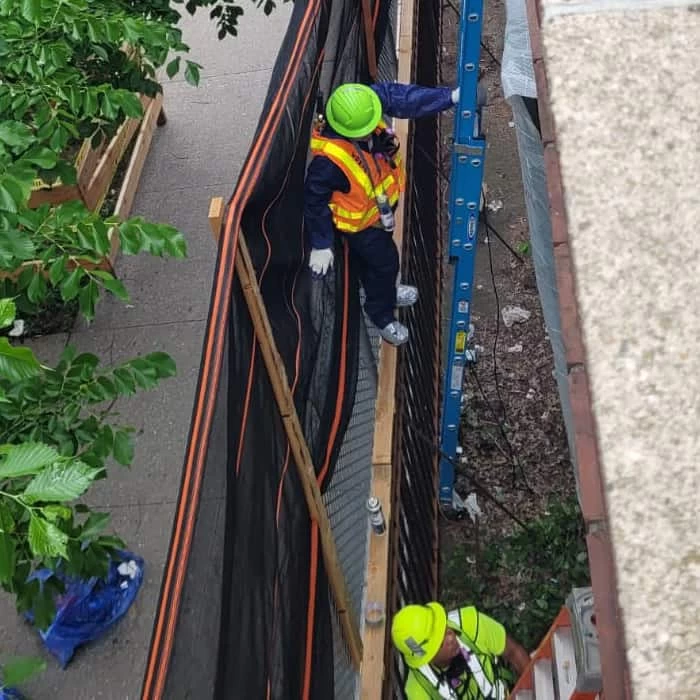
Once on-site, we do a full assessment — not just the burn zone, but the areas smoke traveled, the structural framing that absorbed water, and any materials that may require hazardous handling under New York State law. If asbestos-containing materials were disturbed, that gets addressed before any other work proceeds. This isn’t a slowdown — it’s what keeps the job legal and keeps your family safe.
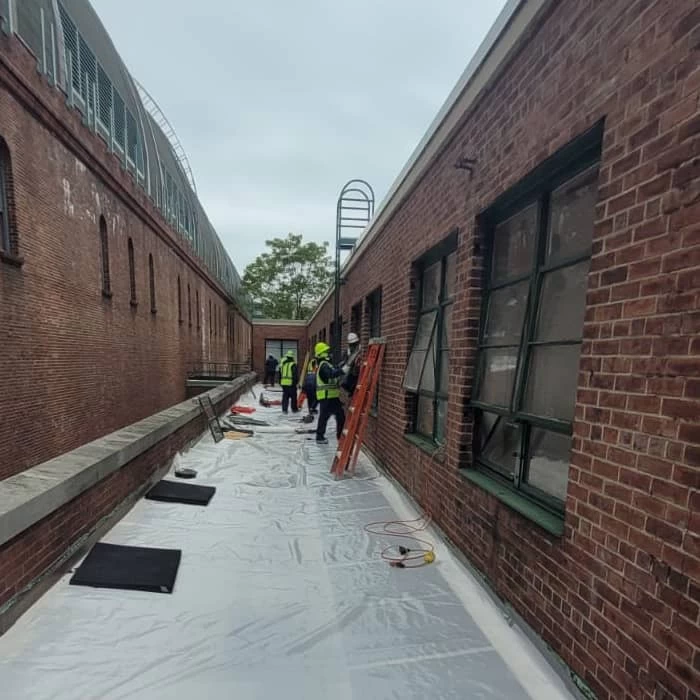
From there, the process moves through water extraction and drying, smoke and soot removal, odor treatment using air scrubbing and thermal fogging, NADCA-certified HVAC cleaning, and structural repairs or full reconstruction as needed. Because we hold a Nassau County GC license, we pull permits directly from the Town of Hempstead or Town of North Hempstead — whichever applies to your property — and handle the code compliance side so you don’t have to figure out which jurisdiction you’re even in. New Hyde Park’s split across two towns and three fire districts is one of those local details that catches homeowners off guard. It doesn’t catch us off guard.
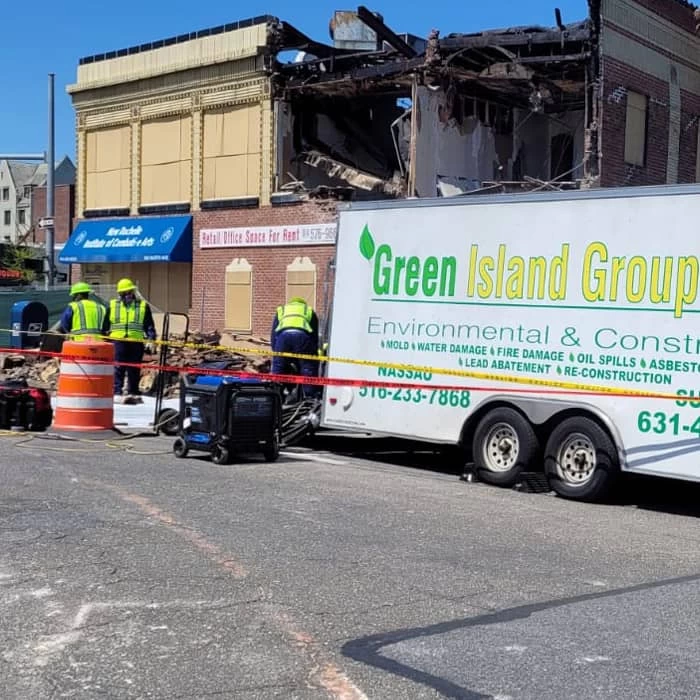
Fire damage restoration in New Hyde Park isn’t a single service — it’s a sequence of connected work that has to be done in the right order by people with the right credentials. We cover the full scope: emergency board-up and stabilization, water extraction, structural drying, asbestos and lead paint assessment and abatement where required, smoke and soot removal from all affected surfaces, odor elimination, HVAC cleaning, and complete reconstruction back to pre-loss condition.
For New Hyde Park homeowners, the asbestos and lead components aren’t edge cases — they’re standard. The neighborhood’s post-war Cape Cods, colonials, and split-levels were built with materials that were common at the time and hazardous by today’s standards. Our NYS DOL licenses cover both, and the USEPA Lead/RRP certification ensures that any disturbance of lead-painted surfaces during reconstruction is handled in full compliance with federal law.
Insurance coordination is built into our process from day one. We document every phase with the level of detail Nassau County adjusters need to process claims accurately, and we bill your insurance company directly. If you’ve had an oil burner puff-back — which happens regularly in this area at the start of heating season — that’s handled under the same process: full soot assessment, surface cleaning, and air quality restoration throughout the home, not just in the rooms with visible staining.
Is it safe to stay in my New Hyde Park home after a fire?
In most cases, no — at least not until a professional assessment has been completed. Smoke and soot contain carbon monoxide, formaldehyde, and fine particulate matter that remain in the air and on surfaces long after the fire is out. In a New Hyde Park home built before 1980, there’s an additional concern: fire and firefighting water can disturb asbestos-containing materials like floor tiles, pipe insulation, or ceiling texture, releasing fibers that are invisible and dangerous to breathe.
Even if the damage looks contained to one room, smoke travels through HVAC ductwork and wall cavities throughout the house. The air quality in rooms that look untouched can still be compromised. A professional assessment will tell you exactly what you’re dealing with before you or your family spend another night there. We can be on-site within the hour to evaluate the property and give you a clear picture of what’s safe and what needs to be addressed first.
How much does fire damage restoration typically cost in Nassau County?
The range is wide because the scope varies so much. Minor smoke damage from a contained kitchen fire might run $3,000 to $8,000. A fire that causes structural damage and requires full reconstruction in a New Hyde Park home — where median home values sit around $800,000 to $900,000 — can easily reach $75,000 to $150,000 or more depending on the extent of the loss.
What drives cost in this specific area is the age of the housing stock. Pre-1980 homes almost always require asbestos testing and, if materials were disturbed, licensed abatement before restoration work can proceed. That adds cost, but it’s not optional under New York State law. Lead paint compliance under the federal RRP rule adds another layer for homes built before 1978. These aren’t surprises if you’re working with a contractor who knows Nassau County’s housing inventory — they’re standard line items that get documented and submitted to your insurance company as part of the claim.
Does homeowners insurance cover fire damage restoration in New Hyde Park?
Standard homeowners insurance policies generally cover fire damage, including smoke damage, water damage from firefighting efforts, and the cost of temporary housing if your home is uninhabitable. What they cover specifically — and how much — depends on your policy limits, your deductible, and how thoroughly the damage is documented at the time of the claim.
This is where documentation matters enormously. Nassau County adjusters process a high volume of claims, and the ones that get fully paid out are the ones backed by detailed, professional-grade assessments with itemized scopes of work. We document every phase of the restoration with insurance-standard reporting and bill your carrier directly, which removes a significant burden from you during an already stressful situation. If there’s a dispute about what’s covered, having a contractor who understands the claims process — and has worked with Nassau County insurers on hundreds of Long Island jobs — is a meaningful advantage.
What is an oil burner puff-back, and does it require professional cleanup?
A puff-back happens when an oil burner misfires and sends a blast of unburned fuel and soot back through the heating system and into the living space. It’s one of the most common fire-related service calls on Long Island, particularly in October and November when heating systems are fired up for the first time after sitting dormant all summer. In a New Hyde Park home with oil heat — which describes a large portion of the neighborhood’s post-war housing stock — a puff-back can coat every room in fine, oily black soot without any actual flame.
Yes, it requires professional cleanup. Puff-back soot is different from regular dust — it’s oily, it smears when you try to wipe it, and it embeds into porous surfaces like drywall, fabric, and wood trim. Household cleaners spread it further. Professional remediation uses HEPA vacuuming, chemical dry sponges, and specialized cleaning agents designed for this specific type of contamination, followed by air scrubbing to address the particles that went airborne. If the soot reached your HVAC system — and it usually does — duct cleaning is part of the job too.
How long does fire damage restoration take from start to finish?
For a contained fire with smoke and water damage but no major structural loss, the restoration process typically takes two to four weeks. A fire that requires structural repairs or full room reconstruction in a New Hyde Park home can take six to twelve weeks, sometimes longer depending on the scope and the permit timeline.
In New Hyde Park specifically, the permitting piece adds a layer of complexity that homeowners don’t always anticipate. The village sits across two towns — Hempstead and North Hempstead — and depending on where your property falls, permits for structural reconstruction go through different municipal offices with different processing timelines. We pull the permits directly as the licensed general contractor of record, so you’re not navigating that on your own. We’ll give you a realistic timeline at the start of the job based on what the assessment reveals — not an optimistic number designed to get you to sign, but an honest projection based on what the work actually requires.
Can fire damage cause mold problems in my home later on?
It can, and it’s more common than most homeowners expect. The water used to extinguish a fire soaks into wall framing, subfloor, insulation, and other building materials that don’t dry on their own — especially in a closed-up, post-fire home. In Nassau County’s climate, with humid summers and damp shoulder seasons, mold can begin developing in those saturated materials within 24 to 48 hours of the fire being extinguished.
The risk is higher in older New Hyde Park homes because the construction methods of the 1950s and 1960s used materials that absorb and hold moisture differently than modern building products. Plaster walls, original wood framing, and older insulation types can stay wet long after the surface appears dry. We address this by deploying industrial drying equipment — dehumidifiers, air movers, and moisture meters — simultaneously with the fire and smoke remediation, not as a separate job after the fact. Treating fire and water damage as one integrated process is what prevents a $10,000 restoration from turning into a $30,000 mold remediation six weeks later.