North Wantagh Homes Built in the '50s Hide More Damage Than You Think
Smoke travels farther than fire — and in a 1950s North Wantagh home, it has a lot of places to go. We respond within one hour, handle your insurance, and take it all the way through rebuild.
I needed a professional consultation explanation of procedure for safe removal of Asbestos in my apartment complex. Without having an account yet, I was very impressed with the caring, knowledgeable and generous advice offered by Jessica, and will look forward to doing business in the future. Thank you so much! I feel much more informed about a sometimes scary endeavor. Peace. Nancy Silva Mineola, NY.
Mia Munoz
Used this company to clean up some water flood in my house. They were fast and easy to work with.very professional, Would recommend to anyone!
Nini Valle
Great company, had a flood and they responded quickly and efficiently. Billed my insurance company directly. I highly recommend this company!
joe colapietro, jr
I had pipe freeze in my basement right before a snow storm and they made to within an hour to help start the clean up process. They we by our side throughout the entire process and even helped with the insurance company. They did such a great job with the cleanup, repair, remidiation, I contracted them to perform the repairs and finishes in the basement. They came with enough manpower and material to get the job done. Leo and Jessica were nothing but a pleasure to deal with!!
Cristian Arredondo c
I had some water damage in my home and Green Island was able to take care of my issue quickly and effectively. I am very pleased with the work they did. They responded quickly and were very professional.
Michael M
Outstanding service! From the office to the field crew everyone was friendly, helpful and responsive. I highly recommend Green Island Group.
The fire is out, but the damage isn’t done. Acidic soot starts bonding permanently to walls and ceilings within hours. Firefighting water — left sitting in North Wantagh’s humid South Shore climate — can trigger mold growth inside 24 hours. Every hour that passes without a qualified team on-site is an hour of damage you can’t undo.
Most North Wantagh homes were built in the 1950s and 1960s. That means the walls, floors, and ceilings in your home likely contain asbestos-containing materials and lead-based paint — both of which get disturbed the moment fire or smoke moves through a structure. A restoration company that isn’t licensed to handle those materials legally cannot complete the job. They have to stop, call someone else, and leave you managing the pieces.
When the right team shows up first, you get one point of contact from emergency response through full reconstruction. Your insurance gets handled directly. The hazardous materials get addressed legally and completely. And you don’t have to become an expert in restoration law during one of the hardest weeks of your life.
We are a Long Island-based restoration and general contracting company serving all of Nassau County, including North Wantagh and the surrounding communities along the Wantagh State Parkway corridor. We hold a Nassau County General Contractor license, IICRC certification at the technician level, a NYS DOL Asbestos License, USEPA Lead/RRP certification, and a NYS DOL Mold License — every credential required to legally complete a full fire restoration in an older Nassau County home.
That matters in North Wantagh more than most places. With the majority of the community’s housing stock built before 1970, nearly every fire job here involves regulated materials that require specific state and federal licenses to touch. We’ve completed more than 5,000 restoration projects across New York State. We bill insurance directly and handle the documentation so you’re not left fighting for fair coverage on a claim that could easily reach six figures on a home worth close to $840,000.
From the Night of the Fire to the Day You Move Back In
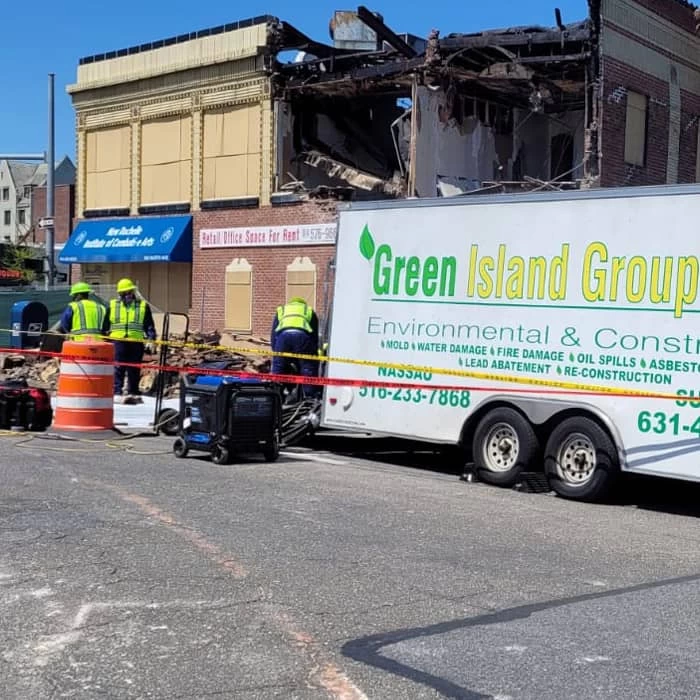
The first call triggers an emergency response. We’re on-site in North Wantagh within one hour — day, night, weekends, and holidays. The first priority is stabilizing the property: securing the structure, boarding openings, extracting firefighting water, and setting up drying equipment before mold gets a foothold in the area’s coastal humidity.
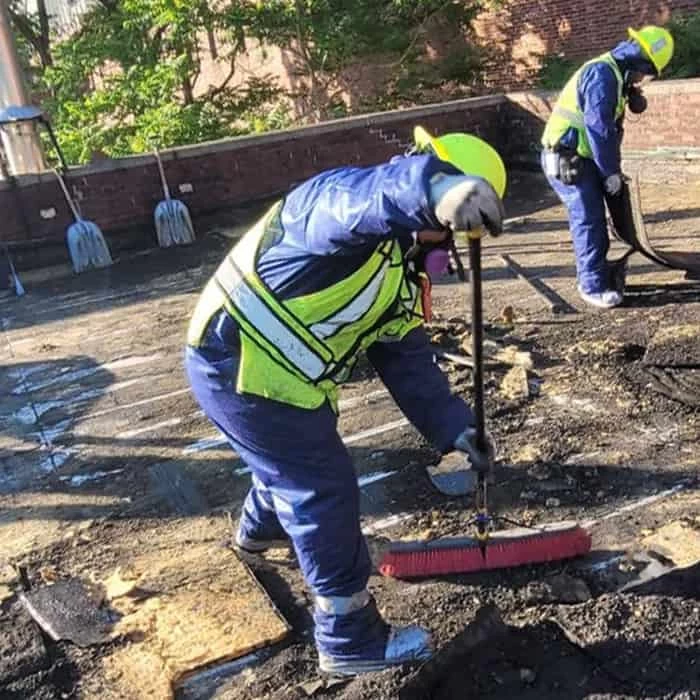
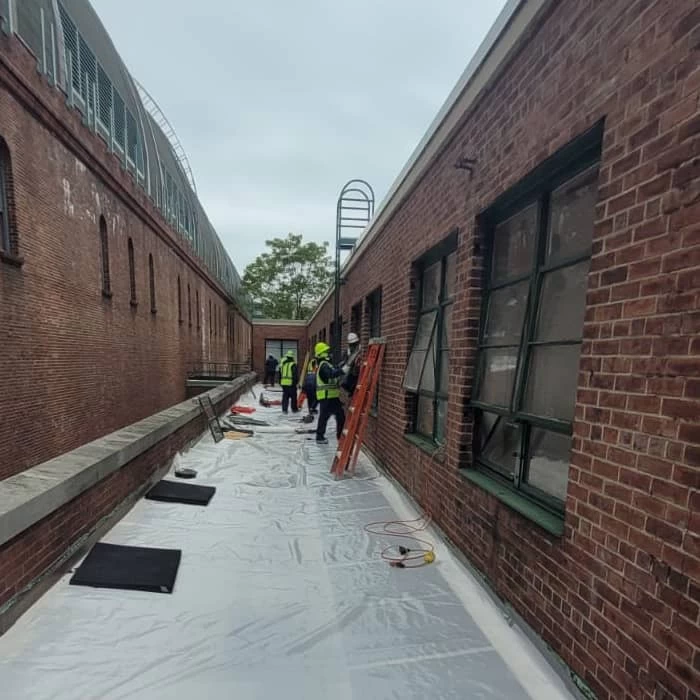
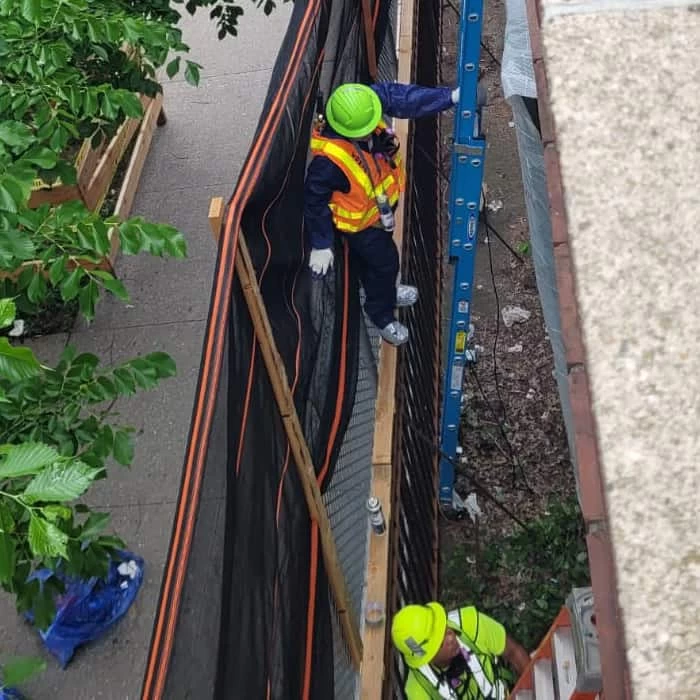
From there, we assess the full scope. Smoke doesn’t stop at the burn zone — it travels through HVAC ductwork, wall cavities, and every porous surface in the house. We use air scrubbers, thermal fogging, ozone treatment, and NADCA-certified duct cleaning to track it down and eliminate it completely, not just in the rooms that burned. If asbestos or lead materials were disturbed — which is likely in a pre-1970 North Wantagh home — we handle abatement and remediation under our NYS DOL and USEPA credentials before any reconstruction begins.
Once remediation is complete, we pull the required Town of Hempstead building permits and move into full reconstruction. Because we hold a Nassau County General Contractor license, we don’t hand your project off to a separate builder. The same company that responded the night of the fire is the company that finishes the rebuild. Throughout all of it, we’re documenting everything for your insurance claim and communicating directly with your adjuster so you’re not stuck in the middle.
What's Actually Included When We Handle Your Restoration
Fire damage restoration in North Wantagh isn’t a single service — it’s a sequence of interconnected jobs that have to be done in the right order by people licensed to do each one. We start with emergency stabilization and water extraction, then move into full smoke and soot remediation using professional-grade equipment that household cleaning products can’t replicate. Oily soot from an oil burner puff-back — one of the most common damage calls in Nassau County’s oil-heated homes — requires chemical sponges, HEPA vacuuming, and HVAC cleaning to fully eliminate. Surface-level cleaning alone won’t get rid of it, and it won’t get rid of the odor either.
If your home was built before 1978, which describes the vast majority of North Wantagh’s housing stock, we conduct testing for asbestos and lead before any demolition or reconstruction begins. This isn’t optional — it’s required by New York State law. Our NYS DOL Asbestos License and USEPA Lead/RRP certification mean we handle that phase in-house, legally, without pausing your project to bring in a separate subcontractor.
Content restoration, structural drying, mold prevention, full reconstruction, and permit management through the Town of Hempstead Building Department are all part of what we do. You get one team, one timeline, and one company accountable for the outcome — from the first hour after the fire to the final inspection.
Is my North Wantagh home safe to re-enter after a fire?
Not always — and the answer depends on more than just whether the fire is out. Smoke leaves behind toxic residue that includes benzene, formaldehyde, and carbon monoxide byproducts embedded in walls, flooring, and soft surfaces. In a pre-1970 North Wantagh home, a fire can also disturb asbestos-containing materials — floor tiles, pipe insulation, ceiling tiles — and lead-based paint, both of which become airborne hazards when disturbed. Structural integrity is another factor. Firefighting water weakens flooring and framing in ways that aren’t always visible from the doorway.
The safest approach is to wait for a professional assessment before re-entering beyond the threshold. When we arrive on-site, we evaluate air quality, structural stability, and hazardous material exposure risk before anyone goes further into the home. If it’s safe to enter, we’ll tell you. If it’s not, we’ll explain exactly why and what needs to happen first.
Does homeowners insurance cover fire damage restoration costs in Nassau County?
In most cases, yes — standard homeowners insurance policies cover fire damage restoration, including smoke and soot cleanup, water extraction from firefighting, temporary housing costs, and structural reconstruction. But what gets covered, and how much, depends heavily on how the claim is documented. Insurance adjusters work from their own assessment, and without thorough documentation of hidden damage — smoke in HVAC systems, asbestos disturbance, mold risk from firefighting water — you can easily end up underpaid on a claim that should cover far more.
On a North Wantagh home with a median value close to $840,000, the gap between a well-documented claim and a poorly documented one can be significant. We bill insurance directly and handle all documentation throughout the restoration process. We’ve guided hundreds of Long Island families through this, and our clients have specifically noted that our involvement in the claims process helped them recover fair value — including for content losses and material replacements they wouldn’t have known to claim on their own.
What does an oil burner puff-back actually do to a home, and is it covered?
A puff-back happens when an oil burner or boiler misfires and ejects a pressurized cloud of unburned fuel and soot back through the heating system. Because oil-fired heating is the norm in Nassau County’s older housing stock — including most of North Wantagh’s mid-century homes — puff-backs are one of the most common damage calls we handle on Long Island. The soot it produces is oily, fine, and penetrating. It coats walls, ceilings, furniture, and every surface inside the HVAC ductwork in a film that standard cleaning can’t remove. The odor it leaves behind is persistent and will continue releasing for months if the source — the ductwork — isn’t cleaned at the same time as the living spaces.
Puff-back damage is typically covered under standard homeowners insurance policies as a sudden and accidental loss. We document the full scope, including duct contamination, and bill your insurance directly. The key is acting quickly — the longer oily soot sits on painted surfaces and fabrics, the harder it is to fully restore them.
How long does fire damage restoration take for a typical North Wantagh house?
It depends on the scope, but here’s a realistic breakdown. Emergency stabilization — water extraction, structural drying, securing the property — typically takes two to five days. Smoke and soot remediation, including HVAC cleaning, runs another three to seven days depending on how far the smoke traveled through the home. If asbestos or lead testing is required, which it almost certainly will be in a pre-1970 North Wantagh home, add time for testing, results, and licensed abatement before reconstruction can begin.
Full reconstruction timelines vary widely based on the extent of structural damage. A kitchen fire with contained damage might wrap up in two to four weeks. A major structural loss requiring framing, electrical, plumbing, and finish work can take two to four months. The Town of Hempstead permit process is a real variable — permit review and inspection scheduling adds time that’s outside our control, though we manage all of that for you. We give you an honest timeline at the start and update you throughout. No surprises.
Can smoke smell come back after a restoration is complete?
Yes, it can — and when it does, it almost always means the source wasn’t fully addressed the first time. Smoke odor comes back when residue is left inside HVAC ductwork, inside wall cavities, or embedded in porous materials like insulation, drywall, or subflooring. Surface cleaning alone — wiping down walls and ceilings — doesn’t reach those areas. Neither does a single round of air freshener or an ozone machine run for a few hours.
Complete odor elimination requires a combination of approaches: thermal fogging to penetrate porous surfaces, ozone treatment to neutralize odor compounds at the molecular level, NADCA-certified duct cleaning to clear the HVAC system, and in some cases, removal and replacement of materials that can’t be cleaned — insulation being the most common example. In older North Wantagh homes with original ductwork and plaster walls, smoke has more places to hide than in newer construction. We don’t sign off on a job until the odor is gone — not masked, gone.
How do I know if a fire restoration contractor is actually licensed to work in North Wantagh?
This is one of the most important questions you can ask — and one most people don’t think to ask until something goes wrong. In North Wantagh, which falls under the Town of Hempstead’s jurisdiction, any contractor performing reconstruction after a fire must hold a Nassau County General Contractor license to legally pull permits and complete structural work. Without it, they’re either working unpermitted — which creates serious problems when you sell the home or file a future claim — or subcontracting the rebuild to someone else without telling you.
Beyond the GC license, fire restoration in a pre-1970 home legally requires a NYS DOL Asbestos License and USEPA Lead/RRP certification to handle the materials that fire almost certainly disturbed. You can verify contractor licenses through the Nassau County licensing portal and the NYS Department of Labor’s online license lookup. Our licenses are current, verifiable, and cover every phase of the job — from emergency response through final inspection. If a contractor can’t show you their Nassau County GC license and their state asbestos credentials before they start, that’s your answer.