When Fire Hits a Center Moriches Home, Speed and Full Scope Are Everything
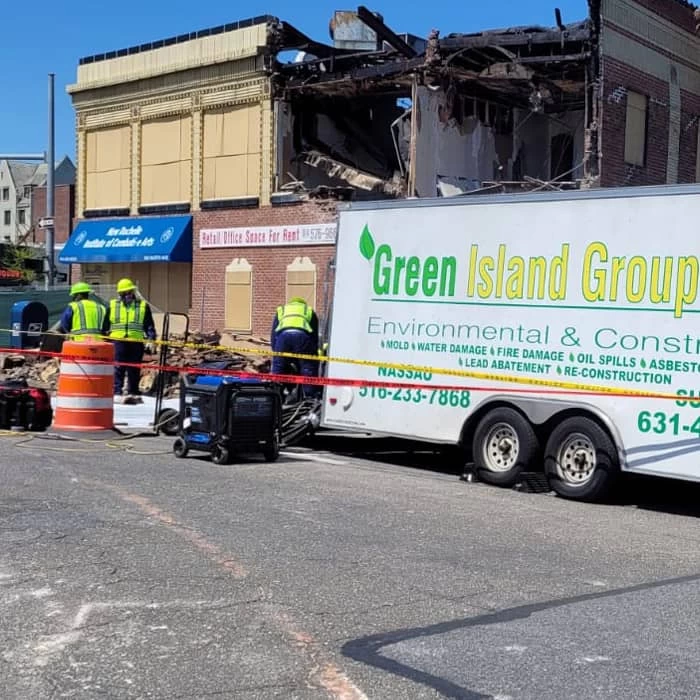
Fire damage moves fast and so does the hidden damage that follows. We respond to Center Moriches homes with a full restoration team, not a patchwork of contractors, and we don’t stop until your home is genuinely safe and livable again.
I needed a professional consultation explanation of procedure for safe removal of Asbestos in my apartment complex. Without having an account yet, I was very impressed with the caring, knowledgeable and generous advice offered by Jessica, and will look forward to doing business in the future. Thank you so much! I feel much more informed about a sometimes scary endeavor. Peace. Nancy Silva Mineola, NY.
Mia Munoz
Used this company to clean up some water flood in my house. They were fast and easy to work with.very professional, Would recommend to anyone!
Nini Valle
Great company, had a flood and they responded quickly and efficiently. Billed my insurance company directly. I highly recommend this company!
joe colapietro, jr
I had pipe freeze in my basement right before a snow storm and they made to within an hour to help start the clean up process. They we by our side throughout the entire process and even helped with the insurance company. They did such a great job with the cleanup, repair, remidiation, I contracted them to perform the repairs and finishes in the basement. They came with enough manpower and material to get the job done. Leo and Jessica were nothing but a pleasure to deal with!!
Cristian Arredondo c
I had some water damage in my home and Green Island was able to take care of my issue quickly and effectively. I am very pleased with the work they did. They responded quickly and were very professional.
Michael M
Outstanding service! From the office to the field crew everyone was friendly, helpful and responsive. I highly recommend Green Island Group.
What Actually Gets Fixed When the Job Is Done Right
A fire leaves more than charred walls. Smoke travels through ductwork, soaks into insulation, and settles into rooms that never saw a flame. The visible burn zone is often the smallest part of the problem and if the hidden damage doesn’t get addressed, you’ll be smelling it and living with it months after the crew has packed up and left.
For homes in Center Moriches especially those south of Montauk Highway where bayfront humidity is a real factor suppression water from firefighting dries significantly slower than in inland properties. That moisture sitting inside wall cavities and under flooring creates a narrow window before mold takes hold. A restoration process that only handles fire damage and ignores what the water left behind isn’t a complete job.
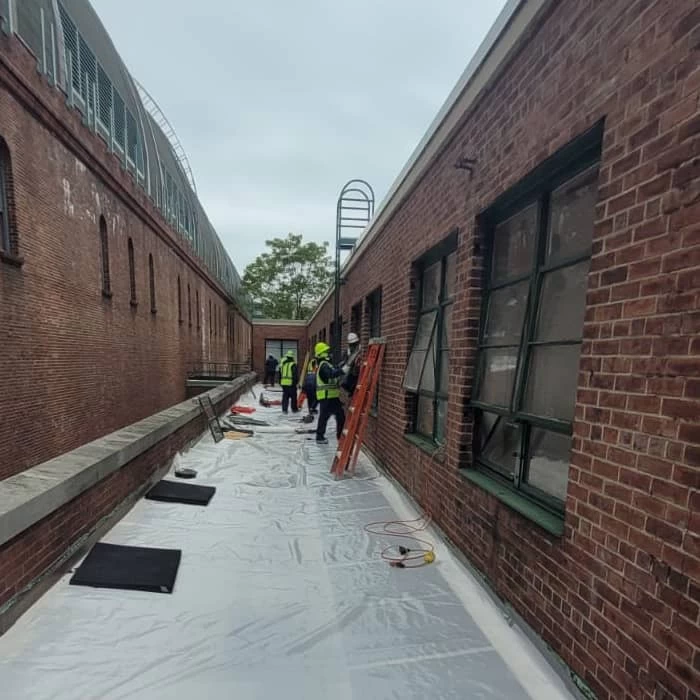
Many of Center Moriches’ older capes and ranches were built in the 1950s and 1960s, before asbestos-containing materials were regulated out of residential construction. A fire in one of these homes doesn’t just damage the structure it can disturb materials that require certified abatement before any rebuild can legally begin. We carry the environmental credentials to handle that scope, which means you won’t hit a wall mid-project because your contractor wasn’t qualified to finish what they started.
Long Island Roots, Not a Franchise Answering Your Call
Green Island Group is a locally owned, Long Island-based restoration company not a national brand licensing its name to a regional operator. When you call, you’re reaching people who actually work here, know Center Moriches and the South Shore, and are accountable to the communities we serve. We already have an established presence in Moriches and East Moriches, so Center Moriches isn’t new territory for us it’s home turf.
We handle everything from emergency stabilization and board-up through soot remediation, water extraction, environmental abatement, and full reconstruction. You get one consistent point of contact through the entire process not a relay race between three different contractors while your home sits in limbo.
Our customers specifically name Leo and Jessica in their reviews not because they were prompted to, but because those are the real people who showed up, communicated clearly, and followed through. In a close-knit community like Center Moriches, that kind of personal accountability isn’t a small thing.
Fire Damage Restoration Process, Center Moriches NY
No Mystery Here's Exactly What Happens From First Call to Finished Home
The moment you call, the clock matters. Soot begins permanently etching porous surfaces drywall, wood framing, brick within 24 to 72 hours. Suppression water starts producing mold conditions within 24 to 48 hours. So the first thing we do is get there fast and assess the full scope, including areas well beyond the visible burn zone.
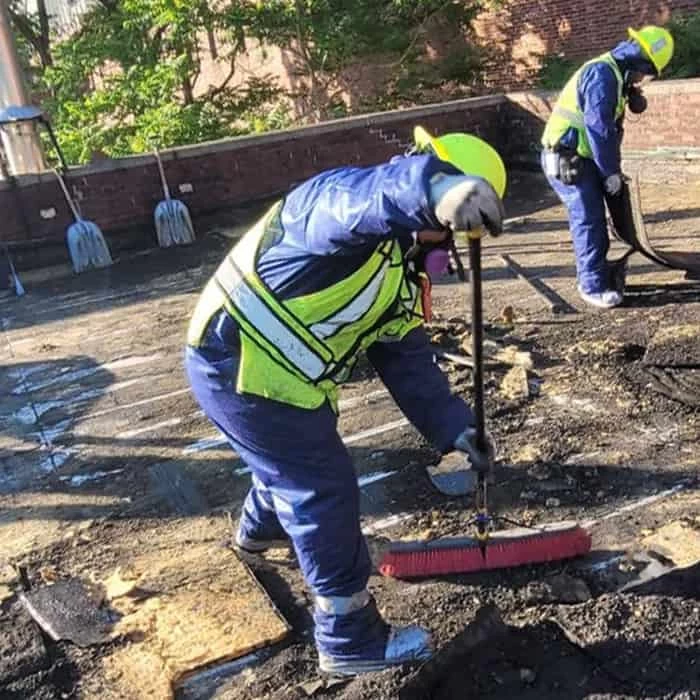
Once on-site, we stabilize the structure boarding up openings, tarping the roof if needed, and securing the property. Then we begin the remediation process: soot and smoke extraction, water removal, and drying. If your home is one of Center Moriches’ older builds and hazardous materials are identified during the assessment, we handle the certified abatement before reconstruction begins. That’s not a detour it’s a required step under New York State law, and skipping it creates real liability for the homeowner.
From there, reconstruction moves through the Town of Brookhaven permitting process. Any structural work after a fire requires a building permit through Brookhaven’s Building Division, and if your property is older and non-conforming, Brookhaven’s 50% rule may affect what can be rebuilt and how. We know how to navigate that. Throughout every phase, we work directly with your insurance adjuster documenting scope, communicating clearly, and making sure the claim reflects the actual damage so you’re not left covering gaps out of pocket.
Fire Damage Restoration Services, Center Moriches NY
Full Scope, One Team From Emergency Call to Certificate of Occupancy
Fire restoration isn’t a single service it’s a sequence of interconnected work that has to happen in the right order. We cover the entire sequence: emergency response and board-up, structural stabilization, smoke and soot remediation, water extraction and drying, air quality restoration, environmental abatement where required, and complete reconstruction through final finishes. Nothing gets handed off to a second company midstream.
For Center Moriches homeowners in the Holiday Beach community or other bayfront areas along Moriches Bay, that scope matters even more. Salt air accelerates corrosion of exposed metal systems. Coastal humidity slows drying timelines. High-value waterfront properties require a restoration contractor who understands the complexity of the job not one who applies the same flat process to every house regardless of where it sits or how it’s built.
Insurance coordination is built into every job, not offered as an add-on. Most homeowners in Center Moriches have never filed a major property damage claim, and the process is genuinely confusing. We work directly with adjusters, document everything in the format insurers require, and help make sure the settlement reflects the real cost of restoring your home not a lowball estimate that leaves you short. We’re not done until you’re satisfied with the result.
Is it safe to stay in my Center Moriches home after a fire?
In most cases, no at least not immediately. Even if the fire was contained to one room, smoke and soot spread through HVAC systems and wall cavities throughout the entire structure. The air in a fire-damaged home contains carbon particles, volatile organic compounds, and in older Center Moriches homes built before the late 1970s, potentially disturbed asbestos fibers or lead dust. These aren’t things you can smell your way to safety on they require professional air quality testing to confirm.
Beyond air quality, structural integrity needs to be assessed before anyone re-enters. Water from firefighting suppression can compromise flooring, subfloor systems, and load-bearing elements in ways that aren’t visible from the surface. Until a qualified restoration contractor has evaluated the property and cleared it as safe, the risk of staying isn’t worth it. If you have children or anyone with respiratory sensitivities in your household, that urgency is even higher.
How long does fire damage restoration typically take in Center Moriches?
It depends on the scope of the damage, but most residential fire restoration projects in Center Moriches range from a few weeks for contained smoke and water damage to several months for fires involving significant structural loss. The timeline isn’t just about the physical work it also includes the Town of Brookhaven permitting process, which is required for any structural reconstruction following a fire. Permit timelines vary, and if your property is older and classified as non-conforming under Brookhaven’s zoning code, there may be additional regulatory steps that affect what can be rebuilt and how quickly.
For homes in Center Moriches that were built in the 1950s or 1960s, asbestos testing and abatement if required adds time to the front end of the project before reconstruction can legally begin. This isn’t optional. New York State law requires certified abatement of any disturbed asbestos-containing materials before other work proceeds. A contractor who skips that step is creating a serious liability for the homeowner. Factoring in all phases realistically is something we walk every client through before work begins, so there are no surprises mid-project.
Will my homeowners insurance cover fire damage restoration in New York?
Standard homeowners insurance policies in New York typically cover fire damage, including the cost of smoke remediation, water extraction from suppression efforts, and structural reconstruction. But “typically covers” and “actually pays what it should” are two different things. Insurance adjusters work for the insurance company, and their initial scope assessment doesn’t always capture the full extent of the damage particularly hidden damage like smoke in ductwork, moisture in wall cavities, or environmental hazards that require certified abatement.
This is one of the most common pain points we see with Center Moriches homeowners after a fire. The claim gets filed, the adjuster comes out, and the initial estimate doesn’t reflect the real cost of a complete restoration. We work directly with adjusters throughout the process documenting damage thoroughly, communicating in the format insurers require, and advocating for a settlement that covers the actual scope of the work. It’s also worth noting that public adjusters exist specifically because local homeowners need help navigating these claims. Whether you use a public adjuster or rely on your restoration contractor to help coordinate, don’t assume the first number the insurer offers is the final one.
Can a fire in my older Center Moriches home create an asbestos problem?
Yes, and this is a real concern for a significant portion of Center Moriches’ housing stock. Homes built before 1978 which includes many of the capes, ranches, and colonials throughout the hamlet commonly contain asbestos in floor tiles, pipe insulation, ceiling texture coatings, and roofing materials. Under normal conditions, intact asbestos-containing materials don’t pose an immediate risk. But a fire disturbs those materials, breaks them apart, and releases fibers into the air and throughout the structure.
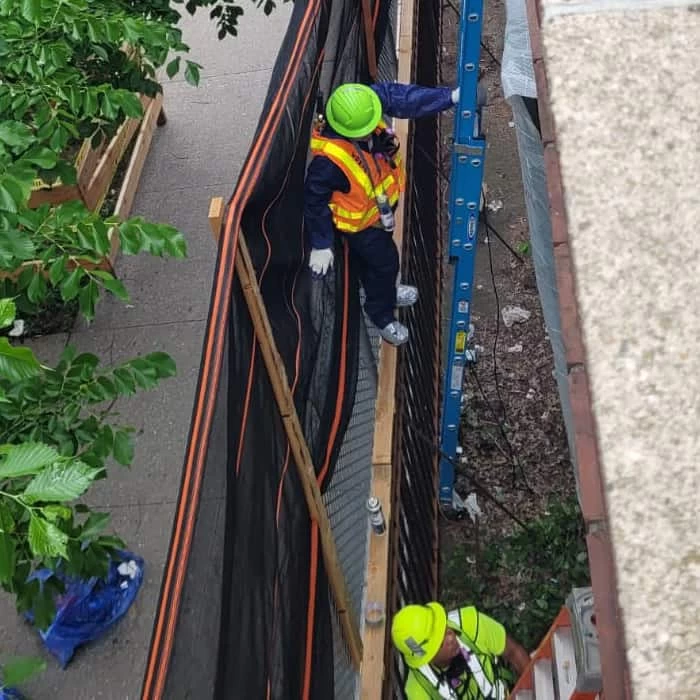
New York State requires that any asbestos abatement work be performed by a NYSDOL-certified contractor. That means if testing confirms the presence of disturbed ACM in your home, a standard general contractor or fire restoration company without environmental credentials cannot legally complete the job. We carry the certifications to handle asbestos abatement as part of the overall restoration scope, which means the work doesn’t stall out when hazardous materials are identified. If you’re not sure whether your home may be affected, the safest assumption for any pre-1978 Center Moriches property is to have it tested before reconstruction begins.
Why does smoke smell linger in a home even after cleanup?
Because smoke doesn’t just coat surfaces it penetrates them. Drywall, wood framing, insulation, and soft materials absorb smoke particles at a molecular level. If the remediation process only addresses visible soot and surface residue, the odor will come back, especially in humid conditions. Center Moriches’ proximity to Moriches Bay means interior humidity levels in bayfront and near-waterfront homes are naturally elevated and humidity reactivates embedded smoke odors in ways that feel like the problem was never fixed.
Effective smoke odor elimination requires treatment of the materials themselves not just the surfaces. That includes HVAC ductwork, which carries smoke throughout the entire home during and after a fire event, and wall cavities where smoke settles behind drywall. Thermal fogging, hydroxyl generation, and encapsulation are tools we use depending on the material and severity. A restoration process that skips these steps will leave you with a home that smells fine the day the crew leaves and starts smelling like smoke again three weeks later when the weather changes.
How does Green Island Group handle fire restoration differently from a national franchise?
The most practical difference is accountability. With a national franchise, you’re often dealing with a call center intake process, a regional dispatch system, and crews whose connection to your specific job ends when the next project comes in. In a community like Center Moriches where the people who show up matter and word travels about who does good work that model doesn’t hold up well.
Green Island Group is locally owned and operated out of Long Island, with an established service presence in Moriches and East Moriches already. The people who answer your call are the same people responsible for the outcome of your project. Our customers name Leo and Jessica in their reviews because those are the real individuals who managed their jobs from start to finish. Beyond the accountability piece, we also bring environmental remediation credentials that many franchise operators don’t carry which matters specifically in Center Moriches, where the age of the housing stock makes asbestos and lead paint a genuine consideration on fire jobs. A company that has to stop work when hazardous materials are found isn’t equipped for this area. We are.