When the Season Can't Wait and the Damage Won't Hold
At the end of Long Island one road in, one road out you need a fire damage restoration team that actually shows up and handles it all. We at Green Island Group do exactly that, from the first call through the final finish.
I needed a professional consultation explanation of procedure for safe removal of Asbestos in my apartment complex. Without having an account yet, I was very impressed with the caring, knowledgeable and generous advice offered by Jessica, and will look forward to doing business in the future. Thank you so much! I feel much more informed about a sometimes scary endeavor. Peace. Nancy Silva Mineola, NY.
Mia Munoz
Used this company to clean up some water flood in my house. They were fast and easy to work with.very professional, Would recommend to anyone!
Nini Valle
Great company, had a flood and they responded quickly and efficiently. Billed my insurance company directly. I highly recommend this company!
joe colapietro, jr
I had pipe freeze in my basement right before a snow storm and they made to within an hour to help start the clean up process. They we by our side throughout the entire process and even helped with the insurance company. They did such a great job with the cleanup, repair, remidiation, I contracted them to perform the repairs and finishes in the basement. They came with enough manpower and material to get the job done. Leo and Jessica were nothing but a pleasure to deal with!!
Cristian Arredondo c
I had some water damage in my home and Green Island was able to take care of my issue quickly and effectively. I am very pleased with the work they did. They responded quickly and were very professional.
Michael M
Outstanding service! From the office to the field crew everyone was friendly, helpful and responsive. I highly recommend Green Island Group.
A fire in Montauk hits differently than a fire anywhere else on Long Island. If your property sits vacant between seasons which a significant number of homes out here do there’s a real chance the damage went undetected for days before anyone called it in. By that point, soot has already started etching into surfaces, firefighting water has had time to breed mold in the coastal humidity, and what started as a contained fire has quietly become a much bigger problem.
The good news is that a thorough restoration addresses all of it not just the charred area, but the smoke that traveled through the HVAC, the water that soaked into the subfloor, and the environmental hazards that need to be cleared before any reconstruction begins. For a home built before 1970 and a meaningful chunk of Montauk’s housing stock falls in that range that often means asbestos-containing materials were disturbed in the fire. That’s not a job for a basic cleanup crew. It requires licensed abatement, proper documentation, and a team that knows how to sequence the work correctly.
When it’s done right, you get your property back in full not patched up, not partially remediated, but genuinely restored. For a seasonal homeowner trying to recover before the next rental season, or a year-round local who just wants to be back in their home, that outcome is the only one worth working toward.
We’re a locally owned and operated restoration company based on Long Island, serving Nassau and Suffolk Counties and the broader metro area including Montauk and the East End. When you call, you reach the people who will actually manage your job. Customers consistently name Leo and Jessica by name in their reviews not because they’re listed on a website, but because we’re the ones communicating throughout the project, answering questions, and making sure nothing falls through the cracks.
That matters a lot when your property is at the end of Montauk Highway and you’re managing the situation from New York City. We handle the full scope emergency response, smoke and soot remediation, water extraction, environmental abatement, and complete reconstruction so you’re not coordinating a chain of separate contractors across a 100-mile drive. The job doesn’t end until it’s right, and that’s not a marketing line it’s how we operate.
From the First Call to the Final Walk-Through, Here's What to Expect
It starts with the call. Whether you’re standing in front of the damage or you just got the news from three states away, we mobilize quickly. Response times matter here soot begins permanently bonding to surfaces within 24 to 72 hours, and in a coastal environment like Montauk, the ambient humidity accelerates that process. The sooner we’re on-site, the more of the property can be saved.
Once on-site, our first priority is a thorough damage assessment not just what’s visibly burned, but what the smoke reached, where water migrated, and whether any hazardous materials were disturbed. In older Montauk homes, that assessment often includes identifying asbestos-containing materials before any work begins. New York State law requires licensed abatement before restoration can proceed in those cases, and we handle that in-house, which eliminates the delay of sourcing a separate contractor. All reconstruction work requiring permits goes through the East Hampton Town Building Department, and we’re familiar with that process.
From there, remediation and reconstruction move in a coordinated sequence environmental clearance, structural drying, smoke and odor elimination, and finally the rebuild to pre-loss condition. You’re kept informed throughout. If you’re not local, that communication is what keeps the project on track and keeps you from feeling like you’re managing it blind from a distance.
Fire and Smoke Damage Restoration Services, Montauk
Every Phase Covered, From the Harbor to the Bluffs
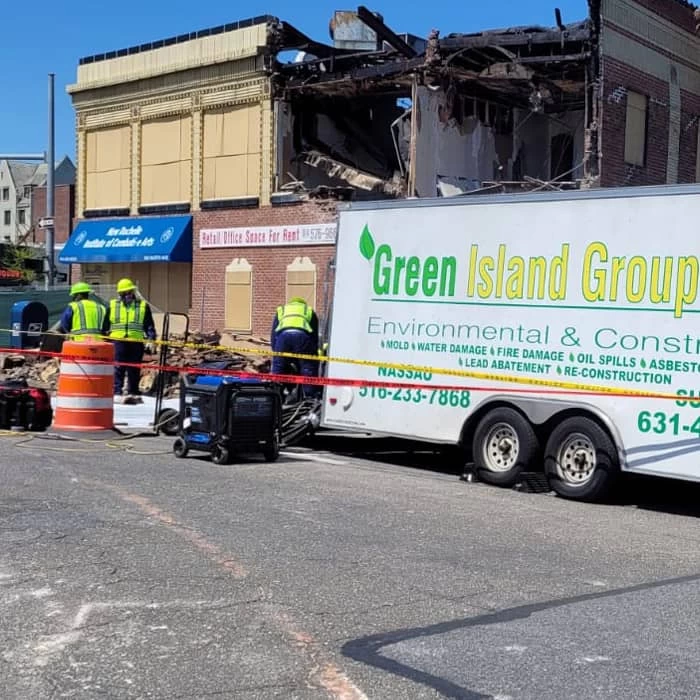
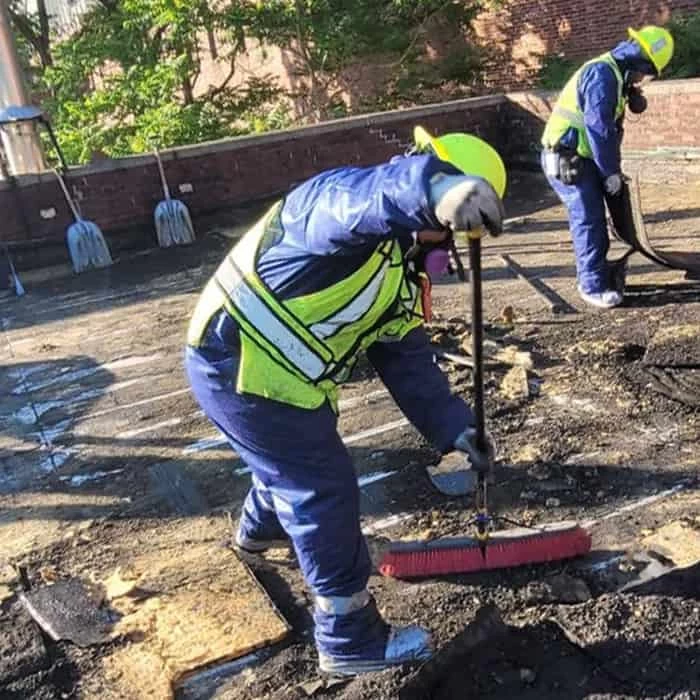
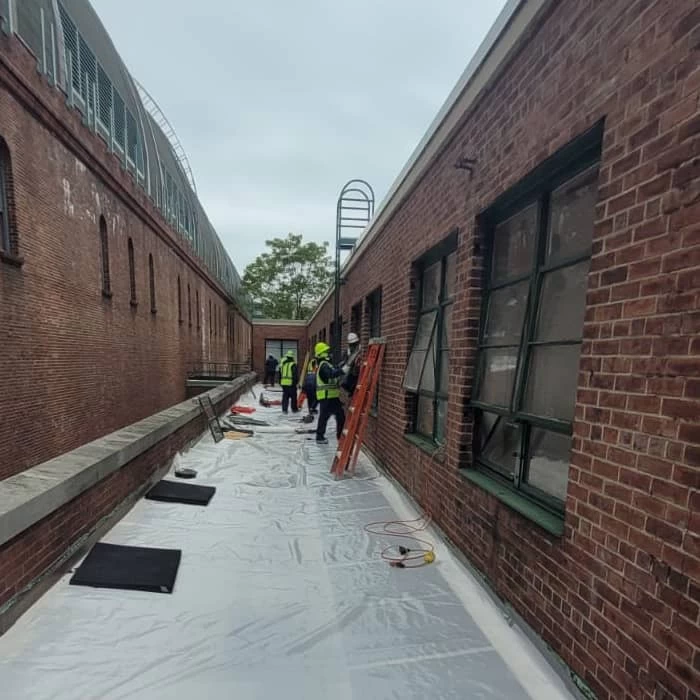
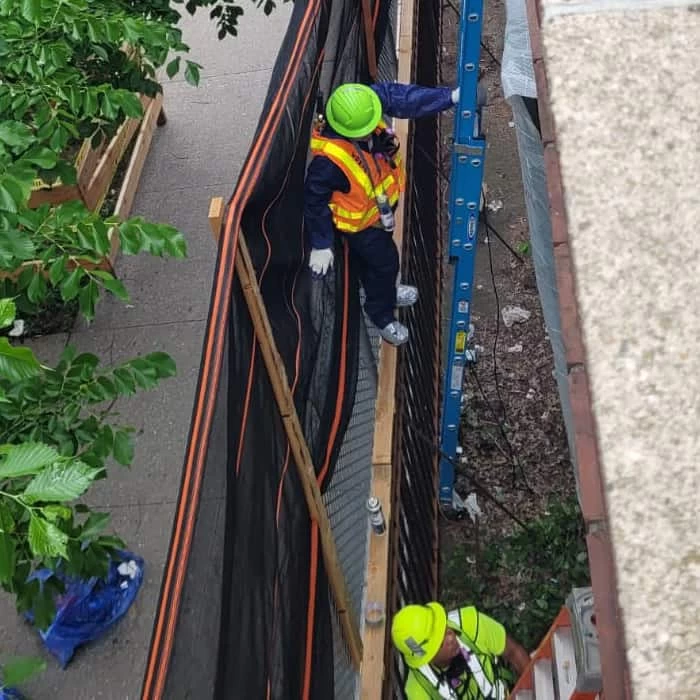
Fire damage restoration isn’t a single service it’s a sequence of interconnected work that has to be done in the right order by people who know what they’re doing. We cover the full scope: emergency board-up and securing of the property, smoke and soot removal from all affected surfaces, water extraction and structural drying from firefighting efforts, mold remediation when moisture has had time to set in, asbestos and environmental abatement for pre-1980 construction, and complete reconstruction through final finishes.
For Montauk specifically, that environmental piece is not optional it’s frequently necessary. Homes in the Ditch Plains area, around Fort Pond, and along the older residential blocks near the harbor regularly contain materials that require licensed abatement before any restoration work can touch them. We account for this in the initial assessment so there are no surprises mid-project.
Commercial properties are also part of what we handle. If you operate a restaurant, inn, or harbor-adjacent business and a fire puts your season at risk, our approach is the same: fast response, full scope, insurance coordination, and a clear timeline. Our fire smoke damage restoration process is documented thoroughly for insurance purposes adjusters get what they need, and you’re not left fighting for coverage on a claim that should be straightforward.
What should I do first if there's been a fire at my Montauk vacation home?
The first thing to do is make sure the property is safe to enter that determination comes from the fire department, not from you. Once the scene has been cleared, call a restoration company before you call anyone else. The reason timing matters so much is that soot and smoke residue begin bonding permanently to walls, ceilings, and surfaces within 24 to 72 hours. In a coastal environment like Montauk, where humidity is consistently elevated, that window can be even shorter.
If you’re not local and you found out about the fire remotely, that’s actually a common situation out here a lot of Montauk properties are seasonally vacant. We can mobilize to the property, secure it, begin the assessment, and keep you informed throughout the process without requiring you to be on-site. The sooner the call comes in, the more of the property can be saved and the lower the total restoration cost tends to be.
Does homeowners insurance cover fire damage restoration in Montauk, NY?
In most cases, yes standard homeowners insurance covers fire damage, including smoke damage, water damage from firefighting efforts, and the cost of restoration and reconstruction. But the scope of what gets covered depends heavily on how well the damage is documented and how the claim is filed. High-value properties in Montauk generate complex, high-dollar claims, and insurers don’t always capture the full picture on their own.
We work directly with insurance adjusters and provide thorough documentation of the damage not just the visible burn area, but secondary damage from smoke, water infiltration, and any environmental hazards that were disturbed. Multiple customers have specifically cited this insurance assistance as a major reason they chose us and would recommend our services. If you’ve never navigated a claim at this scale before, having a restoration team that knows the process is a real advantage.
Can smoke and soot damage be fully cleaned from a Montauk beach house?
Yes, but the timeline matters enormously. Soot is acidic, and it begins etching into porous surfaces drywall, wood, tile grout, fabric within hours of a fire. The longer it sits, the more permanent the damage becomes, and in a beach house that may have gone unoccupied for weeks before the fire was even discovered, there’s often a wider spread of smoke damage than the burn area would suggest. Smoke travels through HVAC systems, gets into wall cavities, and settles on every surface in the airflow path.
Professional smoke and soot remediation uses a combination of chemical treatments, HEPA filtration, and ozone or hydroxyl technology to eliminate odor and residue at the source not just mask it. In coastal homes with high humidity and salt air exposure, surface materials can already be in a compromised state, which affects how treatments are applied. Our team understands the building conditions specific to Montauk and will approach this differently than a crew that treats every job the same regardless of location.
How does asbestos affect fire damage restoration in older Montauk homes?
It’s one of the most common complications in Montauk fire restoration, and it’s one that a lot of property owners don’t anticipate. Roughly a third of Montauk’s housing stock was built before 1970, when asbestos-containing materials were standard insulation, floor tiles, ceiling tiles, roofing materials, and joint compound all commonly contained asbestos in homes of that era. When a fire damages those materials, asbestos fibers can be released into the air, and New York State law requires licensed abatement before any restoration or reconstruction work can proceed.
This is not a step you can skip or work around. If a restoration company starts tearing out drywall or replacing flooring in a pre-1980 home without testing for asbestos first, they’re creating a liability problem and a health hazard. We handle licensed asbestos abatement in-house, which means the assessment, the abatement, and the restoration are all managed under one roof no waiting on a separate contractor, no gap in the project timeline, and no confusion about who’s responsible for what.
How long does fire damage restoration typically take for a property in Montauk?
The honest answer is that it depends on the scope, and the scope in Montauk is often broader than it first appears. A contained kitchen fire in an occupied year-round home might be fully restored in two to four weeks. A fire in a seasonally vacant property where the damage went undetected, moisture has had time to create secondary mold growth, and older construction materials require abatement can take significantly longer.
The factors that most affect the timeline are how quickly remediation begins, whether environmental hazards are present, the extent of structural damage, and how smoothly the permitting process moves through the East Hampton Town Building Department. We map out a realistic timeline from the initial assessment and communicate clearly throughout the project. For seasonal homeowners working against a specific calendar trying to recover the property before summer rentals begin, for example that transparency about timing is something we take seriously from day one.
Can fire damage restoration be managed remotely if I don't live in Montauk full-time?
Yes, and it’s something we handle regularly. A large portion of Montauk’s property owners are based in New York City or elsewhere and aren’t on-site when a fire occurs or during the restoration process. Our model is built around consistent, named communication customers specifically mention Leo and Jessica in their reviews because those are the people who stay on the project, provide updates, and answer questions throughout.
What makes remote management work is documentation and communication. Every phase of the restoration is documented with photos and written reports, which serves double duty it keeps you informed and it supports the insurance claim. You don’t need to be standing in the driveway to know what’s happening with your property. If you’re managing a Montauk home from a distance, that continuity of communication isn’t a bonus feature it’s the core of how the job gets done.