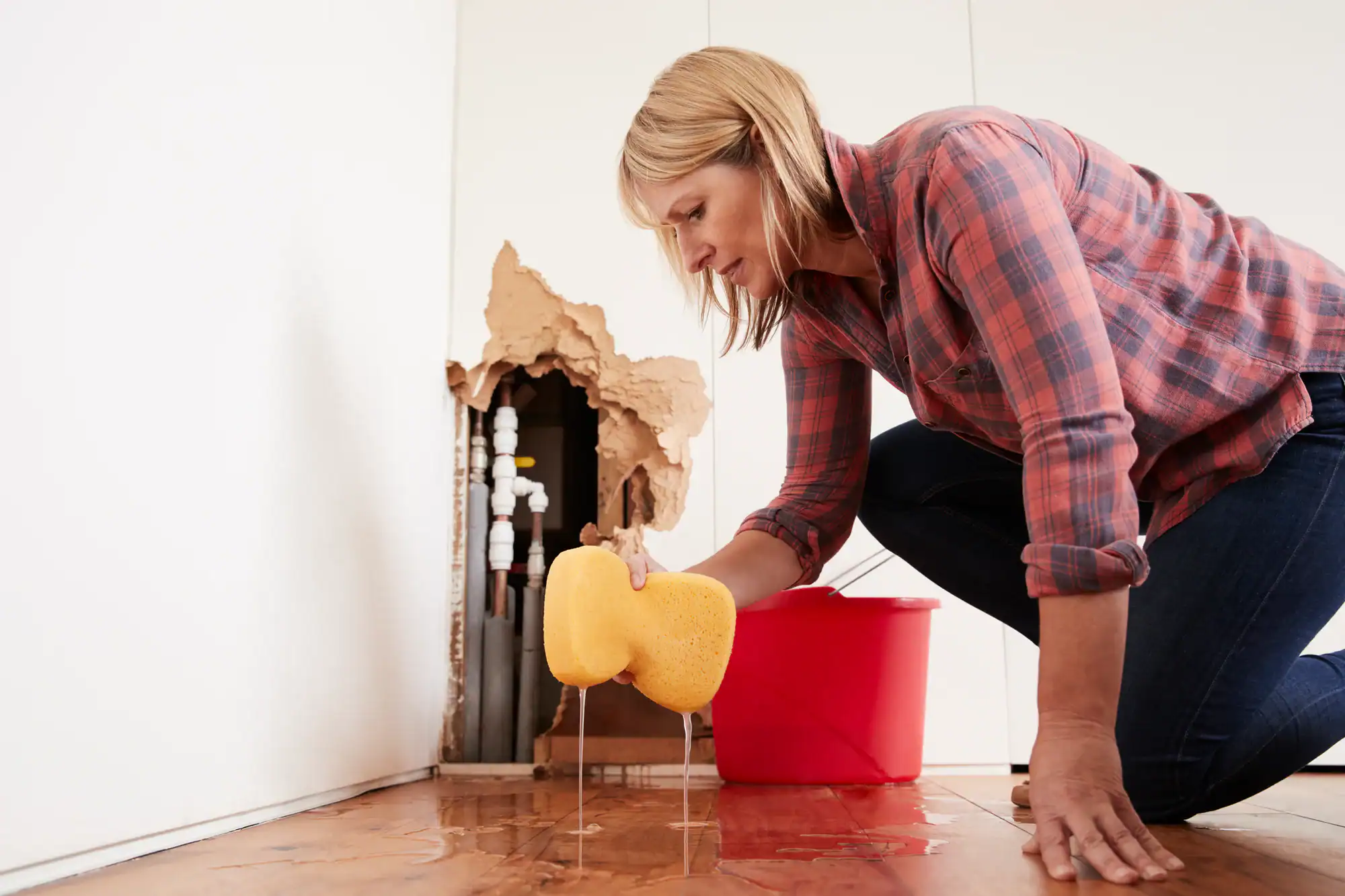
When water gets into a 1950s Cape Cod or hi-ranch, it moves fast and hides well. We respond to water damage emergencies across Elmont with licensed crews, real equipment, and the local knowledge to handle what these homes actually throw at you.
I needed a professional consultation explanation of procedure for safe removal of Asbestos in my apartment complex. Without having an account yet, I was very impressed with the caring, knowledgeable and generous advice offered by Jessica, and will look forward to doing business in the future. Thank you so much! I feel much more informed about a sometimes scary endeavor. Peace. Nancy Silva Mineola, NY.
Mia Munoz
Used this company to clean up some water flood in my house. They were fast and easy to work with.very professional, Would recommend to anyone!
Nini Valle
Great company, had a flood and they responded quickly and efficiently. Billed my insurance company directly. I highly recommend this company!
joe colapietro, jr
I had pipe freeze in my basement right before a snow storm and they made to within an hour to help start the clean up process. They we by our side throughout the entire process and even helped with the insurance company. They did such a great job with the cleanup, repair, remidiation, I contracted them to perform the repairs and finishes in the basement. They came with enough manpower and material to get the job done. Leo and Jessica were nothing but a pleasure to deal with!!
Cristian Arredondo c
I had some water damage in my home and Green Island was able to take care of my issue quickly and effectively. I am very pleased with the work they did. They responded quickly and were very professional.
Michael M
Outstanding service! From the office to the field crew everyone was friendly, helpful and responsive. I highly recommend Green Island Group.
Most homeowners in Elmont don’t realize how much damage is still sitting inside their walls after the visible water is cleaned up. That’s the part that turns into mold. In a home built in 1952 with original wood framing, plaster walls, and a basement that’s seen decades of groundwater pressure, moisture doesn’t just evaporate on its own — it soaks in, spreads laterally through subfloor assemblies, and stays hidden until it becomes a much bigger problem.
When restoration is done right, you’re not just dry on the surface. You’re dry where it counts — inside the wall cavities, under the floors, and within the structural framing that holds your home together. That’s what protects your equity. With median home values in Elmont now sitting above $620,000, the difference between a thorough restoration and a surface-level dry-out isn’t cosmetic. It’s financial.
Elmont’s high water table adds another layer to this. Western Nassau County groundwater doesn’t wait for a named storm — it rises after sustained rain, pushes through foundation cracks, and floods basements in homes that weren’t built with modern waterproofing. Getting the moisture out completely, and understanding where it came from, is what keeps it from coming back next season.
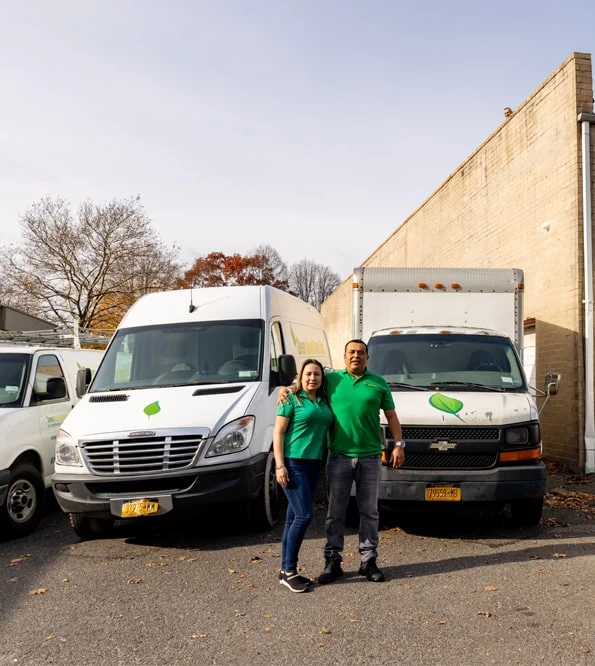
We’re a Long Island-based water damage restoration company — not a franchise location, not a regional hub routing your call through a national system. When you call, you reach people who actually work here, know Elmont and Nassau County, and will show up to your home on Elmont Road or off Hempstead Turnpike without needing to look up where that is.
That matters more than it sounds. Elmont’s housing stock is specific — mostly post-war Cape Cods and ranches, aging infrastructure, and basements that sit in one of the highest water table zones in western Nassau County. Our crews understand those conditions and handle the job differently than someone reading off a checklist.
Every technician we employ is IICRC-certified and fully licensed under New York State’s 2016 Mold Law, which requires separate NYS Department of Labor credentials for mold assessment and remediation. That’s not a marketing point — it’s a legal standard, and it’s one you should hold every restoration company you call to.
From First Call to Dry Home — Here's the Honest Walkthrough
It starts the moment you call. We’re available 24 hours a day, and our goal is to have a crew on-site as fast as possible — because every hour water sits inside a 70-year-old wood-framed home is an hour closer to mold. The EPA and IICRC both document that mold colonization can begin within 24 to 48 hours of sustained moisture exposure. That window is real, and in Elmont’s older housing stock, it closes faster than most people expect.
When our crew arrives, the first step isn’t pulling out equipment — it’s assessment. Thermal imaging cameras map moisture that’s invisible to the naked eye, identifying wet areas inside wall cavities, under flooring, and within structural assemblies before a single piece of drying equipment is placed. This matters especially in Elmont homes where plaster walls and original subfloors absorb and hold water in ways that modern drywall simply doesn’t.
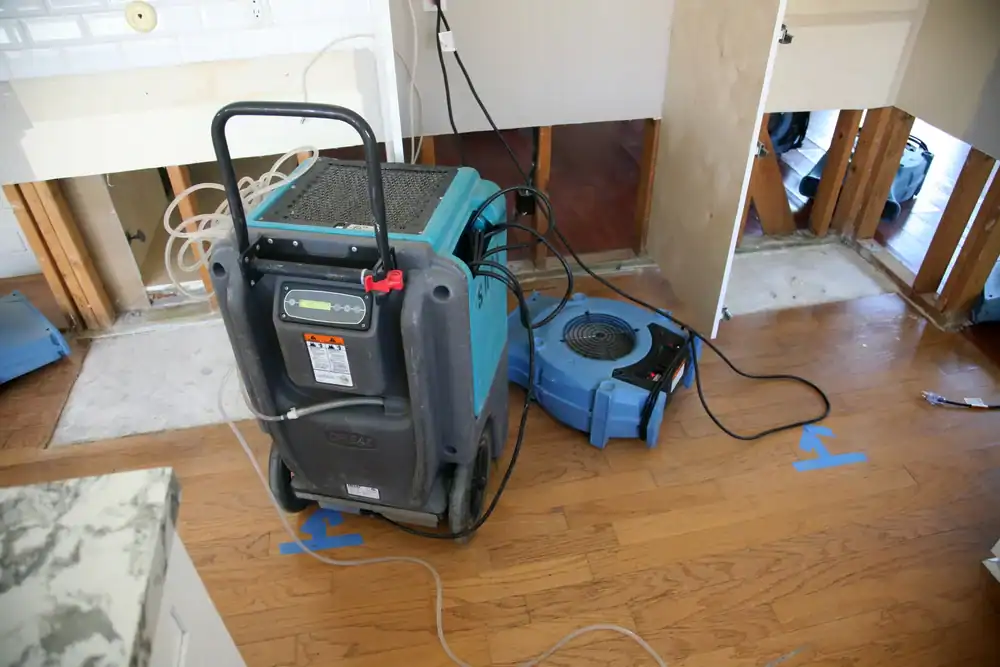
Once we’ve mapped the full moisture picture, industrial drying begins. These aren’t hardware store dehumidifiers — they’re commercial-grade desiccant units and high-velocity air movers that pull moisture out of building materials at the structural level. Drying continues until calibrated moisture meters confirm your home meets IICRC S500 standards — not when it looks dry, not when it smells dry, when it actually is. Because restoration work in Elmont may require permits through the Town of Hempstead Building Department depending on the scope of structural repairs, we handle that documentation as part of the process.
Water damage restoration isn’t one thing — it’s a sequence of connected steps that each depend on the one before it. Our process covers emergency water extraction, structural drying, moisture mapping, mold assessment, mold remediation (where required), and full documentation for your insurance claim. Every step is performed by our licensed, IICRC-certified technicians using professional-grade equipment — not subcontracted to whoever’s available that week.
For Elmont homeowners specifically, a few things come up more than others. Sump pump failures during heavy rain are common in this part of Nassau County given the elevated water table. Burst pipes in winter hit hard in homes where original cast iron supply lines run through poorly insulated exterior walls — a standard feature of the Cape Cods and ranches that make up the majority of Elmont’s housing stock. Sewage backups during summer storm events are also a real issue, especially when heavy rainfall overwhelms drainage systems near the Queens border. We handle all of these scenarios.
Insurance navigation is built into our service, not bolted on as an afterthought. We document everything — moisture readings, thermal images, scope of damage, drying logs — in the format insurance adjusters expect. If you’ve never filed a water damage claim before, that process can feel overwhelming. Our goal is to handle it so you don’t have to become an expert in something you never wanted to deal with in the first place.
Does homeowners insurance cover basement flooding in Elmont, NY?
It depends on what caused the flooding, and this distinction matters a lot for Elmont homeowners. Standard homeowners insurance typically covers sudden and accidental water damage — a burst pipe, a washing machine overflow, or an appliance failure. What it usually does not cover is flooding from outside the home, including groundwater rising through your foundation, which is a common occurrence in western Nassau County given the area’s elevated water table. That type of damage typically requires a separate flood insurance policy through the National Flood Insurance Program.
Sewage backup coverage is another gray area. Some policies include it, many don’t without an endorsement. If your basement flooded during one of the heavy summer storm events that push the local drainage system past capacity — which happens in communities along the Queens border — you’ll want to review your policy carefully before assuming you’re covered. We document everything from the first hour on-site in a format that supports your claim, and can work directly with your adjuster to make sure nothing gets missed or underpaid.
How quickly does mold start growing after water damage in an older home?
According to the EPA and IICRC, mold can begin colonizing wet building materials within 24 to 48 hours of water intrusion. That’s the general window — but in a home built in the 1950s with original wood framing, plaster walls, and wood subfloors, the conditions for mold growth are more favorable than in a modern home with drywall and engineered lumber. Older materials are more porous, absorb moisture more readily, and hold it longer. The 24-hour clock is real, and in Elmont’s housing stock, it’s not a figure of speech.
This is why response time isn’t just about convenience — it’s about the difference between a water damage restoration job and a mold remediation project. Mold remediation in New York requires a separately licensed contractor under the state’s 2016 Mold Law, takes significantly longer, and costs materially more than a restoration job that starts before mold has a chance to establish. Getting a crew on-site quickly isn’t urgency for its own sake. It’s the most cost-effective decision you can make in the first few hours after discovering water damage.
What's the difference between water damage restoration and just drying things out?
Drying things out means removing visible water and running a dehumidifier until the air feels normal. Water damage restoration means verifying — with calibrated instruments — that the moisture inside your walls, subfloor, and structural framing has been reduced to levels that meet IICRC S500 standards. Those are two very different outcomes, and the gap between them is where mold problems come from.
In a typical Elmont home, the basement ceiling is also the first-floor subfloor. Water that enters the basement doesn’t just pool on the floor — it wicks upward into the wood assembly above it. A surface-level dry-out that passes a visual inspection can leave that framing at 25 to 30 percent moisture content, well above the 15 to 19 percent threshold where mold growth becomes likely. Industrial drying equipment — commercial desiccant dehumidifiers and high-velocity air movers — is what actually reaches those cavities. Consumer-grade equipment isn’t designed for it, and a shop vac and a box fan won’t get you there no matter how long you run them.
How long does water damage restoration typically take for a home in Elmont?
Most residential water damage restoration jobs take between three and five days for the drying phase alone, assuming the work starts promptly and the source of water has been stopped. The full process — extraction, drying, moisture verification, and any necessary repairs — can run longer depending on the extent of the damage and what’s affected. A finished basement that took on several inches of water will take longer to dry than an isolated pipe leak in a bathroom wall.
For Elmont homes specifically, the age of the construction is a factor. Original wood framing and plaster walls hold moisture longer than modern materials, which means drying timelines can run toward the longer end of the range. Structural repairs following water damage may also require a building permit through the Town of Hempstead, which can affect the overall project timeline. We handle permit documentation as part of the job so that doesn’t become a separate task you’re managing on your own while also dealing with an insurance claim.
My basement floods every time it rains hard — is that a restoration issue or something else?
If your Elmont basement floods repeatedly after heavy rain, you’re most likely dealing with hydrostatic pressure — groundwater pushing up through foundation cracks, floor joints, or the base of your walls. This is one of the most common chronic water problems in western Nassau County, and it’s driven by the area’s naturally high water table. It’s not a restoration issue in the traditional sense — restoration addresses damage after an event. What you’re describing is an ongoing structural vulnerability that needs to be assessed and addressed at the source.
That said, every time your basement floods, it creates a new water damage event with its own mold risk, structural exposure, and potential insurance implications. We can assess the damage from each event and help you document it properly, but we’ll also be honest with you about what’s causing it. If the answer is a failed sump pump, that’s a straightforward fix. If it’s foundation waterproofing that’s deteriorated over 70-plus years, that’s a longer conversation — but one worth having before the next heavy rain season hits.
How do I know if a water damage restoration company in Elmont is actually licensed?
In New York State, any company performing mold remediation is required to hold a separate license issued by the NYS Department of Labor under the state’s 2016 Mold Law. This applies to every restoration company working in Elmont, Nassau County — and it’s a license you can verify directly through the NYS DOL’s online lookup tool. Ask any company you’re considering for their mold remediation license number before work begins. If they can’t provide one, they are not legally authorized to perform mold remediation in New York, regardless of how long they’ve been in business or what their website says.
Beyond the state mold license, IICRC certification is the industry standard for water damage restoration technicians. Look for Water Damage Restoration Technician (WRT) and Applied Structural Drying (ASD) certifications at minimum. We carry the required NYS licenses and hold active IICRC certifications — all of which are available for you to verify before you commit to anything.