When the Canal Comes In, You Need Someone Who Knows Freeport
South Shore flooding doesn’t wait for a convenient time. We respond fast, handle the insurance paperwork, and get your Freeport home dried out the right way — before mold turns a bad day into a bigger problem.
I needed a professional consultation explanation of procedure for safe removal of Asbestos in my apartment complex. Without having an account yet, I was very impressed with the caring, knowledgeable and generous advice offered by Jessica, and will look forward to doing business in the future. Thank you so much! I feel much more informed about a sometimes scary endeavor. Peace. Nancy Silva Mineola, NY.
Mia Munoz
Used this company to clean up some water flood in my house. They were fast and easy to work with.very professional, Would recommend to anyone!
Nini Valle
Great company, had a flood and they responded quickly and efficiently. Billed my insurance company directly. I highly recommend this company!
joe colapietro, jr
I had pipe freeze in my basement right before a snow storm and they made to within an hour to help start the clean up process. They we by our side throughout the entire process and even helped with the insurance company. They did such a great job with the cleanup, repair, remidiation, I contracted them to perform the repairs and finishes in the basement. They came with enough manpower and material to get the job done. Leo and Jessica were nothing but a pleasure to deal with!!
Cristian Arredondo c
I had some water damage in my home and Green Island was able to take care of my issue quickly and effectively. I am very pleased with the work they did. They responded quickly and were very professional.
Michael M
Outstanding service! From the office to the field crew everyone was friendly, helpful and responsive. I highly recommend Green Island Group.
There’s a version of this where you call someone, they pull the water out, run some fans for a few days, and leave. Walls look dry. Everything seems fine. Then six weeks later you’re smelling something you can’t explain, or your insurance adjuster is asking why there’s no drying documentation. That’s the version you want to avoid.
When water damage restoration is done correctly — with calibrated moisture meters, thermal imaging, and IICRC-standard drying logs — you get real confirmation that the job is finished, not just visually acceptable. That documentation matters when you’re filing a claim with your NFIP flood insurer and your homeowners carrier at the same time, which is exactly the situation a lot of Freeport homeowners in Zone AE find themselves in after a tidal event or nor’easter.
Freeport’s housing stock adds another layer. A lot of homes in the southern waterfront neighborhoods were built well before modern vapor barriers and flood-resistant construction were standard. Moisture hides differently in those walls. It sits in places a quick surface check won’t catch. Getting it right here means understanding what you’re actually working with — not running a standard drying protocol designed for a 1990s tract home in a different zip code.
Local Crew, Real Accountability, No Franchise Middleman
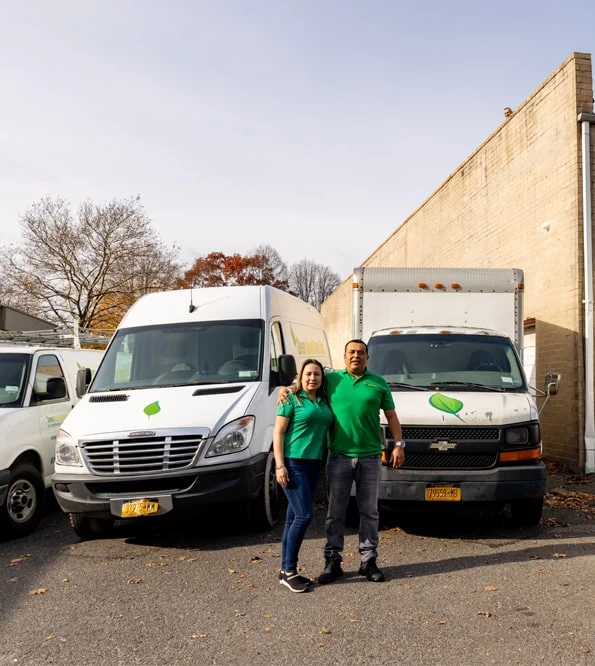
We’re a Long Island restoration company — not a national brand with a local phone number. When you call 631-256-5711, you’re reaching people who work this area, know the South Shore, and have dealt with the specific flooding patterns that come with living near Hempstead Bay and the Woodcleft Canal in Freeport.
There’s no corporate routing here. The crew that shows up to your home is the same crew that’s worked in south Freeport before — in the canal-side neighborhoods, in the older homes along the waterfront, and in the properties that have been through Sandy and kept going. That kind of familiarity isn’t something a franchise can replicate.
We’re fully licensed under New York State’s Mold Law, which requires separate licensing for mold assessment and remediation. In a village like Freeport where chronic moisture from tidal flooding and high water tables is the reality — not the exception — that license isn’t a formality. It’s what makes the work legal, properly documented, and clean on your record if you ever sell.
It starts the moment you call. Whether it’s a burst pipe at 2 a.m. in February or tidal surge pushing through a south Freeport foundation during a full-moon high tide, the first step is getting someone there fast. We dispatch locally, so response time isn’t dependent on a national scheduler finding availability in your zip code.
Once on-site, we assess the full scope of the damage — not just what’s visible. Thermal imaging cameras identify moisture behind walls and beneath flooring that a standard walk-through would miss entirely. This matters in Freeport specifically, where saltwater intrusion from coastal flooding behaves differently than freshwater. It’s more corrosive, it leaves mineral deposits that keep drawing moisture, and it accelerates mold growth in ways that freshwater damage doesn’t. Our drying plan accounts for that.
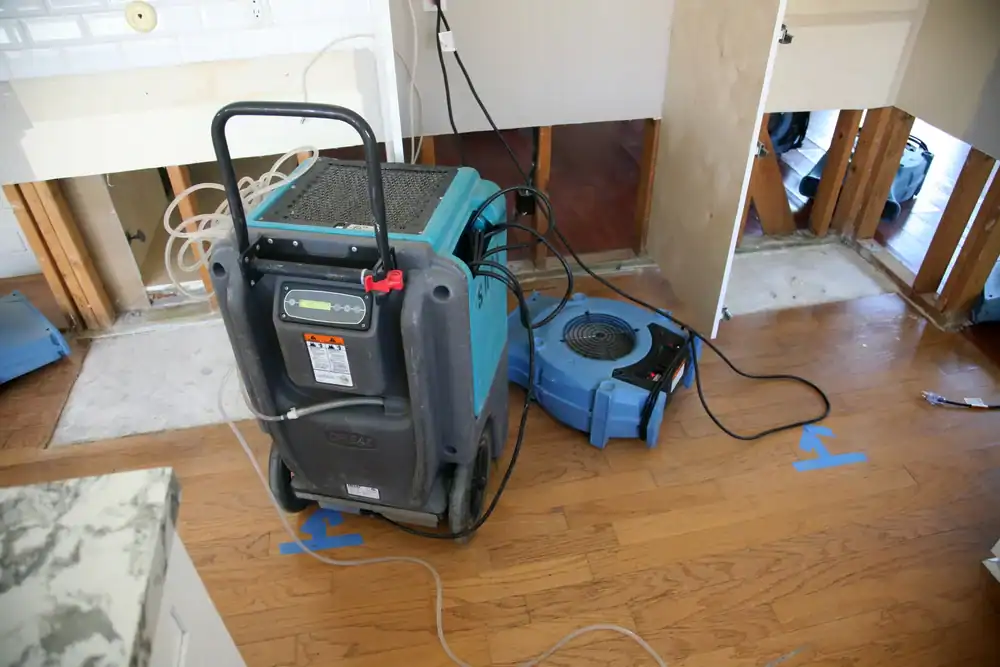
From there, extraction and structural drying begin using commercial-grade equipment, with daily moisture readings tracked and logged throughout the process. When drying is complete, you get documented proof — the kind of paperwork that NFIP adjusters and homeowners insurance carriers both need to process a claim. If mold is found or suspected, remediation follows under New York State’s licensed mold protocols. The job isn’t marked done until the numbers confirm it.
Water damage restoration isn’t one thing — it’s a sequence of steps that have to happen in the right order to actually work. We handle the full scope: emergency water extraction, structural drying, moisture mapping, mold inspection, licensed mold remediation when needed, and documentation for insurance claims. You don’t have to coordinate multiple contractors or figure out which part of the job your insurance covers. That’s handled.
For Freeport homeowners, the insurance piece is especially important. Properties in FEMA Zone AE — which covers significant portions of south Freeport — are typically required to carry National Flood Insurance Program coverage alongside private homeowners insurance. Those two policies have different triggers, different documentation requirements, and different adjusters. We work directly with both, handling the communication and paperwork so you’re not stuck in the middle trying to explain the same damage twice.
The scope of what’s needed varies by property. An older canal-side home with plaster walls and a crawl space requires a different approach than a more recently built home north of Sunrise Highway. We assess each property on its own terms — what the structure is, how the water entered, how far it traveled, and what the realistic path to a fully restored, verified-dry result actually looks like. That’s the standard every job is held to, regardless of size.
How quickly can mold start growing after flooding in a Freeport home?
Mold can begin colonizing within 24 to 48 hours of water intrusion — and in Freeport, that window is tighter than it sounds. The proximity to Great South Bay and the naturally high water tables in the canal-side neighborhoods mean ambient humidity is already elevated even before a flooding event. When water enters a home in that environment, the conditions for mold growth are essentially pre-set.
The part most homeowners don’t realize is that mold doesn’t start on surfaces you can see. It starts inside wall cavities, beneath subfloor material, and in insulation — places where moisture sits undisturbed and air circulation is minimal. By the time there’s a visible patch or a detectable odor, the problem is already well-established. That’s why the response window isn’t a sales pitch — it’s the practical difference between a drying job and a remediation job.
Does flood insurance actually cover water damage restoration costs in Freeport, NY?
It depends on how the water entered your Freeport home, and that distinction matters a lot. NFIP flood insurance — which is required for properties with federally backed mortgages in FEMA Zone AE, covering much of south Freeport — covers damage caused by flooding from an external source, like tidal surge or stormwater overflow. Standard homeowners insurance typically covers sudden internal failures, like a burst pipe or a failed sump pump, but not external flooding.
Where it gets complicated is when both things happen at once, which is common during a major coastal event. A nor’easter can simultaneously overwhelm your sump pump and push water through the foundation. Each policy may cover a different portion of the damage, and each requires its own documentation and adjuster process. We work with both types of carriers, document the damage in a way that satisfies both claim requirements, and help you understand what’s covered before you’re surprised by a gap.
What makes saltwater flood damage different from regular water damage?
Saltwater is corrosive in ways that freshwater isn’t. When tidal surge or bay water enters a home — which is a documented, recurring reality for properties near the Woodcleft Canal and the Nautical Mile — it leaves behind chloride deposits in building materials even after the visible water is gone. Those deposits are hygroscopic, meaning they continue to pull moisture from the air long after drying appears complete. That’s why a home that looks and feels dry after a tidal flooding event can still be harboring elevated moisture levels weeks later.
Saltwater also accelerates the deterioration of metal fasteners, electrical components, and drywall backing in ways that freshwater damage doesn’t. Drywall that’s been soaked in saltwater typically cannot be dried and saved — it needs to come out. The drying protocol for a saltwater-affected home is more aggressive, requires more monitoring, and takes longer to confirm complete than a standard freshwater event. If a restoration company isn’t accounting for that distinction in their process, the job isn’t being done correctly for a South Shore property.
How long does the water damage restoration process typically take?
The honest answer is that it varies, and anyone who gives you a flat timeline before seeing the property is guessing. A straightforward water heater failure in a north Freeport home with modern construction might be resolved in three to five days. A tidal flooding event that pushed saltwater into the lower level of a canal-side home in south Freeport — with older building materials, a crawl space, and moisture behind plaster walls — could take significantly longer to dry completely and document properly.
The most important thing to understand is that the timeline is driven by the moisture readings, not by how the space looks or feels. IICRC standards require drying to be confirmed with calibrated equipment, not eyeballed. Rushing that process to hit a faster timeline is how homes end up with mold problems that weren’t there when the crew left. We track daily readings and keep you informed throughout — the job closes when the numbers say it’s done.
Does Green Island Group handle the insurance claim, or is that the homeowner's responsibility?
We handle the documentation and work directly with your insurance carriers — both NFIP and private homeowners insurance if you carry both, which is common for Freeport properties in Zone AE. That means the moisture logs, thermal imaging reports, extraction records, and scope of work are all prepared in the format adjusters need to process the claim.
What that means practically is that you’re not the one translating damage into insurance language or trying to explain to two separate adjusters why the same event caused two different types of damage. That coordination is part of the job. Freeport homeowners dealing with a major coastal flooding event already have enough to manage — figuring out which policy covers which portion of a claim while water is still in the house shouldn’t be one of them. The goal is to get you the maximum covered restoration scope without the back-and-forth.
Is water damage restoration in Freeport more expensive because of the flood zone location?
The cost of restoration is driven by the scope of damage, the size of the affected area, the materials involved, and whether mold remediation is needed — not the zip code. That said, Freeport properties in the southern waterfront neighborhoods do tend to involve more complex scopes than a typical inland job, because of the factors already described: saltwater intrusion, older building materials, high ambient humidity, and the frequency with which flooding recurs in the same structures.
What keeps costs manageable for most Freeport homeowners is that insurance coverage — particularly NFIP flood insurance for Zone AE properties — is specifically designed for these events. When the documentation is done correctly and the claim is filed completely, the out-of-pocket exposure is often far less than homeowners expect going in. The bigger financial risk isn’t the cost of professional restoration. It’s the cost of incomplete restoration that leads to mold remediation, structural repairs, or disclosure complications when it comes time to sell — all of which cost significantly more than getting it right the first time.