Garden City South Homes Don't Wait — Neither Do We
When water gets into a 70-year-old home on the Hempstead Plains, the clock starts immediately. We respond fast to water damage restoration calls across Garden City South — with licensed crews, real equipment, and zero runaround.
I needed a professional consultation explanation of procedure for safe removal of Asbestos in my apartment complex. Without having an account yet, I was very impressed with the caring, knowledgeable and generous advice offered by Jessica, and will look forward to doing business in the future. Thank you so much! I feel much more informed about a sometimes scary endeavor. Peace. Nancy Silva Mineola, NY.
Mia Munoz
Used this company to clean up some water flood in my house. They were fast and easy to work with.very professional, Would recommend to anyone!
Nini Valle
Great company, had a flood and they responded quickly and efficiently. Billed my insurance company directly. I highly recommend this company!
joe colapietro, jr
I had pipe freeze in my basement right before a snow storm and they made to within an hour to help start the clean up process. They we by our side throughout the entire process and even helped with the insurance company. They did such a great job with the cleanup, repair, remidiation, I contracted them to perform the repairs and finishes in the basement. They came with enough manpower and material to get the job done. Leo and Jessica were nothing but a pleasure to deal with!!
Cristian Arredondo c
I had some water damage in my home and Green Island was able to take care of my issue quickly and effectively. I am very pleased with the work they did. They responded quickly and were very professional.
Michael M
Outstanding service! From the office to the field crew everyone was friendly, helpful and responsive. I highly recommend Green Island Group.
What Staying Ahead of the Damage Actually Looks Like
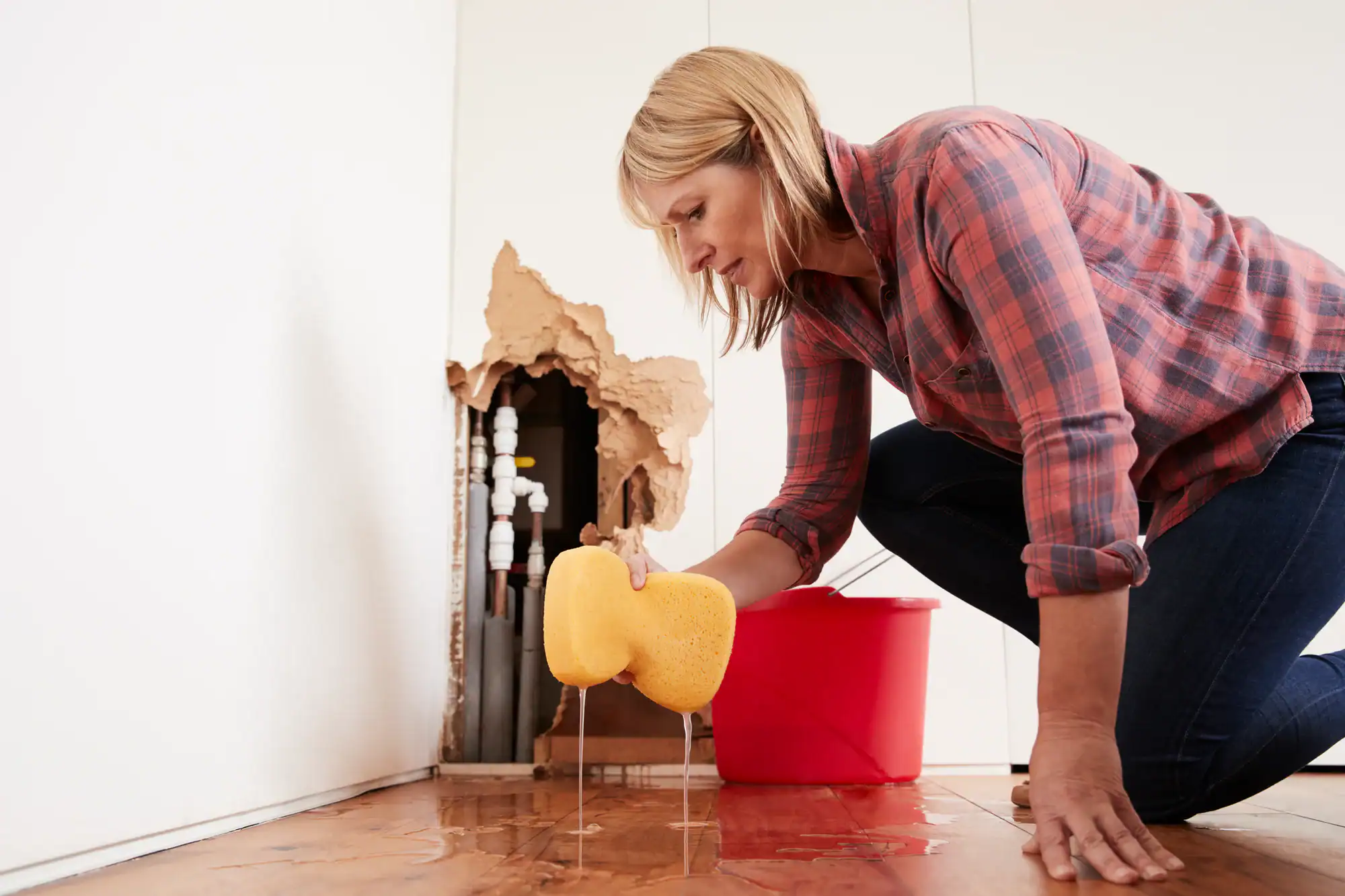
Most homeowners in Garden City South don’t call until they’ve already tried to handle it themselves — fans running, towels down, hoping it dries out. That’s understandable. But in a 1950s Cape Cod or split-level with original plaster walls and aged wood framing, moisture doesn’t just sit on the surface. It moves. It gets into the subfloor. It settles behind walls. And once mold takes hold — which EPA research puts at 24 to 48 hours — you’re no longer dealing with a water problem. You’re dealing with a remediation project.
The Hempstead Plains geology doesn’t help. Much of Garden City South sits above a water table that’s only a few feet below the surface. After a nor’easter or a hard spring thaw, that groundwater rises and pushes against foundations across this entire area. A basement that looks dry by morning can still have moisture locked inside concrete block walls and under slab — moisture that a shop vac and a box fan will never touch.
What professional water damage restoration actually gives you is certainty. Moisture readings — not visual guesses — that tell you what’s actually dry. Documentation that holds up with your insurance carrier. And a home that doesn’t develop a mold problem three weeks later because someone declared it “good enough” too soon.
Nassau County Work, Not a Franchise Forwarding Your Call
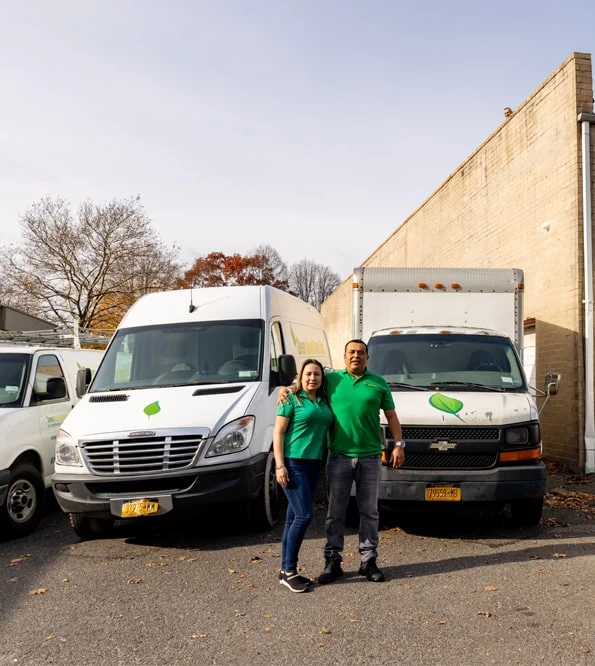
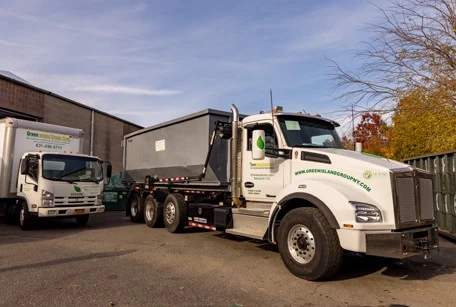
We’re locally owned and operated in Nassau County. When you call, you’re reaching the same organization that’s sending the crew — not a national call center routing your emergency through a queue while water spreads across your basement floor.
We’ve worked in homes throughout the Town of Hempstead for years, including the compact residential streets of Garden City South. We know what 1950s construction looks like from the inside — original galvanized plumbing, aging foundations, subfloor materials that absorb moisture fast. We know the Town of Hempstead Building Department permitting process, and we handle it so you don’t have to figure it out mid-emergency.
We’re also fully licensed under New York State’s 2016 Mold Law, which requires separate licensing for mold remediation work. Many operators advertising in this market don’t hold that license. We do — and we’ll tell you the license number if you ask.
Water Damage Restoration Process, Garden City South
No Guesswork — Here's Exactly What Happens When We Arrive
The first thing we do when we arrive is assess — not assume. We use moisture meters and thermal imaging to map what’s actually wet, including inside walls, under flooring, and within structural cavities. In Garden City South’s mid-century housing stock, visible damage is almost never the full picture. We need to know what’s happening inside the structure before we touch anything.
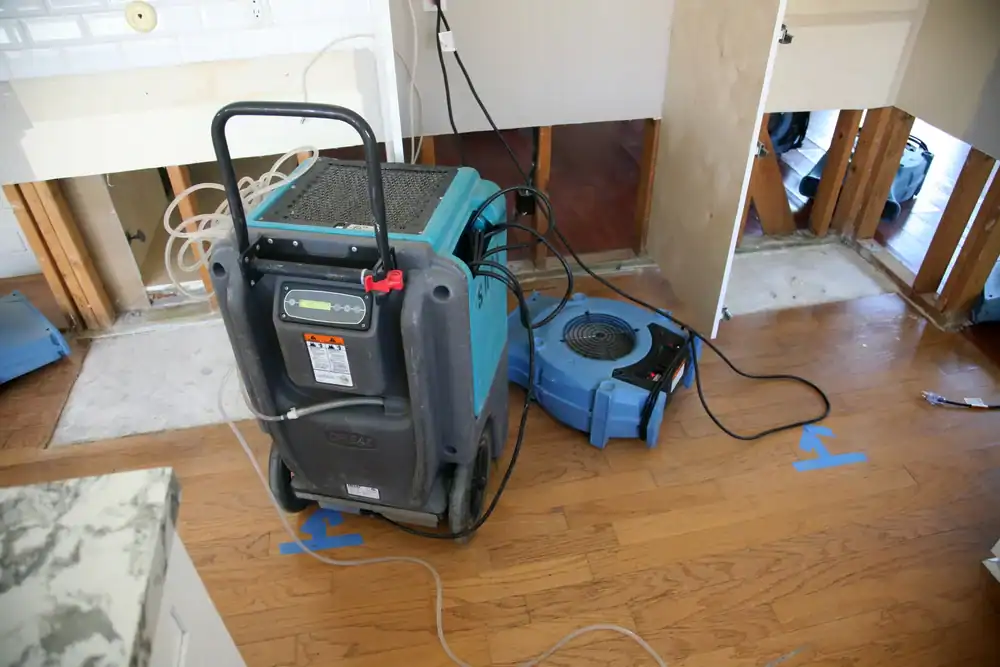
From there, we extract standing water, set industrial air movers and desiccant dehumidifiers, and begin the drying process. This equipment operates at a completely different level than anything available at a hardware store. It pulls moisture out of structural materials — not just the air — and we monitor readings daily until the numbers confirm the job is done, not just until it looks dry.
If the damage involves structural materials that need to come out — drywall, insulation, subfloor sections — we handle that removal and work through the Town of Hempstead Building Department for any permits required before reconstruction begins. We also build a complete documentation package throughout the entire process: photos, moisture logs, scope of work, drying records. That package goes directly to your insurance adjuster and is built to support a full, accurate claim from the start.
Water damage restoration isn’t a single step — it’s a sequence, and every part of it matters. When we respond to a call in Garden City South, the work covers emergency water extraction, structural drying, moisture mapping, and full documentation for your insurance claim. If mold is present or develops during the process, we handle remediation in-house under our New York State Department of Labor mold remediation license — so you’re not coordinating between two separate companies while your home sits open.
For homes along the Nassau Boulevard corridor and the surrounding residential streets in Garden City South, the most common scenarios we respond to are basement flooding from groundwater intrusion after heavy rain, burst pipes in under-insulated utility areas during winter cold snaps, and appliance failures — water heaters and washing machine connections that have been in place for decades in homes that haven’t been fully updated. Each of these has a different damage profile, and we treat them accordingly.
Because Garden City South is an unincorporated hamlet, all permit-required work goes through the Town of Hempstead Building Department — not a village office. We’re familiar with that process and manage it directly. We also work with all major homeowners insurance carriers and handle adjuster communication so the claim reflects the actual scope of damage, not a minimized version of it.
Does homeowners insurance cover water damage in Garden City South, NY?
It depends on the cause, and this is where a lot of homeowners get caught off guard. Standard homeowners insurance policies in New York generally cover sudden and accidental water damage — a pipe that bursts, a water heater that fails, a washing machine hose that gives out. What they typically don’t cover is gradual damage, meaning a slow leak that’s been developing for weeks or months, or flooding from an outside water source, which requires separate flood insurance through FEMA’s National Flood Insurance Program.
For Garden City South homeowners, the groundwater intrusion that happens after a nor’easter or a high water table event is often categorized as flooding — which means it may fall under flood coverage rather than your standard policy. This distinction matters enormously when you’re filing a claim on a home valued at $700,000 or more. We document the damage and its cause thoroughly from the first visit, which gives your adjuster a clear, accurate picture and reduces the chance of a coverage dispute later.
How quickly can mold develop after water damage in an older home?
Mold can begin growing within 24 to 48 hours of water intrusion — this is documented EPA and IICRC guidance. In a newer home with modern building materials, that window still matters. In a 1950s Cape Cod or split-level in Garden City South, it matters more. Original wood framing, plaster walls, and aged subfloor materials are highly porous and give mold abundant organic material to colonize. The risk isn’t just surface mold you can see — it’s mold growing inside wall cavities that look completely normal from the outside.
This is why the drying timeline is so critical. A restoration company that declares a job complete based on visual assessment rather than moisture readings is leaving you exposed. We don’t close out a job in Garden City South until the moisture meters confirm that structural materials have reached acceptable drying standards — because in a 70-year-old house, “looks dry” and “is dry” are not the same thing.
What causes basement flooding in Garden City South specifically?
Garden City South sits on the Hempstead Plains, a flat, low-drainage landscape where the water table is only a few feet below the surface in many areas. When heavy rain hits — and Long Island’s nor’easters can deliver several inches in a short window — that water table rises fast. It pushes hydrostatically against basement foundations throughout this area, finding its way through cracks in concrete block walls, floor drain backups, and gaps around utility penetrations. This isn’t coastal flooding. It’s an inland groundwater problem that affects compact, fully urbanized neighborhoods like Garden City South just as reliably as storm surge affects the barrier island towns.
The homes most vulnerable are those with original 1950s foundations that have developed permeability over decades and no modern sump pump system — or a sump system that wasn’t designed for the volume of water that current storm intensities can produce. If your basement flooded after a recent nor’easter or spring thaw, you’re dealing with a groundwater intrusion issue, and the fix starts with understanding how water is actually entering the structure — not just where it ended up on the floor.
How does the water damage restoration process work with my insurance adjuster?
The short version: we handle the documentation side so you’re not trying to build a claim from memory while also managing a disrupted household. From the moment we arrive, we’re creating a record — moisture readings, photographs, a written scope of work, and daily drying logs. That record is what your adjuster uses to evaluate the claim, and it needs to be thorough and accurate from the start.
One thing that matters specifically in a high-value market like Garden City South is scope accuracy. With median home values in this area well above $700,000, the cost to properly restore water-damaged materials — original hardwood floors, plaster walls, finished basement spaces — is significant. An incomplete or poorly documented claim can result in a settlement that doesn’t cover the actual restoration cost. We communicate directly with adjusters from all major carriers and make sure the documentation reflects the real scope of what happened to your home, not a minimized version of it.
How long does water damage restoration take from start to finish?
The drying phase alone typically takes three to five days for most residential water damage scenarios, though that can extend depending on how much structural material was affected and how long the water was present before extraction began. Structural drying isn’t something you can rush — it’s governed by moisture readings, not a calendar. We monitor daily and adjust equipment placement based on what the numbers show.
After drying is complete, any reconstruction work — replacing drywall, subfloor sections, insulation — adds additional time, and in Garden City South, that reconstruction goes through the Town of Hempstead Building Department for permitting if structural work is involved. That process adds some lead time, but it’s non-negotiable and we manage it directly. The full timeline from emergency response to a restored, permitted, and documented job typically runs one to three weeks depending on the extent of the damage. We’ll give you a realistic estimate after the initial assessment — not a number designed to make you feel better in the moment.
Is water damage restoration in Garden City South covered if it involves mold?
Mold remediation coverage under a homeowners policy varies by carrier and by how the mold developed. If mold resulted directly from a covered water damage event — a burst pipe, for example — many policies will include some mold remediation coverage, often with a sub-limit. If the mold is the result of a long-term moisture issue or deferred maintenance, coverage is less likely. Reading your specific policy language and getting your carrier on the phone early is important.
What matters on the contractor side is that whoever performs mold remediation in New York State holds a valid New York State Department of Labor mold remediation contractor license. This is a legal requirement under the 2016 Mold Law, and it’s not universally followed in this market. An unlicensed operator doing mold remediation work in your Garden City South home is operating outside the law, and their work may not be accepted by your insurance carrier or recognized by a future home inspector. We hold the required state license and follow IICRC AMRT standards for all mold-related work — so the remediation is done correctly, documented properly, and stands up to scrutiny.