Levittown Homes Are Built Different — and So Is Our Approach
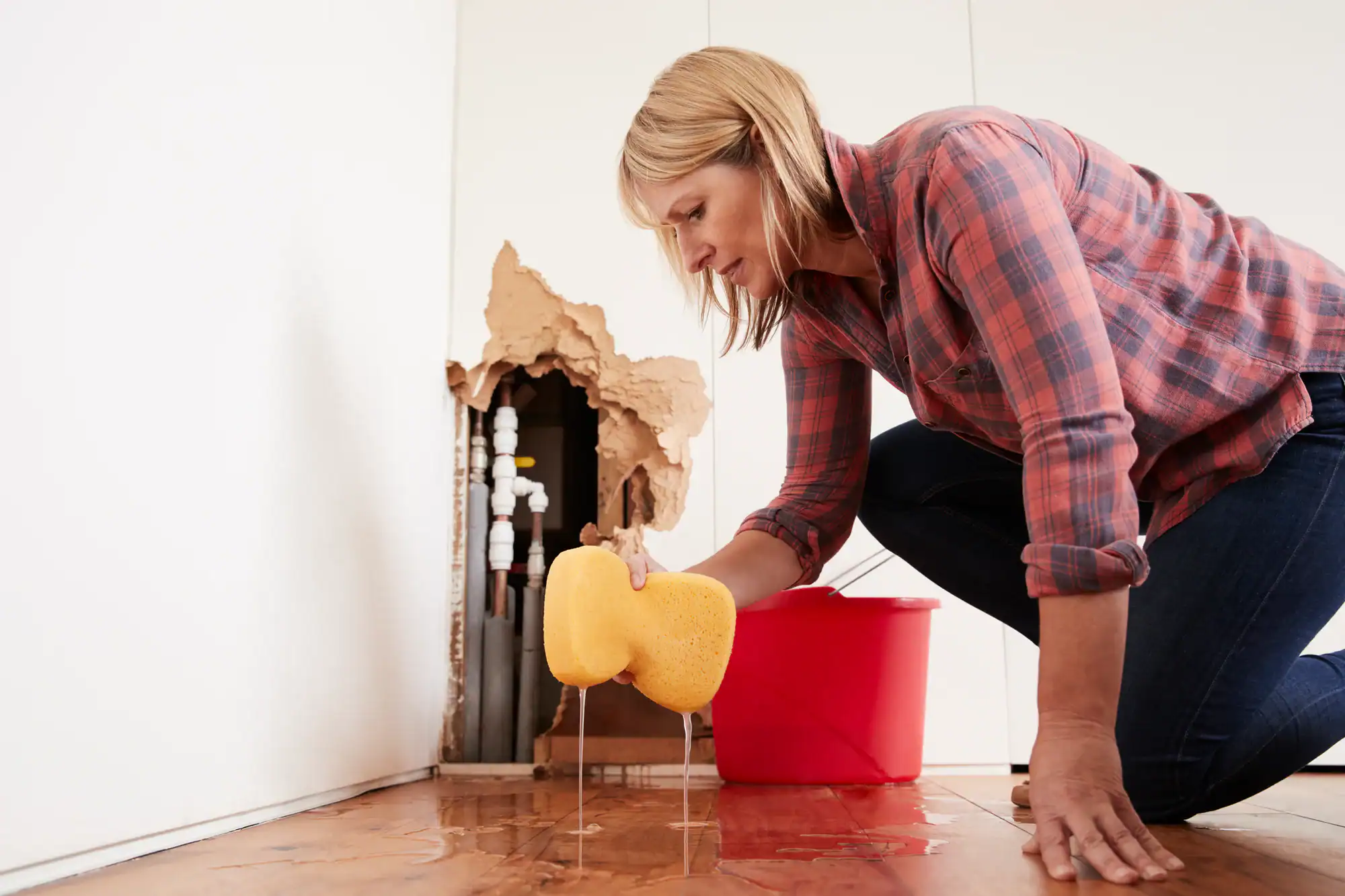
When water gets into a 75-year-old Levitt home, it doesn’t behave the way it would in newer construction. We know what’s behind your walls — and we move fast before it gets worse.
I needed a professional consultation explanation of procedure for safe removal of Asbestos in my apartment complex. Without having an account yet, I was very impressed with the caring, knowledgeable and generous advice offered by Jessica, and will look forward to doing business in the future. Thank you so much! I feel much more informed about a sometimes scary endeavor. Peace. Nancy Silva Mineola, NY.
Mia Munoz
Used this company to clean up some water flood in my house. They were fast and easy to work with.very professional, Would recommend to anyone!
Nini Valle
Great company, had a flood and they responded quickly and efficiently. Billed my insurance company directly. I highly recommend this company!
joe colapietro, jr
I had pipe freeze in my basement right before a snow storm and they made to within an hour to help start the clean up process. They we by our side throughout the entire process and even helped with the insurance company. They did such a great job with the cleanup, repair, remidiation, I contracted them to perform the repairs and finishes in the basement. They came with enough manpower and material to get the job done. Leo and Jessica were nothing but a pleasure to deal with!!
Cristian Arredondo c
I had some water damage in my home and Green Island was able to take care of my issue quickly and effectively. I am very pleased with the work they did. They responded quickly and were very professional.
Michael M
Outstanding service! From the office to the field crew everyone was friendly, helpful and responsive. I highly recommend Green Island Group.
The moment water enters your home, a clock starts. Within 24 to 48 hours, mold can begin growing inside your wall cavities, under your flooring, and in the structural framing you can’t see. This is documented science, and it’s why the speed of your response matters more than almost anything else.
For Levittown homeowners specifically, that window is tighter than most people realize. Many of the original Levitt ranch homes were built on concrete slabs with radiant heating pipes embedded directly in the slab. When those pipes fail — and after 75 years, many of them are — water doesn’t flood dramatically across the floor. It seeps upward through the concrete slowly and silently, saturating your flooring from underneath before you ever notice it on the surface. By the time you feel it, the damage is already well underway.
What changes after professional restoration is done right: the moisture is actually gone — not just surface-dry, but measurably dry inside your walls, under your slab, and within your structure. Your insurance claim is documented to the standard your carrier requires. And the mold risk that was building by the hour is stopped before it becomes a separate, far more expensive problem. That’s the outcome that matters.
Local Ownership Means Someone's Actually Accountable
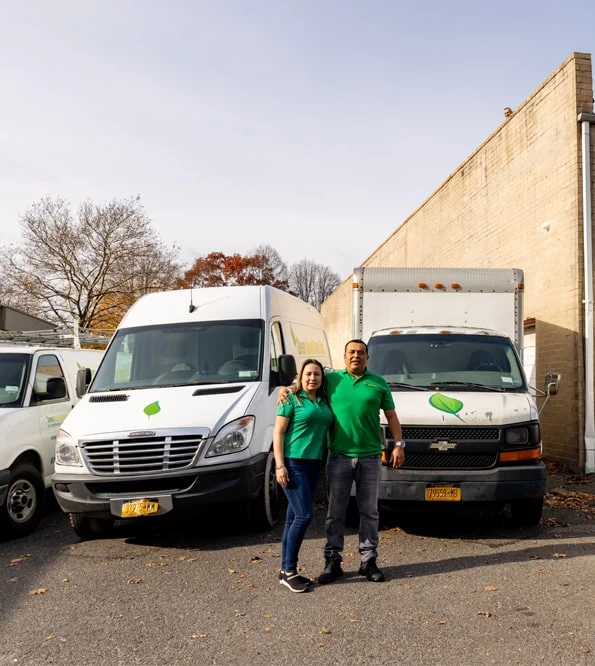
Green Island Group is a Long Island company — not a franchise unit operating under a national brand name, and not a lead-generation site with a Levittown domain and a Chicago phone number. When you call us, you’re talking to the people who will actually show up to your home.
We’ve worked throughout Levittown and Nassau County, including the original Levitt neighborhoods along Gardiners Avenue, Wantagh Avenue, and the streets that branch off Hempstead Turnpike. We understand what these homes look like from the inside — the expanded Cape Cods with finished attics, the slab-on-grade ranches, the three generations of plumbing modifications layered into a house that started at 750 square feet in 1949. That knowledge changes how we approach a job.
We’re fully licensed under New York State’s Mold Law, IICRC-certified, and carry a Nassau County Home Improvement Contractor license. These aren’t checkboxes — they’re the legal requirements that protect you when a claim is filed and work needs to be verified.
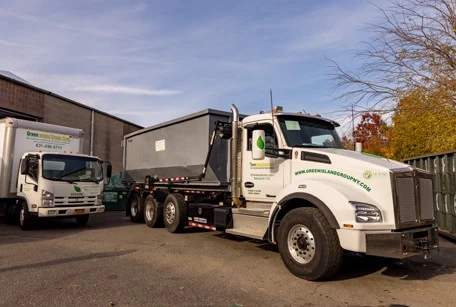
When you call Green Island Group, you’re not reaching a national dispatch center. You’re reaching someone on Long Island who can have a crew moving toward your Levittown address within the hour — any time of day, any day of the year. The first thing we do when we arrive is assess the full scope of what happened, not just what’s visible. We use thermal imaging cameras and calibrated moisture meters to find where water has migrated inside your walls, beneath your flooring, and into structural materials that look fine on the surface but aren’t.
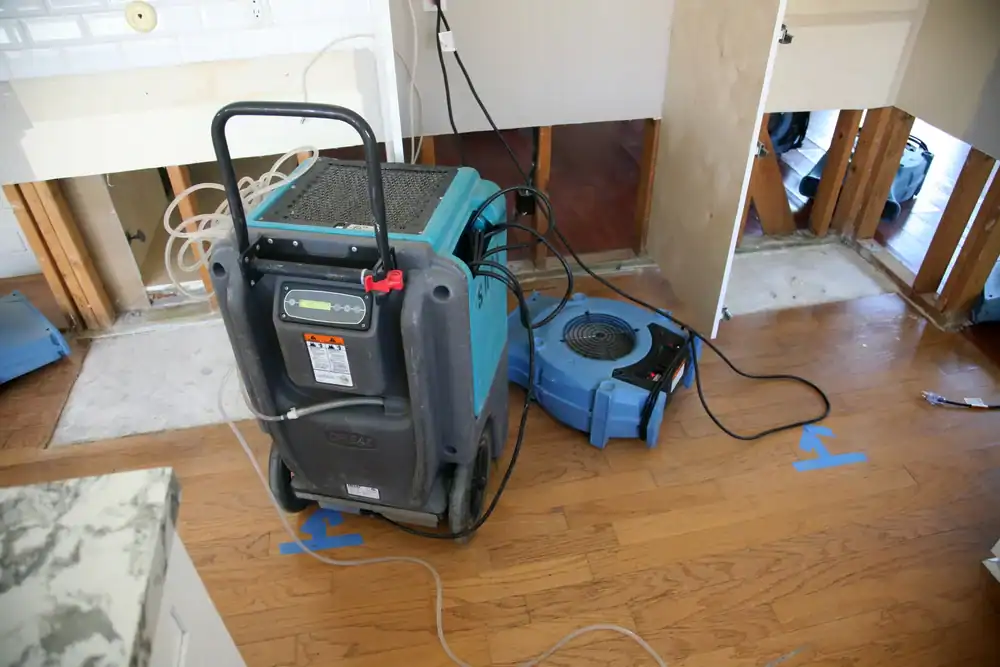
From there, we extract standing water, set industrial air movers and desiccant dehumidifiers, and begin the structural drying process. This equipment isn’t comparable to hardware store fans — it pulls moisture out of wall cavities, subfloor material, and framing from the inside out. In a Levittown home where water may have traveled through layers of renovation work done across five decades, that distinction matters.
Throughout the drying process, we document everything to IICRC S500 standards — moisture readings, drying logs, thermal imaging reports. This documentation is what your insurance adjuster needs to process your claim properly. We communicate directly with your carrier, so you’re not left translating between our crew and an insurance company while managing a damaged home. The job isn’t done until the readings confirm your home is structurally dry.
What's Actually Included When We Restore Your Home
Water damage restoration isn’t a single task — it’s a sequence of steps that have to happen in the right order to actually work. We handle the full scope: emergency water extraction, structural drying, moisture mapping, antimicrobial treatment where needed, and complete insurance documentation. If the water source was a burst pipe, a failed radiant heating line beneath your slab, or surface flooding from a Nassau County flash flood event, the category of water determines how we handle the material removal and treatment process.
Category 1 water — a clean supply line failure — is handled differently than Category 2 or Category 3 water, which carries contaminants and requires stricter protocols for material handling and disposal. Levittown’s flat topography and the density of impervious surfaces along Hempstead Turnpike mean that surface flooding events often push Category 2 or 3 water into basements and ground-floor spaces. That’s not a minor distinction — it affects what materials can be dried in place and what needs to come out.
For jobs where mold is discovered or suspected, our mold assessment and remediation services are handled under separate New York State-issued licenses, as required by the 2016 NY Mold Law. This isn’t optional under state law, and any restoration company operating in Nassau County that can’t demonstrate separate licensing for both functions is operating outside legal compliance. We maintain both licenses.
Does homeowners insurance cover water damage restoration in Levittown, NY?
It depends on the source of the water, and the distinction matters a lot. Most standard homeowners insurance policies in New York cover sudden and accidental water damage — a burst pipe, a washing machine line that fails, an ice dam that forces water through your roof. What they typically don’t cover is gradual damage: a slow leak that’s been building for months, or a radiant heating pipe beneath your slab that’s been seeping for years before you noticed it. That’s a meaningful distinction for Levittown homeowners specifically, because the slab-on-grade construction in the original Levitt ranch homes makes radiant pipe failures notoriously difficult to detect early.
What you can control is the documentation. Insurance carriers in Nassau County require IICRC-compliant moisture logs, thermal imaging reports, and itemized damage assessments to process a water damage claim properly. If that documentation isn’t there, claims get disputed or underpaid. We document every job to that standard and communicate directly with your adjuster — so you’re not navigating that process alone while also managing a damaged home.
How quickly does mold start growing after water damage in my home?
The EPA and the IICRC both put the window at 24 to 48 hours under the right conditions — and Long Island’s humid climate in spring and summer creates exactly those conditions. Mold doesn’t need a lot of water to get started. It needs moisture, organic material, and warmth. A Levittown home that’s 75 years old has plenty of organic material inside its wall cavities, original framing, and subfloor layers — and if water has reached those areas, mold can begin growing before you’ve even had a chance to call anyone.
The part that catches most homeowners off guard is that mold starts in places you can’t see. It grows inside wall cavities, under flooring, and in the structural framing behind drywall — not on surfaces where you’d notice it immediately. By the time you can see mold or smell it, the growth is already established. That’s why professional drying — with equipment that actually removes moisture from inside the structure, not just from the surface — is the thing that stops the clock. Speed is everything here, and waiting for a national company’s callback window to open is not a neutral decision.
What makes water damage in a Levittown slab home different from other houses?
The original Levitt ranch homes were built on concrete slabs with hot-water radiant heating pipes embedded directly in the slab — a construction method that was efficient in 1949 and is now, 75 years later, a significant liability. When those pipes corrode and fail, water doesn’t pour out dramatically. It migrates upward through the concrete slowly, saturating whatever flooring sits on top of it from underneath. Vinyl flooring feels soft underfoot. Hardwood warps. A homeowner might notice something feels off for weeks before understanding what’s actually happening.
This type of damage is invisible to standard visual inspection. You need thermal imaging to locate where the moisture is migrating and calibrated moisture meters to understand how deep it’s gone. It’s also frequently misdiagnosed by contractors who aren’t familiar with this construction type — they dry the surface and leave the slab still saturated, which means the problem returns. If your Levittown home is a slab-on-grade ranch and you’re seeing unexplained moisture, soft spots in your flooring, or persistent dampness anywhere on the ground floor, that’s a situation that warrants a professional assessment before it becomes a mold problem.
How long does the water damage restoration process typically take?
The honest answer is that it depends on how much water entered, where it went, and what materials it reached. A straightforward pipe burst that’s caught quickly in a finished basement might be dried and documented within three to five days. A more complex situation — water that’s migrated into wall cavities, reached subfloor material, or saturated a concrete slab — can take seven to ten days or more to dry properly, because you’re waiting for moisture meter readings to confirm the structure is actually dry, not just assuming it is.
In Levittown, where many homes have been expanded and renovated over decades, water often travels through layers of construction that weren’t designed to work together — original framing, mid-century insulation, and modern drywall in the same wall cavity. That complexity affects drying time, because air movers and dehumidifiers have to work through all of it. What we don’t do is call a job done based on how many days have passed. The job is done when the readings say it’s done, and we document every reading along the way for your insurance claim.
Can I use fans and a dehumidifier from the hardware store to dry my home myself?
You can, but it won’t accomplish what you need it to accomplish — and in some cases, it can make things worse. Consumer-grade fans move surface air. They do not extract moisture from inside wall cavities, from beneath concrete slabs, or from within structural framing. What they can do is create air movement that distributes mold spores if growth has already started, which spreads the problem rather than containing it.
Industrial restoration equipment — the kind we deploy — is purpose-built to pull moisture out of materials from the inside. Desiccant dehumidifiers and high-velocity air movers work together to drop the vapor pressure inside structural materials, drawing moisture out through the surface and into the air where it can be captured. The difference between that and a $300 hardware store dehumidifier isn’t incremental — it’s the difference between a home that’s actually dry and one that looks dry on the surface while mold develops inside the wall. For a Levittown home valued at over $500,000, the cost of professional drying is a small fraction of what secondary mold remediation costs if the first response isn’t done right.
How do I know if a water damage company serving Levittown is actually licensed and legitimate?
This is worth asking directly before you let anyone start work. In New York State, any company performing mold assessment or mold remediation must hold separate licenses issued by the New York State Department of Labor — one for assessment and one for remediation. A single company cannot legally perform both on the same project without maintaining separate licensure. You can verify any contractor’s license through the NY State DOL website before work begins.
Beyond mold licensing, restoration contractors performing structural repairs in Nassau County need a Home Improvement Contractor license through the Town of Hempstead. IICRC certification — specifically the Water Damage Restoration Technician (WRT) credential — is the industry standard your insurance company uses to evaluate whether the work was performed correctly. A company that can’t show you these credentials isn’t just less qualified — the work they perform may not be recognized by your insurance carrier, which could leave you with an unpaid claim and a home that wasn’t properly restored. Levittown homeowners have enough to deal with in an emergency without that added risk. Ask for credentials upfront. Any legitimate restoration company will provide them without hesitation.