I needed a professional consultation explanation of procedure for safe removal of Asbestos in my apartment complex. Without having an account yet, I was very impressed with the caring, knowledgeable and generous advice offered by Jessica, and will look forward to doing business in the future. Thank you so much! I feel much more informed about a sometimes scary endeavor. Peace. Nancy Silva Mineola, NY.
Mia Munoz
Used this company to clean up some water flood in my house. They were fast and easy to work with.very professional, Would recommend to anyone!
Nini Valle
Great company, had a flood and they responded quickly and efficiently. Billed my insurance company directly. I highly recommend this company!
joe colapietro, jr
I had pipe freeze in my basement right before a snow storm and they made to within an hour to help start the clean up process. They we by our side throughout the entire process and even helped with the insurance company. They did such a great job with the cleanup, repair, remidiation, I contracted them to perform the repairs and finishes in the basement. They came with enough manpower and material to get the job done. Leo and Jessica were nothing but a pleasure to deal with!!
Cristian Arredondo c
I had some water damage in my home and Green Island was able to take care of my issue quickly and effectively. I am very pleased with the work they did. They responded quickly and were very professional.
Michael M
Outstanding service! From the office to the field crew everyone was friendly, helpful and responsive. I highly recommend Green Island Group.
What Stays Hidden in Your Walls Costs More Than What You Can See
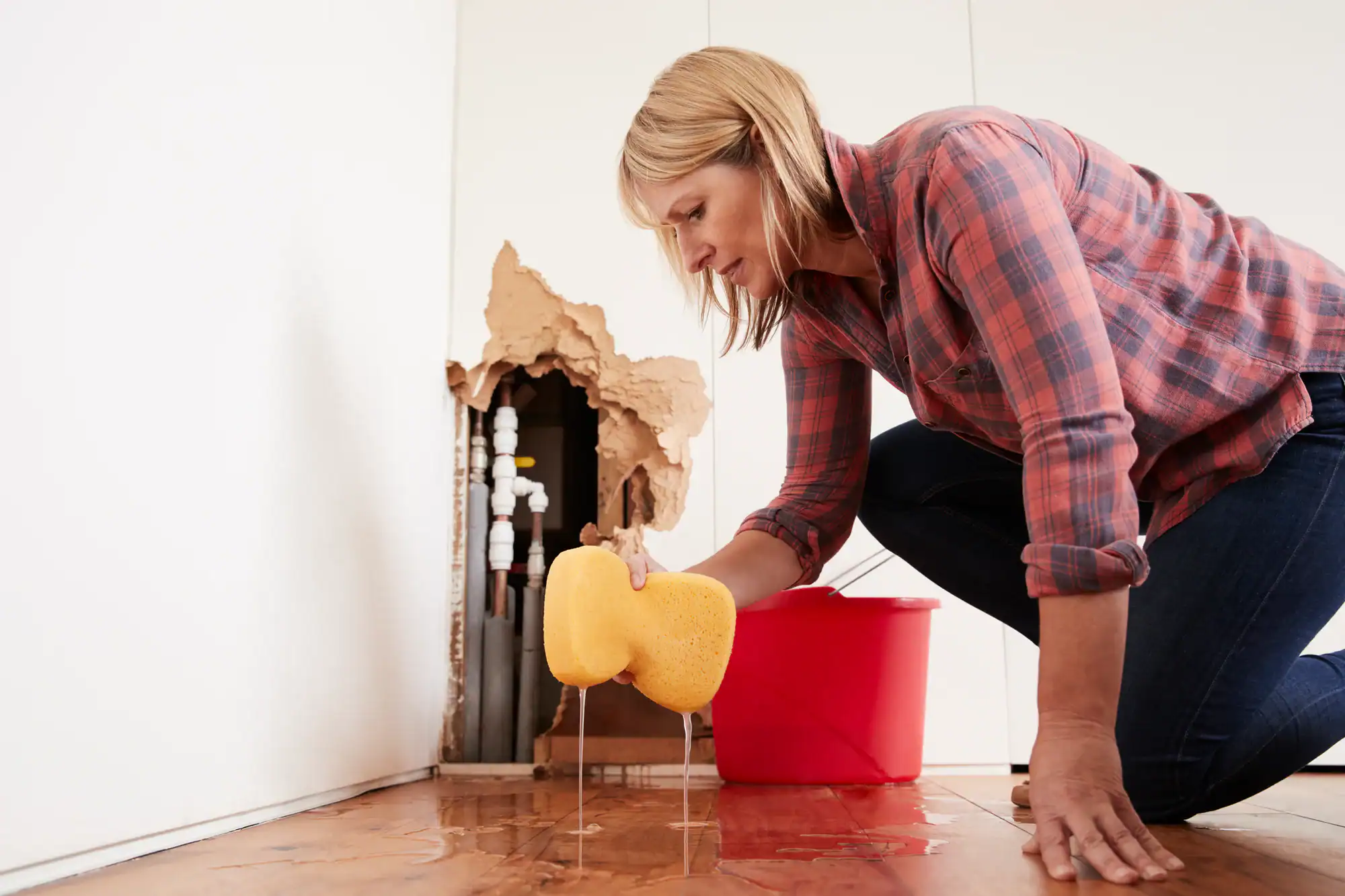
Most of the damage after a water event in Massapequa Park isn’t visible on day one. It’s inside the walls of a 1950s colonial, underneath hardwood floors that absorbed more than they showed, or sitting in a subfloor cavity that hasn’t dried out since the storm passed. By the time you see discoloration or smell something off, the window to stop it cheaply has already closed.
The homes in “The Park” were built in a different era — most of them between the 1940s and 1960s, with some dating back to the original 1920s development. That aging construction absorbs moisture faster and holds it longer than modern builds. When water gets in, it doesn’t just sit on the surface. It travels through original drywall, into wood framing, and into the structural materials that hold your home together.
What good restoration actually gives you is certainty. Not just dry floors, but confirmed moisture readings throughout the structure. Not just a dehumidifier running for a few days, but thermal imaging that finds water where you can’t see it. When we finish the job right, you know your home is genuinely dry — and you’re not waiting six months to find out what was missed.
Water Restoration Companies Serving Massapequa Park
Local Knowledge That No Franchise Manual Can Teach
We’re a Long Island-based water damage restoration company — not a national brand with a local phone number. When you call, you’re reaching people who know Nassau County’s South Shore, who understand what storm surge looks like when it pushes through the canal system south of Merrick Road, and who have worked on the kind of homes that make up Massapequa Park’s housing stock.
That matters when the job involves a mid-century home near the canals off Merrick Road, or a Sears kit house on one of the Irish-named streets between Sunrise Highway and Park Boulevard. These aren’t generic square footage — they’re homes with real history, and the restoration approach has to reflect that.
We also know the Village of Massapequa Park operates its own Building Department. Restoration work that involves structural repairs or demolition inside the village requires permits issued at the village level — not just through the Town of Oyster Bay. We know that process, and we handle it so you don’t have to figure it out mid-emergency.
Water Damage Restoration Service, Massapequa Park NY
From the First Call to a Fully Documented, Dry Home
When you call, the first thing that happens is a real conversation — not a form, not a callback queue. We ask what you’re dealing with, and we move. For emergency situations, especially during nor’easters or storm surge events that affect the South Shore, response time is everything. Every hour of standing water in a home with older construction accelerates the damage. We treat that urgency like it’s our own home.
On-site, we start with a full assessment using thermal imaging cameras and professional moisture meters. This step isn’t optional — it’s the only way to know where the water actually went, not just where it’s visible. In Massapequa Park’s older housing stock, water migrates quickly through original building materials and into structural cavities that look fine on the surface. We map the full extent before we touch anything.
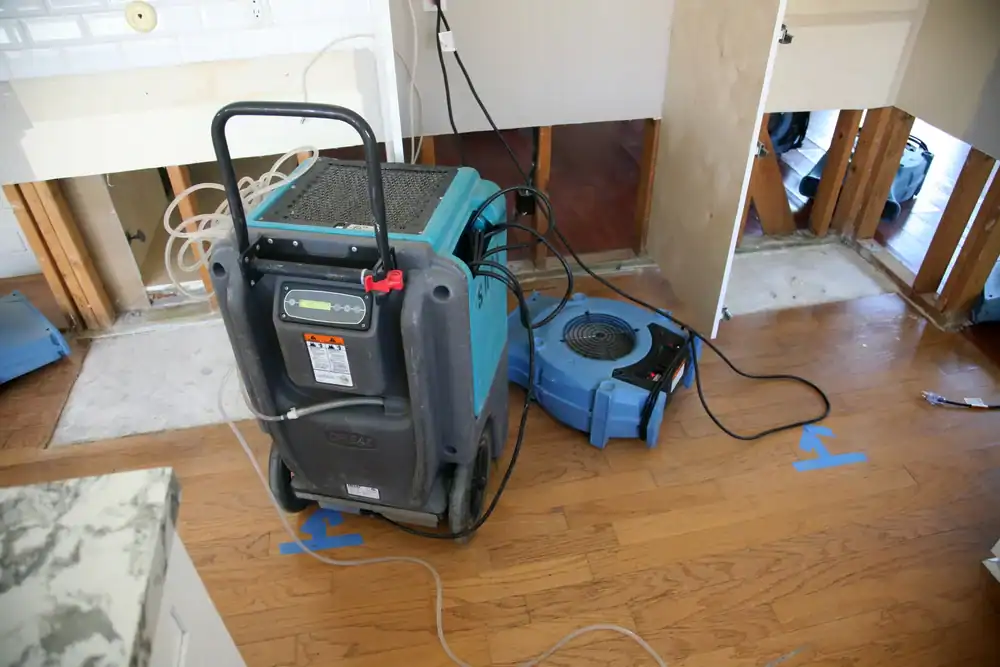
From there, water extraction and structural drying begin using industrial-grade equipment — not consumer dehumidifiers. We monitor moisture levels throughout the drying process, document everything in the format your insurance carrier expects, and communicate directly with your adjuster. If the scope of damage requires permits through the Village of Massapequa Park’s Building Department, we handle that as part of the job. When the work is done, you get confirmation — not a handshake and a hope.
Water Restoration and Mold Remediation, Nassau County
Every Job Covers What Massapequa Park Homes Actually Face
Water damage restoration here isn’t a single service — it’s a sequence. Extraction comes first, then structural drying, then a full moisture verification before any reconstruction begins. In a coastal community with high ambient humidity and a housing stock that dates back decades, skipping steps doesn’t save time. It creates mold problems that show up weeks later and cost significantly more to address.
Speaking of mold — New York State’s 2016 Mold Law requires specific Department of Labor licensing for both mold assessment and mold remediation. These are separate licenses, and many operators advertising in Nassau County don’t hold them. Unlicensed mold work is illegal in New York, and it can complicate your insurance claim in ways that are difficult to unwind. We carry the required state licensing, and that’s not a fine-print detail in a flood-prone village like Massapequa Park — it’s the baseline for doing the job legally and correctly.
Insurance claim documentation is built into every job we do. We photograph damage at every stage, record moisture readings throughout the structure, and produce the kind of scope documentation that insurance adjusters are trained to evaluate against IICRC S500 standards. Whether you’re dealing with a homeowners claim or a flood insurance policy — both of which are common in Massapequa Park’s FEMA flood zones — the paperwork is handled with the same care as the physical work.
How quickly does mold start growing after water damage in Massapequa Park?
Mold can begin growing within 24 to 48 hours of water intrusion. In Massapequa Park specifically, that window can feel even shorter because of the South Shore’s coastal humidity. When ambient moisture in the air is already elevated, wet building materials don’t need much help reaching the conditions mold needs to take hold.
The bigger issue is that mold doesn’t start in visible places. It starts inside wall cavities, under flooring, and in the subfloor — exactly the areas that older homes in Massapequa Park have in abundance. By the time you see it or smell it, it’s already established. That’s why the drying verification step matters as much as the extraction itself. Confirming that the structure is genuinely dry — not just surface dry — is what separates a complete restoration from one that creates a mold problem three weeks later.
Does flood insurance cover water damage from canal flooding in Massapequa Park?
It depends on the source of the water and how your policy is written, and this is one of the more complicated questions South Shore homeowners face. Standard homeowners insurance typically covers sudden and accidental water damage — a burst pipe, an appliance failure, a roof leak. It generally does not cover flooding from external water sources, which includes storm surge and canal overflow. That type of damage falls under flood insurance, which is a separate policy administered through the National Flood Insurance Program or private carriers.
Many Massapequa Park properties are located in FEMA-designated flood hazard zones, which means flood insurance is often required as a condition of the mortgage. If you’re in one of those zones and you have flood coverage, canal flooding from a storm event should be claimable — but the documentation has to be specific and complete. The distinction between flood damage and other water intrusion matters to adjusters, and how the damage is documented from the start affects how the claim resolves. We’ve navigated this on South Shore properties before and handle the documentation accordingly.
What actually happens if water damage in my home goes untreated for a few days?
The short answer is that costs compound fast. Industry data shows restoration expenses can double for every 24 hours that water intrusion goes unaddressed. In a Massapequa Park home built in the 1950s or earlier, that escalation happens quickly because the building materials — original drywall, wood framing, older insulation — absorb moisture readily and release it slowly. What might be a contained mitigation job on day one becomes a full demolition and rebuild by day three.
Beyond cost, the structural timeline matters too. Wood framing that stays wet long enough begins to weaken. Drywall that absorbs water loses integrity and becomes a mold substrate. Hardwood floors that aren’t extracted and dried within the first 24 to 48 hours often can’t be saved. Industrial drying equipment is what actually dries a home, and the sooner it’s running, the better the outcome.
Do I need a permit for water damage restoration work in Massapequa Park village?
In many cases, yes — and this is a detail that catches homeowners and some restoration companies off guard. Massapequa Park is an incorporated village with its own Building Department, which means it operates independently from the Town of Oyster Bay. Restoration work that involves removing finished surfaces — drywall, flooring, ceilings — or making structural repairs within the village typically requires a permit issued by the Village of Massapequa Park’s Building Department specifically, not just a general Nassau County or town-level approval.
This matters practically because work performed without the required village permits can create complications when you sell the home, file an insurance claim, or need a certificate of occupancy for rebuilt areas. A restoration company that doesn’t know the difference between working inside the incorporated village versus the surrounding hamlet of Massapequa may not pull the right permits — or any permits at all. We’re familiar with the village’s process and handle permitting as part of the job so there are no compliance surprises after the work is done.
How do I know if the water damage restoration company I hire is properly licensed in New York?
The most important license to verify in New York is the mold remediation license issued by the New York State Department of Labor. Since the 2016 Mold Law took effect, mold assessment and mold remediation in New York must be performed by separately licensed contractors — and the two licenses are distinct. A company that does both needs to hold both, or use separate licensed parties for each phase. You can verify a contractor’s mold license directly through the NY DOL’s online license lookup.
Beyond mold licensing, IICRC certification is the industry standard for water damage restoration specifically. IICRC-certified technicians follow the S500 protocol — the same standard insurance carriers use to evaluate whether restoration was performed correctly. A company without IICRC certification isn’t necessarily doing bad work, but their documentation may not hold up the same way during the claims process. In Nassau County, where South Shore flood claims are common and adjusters are experienced, having a certified and fully licensed restoration company handle the job from the start protects both your home and your claim.
What should I do in the first hour after discovering water damage in my Massapequa Park home?
The first thing to do is stop the source if you can — shut off the main water supply if it’s a plumbing failure, or move away from the affected area if it’s storm-related and still actively flooding. Don’t run fans or try to dry things yourself yet, because moving air through a space with contaminated water or saturated materials can spread the problem before you know the full extent of it.
Call a restoration company immediately — not after you’ve tried to clean it up, not after the weekend. In Massapequa Park, where the housing stock is older and the South Shore’s humidity is a constant factor, the 24 to 48-hour mold window starts the moment the water intrudes, not when you get around to dealing with it. While you’re waiting for the crew to arrive, document everything with photos and video for your insurance claim — the water level, the affected areas, any visible damage to flooring, walls, and belongings. Don’t throw anything away before it’s documented. That documentation is the foundation of your claim, and starting it early makes the entire process easier to navigate.