When Water Damage Hits a North Hills Home, Every Hour Counts
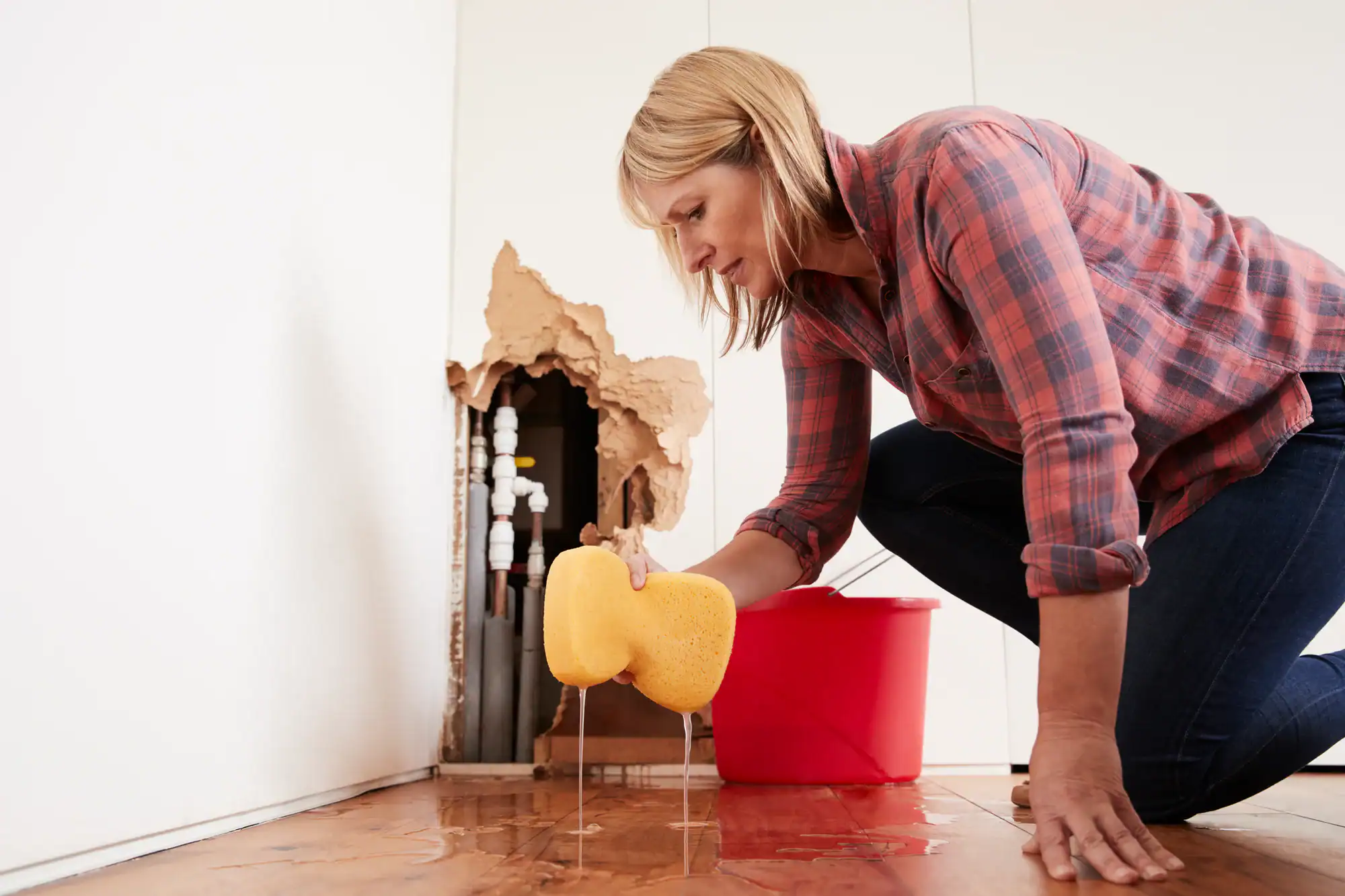
Water damage in a North Hills home doesn’t wait — and neither should your restoration team. We respond fast with the equipment, licensing, and local knowledge to stop the damage before it becomes a much bigger problem. The homes throughout this village aren’t standard builds, and they don’t get standard treatment from us.
I needed a professional consultation explanation of procedure for safe removal of Asbestos in my apartment complex. Without having an account yet, I was very impressed with the caring, knowledgeable and generous advice offered by Jessica, and will look forward to doing business in the future. Thank you so much! I feel much more informed about a sometimes scary endeavor. Peace. Nancy Silva Mineola, NY.
Mia Munoz
Used this company to clean up some water flood in my house. They were fast and easy to work with.very professional, Would recommend to anyone!
Nini Valle
Great company, had a flood and they responded quickly and efficiently. Billed my insurance company directly. I highly recommend this company!
joe colapietro, jr
I had pipe freeze in my basement right before a snow storm and they made to within an hour to help start the clean up process. They we by our side throughout the entire process and even helped with the insurance company. They did such a great job with the cleanup, repair, remidiation, I contracted them to perform the repairs and finishes in the basement. They came with enough manpower and material to get the job done. Leo and Jessica were nothing but a pleasure to deal with!!
Cristian Arredondo c
I had some water damage in my home and Green Island was able to take care of my issue quickly and effectively. I am very pleased with the work they did. They responded quickly and were very professional.
Michael M
Outstanding service! From the office to the field crew everyone was friendly, helpful and responsive. I highly recommend Green Island Group.
What Getting This Right Actually Protects in North Hills
The homes in North Hills aren’t standard builds. Many of them have original plaster walls, older wood framing, finished basements, and custom materials that took decades — and serious money — to get right. When water gets in, the stakes are different here than they are in a post-war ranch in a neighboring town. What looks dry on the surface can be actively saturated inside a wall cavity, under a hardwood floor, or behind built-in cabinetry. And in an older North Hills home with the kind of construction common to Nassau County’s North Shore, that hidden moisture doesn’t stay hidden for long before it turns into something worse.
Mold can begin growing within 24 to 48 hours of water intrusion — and in a home with plaster walls and original wood lath, it finds places to establish itself that a visual inspection will never catch. That’s documented EPA and IICRC guidance, and it’s exactly why the window between “this just happened” and “this is now a mold problem” is so short.
North Hills also sits on glacially deposited soil with a naturally high water table — a combination that creates hydrostatic pressure against basement walls and floors even when it hasn’t rained in days. Getting a water damage job done right here means understanding that dynamic, not just running fans until things look dry. When restoration is handled correctly, you’re not just recovering from one event. You’re protecting what you’ve built — and what you’ve invested — for the long term.
A Long Island Team That Understands North Hills Properties
We’re a Long Island-based water damage restoration company — not a franchise, not a call center, not a national brand routing your emergency through a dispatch system three states away. When you call, you reach a local team that already knows Nassau County’s North Shore, the terrain, the housing stock, and the specific conditions that drive water damage in North Hills.
The homes along Shelter Rock Road and throughout this village aren’t generic properties. They’re large, architecturally complex, and often built with materials that require a different level of care than a standard restoration job. The crew that shows up on day one is the same crew that finishes the job — and there’s a single point of contact from the first call to the final moisture reading.
We carry the licensing required under New York State’s Mold Law, maintain IICRC certification, and work directly with homeowners’ insurance carriers to document damage and support the claims process. The goal isn’t just to dry out a space. It’s to make sure the job is actually done — confirmed by the readings, not just by how it looks.
How We Handle Water Damage Restoration in North Hills
It starts the moment you call. We’re available 24 hours a day, seven days a week, because a pipe failure at 11pm in a 6,000-square-foot North Hills home doesn’t wait until morning. The first step on-site is a full damage assessment — moisture meters, thermal imaging, and a documented scope of what’s affected and what isn’t. You’ll know what you’re dealing with before any work begins.
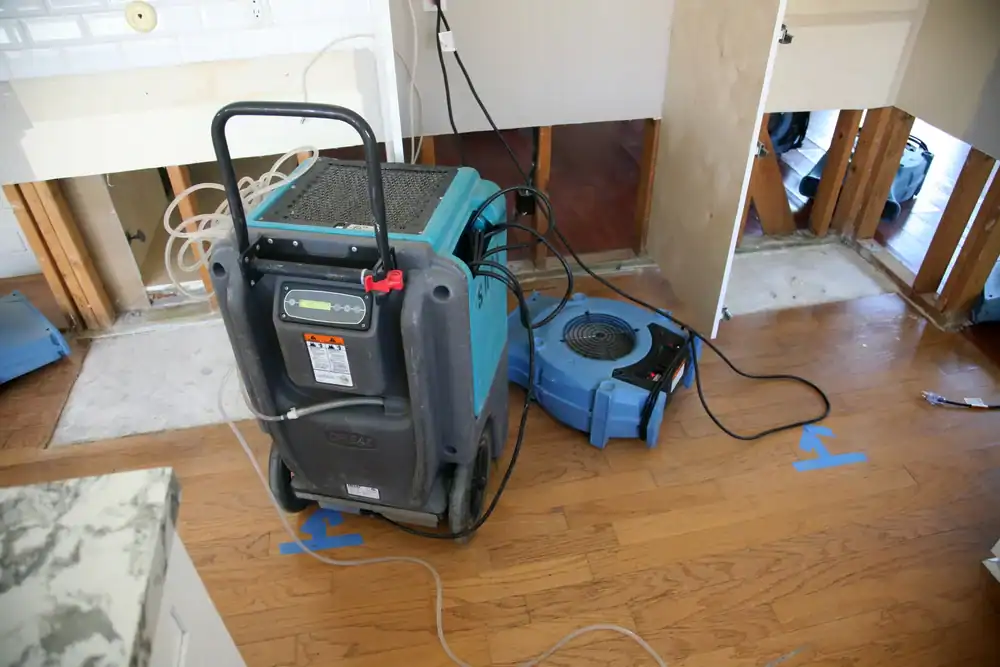
From there, water extraction comes first. Standing water is removed, then the drying process starts using commercial-grade dehumidifiers and air movers positioned based on the actual moisture readings — not guesswork. In older North Hills homes with plaster walls and original wood framing, this phase takes longer and requires more precision than it would in newer construction. Thermal imaging confirms that moisture inside wall cavities and under flooring is actually gone, not just assumed to be.
If the scope of work involves structural repairs — which it often does in a larger home — any permits required by the North Hills Village Building Department at 1 Shelter Rock Road are handled as part of our process. Once structural drying is confirmed complete, reconstruction begins. Throughout every phase, damage documentation is being built in real time to support your insurance claim. When the job is done, you’ll have the readings and the paperwork to prove it.
What's Included When You Call Us for Water Damage in North Hills
Water damage restoration isn’t a single task — it’s a sequence of connected steps, and cutting corners on any one of them creates problems down the road. We handle the full process: emergency water extraction, structural drying, moisture mapping with thermal imaging, mold assessment, mold remediation (licensed under New York State’s 2016 Mold Law), content protection, and reconstruction. Every phase is documented.
For North Hills homeowners, a few things come up more often than they do elsewhere. Sewage backups in the unsewered sections of the village — the areas still on cesspools and septic systems — represent Category 3 water damage, which requires full containment, specialized disposal, and antimicrobial treatment. That’s a different job than a burst pipe, and it needs to be handled by a team that knows the difference. Similarly, ice dam damage — common in the large, complex-roofline homes throughout this area — often means water has infiltrated behind roofing materials and is sitting inside ceiling and wall assemblies well before any stain appears. That kind of damage doesn’t show up in a visual inspection. It shows up in a thermal camera.
We also work directly with homeowners’ insurance carriers, including the high-value home policies common in Nassau County’s North Shore communities. Thorough documentation, clear communication with adjusters, and a professional claims process are part of every job — because in a home at this value level, how the claim is handled matters as much as how the restoration is done.
How quickly can water damage restoration begin for a North Hills home?
We respond to North Hills 24 hours a day, seven days a week. The village sits at the intersection of the Long Island Expressway and the Northern State Parkway — two of the most direct routes across Nassau County’s North Shore — which means our crew can reach you quickly regardless of when the call comes in.
Speed matters here more than it might in some other contexts. In a large estate-style home, a single pipe failure can spread across multiple floors and rooms within hours. The faster water extraction begins, the smaller the affected area stays — and the lower the total restoration cost. Waiting until morning on a nighttime emergency in a home this size isn’t a neutral decision. It’s a decision that compounds the damage while you sleep.
Does homeowners insurance cover water damage restoration in North Hills, NY?
Most standard homeowners insurance policies cover sudden and accidental water damage — a burst pipe, a failed appliance supply line, an ice dam forcing water through the roof. What they typically don’t cover is damage that developed gradually over time, or flooding from an external source like groundwater or storm surge (which requires separate flood insurance through FEMA’s National Flood Insurance Program).
For North Hills homeowners, this distinction matters because the high water table and glacially variable soils in this area can create basement moisture conditions that look like a sudden event but are actually the result of chronic hydrostatic pressure. A thorough damage assessment — with documented moisture readings and thermal imaging — helps establish the timeline of the damage, which is exactly what your insurance adjuster needs to process the claim correctly. We work directly with carriers throughout the claims process, including the high-value home policies common to North Hills, to make sure the documentation supports a full and accurate settlement.
How do I know if there's hidden mold after water damage in an older North Hills home?
In a newer home with drywall construction, hidden moisture is still a risk. In an older North Hills home with plaster walls and original wood lath framing, it’s a near-certainty if the drying process wasn’t handled correctly. Plaster walls don’t behave like drywall — they absorb moisture differently, they dry more slowly, and they create cavities behind them where mold can establish itself without any visible surface sign.
The honest answer is that you can’t know from a visual inspection alone. Thermal imaging cameras detect temperature differentials that indicate moisture presence inside wall assemblies, under flooring, and behind built-ins — well before any staining, odor, or visible growth appears. Calibrated moisture meters confirm actual moisture content in structural materials. If a restoration company told you the job was done without using both of those tools and showing you the readings, there’s a real possibility the job wasn’t actually finished. Under New York State’s 2016 Mold Law, any mold assessment or remediation work must be performed by a licensed contractor — so if mold is found, make sure whoever handles it can provide their NYS Mold Remediation Contractor license number.
What's the difference between water damage categories, and why does it matter?
Water damage is classified into three categories based on contamination level, and the category determines how the job is handled, what materials can be salvaged, and what safety protocols are required. Category 1 is clean water — a supply line, a dishwasher overflow, a burst copper pipe. Category 2 is gray water, which carries some contamination — washing machine discharge, toilet overflow without solid waste. Category 3 is black water, which is considered grossly contaminated and requires full protective protocols, specialized disposal, and antimicrobial treatment.
This matters specifically in North Hills because the unsewered sections of the village — areas that still rely on cesspools and septic systems rather than the Nassau County Sewage District connection — carry a real risk of Category 3 sewage backup during heavy rain events. When a cesspool is overwhelmed, it can force sewage back through basement floor drains, and that’s not a situation where standard water extraction equipment and a shop vac get the job done. It requires containment, proper disposal, and a licensed team that handles hazardous material correctly. Treating a Category 3 event like a Category 1 doesn’t just leave contamination behind — it creates health risk for everyone in the home.
Does water damage restoration work in North Hills require a permit?
It depends on the scope of the work. Water extraction and structural drying typically don’t require a permit on their own. But when restoration involves structural repairs — replacing damaged framing, reconstructing walls, modifying building systems — those repairs generally do require a permit issued by the North Hills Village Building Department, located at Village Hall at 1 Shelter Rock Road.
This is worth paying attention to because North Hills is an incorporated village with its own Building Department, separate from Nassau County’s permitting process. A contractor who pulls a county-level permit but skips the village-level requirement isn’t in compliance. For a homeowner with a high-value property and an active insurance claim, unpermitted repair work can create complications at resale and potentially affect the claim. We’re familiar with the village’s permit requirements and handle the documentation as part of the restoration process — so you’re not left managing that piece on your own while also dealing with the damage itself.
How long does water damage restoration typically take in a large North Hills home?
Structural drying alone — the process of removing moisture from building materials after water extraction — typically takes three to five days under normal conditions, using commercial dehumidifiers and air movers. In a large North Hills home, that timeline can extend based on the size of the affected area, the materials involved, and how long the water was present before extraction began.
Plaster walls, original hardwood floors, and older wood framing all hold moisture longer than modern construction materials, which means the drying phase in a Gold Coast-era estate home genuinely takes more time than it would in a newer build. Rushing that phase — or declaring it complete before moisture readings confirm it — is how hidden mold problems develop weeks later. After structural drying is confirmed, reconstruction begins, and the timeline for that phase depends entirely on what was damaged. A single affected room might be restored in a week. A multi-floor event in a large home with custom finishes can take considerably longer. The timeline is driven by the readings and the scope, not by a calendar — and any company that gives you a firm completion date before they’ve seen the moisture data is guessing.