When Manhasset Bay Comes Inside, You Need Someone Who Knows Why
Port Washington isn’t a typical Long Island town — and water damage here isn’t a typical problem. We respond fast, dry it right, and handle the insurance so you’re not left figuring it out alone.
I needed a professional consultation explanation of procedure for safe removal of Asbestos in my apartment complex. Without having an account yet, I was very impressed with the caring, knowledgeable and generous advice offered by Jessica, and will look forward to doing business in the future. Thank you so much! I feel much more informed about a sometimes scary endeavor. Peace. Nancy Silva Mineola, NY.
Mia Munoz
Used this company to clean up some water flood in my house. They were fast and easy to work with.very professional, Would recommend to anyone!
Nini Valle
Great company, had a flood and they responded quickly and efficiently. Billed my insurance company directly. I highly recommend this company!
joe colapietro, jr
I had pipe freeze in my basement right before a snow storm and they made to within an hour to help start the clean up process. They we by our side throughout the entire process and even helped with the insurance company. They did such a great job with the cleanup, repair, remidiation, I contracted them to perform the repairs and finishes in the basement. They came with enough manpower and material to get the job done. Leo and Jessica were nothing but a pleasure to deal with!!
Cristian Arredondo c
I had some water damage in my home and Green Island was able to take care of my issue quickly and effectively. I am very pleased with the work they did. They responded quickly and were very professional.
Michael M
Outstanding service! From the office to the field crew everyone was friendly, helpful and responsive. I highly recommend Green Island Group.
There’s a difference between a basement that looks dry and a home that actually is dry. In Port Washington, that distinction matters more than almost anywhere else on Long Island. You’re living on a peninsula — Manhasset Bay to the west, Long Island Sound exposure to the north — and the water table underneath your property reflects that. When flooding hits, moisture doesn’t just sit on the surface. It moves into walls, under flooring, and through foundation gaps in ways that won’t show up until weeks later, when the mold does.
Coastal homes in Port Washington — especially the postwar colonials and capes that make up a significant portion of the housing stock in neighborhoods from Manorhaven to Flower Hill — tend to hold moisture longer than newer construction. Older building materials absorb more, dry slower, and hide damage better. When the job is done correctly, you get more than a dry floor. You get moisture readings that confirm the structure is dry, documentation that holds up with your insurance adjuster, and the confidence that you’re not going to find a mold problem behind your drywall two months from now. That’s what proper water damage restoration actually delivers.
Long Island Roots, Not a Franchise Routing Your Call to a Call Center
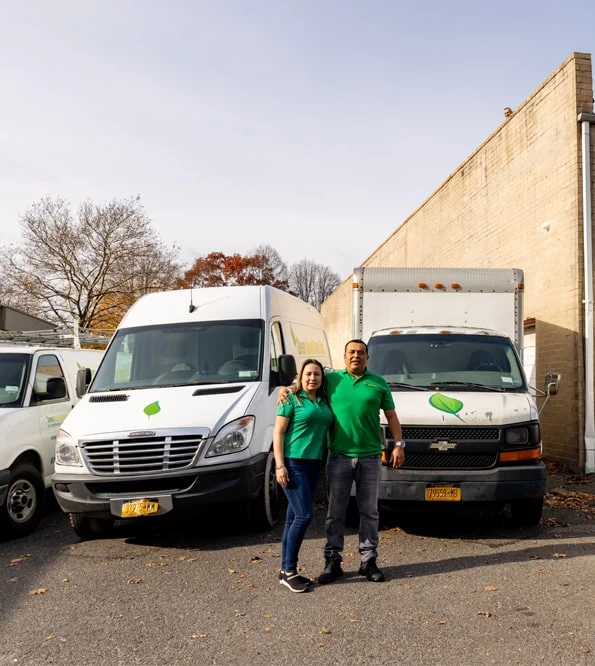
We’re a locally owned and operated restoration company serving Port Washington and the broader Long Island area — not a national franchise with a local phone number and a corporate dispatch system. When you call, you reach people who are already on Long Island and who know the difference between a Sands Point waterfront estate and a bayfront cottage in Manorhaven. That geographic familiarity shapes how we assess damage, how we plan the work, and how we communicate with your insurance carrier.
We’re IICRC-certified and fully licensed under New York State’s 2016 Mold Law, which requires separate licensing for mold assessment and mold remediation. That’s a legal requirement in this state — not a bonus credential. We carry it because the work demands it and because your claim depends on it.
Port Washington homeowners protecting properties worth well over a million dollars deserve a restoration company that treats the job with the same seriousness. That’s what we show up to do.
Emergency Water Damage Service, Port Washington NY
From First Call to Final Moisture Reading — Here's the Honest Walkthrough
It starts the moment you call. We pick up — day or night — and get someone moving toward Port Washington immediately. Nor’easters don’t wait for business hours, and neither do burst pipes in January. Our first priority when we arrive is stopping any active water source and getting eyes on the full scope of the damage, including the areas you can’t see. We use thermal imaging cameras to identify moisture trapped inside walls and under flooring — because in older North Shore homes, the hidden damage is often more significant than what’s visible on the surface.
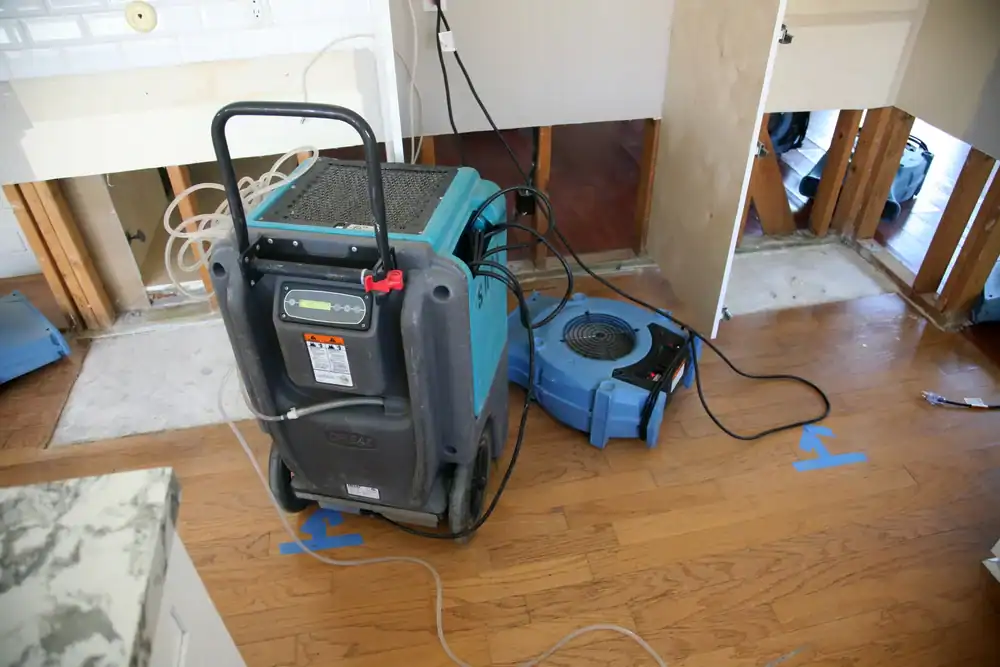
Once the assessment is complete, we set up industrial extraction and drying equipment calibrated to the specific conditions of your home. Coastal ambient humidity in Port Washington runs higher than inland communities, which means drying timelines and equipment placement need to account for that baseline. We monitor moisture levels daily and adjust as needed — the job isn’t done because it looks dry, it’s done when the readings confirm it.
From there, we handle the documentation your insurance carrier needs and coordinate any structural repairs through the appropriate permitting channels. Port Washington’s 11050 zip code spans the unincorporated hamlet and five incorporated villages — Sands Point, Manorhaven, Flower Hill, Port Washington North, and Baxter Estates — each with its own municipal governance. We know how to navigate that permitting landscape so the repair process doesn’t stall on an administrative detail.
Water Damage Restoration Service, Port Washington NY
What's Actually Included When You Call Green Island Group
Water damage restoration isn’t a single task — it’s a sequence of decisions, each one affecting the outcome of the next. When you call us for a water damage event in Port Washington, the work covers emergency water extraction, structural drying with calibrated industrial equipment, thermal imaging for hidden moisture detection, air quality monitoring, and complete damage documentation for your insurance claim. If mold is found or suspected — which is a real possibility in any coastal home that’s experienced recurring flooding — we handle mold assessment and remediation under our New York State licenses, keeping the work legally compliant and your claim intact.
One thing worth understanding in a community like Port Washington is the insurance complexity that comes with coastal living. Standard homeowners insurance typically covers sudden, accidental water damage — a burst pipe, an appliance failure, a roof leak during a storm. Tidal flooding and storm surge from Manhasset Bay are generally covered under a separate flood insurance policy, either through the NFIP or a private carrier. We document damage in a way that clearly identifies the source and supports the strongest possible claim under whichever policy applies — because getting that distinction wrong costs homeowners real money.
We work directly with all major insurance carriers, including those most common among high-value homeowners in Nassau County. Every job closes with written moisture verification, a documented scope of completed work, and a clear record of what was found, what was done, and what was confirmed dry.
Does homeowners insurance cover flooding from Manhasset Bay in Port Washington?
This is one of the most important questions Port Washington homeowners face after a water event — and the answer depends entirely on where the water came from. Standard homeowners insurance covers sudden and accidental water damage: a pipe that bursts, a water heater that fails, rain that enters through a damaged roof. It does not cover flooding that originates from an external body of water, which includes storm surge and tidal overflow from Manhasset Bay. That type of damage falls under flood insurance, which is a completely separate policy — either through the federal National Flood Insurance Program (NFIP) or a private flood carrier.
Many Port Washington homeowners, particularly those in waterfront areas of Manorhaven or along Shore Road, carry both types of coverage without fully understanding where one ends and the other begins. That ambiguity becomes a real problem when you’re trying to file a claim after a coastal flooding event. Part of what we do is document the damage in a way that clearly identifies the water source — because that documentation is what determines which policy responds and how much you recover.
How quickly does mold start growing after a basement floods?
Mold can begin growing within 24 to 48 hours of water intrusion — that’s the documented threshold from both the EPA and IICRC standards. In a coastal community like Port Washington, that window is even more pressing because ambient humidity levels near Manhasset Bay are already elevated before a flood event starts. The baseline moisture in the air gives mold the head start it needs, which is why the speed of extraction and drying matters as much as the quality of it.
What makes this more complicated in older Port Washington homes is that mold doesn’t always grow where you can see it. It develops inside wall cavities, under subfloors, and behind insulation — places that feel dry to the touch but still hold enough moisture to support growth. By the time you see discoloration on a wall or smell something off, the mold has usually been there for a while. The right approach is immediate professional extraction and structural drying, followed by moisture verification that confirms every affected area — not just the visible ones — has been brought back to safe levels.
What's the difference between water extraction and structural drying — do I need both?
Yes, and understanding the difference matters. Water extraction is the process of physically removing standing water from your home using industrial pumps and wet vacuums. It’s the first step, and it’s fast. Structural drying is what comes after — and it’s a longer, more technical process that removes moisture from the building materials themselves: the subfloor, the wall framing, the drywall, the insulation. You can extract all the standing water in a basement and still have a serious moisture problem inside the structure.
In Port Washington’s older housing stock — homes built in the 1940s through 1970s that make up a large portion of the community — building materials like plaster, older drywall, and untreated wood framing absorb water deeply and dry slowly. They need calibrated drying equipment positioned correctly, monitored daily, and adjusted based on actual moisture readings rather than visual appearance. Skipping or shortcutting structural drying is the most common reason water damage jobs fail — and why homeowners end up dealing with mold or structural issues months later that could have been prevented at the time of the original event.
How long does water damage restoration take in a Port Washington home?
The honest answer is that it depends on the scope of the damage and the conditions of the specific home — but for most residential water damage events, the structural drying phase alone takes three to five days when handled correctly. Larger events, or situations where water has penetrated deeply into walls or flooring, can extend that timeline. In Port Washington specifically, the elevated coastal humidity can slow drying compared to inland Nassau County communities, which is something we account for in how we set up and monitor equipment.
The full restoration timeline — from initial extraction through any necessary structural repairs — varies significantly based on what’s found during the assessment. A finished basement with water-damaged drywall and flooring takes longer than an unfinished space. A home in Sands Point with custom millwork or period architectural details requires more careful, deliberate work than a straightforward gut-and-replace. We give you a realistic timeline at the start of the job, not an optimistic one — because surprises in the middle of a restoration are the last thing you need.
Is a mold test required after water damage, and who can legally perform it in New York?
New York State’s 2016 Mold Law established specific licensing requirements for anyone performing mold assessment or mold remediation professionally. Assessors and remediators must hold separate licenses issued by the NY State Department of Labor — they cannot be the same person or company performing both roles on the same job, with limited exceptions. This is a legally enforceable requirement, and work performed by unlicensed operators can create real problems: voided insurance claims, liability exposure, and remediation that doesn’t meet the standard required for a clean bill of health from a licensed assessor.
Whether a mold test is required after water damage depends on what’s found during the restoration process. If visible mold is present, or if moisture readings suggest conditions that could support growth in areas that weren’t fully dried in time, a licensed mold assessment is the appropriate next step. For Port Washington homeowners — particularly those in homes with recurring flood history or elevated coastal humidity — this isn’t an unlikely scenario. We carry both the mold assessment and mold remediation licenses required under New York State law, and we can walk you through what the process looks like if it becomes relevant to your situation.
What should I do in the first hour after my basement floods in Port Washington?
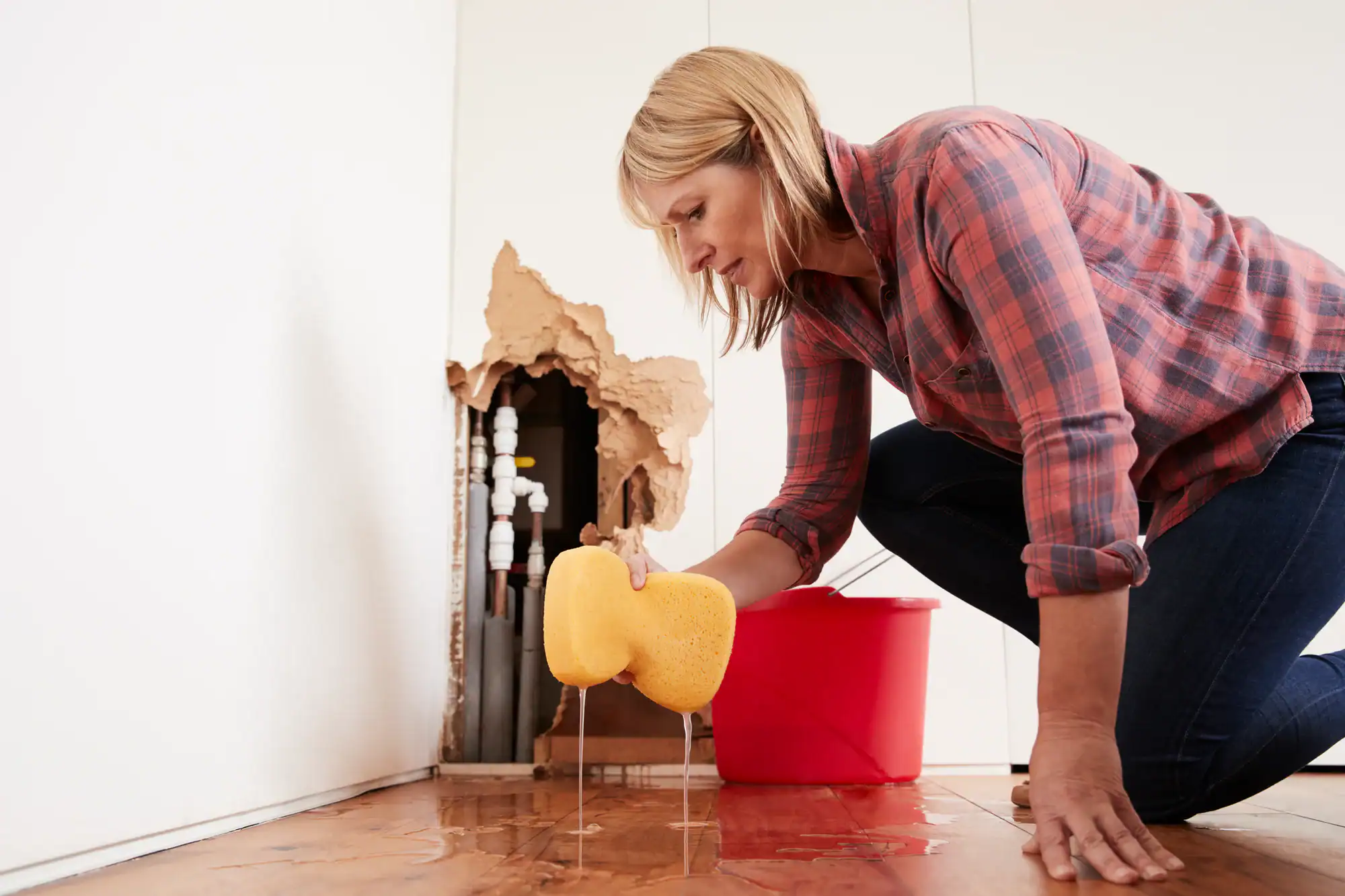
The first hour matters more than most homeowners realize. If there’s any possibility the water is in contact with electrical systems — outlets, a panel, wiring near the floor — don’t enter the space until you’ve confirmed the power to that area is off. Once it’s safe to enter, your priority is stopping the water source if it’s internal (shutting off the main water supply for a burst pipe, for example) and getting a restoration company on the phone. The faster extraction starts, the smaller the mold window stays.
Document everything before anything is moved or touched — photos and video of the water level, the affected materials, and any visible damage to walls, flooring, and belongings. That documentation becomes part of your insurance claim, and it’s much harder to reconstruct after the fact. In Port Washington, where a coastal flooding event can affect multiple homes in the same neighborhood simultaneously, getting a restoration company dispatched quickly matters — availability gets tight fast after a nor’easter or a tidal surge event hits the Manorhaven waterfront or the Town Dock area. Call us as soon as it’s safe to do so, and we’ll take it from there.