Water Damage Restoration in South Valley Stream, NY
South Valley Stream Homes Don't Wait — Neither Do We
Your home carries a flood risk score of 6 out of 10. When water gets in, you have 24 to 48 hours before mold starts growing inside your walls. We respond fast — with a local Long Island crew that knows Nassau County homes inside and out.
I needed a professional consultation explanation of procedure for safe removal of Asbestos in my apartment complex. Without having an account yet, I was very impressed with the caring, knowledgeable and generous advice offered by Jessica, and will look forward to doing business in the future. Thank you so much! I feel much more informed about a sometimes scary endeavor. Peace. Nancy Silva Mineola, NY.
Mia Munoz
Used this company to clean up some water flood in my house. They were fast and easy to work with.very professional, Would recommend to anyone!
Nini Valle
Great company, had a flood and they responded quickly and efficiently. Billed my insurance company directly. I highly recommend this company!
joe colapietro, jr
I had pipe freeze in my basement right before a snow storm and they made to within an hour to help start the clean up process. They we by our side throughout the entire process and even helped with the insurance company. They did such a great job with the cleanup, repair, remidiation, I contracted them to perform the repairs and finishes in the basement. They came with enough manpower and material to get the job done. Leo and Jessica were nothing but a pleasure to deal with!!
Cristian Arredondo c
I had some water damage in my home and Green Island was able to take care of my issue quickly and effectively. I am very pleased with the work they did. They responded quickly and were very professional.
Michael M
Outstanding service! From the office to the field crew everyone was friendly, helpful and responsive. I highly recommend Green Island Group.
When water damage is handled correctly, you stop worrying about what’s hiding behind the drywall. No mystery smell three weeks later. No mold disclosure conversation when you go to sell. No second round of repairs because the first crew only dried what they could see. That’s the difference between a job that looks done and a job that actually is.
South Valley Stream’s housing stock is mostly post-war — Cape Cods, ranches, and expanded colonials built between 1940 and 1969. These homes are now 55 to 85 years old, and they have original wood framing, plaster walls, and aging subfloor construction that holds moisture long after the surface looks dry. A visual inspection doesn’t catch that. Thermal imaging and calibrated moisture meters do.
The hamlet also carries one of the higher flood risk scores on the South Shore — a 6 out of 10, compared to a 1 out of 10 for Valley Stream just to the north. That gap reflects real geographic exposure: lower elevation, South Shore drainage patterns, and proximity to the waterways that feed into Jamaica Bay. When you get proper restoration in South Valley Stream, you’re not just fixing today’s damage — you’re protecting a home that’s statistically more likely to see water again.
Local Water Restoration Company, Nassau County, NY
Long Island Roots, Not a Franchise on the Phone
We are a locally owned restoration company based on Long Island. When you call, you reach a real team — not a national call center routing your emergency to whoever picks up the lead. Several of the companies that show up when you search for water damage help in South Valley Stream have phone numbers with 718 or out-of-state area codes. That tells you everything you need to know about how local they actually are.
We’ve worked in Nassau County homes long enough to know what a 1958 Cape Cod looks like from the inside — aging pipes, no vapor barrier in the wall cavities, a basement that was never designed for today’s storm volumes. We know the Town of Hempstead permitting process, and we know what documentation your insurance carrier needs to process a claim without a fight. We’ve handled water damage in South Valley Stream’s older neighborhoods and understand the specific vulnerabilities of homes built in this era and location.
Our reputation in South Valley Stream has been built the same way any local business does — by doing the job right and letting the results speak.
Emergency Water Damage Service, South Valley Stream, NY
From the First Call to a Dry, Documented Home
The first call triggers a rapid response. We dispatch a local crew — not a subcontractor pulled from a national roster — and we give you a real arrival window, not a four-hour range. In South Valley Stream, where homes sit close together and basements are often the first thing to flood, getting there fast matters. Every hour of standing water is more structural damage and more mold risk in walls that were never built to handle it.
When we arrive, we don’t just look at what’s wet. We use thermal imaging cameras and professional moisture meters to map every affected area, including inside wall cavities and beneath subfloor material. In a post-war Nassau County home, that step isn’t optional — it’s what separates a real restoration from a surface cleanup that comes back to haunt you.
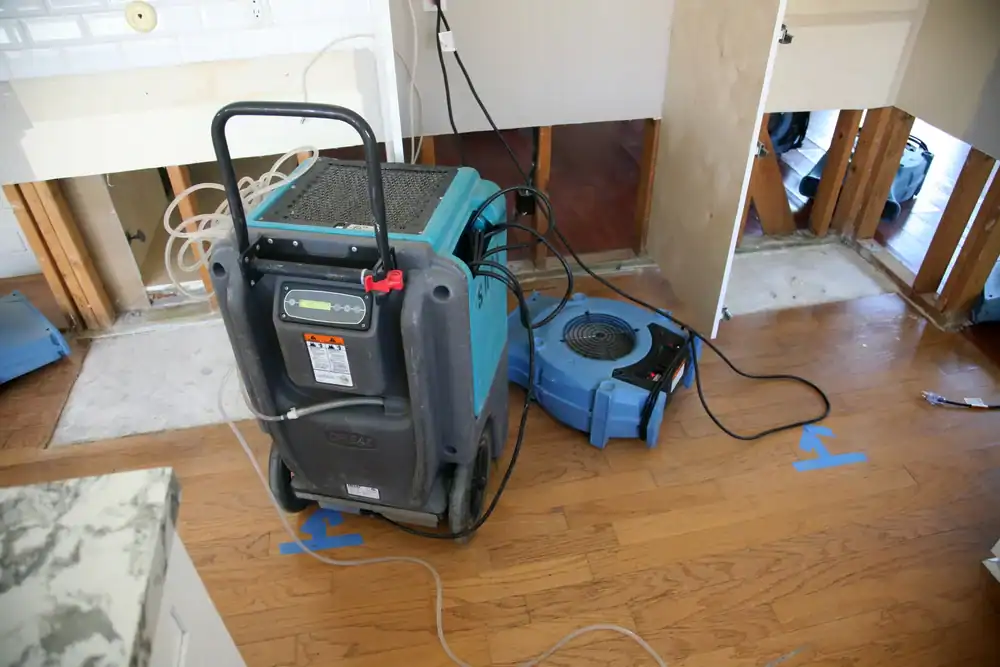
From there, we extract standing water, set industrial drying equipment, and monitor moisture levels daily until the instruments confirm the structure is dry — not when it looks dry, not when a timeline says it should be. We document everything throughout: moisture readings, drying logs, thermal images, and photos. That documentation protects your insurance claim from start to finish, whether you’re working with a standard homeowners policy or an NFIP flood policy — both of which are common in South Valley Stream given its elevated flood risk profile.
Water Restoration Services, South Valley Stream, NY
Everything Covered, Nothing Left to Chance
Water damage restoration isn’t one thing — it’s a sequence of connected steps that all have to be done right for the outcome to hold. We handle the full scope: emergency water extraction, structural drying, moisture mapping, content protection, mold prevention treatment, and the documentation your insurance adjuster needs to close the claim cleanly.
Mold remediation is a separate, legally regulated service in New York State. Under the 2016 NY Mold Law, mold assessment and remediation must be performed by contractors holding active New York State Department of Labor licenses — not just anyone with a dehumidifier and a spray bottle. In South Valley Stream, where homes are old and flood risk is real, mold remediation isn’t a hypothetical add-on. It’s a routine downstream consequence of water damage that requires licensed, compliant work. We meet that standard.
We also work directly with homeowners navigating insurance claims — including NFIP flood insurance, which operates on a completely different documentation and adjuster process than standard homeowners coverage. A significant number of South Valley Stream residents carry both policy types, given the hamlet’s South Shore location and flood risk score. We know the difference between the two, and we help you get the documentation right the first time so your claim doesn’t stall.
How quickly can water damage lead to mold in a South Valley Stream home?
Mold can begin growing inside wall cavities within 24 to 48 hours of water intrusion — and in South Valley Stream’s older homes, that timeline is especially relevant. Most of the housing stock here was built between 1940 and 1969, which means original wood framing, plaster walls, and subfloor construction that absorbs and holds moisture in ways that newer materials don’t. The mold doesn’t start on the surface where you can see it. It starts inside the wall, in the framing, under the floor — places that only thermal imaging and moisture meters will catch.
This is why the speed of your first call matters as much as who you call. A crew that arrives quickly and maps the full moisture footprint — not just the visible wet area — gives you a real shot at preventing mold growth before it starts. A crew that shows up a day later and eyeballs the damage is essentially just documenting a future mold problem.
Does homeowners insurance cover water damage restoration in South Valley Stream, NY?
Standard homeowners insurance typically covers sudden and accidental water damage — a burst pipe, an appliance failure, a roof leak from a storm. It generally does not cover flooding caused by rising groundwater or storm surge, which is where NFIP flood insurance comes in. In South Valley Stream, that distinction matters more than it does in most Nassau County communities. With a flood risk score of 6 out of 10, a meaningful number of homeowners here carry both a standard homeowners policy and a separate NFIP flood policy — and the two claims processes are completely different.
NFIP claims require specific documentation, work with different adjusters, and have different coverage structures than standard homeowners claims. If you have both policies and your damage involves flooding, getting the documentation right from the start is critical. We’re familiar with both processes and help you build the paper trail your adjusters need — so you’re not chasing a stalled claim weeks after the water is gone.
What does water damage restoration actually cost on Long Island?
The national average for a water damage insurance claim runs approximately $11,000 to $13,000, but the actual cost of a restoration job depends heavily on the scope — how much area is affected, whether structural materials need to be removed and replaced, and whether mold remediation is required as a follow-up. In South Valley Stream, where homes are older and moisture tends to travel further into structural cavities before it’s caught, the scope can expand quickly if the initial response is slow or incomplete.
The more useful framing isn’t what restoration costs — it’s what skipping proper restoration costs. Mold remediation in a post-war Nassau County home can run well into five figures. A declined insurance claim because the original work wasn’t documented to adjuster standards adds more. The cost of doing it right the first time is almost always less than the cost of fixing what a rushed or incomplete job left behind.
Does Green Island Group handle mold remediation after water damage in South Valley Stream?
Yes — and it’s worth understanding what that actually requires under New York State law. The 2016 NY Mold Law mandates that mold assessment and mold remediation be performed by contractors holding active New York State Department of Labor licenses. These are separate licenses, and the work has to be performed by separately licensed parties. That’s not a technicality — it’s a legal requirement that many unlicensed operators ignore, and work done by an unlicensed contractor can complicate your insurance claim and create liability issues for you as a homeowner.
In South Valley Stream, mold remediation after water damage isn’t an edge case. Given the age of the housing stock and the hamlet’s documented flood risk, hidden mold growth following a water event is a common outcome when the initial restoration isn’t done thoroughly. We hold the required New York State licenses, we follow proper remediation protocols, and we document the work in a way that holds up to insurance review.
How do I know if there's hidden water damage inside my walls after a flood?
You often don’t — not without the right equipment. Visual inspection tells you what’s wet on the surface. It doesn’t tell you what’s saturated inside a plaster wall, under a hardwood floor, or in the structural framing of a 1960s ranch home. In South Valley Stream’s older housing stock, moisture migrates into cavities and stays there long after the surface materials feel dry to the touch. That’s where mold starts, and it can stay hidden for weeks before a smell or a stain gives it away.
The tools that actually find hidden moisture are thermal imaging cameras and calibrated moisture meters. Thermal imaging detects temperature differentials caused by trapped moisture inside walls and ceilings. Moisture meters give precise readings at specific points in structural materials. Together, they produce a moisture map of the affected area — not a guess, not a visual estimate, but instrument-verified data that tells you exactly where the damage extends and confirms when the structure is genuinely dry.
Why should I hire a local water damage company instead of a national franchise in South Valley Stream?
The practical answer is response time and accountability. A national franchise routing calls through a regional dispatch system is not the same as a local Long Island crew that can be in South Valley Stream within the hour. In a water damage emergency, that difference in response time is measured in structural damage and mold risk — not just inconvenience. When you search for water damage help in this area, some of the companies that appear have phone numbers with 718 New York City area codes or even out-of-state numbers. They are not local operators — they are lead-generation services that sell your contact information to whoever is available.
Beyond response time, local knowledge matters in a place like South Valley Stream. The Town of Hempstead permitting process, the specific vulnerabilities of post-war Nassau County housing, the difference between a standard homeowners claim and an NFIP flood claim — these are things we work with regularly. A national brand calling from a call center three states away is working from a script. We’ve been inside these homes, we know what we’re dealing with before we walk through the door, and we understand the unique challenges South Valley Stream residents face.