South Shore Homes Don't Get a Second Chance to Dry Right
When water gets into a Wantagh home, the clock starts immediately. We respond fast, dry it right, and handle your insurance claim from start to finish.
I needed a professional consultation explanation of procedure for safe removal of Asbestos in my apartment complex. Without having an account yet, I was very impressed with the caring, knowledgeable and generous advice offered by Jessica, and will look forward to doing business in the future. Thank you so much! I feel much more informed about a sometimes scary endeavor. Peace. Nancy Silva Mineola, NY.
Mia Munoz
Used this company to clean up some water flood in my house. They were fast and easy to work with.very professional, Would recommend to anyone!
Nini Valle
Great company, had a flood and they responded quickly and efficiently. Billed my insurance company directly. I highly recommend this company!
joe colapietro, jr
I had pipe freeze in my basement right before a snow storm and they made to within an hour to help start the clean up process. They we by our side throughout the entire process and even helped with the insurance company. They did such a great job with the cleanup, repair, remidiation, I contracted them to perform the repairs and finishes in the basement. They came with enough manpower and material to get the job done. Leo and Jessica were nothing but a pleasure to deal with!!
Cristian Arredondo c
I had some water damage in my home and Green Island was able to take care of my issue quickly and effectively. I am very pleased with the work they did. They responded quickly and were very professional.
Michael M
Outstanding service! From the office to the field crew everyone was friendly, helpful and responsive. I highly recommend Green Island Group.
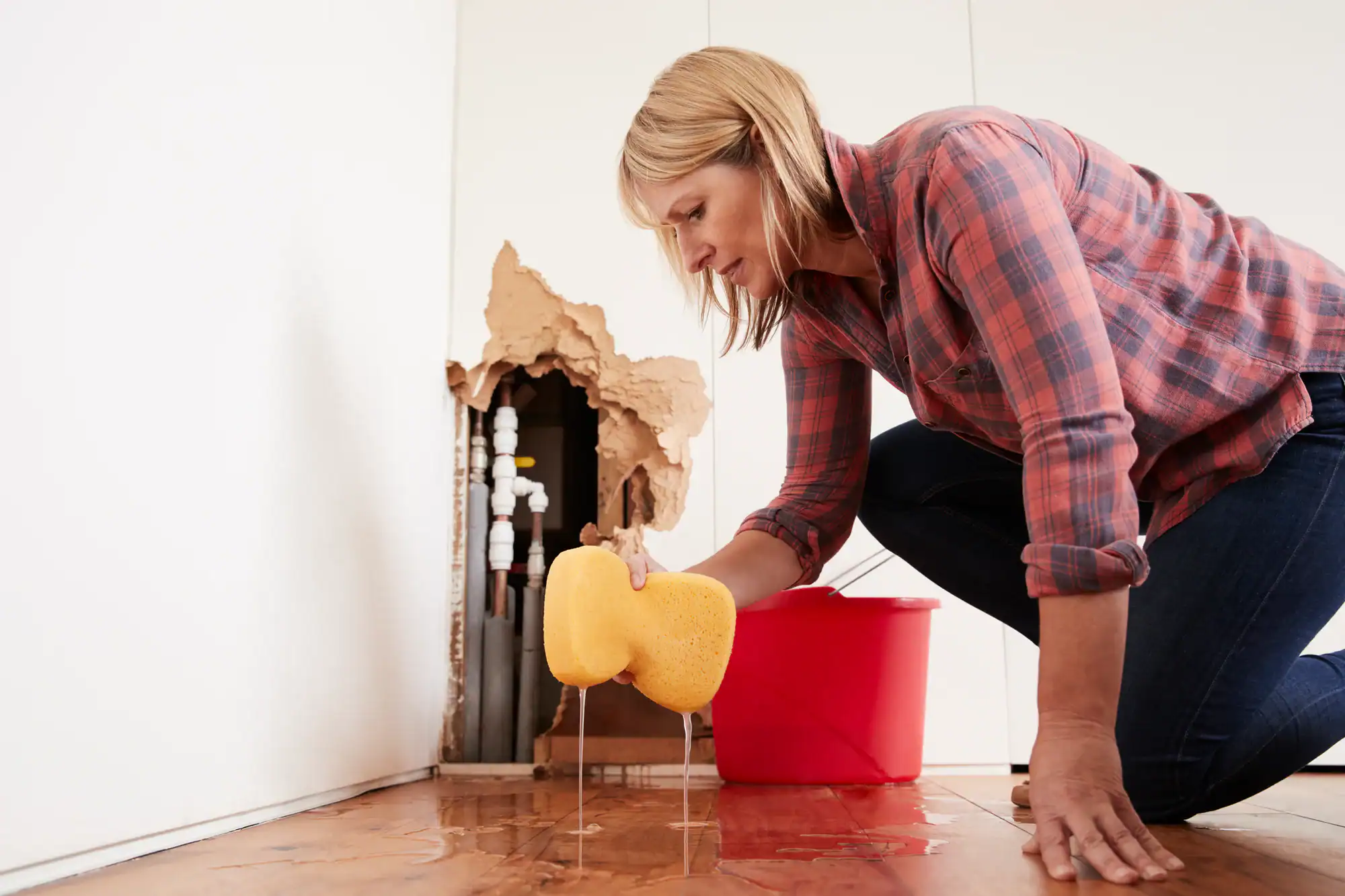
The visible water is only part of the problem. In Wantagh’s aging housing stock — most of it built in the 1950s — water travels fast through wall cavities, under original hardwood floors, and into structural framing that was never designed with modern moisture barriers in mind. What looks dry on the surface can be quietly feeding mold growth for weeks inside the walls of a post-war Cape Cod or ranch.
Mold can begin colonizing wet materials within 24 to 48 hours of water intrusion. On the South Shore, where the water table runs naturally high and the surrounding soil stays saturated during storm events, that window closes faster than it would in an inland community. A flooded basement in South Wantagh after a nor’easter isn’t the same job as a flooded basement in Plainview. The conditions here are different, and the response needs to match them.
When the job is done correctly, you get more than dry walls. You get documented moisture readings confirming the structure is actually dry — not just visually dry. You get a home that’s safe, a clear record for your insurance company, and the confidence that you won’t be dealing with a mold remediation bill six weeks from now.
No Franchise. No Rerouted Calls. Just a Local Crew That Shows Up.
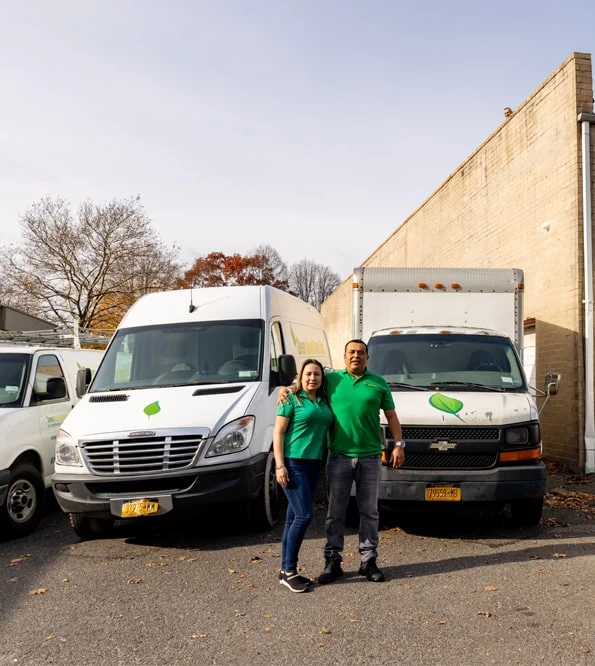
We are a locally owned and operated restoration company serving Long Island. When you call us, you’re not reaching a national call center that routes your job to whoever’s available. You’re reaching the team that will actually show up at your door — the same people who assess the damage, run the equipment, and see the job through to completion.
That matters in a community like Wantagh, where your home is likely worth close to $900,000. We’ve worked across Nassau County’s South Shore long enough to know the specific challenges Wantagh residents face — from the naturally high water table in South Wantagh to the storm surge risk along the Wantagh Parkway corridor. We’re IICRC-certified, fully licensed under New York’s 2016 Mold Law, and experienced working directly with insurance adjusters so you don’t have to navigate that process alone. This is our backyard. We treat it like it.
From the First Call to the Final Moisture Reading — Here's the Real Process
The first thing that happens when you call is simple: a real person picks up. Not a voicemail, not an answering service. We get the basics — what happened, where you are, how bad it looks — and we move. For Wantagh and the surrounding South Shore communities, our goal is to be on-site fast, because every hour that passes in a home with a naturally high water table is an hour the damage is spreading somewhere you can’t see it.
When we arrive, we don’t start pulling things apart before we understand the full picture. We use thermal imaging cameras and calibrated moisture meters to map the affected area — walls, floors, subfloor, framing. This step matters especially in Wantagh’s older homes, where water has a habit of traveling through original plaster walls and settling into spaces that look completely fine from the outside. Once we know exactly what we’re dealing with, we document everything with photographs and written readings before any work begins. That documentation becomes the foundation of your insurance claim.
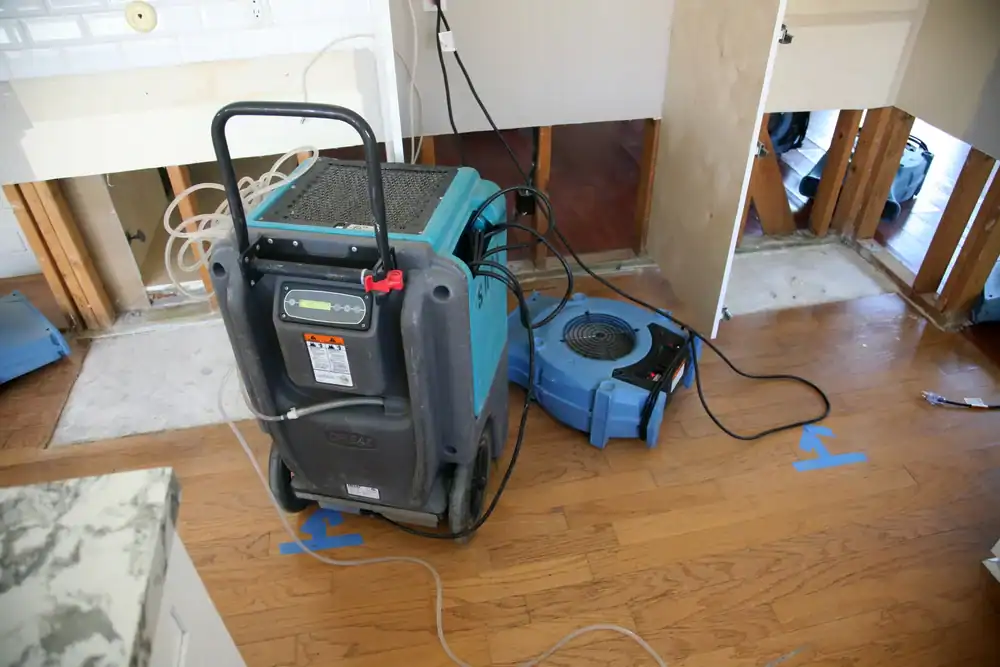
From there, we extract standing water, set up industrial drying equipment, and monitor moisture levels daily until the structure hits safe readings. If any work requires a permit through the Town of Hempstead Building Department — drywall replacement, structural repairs — we handle that too. The job isn’t done when it looks dry. It’s done when the numbers confirm it.
Everything Covered — Including the Part Most Companies Skip
Water damage restoration isn’t one thing — it’s a sequence of connected steps that each have to be done right for the whole job to hold up. We handle the full scope: emergency water extraction, structural drying, moisture mapping, mold prevention treatment, and full documentation for your insurance carrier. For Wantagh homeowners dealing with storm surge, sump pump failures, burst pipes in the middle of a January cold snap, or a slow leak that’s been hiding behind a wall for months — the service adapts to what you’re actually dealing with, not a generic checklist.
Because Wantagh sits within the Town of Hempstead, any restoration work that involves structural repairs — opening walls, replacing subfloor, rebuilding damaged framing — requires permits through the Town of Hempstead Building Department. We’re familiar with those requirements and factor them into the scope from the start, so nothing gets done that creates a problem for you down the road.
The part most homeowners don’t expect us to handle is the insurance side. We document damage before we touch anything, communicate directly with your adjuster, and work to make sure the claim reflects the full, accurate scope of what needs to be restored. Most standard homeowners insurance policies cover sudden, accidental water damage — and the average claim in situations like this runs between $11,000 and $13,000. You shouldn’t have to figure out that process while you’re also dealing with a flooded home. We handle it.
Does homeowners insurance cover water damage restoration in Wantagh, NY?
In most cases, yes — but the details matter. Standard homeowners insurance policies typically cover sudden and accidental water damage, which includes things like a burst pipe, a failed water heater, or storm-driven water intrusion. What’s usually not covered is damage caused by long-term neglect or gradual leaks that were ignored over time. Flood damage from rising groundwater or storm surge — which is a real risk on Wantagh’s South Shore — typically requires a separate flood insurance policy through the National Flood Insurance Program (NFIP).
The claims process itself is where most homeowners run into trouble. Insurance companies require thorough documentation — photographs, moisture readings, a written scope of work — before they’ll approve the full cost of restoration. We document everything before any work begins, communicate directly with your adjuster throughout the job, and work to make sure the claim reflects the actual scope of the damage. If you’re not sure what your policy covers, we can help you understand what you’re looking at before you file.
How quickly does mold start growing after water damage in a home?
Mold can begin colonizing wet structural materials within 24 to 48 hours of water intrusion — and in a South Shore community like Wantagh, that timeline can feel even tighter. The naturally high water table along Nassau County’s coastal plain means the surrounding soil is already saturated during storm events, which slows the drying process in basements and crawl spaces compared to what you’d see in an inland home. Add the humidity that comes with proximity to the Great South Bay, and the conditions for mold growth are more favorable here than most people realize.
The critical thing to understand is that mold doesn’t wait for the water to be visibly present. Once moisture is absorbed into drywall, insulation, or wood framing — especially in Wantagh’s older post-war homes where original materials have been absorbing humidity for decades — the clock is already running. Getting a professional on-site quickly, with the equipment to actually measure moisture inside the structure rather than just looking at the surface, is the only way to get ahead of it.
What causes most water damage in Wantagh homes, and what should I watch for?
The most common causes in Wantagh break down into a few categories: storm-related flooding, aging pipe failures, appliance malfunctions, and sump pump failures during heavy rain. Given that the median home in Wantagh was built around 1957, the original plumbing in many of these properties — galvanized steel pipes with a typical lifespan of 40 to 70 years — is well past its designed service life. Pinhole leaks, slow corrosion behind walls, and sudden pipe bursts during winter cold snaps are all common in homes of this age.
On the storm side, Wantagh’s position as the Gateway to Jones Beach puts it directly in the path of South Shore flooding patterns. The State of New York has specifically identified the Wantagh Parkway corridor as prone to tidal flooding during extreme weather events — which means storm surge from the Atlantic can push water inland into the southern sections of the hamlet faster than most residents expect. Signs to watch for year-round include musty odors in the basement, water stains on ceilings or walls, bubbling paint, soft spots in flooring, and any unexplained increase in your water bill.
How long does water damage restoration typically take to complete?
The honest answer is that it depends on how much water was involved, how long it sat before extraction began, and what materials were affected. A straightforward water extraction and structural drying job — say, a washing machine overflow caught quickly — can be completed in three to five days. A more significant event, like a basement flood after a nor’easter or a burst pipe that went undetected over a weekend, can take one to two weeks or longer once you factor in drying time, any required demolition of damaged materials, and reconstruction.
In Wantagh specifically, the drying phase tends to run longer than in inland communities because of the area’s naturally high water table and the older construction materials common in post-war homes. Original plaster walls and older wood framing absorb moisture differently than modern drywall and engineered lumber — they take longer to release it, and they require more careful monitoring. We check moisture readings daily and don’t close a job until the numbers confirm the structure is genuinely dry, not just dry on the surface.
Do I need a permit for water damage repairs in Wantagh, and who handles that?
It depends on the scope of the work. Water extraction and drying — the initial emergency response — doesn’t require a permit. But once the restoration moves into structural repairs, things change. Replacing drywall, repairing or replacing subfloor, rebuilding damaged wall framing, or any work that involves opening up structural components of the home requires a building permit through the Town of Hempstead Building Department, which has jurisdiction over Wantagh as a hamlet within the Town of Hempstead.
This is an area where hiring a restoration company that knows local requirements makes a real difference. Work done without the required permits can create complications when you go to sell the home, and it can also create issues with your insurance claim if the adjuster discovers unpermitted work was performed. We are familiar with Town of Hempstead permitting requirements and handle the permit process as part of the job — so the restoration is documented correctly from start to finish, and you’re protected on both the insurance side and the building compliance side.
Is Green Island Group different from national franchise restoration companies serving Wantagh?
The core difference is accountability. When you call a national franchise — including the franchise that explicitly covers Wantagh in its territory — your call enters a corporate system before it reaches anyone local. The franchise operator may be excellent, but the brand, the standards, and the communication structure are built for scale, not for the specific conditions of a South Shore Long Island community with 1950s housing stock and a history of coastal flooding.
We are not a franchise. There’s no corporate layer between you and the people doing the work. The team that answers your call is the team that shows up, manages the job, and is accountable to you directly — not to a brand standard designed for a national audience. In a tight-knit community like Wantagh, where home values approach $900,000, that direct accountability is the difference between a company that does the job and a company you’d actually recommend to the family down the street. We’ve built our reputation on Long Island one job at a time, and that’s not something a franchise agreement can replicate.