Westbury's Aging Homes Don't Give You Time to Wait
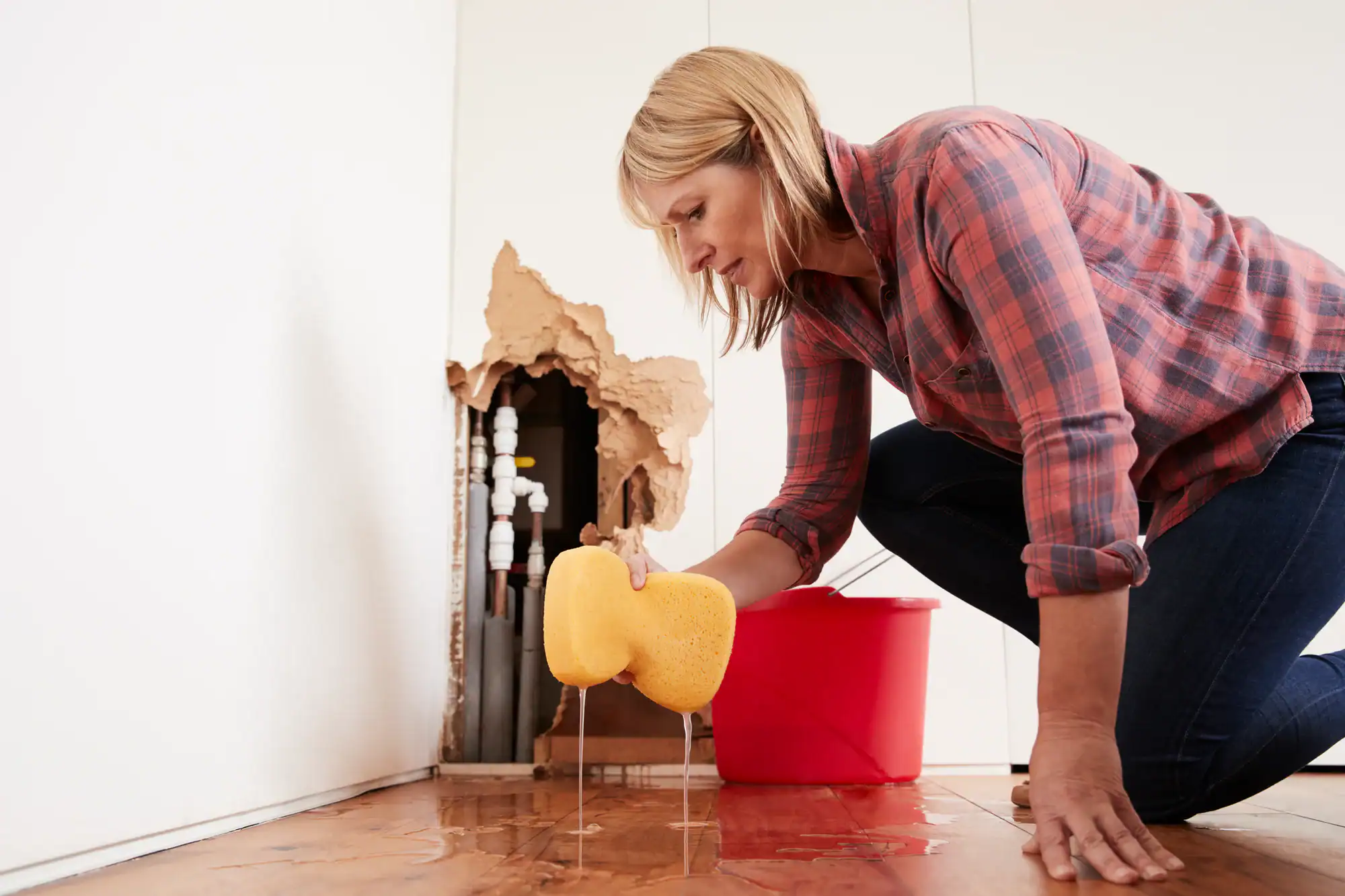
When water gets into a postwar Cape Cod or split-level off Jericho Turnpike, it moves fast — and so does the damage. We respond 24/7 with local Nassau County crews ready to stop it.
I needed a professional consultation explanation of procedure for safe removal of Asbestos in my apartment complex. Without having an account yet, I was very impressed with the caring, knowledgeable and generous advice offered by Jessica, and will look forward to doing business in the future. Thank you so much! I feel much more informed about a sometimes scary endeavor. Peace. Nancy Silva Mineola, NY.
Mia Munoz
Used this company to clean up some water flood in my house. They were fast and easy to work with.very professional, Would recommend to anyone!
Nini Valle
Great company, had a flood and they responded quickly and efficiently. Billed my insurance company directly. I highly recommend this company!
joe colapietro, jr
I had pipe freeze in my basement right before a snow storm and they made to within an hour to help start the clean up process. They we by our side throughout the entire process and even helped with the insurance company. They did such a great job with the cleanup, repair, remidiation, I contracted them to perform the repairs and finishes in the basement. They came with enough manpower and material to get the job done. Leo and Jessica were nothing but a pleasure to deal with!!
Cristian Arredondo c
I had some water damage in my home and Green Island was able to take care of my issue quickly and effectively. I am very pleased with the work they did. They responded quickly and were very professional.
Michael M
Outstanding service! From the office to the field crew everyone was friendly, helpful and responsive. I highly recommend Green Island Group.
Water damage doesn’t wait for business hours, and in Westbury, the conditions work against you from the start. The Hempstead Plains sit on a naturally high water table — which means when your basement floods, moisture isn’t just coming from above. It’s pushing in through your foundation from below. Standard fans won’t touch it. Consumer dehumidifiers won’t cut it. The drying has to be done right, with the right equipment, or you’re left with hidden moisture that turns into a mold problem weeks later.
Most of Westbury’s residential housing was built in the 1950s and 1960s. Those homes have wall cavities, subfloor assemblies, and plumbing systems that weren’t built with modern moisture barriers. When water gets in — from a burst pipe, a backed-up drain, a sump pump that gave out during a storm — it travels through pathways you can’t see. A surface that looks dry can be holding dangerous moisture levels inside the wall. That’s not a worst-case scenario in Westbury. That’s the norm.
Getting the water out is only part of it. The real outcome is a home that’s fully dried, documented, and cleared — so mold doesn’t show up a month from now, your insurance claim holds up, and you’re not tearing walls open again in six weeks. That’s what proper water damage restoration delivers. Not just extraction. Resolution.
Nassau County Work, Not a Franchise Routing Your Call
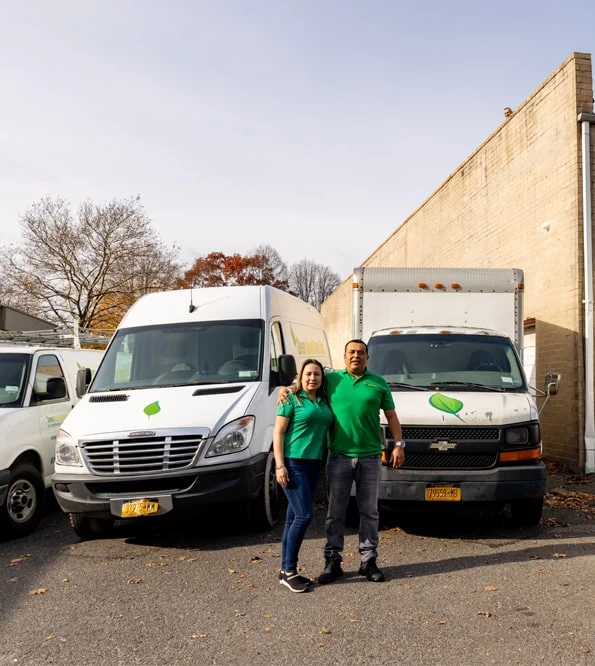
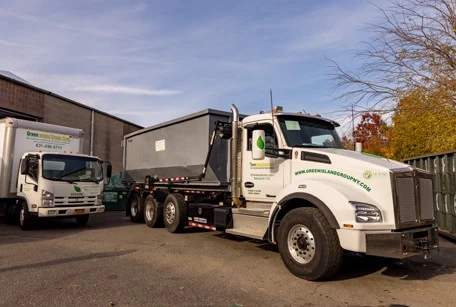
We’re locally owned and operated out of Nassau County. When you call, you’re reaching someone who actually works in Westbury and the surrounding area — not a national call center deciding which available crew to dispatch from three towns over. The team that answers is the team that shows up.
That matters in Westbury specifically. The village has its own Flood Damage Prevention ordinance. Nassau County has its own permit process. New York State requires separate licensing for mold remediation under the 2016 Mold Law. These aren’t details a franchise skimming ZIP codes tends to know. We do, because this is the market we work in every day — from the blocks off Post Avenue to the neighborhoods bordering New Cassel and Carle Place.
We handle the insurance documentation, communicate directly with your adjuster, and make sure nothing gets left out of your claim. Most of our Westbury clients end up with zero out-of-pocket costs. That’s not a guarantee — but it’s what happens when someone who knows the Nassau County claims process is working the paperwork on your behalf.
From Standing Water to Dry Walls — Here's the Sequence
The first call triggers an emergency dispatch. We’re available around the clock because water damage in a 1960s Westbury split-level at 11 PM doesn’t become less serious by morning — it becomes more expensive. A crew comes out, assesses the full scope of the situation, and begins water extraction immediately using truck-mounted and portable extraction equipment.
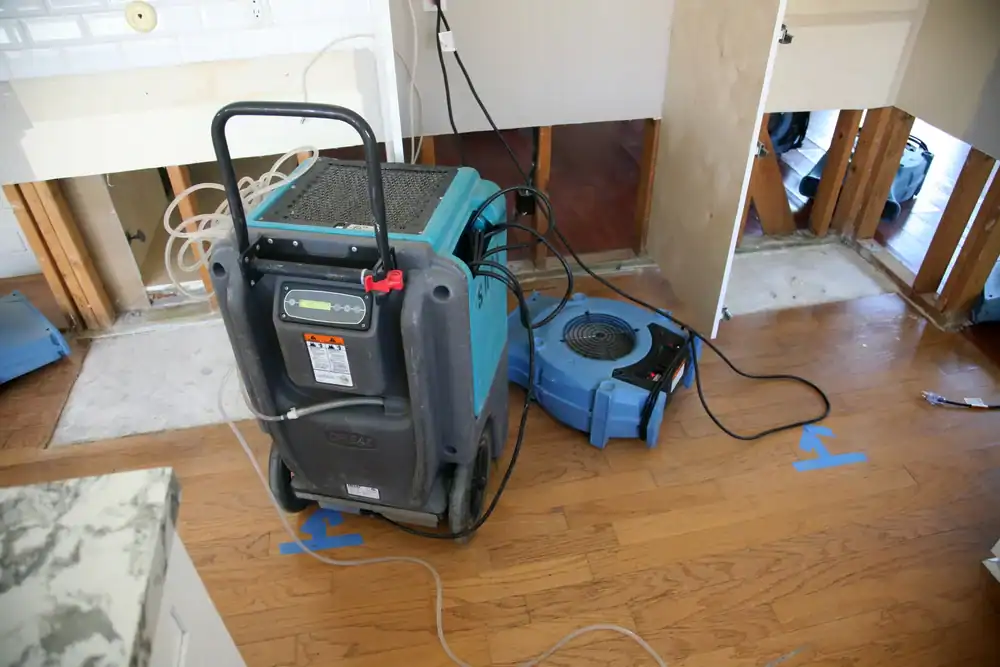
Once the visible water is removed, the real work starts. We use thermal imaging cameras and calibrated moisture meters to find water inside walls, under flooring, and in structural cavities that aren’t visible on the surface. In Westbury’s older housing stock, this step is non-negotiable. We’ve seen homes that looked surface-dry hold significant moisture in the framing behind drywall. Industrial air movers and desiccant dehumidifiers go in next, running to IICRC S500 drying standards — the same standard your insurance carrier uses to evaluate whether the job was done correctly.
Throughout the process, we document everything. Moisture readings, photographs, scope of work, materials affected — all in the format insurance adjusters require. If your restoration involves structural repairs or falls within the Village of Westbury’s flood-prone areas covered under Chapter 127 of the village code, we handle the permit coordination with Nassau County as well. You get a clear picture of what’s happening, what it’s going to cost, and what your insurance should cover — before we go further.
Every Scope of Water Damage Westbury Homes Actually Face
Water damage in Westbury comes from a specific set of causes that aren’t equally common everywhere. Sump pump failures during nor’easters and summer storms are one of the most frequent calls we get from this area. The village’s dense impervious surface coverage — roads, driveways, parking lots — accelerates runoff during heavy rain, and the storm drain infrastructure throughout the greater Westbury area wasn’t built for the intensity of storms that have become routine. In July 2025, the National Weather Service issued a Flash Flood Warning specifically for Western Nassau County, citing urban flash flooding from thunderstorms. That’s not a rare event anymore. It’s the pattern.
Beyond storm-related flooding, burst pipes and supply line failures in aging plumbing systems are a year-round reality in homes built six or seven decades ago. Sewer backup is another serious risk in Westbury — and it’s categorized as Class 3 contaminated water, which means it requires full protective equipment, specialized disposal, and antimicrobial treatment. That’s a licensed remediation job, not a cleanup job, and New York State law is clear about who can do it.
We handle the full scope: water extraction, structural drying, moisture mapping, mold prevention, mold remediation under New York State’s licensing requirements, and coordination with your insurance carrier from start to finish. If your home on or near Jericho Turnpike, Old Country Road, or anywhere in the 11590 ZIP needs water damage repair — from a slow leak behind a wall to a fully flooded basement — we cover it completely.
How quickly does mold start growing after a basement flood in Westbury?
Mold can begin growing within 24 to 48 hours of a water intrusion event — and that window is not a marketing line. It’s an EPA-documented biological reality. In Westbury, that timeline is tighter than it sounds because of the area’s naturally high water table. When your basement floods, groundwater pressure can continue pushing moisture through foundation walls and floor joints even after the visible water has been removed. That residual moisture keeps the environment damp enough for mold to establish itself in wall cavities, behind drywall, and in wood framing.
This is why calling at 11 PM instead of waiting until morning is not an overreaction. Every hour of unaddressed moisture in a postwar Westbury home — where wall assemblies have no modern vapor barriers — is an hour that mold spores are finding conditions they like. The cost difference between a water damage restoration job handled immediately and the same job plus a mold remediation scope weeks later can easily run into several thousand dollars. Speed is the single most effective mold prevention tool available.
Does homeowners insurance cover water damage from a flooded basement in New York?
It depends on the cause, and the distinction matters a lot. Standard homeowners insurance in New York typically covers sudden and accidental water damage — a burst pipe, a failed washing machine supply line, a sump pump overflow that’s part of your policy’s coverage. What it generally does not cover is flooding from an external source, like a storm surge or rising groundwater coming in from outside the home. For that type of flooding, you’d need a separate flood insurance policy through the National Flood Insurance Program or a private carrier.
Most of the water damage calls we handle in Westbury fall into the covered category — internal failures, appliance leaks, drain backups, and storm-related events where water entered through a compromised roof, window, or interior drain rather than rising from outside. The claims process itself is where homeowners run into trouble. Adjusters don’t always offer the full value of a legitimate claim on the first pass. We document every element of the damage in the format carriers require and communicate directly with your adjuster to make sure the full scope is represented. That documentation process is part of what we do — not an add-on.
What's the difference between water mitigation and water damage restoration?
Mitigation is stopping the damage from getting worse — extraction, containment, drying. Restoration is returning the property to its pre-loss condition — repairing or replacing drywall, flooring, insulation, and structural elements that were damaged. Some companies only do one or the other. When a company handles only mitigation, you’re left coordinating a second contractor for the rebuild, which creates gaps in documentation, delays in your insurance claim, and the very real risk that the restoration contractor discovers moisture the mitigation crew missed.
We handle both sides of the process. That matters in Westbury’s older housing stock because the line between mitigation and restoration isn’t always clean. A postwar Cape Cod that took on water through a foundation wall may need drywall removed, framing dried, and then rebuilt — and having one team manage that entire scope means the moisture readings from the drying phase directly inform what gets replaced during restoration. Nothing gets patched over a problem that wasn’t fully resolved.
Does Westbury, NY require permits for water damage restoration work?
For basic water extraction and drying, no permit is typically required. But once the work involves structural repairs — removing and replacing drywall, addressing framing, modifying plumbing, or any reconstruction — Nassau County building permit requirements come into play. If your property is in one of the flood-prone areas covered under the Village of Westbury’s Flood Damage Prevention ordinance (Chapter 127 of the village code, adopted in 2008), there are additional requirements governing how replacement systems and structural work must be performed.
This is one of the areas where working with a locally experienced restoration company makes a real difference. A national franchise that doesn’t regularly work in Westbury may not be familiar with the village’s specific ordinance, which can create compliance issues that surface later — particularly if you’re selling the property or filing a claim that an adjuster scrutinizes closely. We handle permit coordination as part of the restoration process so that nothing gets done out of sequence and your documentation is clean from start to finish.
Is sewer backup covered by homeowners insurance in Nassau County?
Sewer backup coverage is not automatically included in a standard homeowners insurance policy in New York — it’s typically an endorsement, meaning you have to add it separately. Whether you have that endorsement depends on your specific policy, and it’s worth checking before you need it. Nassau County homeowners, particularly in older communities like Westbury where combined or aging separate sewer lines are common, face a higher-than-average risk of sewer backup during heavy storm events when the system gets overloaded.
If you do have the endorsement and your sewer backed up, the claims process for Category 3 contaminated water — which is what sewage-contaminated water is classified as — is more involved than a standard water damage claim. It requires documentation of the contamination level, the scope of affected materials, and the remediation protocol used. New York State also requires licensed contractors for this type of work. We carry the appropriate state licenses, handle the full remediation process safely, and document everything your carrier needs to process the claim correctly.
Why should I choose a local water restoration company over a national franchise in Westbury?
The franchise model means the brand name and the local operator are two different things. SERVPRO of East Meadow/Westbury, for example, is an independently owned franchise location — the national brand doesn’t control the crew quality, the response consistency, or what happens when you have a problem after the job is done. You’re not calling SERVPRO. You’re calling whoever owns that franchise territory, and your experience depends entirely on them.
With us, the company that answers your call is the company doing the work. There’s no routing through a national system, no subcontracted labor you didn’t agree to, and no corporate script standing between you and an actual answer. We work in Westbury regularly — we know the village’s flood ordinance, the Nassau County permit process, the local insurance adjusters, and the specific conditions that make water damage in this part of Long Island different from a generic job anywhere else. That local knowledge isn’t a tagline. It’s what determines whether your home gets dried correctly, your claim gets handled properly, and you’re not dealing with a callback problem two months later.