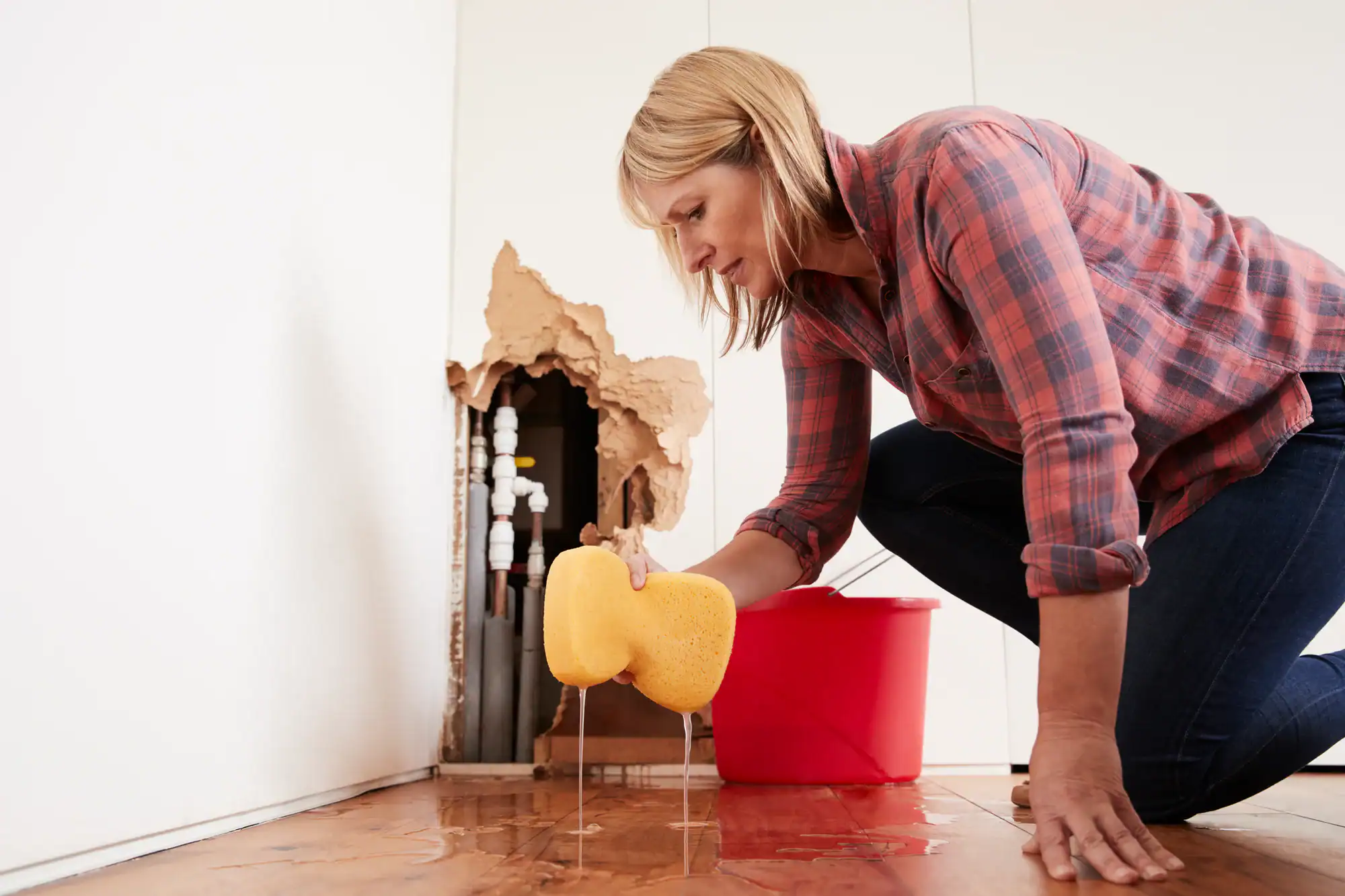
When a 100-Year-Old Home Floods, Every Hour Counts
Williston Park homes were built to last — but not to handle water damage alone. We respond fast, dry deep, and handle everything so your home comes out of this the right way.
I needed a professional consultation explanation of procedure for safe removal of Asbestos in my apartment complex. Without having an account yet, I was very impressed with the caring, knowledgeable and generous advice offered by Jessica, and will look forward to doing business in the future. Thank you so much! I feel much more informed about a sometimes scary endeavor. Peace. Nancy Silva Mineola, NY.
Mia Munoz
Used this company to clean up some water flood in my house. They were fast and easy to work with.very professional, Would recommend to anyone!
Nini Valle
Great company, had a flood and they responded quickly and efficiently. Billed my insurance company directly. I highly recommend this company!
joe colapietro, jr
I had pipe freeze in my basement right before a snow storm and they made to within an hour to help start the clean up process. They we by our side throughout the entire process and even helped with the insurance company. They did such a great job with the cleanup, repair, remidiation, I contracted them to perform the repairs and finishes in the basement. They came with enough manpower and material to get the job done. Leo and Jessica were nothing but a pleasure to deal with!!
Cristian Arredondo c
I had some water damage in my home and Green Island was able to take care of my issue quickly and effectively. I am very pleased with the work they did. They responded quickly and were very professional.
Michael M
Outstanding service! From the office to the field crew everyone was friendly, helpful and responsive. I highly recommend Green Island Group.
Here’s what most Williston Park homeowners don’t realize until it’s too late: water doesn’t stay where you can see it. In a home built in the 1920s or 1930s — with original plaster walls, wood framing, and subflooring that’s been absorbing moisture for decades — water travels fast and hides well. By the time you notice a damp smell or a soft floor, the damage is already inside the structure.
The 24 to 48-hour window before mold begins growing isn’t theoretical. It’s the reality of living in a humid Nassau County climate, in a home built with organic materials that mold colonizes quickly. When water intrusion is addressed correctly within that window — with industrial drying equipment, moisture mapping, and proper structural drying — you avoid the mold remediation, the torn-out walls, and the insurance headaches that come when the job gets done too late or too lightly.
What you’re left with after a proper restoration is a home that’s genuinely dry — not surface dry, structurally dry. Moisture readings confirm it. Your insurance documentation supports it. And the walls you spent years maintaining don’t need to be rebuilt from scratch.
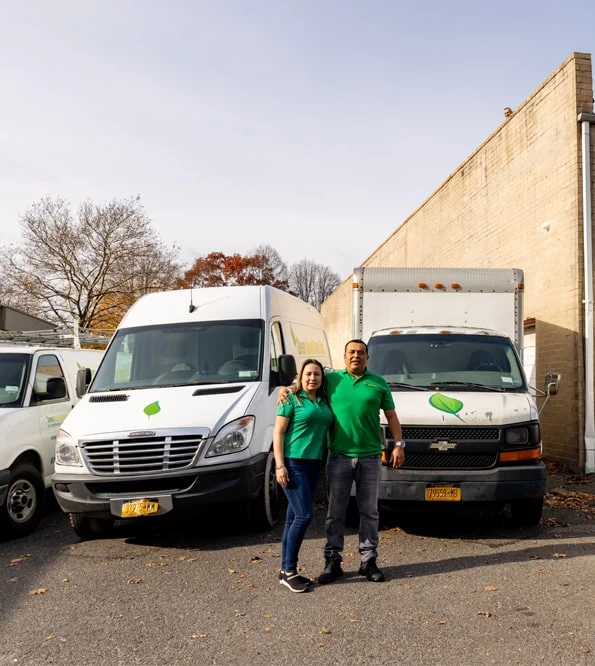
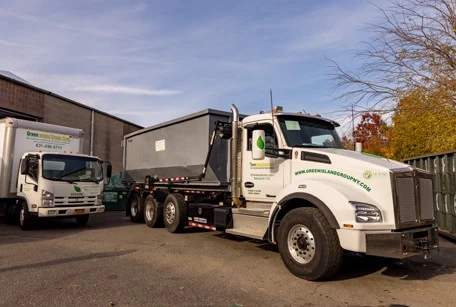
We’re a locally owned restoration company serving Long Island — not a national franchise routing your call through a corporate queue. When you reach out to us, you’re talking to a crew that’s already in Nassau County, already familiar with the Mill River Watershed drainage patterns that push groundwater into Williston Park basements, and already experienced with the kind of century-old construction that defines nearly every home on every street in this village.
That matters more than it sounds. Our technicians have worked inside 1920s Chatlos Colonials and understand what original plaster holds, where water migrates through aging wood framing, and why a visual inspection alone misses half the damage. That’s the difference between a restoration that holds and one that quietly fails inside your walls over the next few months.
We’re IICRC-certified and fully licensed under New York State’s Mold Law — because in a village where every home is between 75 and 100 years old, that’s not optional. It’s the baseline.
It starts the moment you call. We offer 24/7 emergency response to Williston Park, and our goal is simple: get a crew to your door fast enough to matter. For a village this size — under a square mile, just off Willis Avenue — response time is not an excuse we make. It’s a standard we hold ourselves to.
Once on-site, our first priority is stopping the source if it’s still active, then assessing the full scope of damage using thermal imaging cameras and calibrated moisture meters. In a Williston Park home, that step is critical. Original plaster walls and wood framing don’t show moisture the way modern drywall does — and what the eye misses, our equipment finds. We map the moisture throughout the structure before a single piece of equipment gets placed, because drying without a complete picture is guesswork.
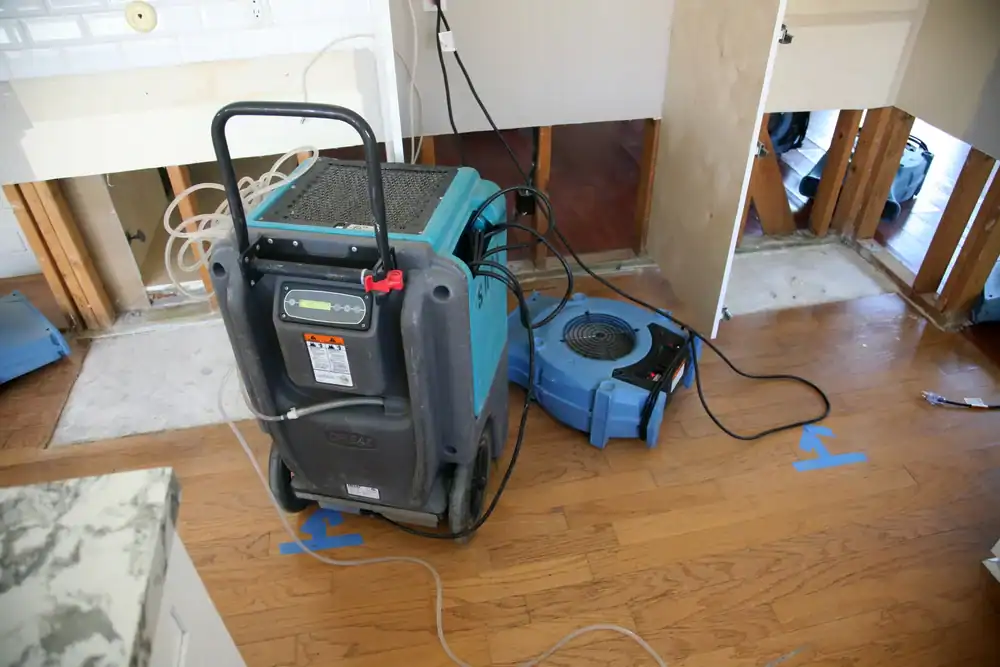
From there, we position industrial air movers, desiccant dehumidifiers, and structural drying systems to pull moisture out of the building materials — not just the air. This isn’t a fan-and-wait process. It’s a measured drying protocol tracked daily until the readings confirm that structural moisture levels are within safe range. If mold remediation is needed, we handle that under New York State’s Mold Law licensing requirements — separately assessed and separately documented, which matters when your insurance claim is on the line.
Water Damage Restoration Service in Williston Park
What's Actually Included When We Do This Right
Water damage restoration in Williston Park isn’t a single task — it’s a sequence of connected steps, and skipping any one of them creates a problem down the road. Our full-service response covers emergency water extraction, structural drying, moisture documentation, mold assessment, and direct coordination with your insurance carrier from start to finish.
Given that Williston Park sits within the Mill River Watershed and Nassau County’s water table is documented as one of the highest in the region, basement flooding here doesn’t always require a named storm. A stretch of wet weather, a rapid snowmelt, or a sump pump failure during a summer power outage can push groundwater into a 1920s foundation just as effectively. We build our service around that reality — not just the dramatic events, but the slow-creep intrusions that Williston Park homeowners experience regularly and often underestimate.
Every job includes written moisture documentation before and after drying — not because it’s paperwork, but because it protects you. If your insurance carrier questions the scope of the damage or the completeness of the restoration, those readings are your evidence. For a home valued above $760,000 in a village where property taxes average over $10,000 a year, that documentation isn’t a detail. It’s part of protecting what you’ve built here.
How quickly does mold start growing after basement flooding in Williston Park?
Mold can begin colonizing within 24 to 48 hours of water intrusion — and in a Williston Park home, that window is especially tight. The original building materials in these homes — wood framing, plaster, cellulose, original subflooring — are organic materials that mold attaches to and spreads through faster than modern drywall or synthetic materials. Add Nassau County’s humid subtropical climate, where summer temperatures and humidity levels create near-ideal mold growth conditions, and the timeline gets even shorter during warmer months.
The practical takeaway is this: if your basement flooded overnight, the decision you make in the morning matters more than most people realize. Consumer fans and dehumidifiers from the hardware store move air — they don’t remove moisture from inside wall cavities or structural framing. Professional extraction and structural drying equipment is the only tool that actually interrupts the mold growth cycle at the source. The sooner we deploy it, the less likely you are to be dealing with a full mold remediation job on top of the water damage.
Will my homeowners insurance cover water damage in my Williston Park home?
It depends on the source of the water, and the distinction matters a lot. Most standard homeowners insurance policies in New York cover sudden and accidental water damage — a burst pipe, a failed appliance, or an overflow from a fixture. What they typically don’t cover is gradual damage from a slow leak that went unaddressed, or flooding that enters from outside the structure through the ground. That second category — groundwater intrusion through a foundation — is the one most relevant to Williston Park, given the area’s high water table and the age of the foundations in these homes.
If you’re unsure what your policy covers, the documentation we provide during the restoration process is what makes or breaks a claim. We photograph the damage, record moisture readings throughout the structure, and communicate directly with your adjuster to ensure the full scope is captured. For a home in Williston Park where values regularly exceed $760,000, having that documentation handled correctly from day one is worth more than most homeowners expect.
How do I know if there's hidden water damage inside my walls?
In most modern homes, hidden moisture eventually shows itself through warped drywall, bubbling paint, or visible staining. In a Williston Park home with original plaster-and-lath construction, the signs are subtler and slower to appear — which means the damage can go further before you notice it. A musty smell that doesn’t go away, a soft spot in the floor, or a wall that feels slightly cool to the touch are often the first indicators that moisture is living somewhere you can’t see.
The reliable way to find it is thermal imaging. A thermal camera detects temperature differences in building materials — and wet materials hold temperature differently than dry ones, making moisture pockets visible even behind intact plaster or hardwood. We use thermal imaging alongside calibrated moisture meters on every assessment, specifically because the building stock in Williston Park doesn’t reveal damage the same way newer construction does. A visual inspection alone in a 1930s home isn’t enough. Our equipment finds what the eye misses.
Do I need a permit for water damage restoration work in Williston Park, NY?
It depends on the scope of the work. Water extraction, drying, and mold remediation generally don’t require a permit on their own. But if the restoration involves opening walls, replacing structural elements, or any reconstruction work — which is common in Williston Park homes where water has traveled into original framing or subflooring — Nassau County Building Department permits may be required before that work begins.
There’s also a separate licensing requirement that applies specifically in New York State: under the 2016 Mold Law, any contractor performing mold assessment or mold remediation must hold a license from the New York State Department of Labor. These are two distinct licenses — one for assessment, one for remediation — and they cannot be held by the same individual on the same job. This is a legal requirement, not an industry recommendation. In a village where every home is between 75 and 100 years old and virtually every water intrusion event carries some mold risk, it’s worth asking any restoration company you consider for their NY State license numbers before work begins.
Why does my Williston Park basement keep flooding even when it doesn't storm heavily?
This is one of the most common questions we hear from homeowners in this part of Nassau County, and the answer usually comes down to the water table. Williston Park sits within the Mill River Watershed, and the water table in this area is documented as one of the highest in the region. When the ground becomes saturated from extended rainfall, snowmelt, or seasonal groundwater rise, the water table can reach or exceed the depth of your foundation — and at that point, water enters not because of a storm overhead, but because the ground itself is full.
Foundations built in the 1920s and 1930s were not constructed with modern waterproofing membranes or drainage systems. Many Williston Park basements have inherent vulnerability to this kind of hydrostatic pressure intrusion, and it tends to get worse as the original foundation materials age. If your basement floods repeatedly under conditions that don’t seem severe enough to explain it, the water table is likely the cause — and the restoration approach needs to account for that, not just treat the symptom each time it happens.
How long does water damage restoration typically take for a home in Williston Park?
The honest answer is that it varies, and anyone who gives you a fixed number without seeing the home first is guessing. For a straightforward basement flooding event with no structural damage and no mold involvement, the drying process typically runs three to five days using industrial equipment — after which a final moisture reading confirms whether the structure has reached safe levels. If the moisture has traveled into wall cavities, original wood framing, or under hardwood floors, the timeline extends because those materials dry more slowly and need to be monitored carefully.
In a Williston Park home specifically, the age of the building materials adds time to the process. Original plaster walls and century-old wood framing hold moisture differently than modern materials, and rushing the drying timeline to hit an arbitrary deadline is exactly how jobs end up with mold problems six weeks later. We track moisture readings daily and keep you informed throughout — the job is done when the numbers confirm it, not when the calendar says it should be.