When Lower Manhattan's Old Bones Spring a Leak, You Need More Than a Mop
In a neighborhood built on century-old infrastructure, water damage moves fast and hides deep. We respond 24/7 with the full NYC licensing stack to handle whatever your building throws at us. Whether you’re managing a pre-war office tower near the Bowling Green subway station or a converted residential building off Whitehall Street, we arrive already knowing what we’re likely to find.
I needed a professional consultation explanation of procedure for safe removal of Asbestos in my apartment complex. Without having an account yet, I was very impressed with the caring, knowledgeable and generous advice offered by Jessica, and will look forward to doing business in the future. Thank you so much! I feel much more informed about a sometimes scary endeavor. Peace. Nancy Silva Mineola, NY.
Mia Munoz
Used this company to clean up some water flood in my house. They were fast and easy to work with.very professional, Would recommend to anyone!
Nini Valle
Great company, had a flood and they responded quickly and efficiently. Billed my insurance company directly. I highly recommend this company!
joe colapietro, jr
I had pipe freeze in my basement right before a snow storm and they made to within an hour to help start the clean up process. They we by our side throughout the entire process and even helped with the insurance company. They did such a great job with the cleanup, repair, remidiation, I contracted them to perform the repairs and finishes in the basement. They came with enough manpower and material to get the job done. Leo and Jessica were nothing but a pleasure to deal with!!
Cristian Arredondo c
I had some water damage in my home and Green Island was able to take care of my issue quickly and effectively. I am very pleased with the work they did. They responded quickly and were very professional.
Michael M
Outstanding service! From the office to the field crew everyone was friendly, helpful and responsive. I highly recommend Green Island Group.
Water damage in the Bowling Green area is not the same problem it is anywhere else in New York. You are not dealing with a flooded basement in a split-level ranch. You are dealing with a 120-year-old building where one failed pipe joint can saturate five floors before the super gets the call. The buildings surrounding Bowling Green Park some dating back to the 1890s were built when steam heat was cutting-edge and asbestos insulation was standard. When water moves through those walls, it does not travel alone.
The outcome you need is not just dry walls. It is a building that has been properly assessed, fully dried, tested for mold, checked for asbestos disturbance, and documented in a way that satisfies your insurance carrier, your co-op board, and if necessary, the NYC Department of Buildings. That is what a real restoration looks like in this neighborhood. Anything short of that is just pushing the problem forward.
The Bowling Green area sits at the southern tip of Manhattan, flanked by the Hudson River, the East River, and New York Harbor. Hurricane Sandy proved what that geography means in practice storm surge at the Battery hit 14.1 feet, and basements throughout the Financial District flooded with five feet of water or more. Coastal flood risk here is not a hypothetical. It is a documented, recurring reality that the city is spending $7 billion to address. Until that infrastructure is in place, you need a restoration team that knows how to respond when the water comes.
Licensed Water Restoration Companies near Bowling Green, NY
Every License This Neighborhood Legally Requires We Hold Them All
We are a fully licensed NYC General Contractor with additional credentials in NYS DOL Mold Remediation, NYS DOL Asbestos, USEPA Lead and RRP, and NYC BIC Trade Waste. That is not a marketing checklist. In the Financial District and around Bowling Green, those are the actual licenses required by law to perform restoration work in pre-war buildings legally and completely. When a building manager at 11 Broadway or a co-op board on State Street asks for your license numbers, we hand them over without hesitation.
The buildings around Bowling Green are some of the oldest occupied commercial and residential structures in the United States. We work in them regularly. We know what a century-old steam pipe system looks like when it fails, what the walls around it are made of, and what the right remediation sequence looks like from extraction through reconstruction. You are not our learning curve.
We serve residential unit owners, co-op and condo boards, commercial property managers, and institutional building operators throughout Lower Manhattan. When the job is in a converted office tower near the Bowling Green subway station or a pre-war building off Whitehall Street, we arrive already knowing what we are likely to find.
Water Damage Restoration Service near Bowling Green, NY
No Guesswork, No Handoffs Here Is Exactly What We Do
The first call triggers an immediate response. In Manhattan, that means a crew familiar with Financial District building access, freight elevator scheduling, and NYC DOT staging requirements not a team figuring it out when they arrive. We are on-site, typically within two hours, with extraction equipment ready to move.
Once we are in, we do not rely on visual inspection alone. Thermal imaging and moisture meters trace where the water actually went through ceilings, down wall cavities, into mechanical chases. In a high-rise or mixed-use building, water rarely stops at the floor where the pipe broke. We map the full extent before any drying equipment goes down, because incomplete assessment leads to mold growth and a second call you do not want to make.
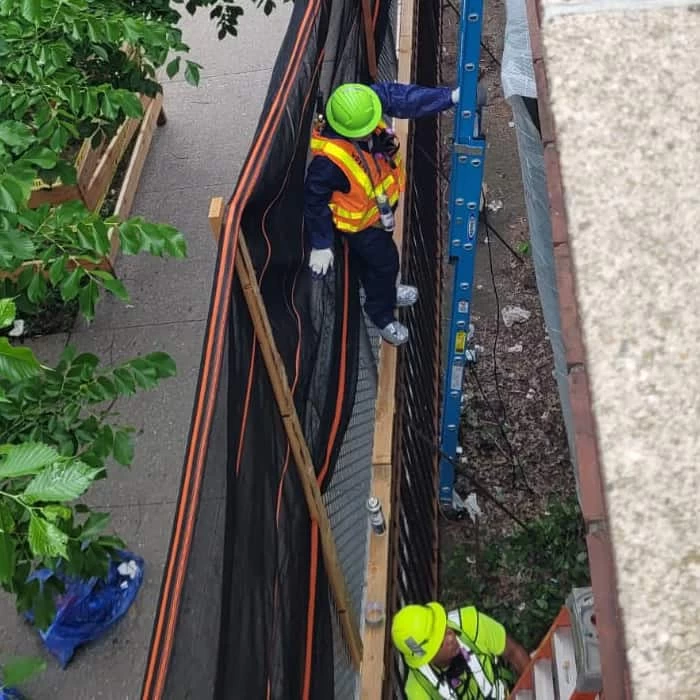
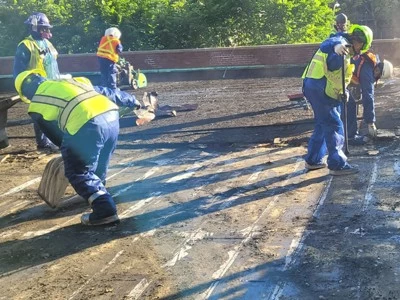
From there, we handle the full scope in sequence: water extraction, structural drying, mold assessment, asbestos evaluation if the building warrants it and in most pre-1987 buildings in this area, it does and final reconstruction. Every phase is documented with moisture readings, drying logs, and written reports built to satisfy NYC-area insurance adjusters. In a building where multiple unit owners and multiple insurance carriers may be involved simultaneously, that documentation is not optional. It is what keeps the claims process from becoming its own disaster.
Water Restoration and Mold Remediation near Bowling Green, NY
Built for Buildings That Were Old Before Your Insurance Company Existed
The Bowling Green area presents a specific combination of risk factors that most restoration contractors are not equipped to handle in a single engagement. Pre-1987 construction means asbestos surveys are legally required before any repair or renovation work begins. Pre-1978 construction which covers virtually every building in this neighborhood means lead paint protocols apply the moment a wall gets opened. Mold can begin colonizing within 24 to 48 hours of water exposure, and in a building with shared walls, shared mechanical systems, and shared air, that timeline applies across every floor the water touched.
We provide the complete scope of water damage restoration: emergency water extraction, commercial-grade structural drying, thermal imaging assessment, mold testing and remediation, asbestos evaluation and abatement where required, lead-safe work practices throughout, debris removal under our NYC BIC Trade Waste license, and full reconstruction to bring the space back to livable or operable condition. One contractor. One contract. No stopping mid-job to bring in a separate abatement crew.
For property managers handling building-wide events whether from a burst pipe in a converted office tower near Battery Park City or post-storm flooding following a coastal surge event we also provide the damage documentation packages your insurance carrier and the NYC DOB will expect. If your building’s situation requires permit filings with the Department of Buildings, we handle that too.
Does water damage restoration near Bowling Green require permits from the NYC Department of Buildings?
In most cases involving structural repairs, plumbing alterations, or significant reconstruction following water damage, yes work in NYC buildings requires permits from the NYC Department of Buildings. This applies whether you are in a residential co-op unit, a commercial office space, or a mixed-use building in the Financial District near Bowling Green. The permit requirement is not something you can skip and hope for the best on, particularly in a neighborhood where building management companies and co-op boards are actively monitoring compliance.
We hold the NYC General Contractor license required to pull those permits legally. We handle the filing process as part of the job, so you are not left coordinating between a restoration crew and a separate GC just to get the paperwork right. If your building has existing violations on record with the DOB which is not uncommon in older Financial District buildings around Bowling Green we can identify those early so they do not create delays mid-project.
How quickly can a water damage restoration crew actually reach a Bowling Green address in Manhattan?
Our documented response time is typically within two hours of the initial call, including to Lower Manhattan addresses near Bowling Green. Getting there is one thing getting set up and working in a Manhattan high-rise is another. Access to a Financial District building involves building security check-in, freight elevator coordination, and often NYC DOT considerations for staging equipment on the street. These are not obstacles we are working through for the first time when we arrive at your address.
The reason speed matters so much here is not just about the inconvenience of standing water. Mold can begin growing within 24 to 48 hours of water exposure. In a building where one saturated floor can affect the units or offices below it, every hour of delay multiplies the scope of damage and the number of parties involved. A two-hour response versus an eight-hour response is often the difference between a contained remediation and a building-wide event.
My Bowling Green-area building was built before 1940 does water damage restoration automatically involve asbestos?
Not automatically, but realistically yes, it often does. New York City building code requires an asbestos assessment before any renovation or repair work begins in pre-1987 buildings. The buildings surrounding Bowling Green Park include some of the oldest occupied commercial structures in the United States, and many still have asbestos-containing materials in pipe insulation, floor tiles, ceiling tiles, and wall systems. When water damage opens up those materials or when drying and reconstruction work requires disturbing them a licensed asbestos abatement contractor must be involved by law.
The practical problem most property owners run into is hiring a water damage company that does not hold the NYS DOL Asbestos license. They start the job, find asbestos, and have to stop work entirely while a separate contractor is brought in. That gap costs time, and time costs money in a Manhattan building. We hold the asbestos license alongside the mold, lead, and general contractor credentials, so we do not stop when we find it. We assess it, handle it correctly, document it, and keep the restoration moving.
What does water damage restoration typically cost in a Manhattan co-op or condo building?
The national average for a water damage insurance claim runs around $12,500. In a Manhattan co-op or condo particularly in a pre-war building in the Financial District that number can climb significantly depending on the scope. If the water moved through multiple floors, if asbestos or lead is present, if the building’s mechanical systems were affected, or if multiple unit owners are involved, the total restoration cost across all parties can reach well into the five or six figures.
What matters most for your out-of-pocket exposure is how thoroughly the damage is documented from the start. Insurance carriers will pay based on what is proven and recorded moisture readings, drying logs, written assessments, and photographic evidence taken at every stage of the job. Gaps in that documentation give adjusters room to reduce or dispute claims. We build the documentation package as part of the restoration process, not as an afterthought, which tends to result in smoother and more complete claim outcomes for building owners and unit holders in this area.
How do I handle water damage in my unit when it also affected my neighbor's apartment below me?
This is one of the most common scenarios we handle in Manhattan residential buildings, and it is more complicated than a single-unit event. When water from your unit damages the unit below, you are now dealing with at least two insurance policies, two sets of owners, a building management company with its own protocols, and potentially a co-op board that wants documentation before anyone starts opening walls. Getting all of those parties aligned quickly is as important as the physical restoration work itself.
The first step is a thorough assessment of both units not just the one where the water originated. Moisture readings need to be taken in the affected unit below to establish the full extent of damage before any drying equipment is placed. From there, the documentation we produce is structured to serve multiple insurance claims simultaneously, which reduces the back-and-forth between carriers and speeds up the overall resolution. If your building management company needs to be looped in before work begins, we are experienced in navigating that conversation without it becoming a delay.
Is the Bowling Green area at real risk for flood damage, or was Sandy a one-time event?
Sandy was not a one-time event it was a demonstration of what this area’s geography makes possible. Bowling Green sits at the southern tip of Manhattan, with the Hudson River to the west, the East River to the east, and New York Harbor directly to the south. During Sandy, storm surge at the Battery reached 14.1 feet above mean lower low water. Floodwaters in the Financial District reached depths of up to eight feet in some locations, and basements in Wall Street high-rises were submerged under five feet of water.
The city’s response to that reality is the Financial District and Seaport Climate Resilience Master Plan a $7 billion infrastructure initiative specifically designed to protect Lower Manhattan from future storm surge events. That plan is still being built. Until it is complete, buildings in and around Bowling Green remain in active coastal flood exposure territory, and the risk is considered by climate projections to be increasing in frequency and intensity over time. If your building does not have a post-Sandy flood response plan and a restoration contractor you can call immediately, now is the right time to establish both.