When Canal Street's Old Bones Get Wet, You Need More Than a Mop
In a corridor built over a buried drainage canal, water damage hits differently. We respond in as little as two hours licensed for everything Lower Manhattan’s pre-war buildings throw at us. Whether you’re in a Tribeca loft, a Chinatown walk-up, or a SoHo cast-iron conversion, we know what water does to these buildings and how to stop it before it spreads.
I needed a professional consultation explanation of procedure for safe removal of Asbestos in my apartment complex. Without having an account yet, I was very impressed with the caring, knowledgeable and generous advice offered by Jessica, and will look forward to doing business in the future. Thank you so much! I feel much more informed about a sometimes scary endeavor. Peace. Nancy Silva Mineola, NY.
Mia Munoz
Used this company to clean up some water flood in my house. They were fast and easy to work with.very professional, Would recommend to anyone!
Nini Valle
Great company, had a flood and they responded quickly and efficiently. Billed my insurance company directly. I highly recommend this company!
joe colapietro, jr
I had pipe freeze in my basement right before a snow storm and they made to within an hour to help start the clean up process. They we by our side throughout the entire process and even helped with the insurance company. They did such a great job with the cleanup, repair, remidiation, I contracted them to perform the repairs and finishes in the basement. They came with enough manpower and material to get the job done. Leo and Jessica were nothing but a pleasure to deal with!!
Cristian Arredondo c
I had some water damage in my home and Green Island was able to take care of my issue quickly and effectively. I am very pleased with the work they did. They responded quickly and were very professional.
Michael M
Outstanding service! From the office to the field crew everyone was friendly, helpful and responsive. I highly recommend Green Island Group.
What Stops a Single Leak From Becoming a Building-Wide Crisis
Water doesn’t wait for business hours, and in a building where you share walls, floors, and plumbing chases with your neighbors, it doesn’t stay in one unit either. A burst pipe on the fourth floor of a Tribeca loft or a backed-up drain in a Chinatown walk-up can reach three units below it before a remediation crew even arrives. The first 24 to 48 hours are when the damage either gets contained or gets expensive.
What you get on the other side of a properly handled water damage restoration is a dry, documented, and structurally sound space not just surface-level drying that leaves moisture trapped behind plaster and inside wood joists. In Canal Street’s pre-war building stock, that distinction matters enormously. These buildings weren’t built with modern moisture barriers. Water finds its way into places that look fine on the surface but are actively growing mold within days.
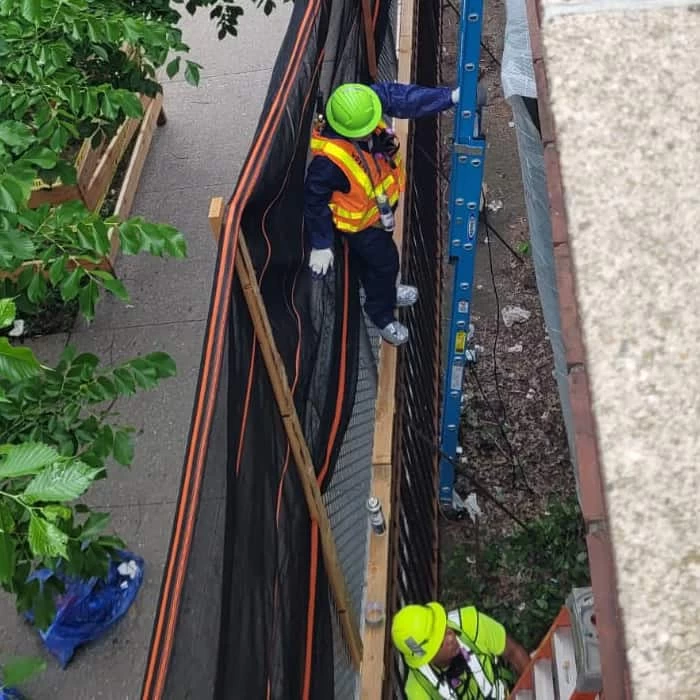
There’s also the hazard layer that most restoration companies aren’t equipped to handle. The buildings along and adjacent to Canal Street cast-iron loft conversions, early 20th-century tenements, mixed-use commercial structures almost universally contain asbestos insulation and lead-based paint. When water damage exposes those materials, the job changes scope immediately. We hold the licenses to handle both without stopping the job or referring you to a separate contractor.
Licensed Water Restoration Companies, Canal Street
Every License the City Requires Under One Roof
We are a New York-based environmental remediation and restoration contractor serving residential, commercial, and mixed-use properties across New York City and Long Island. This isn’t a franchise applying a national template to a local market. We understand the difference between a landmarked cast-iron building in the SoHo-Cast Iron Historic District and a Chinatown tenement and what each one requires from a regulatory and technical standpoint.
The credential stack matters here more than anywhere else. We hold the NYC General Contractor license, NYC BIC Trade Waste license, NYS DOL Mold license, NYS DOL Asbestos license, and USEPA Lead and RRP certifications every license required to legally complete a full water damage restoration in a Canal Street building. Most contractors operating in Lower Manhattan hold one or two of those. Ask before you let anyone through your door.
With a 4.7-star rating across more than 33 verified reviews and documented response times as fast as two hours, the track record speaks clearly. When the water is coming in, you want a team that already knows this neighborhood.
From the First Call to a Dry, Documented, Finished Space
It starts with the call. We operate 24/7 because water damage in a dense urban building at 2 a.m. doesn’t become less serious by morning. When you reach out, you’ll talk to someone who can actually help, not a voicemail. From there, a crew is dispatched and typically on-site within two hours.
The first thing that happens on arrival is a full assessment not just of what’s visibly wet, but of where the water traveled. In Canal Street’s older building stock, water migrates through original wood floor joists, behind plaster walls, and into shared structural cavities in ways that modern construction simply doesn’t. We use thermal imaging and moisture meters to map the full extent of the damage before any drying equipment is placed. If the assessment reveals asbestos-containing materials or lead paint which is common in pre-1978 construction throughout this corridor that gets documented and handled under the same job, not referred out.
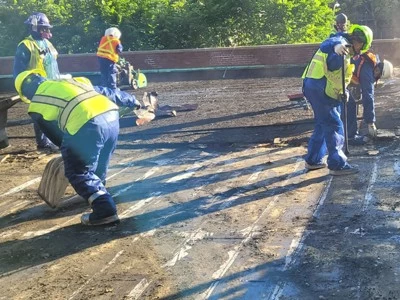
Drying and dehumidification equipment is then staged and monitored daily. Once the space reaches acceptable moisture levels, the remediation phase begins mold treatment if needed, structural drying confirmation, and documentation of every step for your insurance carrier. For buildings within the SoHo-Cast Iron Historic District or other landmarked structures, we’re aware of Landmarks Preservation Commission requirements that can affect how repairs are executed. By the time the job closes, you have a dry space and a complete paper trail.
Water damage restoration near Canal Street isn’t a one-size job. The building stock here ranges from 19th-century cast-iron commercial conversions to early 20th-century tenement walk-ups to modern mixed-use high-rises and each one presents a different set of challenges. Our scope covers the full range: emergency water extraction, structural drying, mold remediation, asbestos abatement, lead remediation, and reconstruction, all under one licensed team.
For residential clients whether you’re in a Tribeca loft co-op or a Chinatown apartment the process includes full insurance documentation support. Manhattan’s high-value property insurance claims require a specific level of damage documentation that generic contractors often can’t provide. We handle the scope of loss reporting, photo documentation, and carrier communication as a standard part of every job, not an add-on.
For commercial property managers and building owners along the Canal Street corridor, the focus shifts to minimizing tenant disruption and maintaining NYC DOB compliance throughout the restoration. We’re familiar with the permit requirements, the BIC trade waste regulations for debris removal, and the specific considerations that come with managing a water damage event in a multi-tenant building. If the damage is in a landmarked structure, that layer gets addressed too not after the fact, but from the start.
Does water damage restoration near Canal Street require a New York City permit?
It depends on the scope of the work. Emergency water extraction, drying, and mold remediation typically don’t require a NYC Department of Buildings permit on their own. But if the water damage requires structural repairs replacing damaged framing, sheetrock, or load-bearing elements then yes, a DOB permit is required before that work begins. In some cases, if the building is within the SoHo-Cast Iron Historic District or is an individual landmark, the Landmarks Preservation Commission may also need to review proposed repairs before work starts.
This is one of the reasons it matters who you hire. A contractor without a valid NYC General Contractor license can’t legally pull those permits, which means the repair work either doesn’t happen correctly or creates liability for the building owner down the line. We hold the NYC GC license and handle the permitting process as part of the job you don’t have to chase that down separately.
What should I do in the first hour after discovering water damage in my Canal Street building?
The most important thing you can do in the first hour is stop the source if you can safely reach it shut off the water supply valve to the affected area or, if it’s a building-wide issue, contact your building super immediately. After that, don’t wait to call a restoration company. The 24-to-48-hour window before mold begins germinating is not a marketing line it’s a real biological timeline, and in a dense building where water is already moving through shared walls and floor systems, that clock starts the moment the water does.
Document everything with photos before anything is moved or dried. Your insurance carrier will want a clear record of the original damage, and that documentation is much harder to reconstruct after the fact. If you’re in a co-op or condo near Canal Street, notify your building manager or board as soon as possible in many Lower Manhattan buildings, the master policy covers certain types of damage, and the building’s insurance may need to be involved alongside your own unit policy.
My Canal Street building is pre-war does that change how water damage restoration works?
Significantly, yes. Pre-war buildings which make up the overwhelming majority of the residential and commercial stock along and adjacent to Canal Street were built without modern moisture barriers, vapor retarders, or the kind of drainage systems that newer construction takes for granted. Water intrusion in these buildings tends to travel farther and stay longer than it does in modern construction. Original wood floor joists absorb moisture quickly and hold it, plaster walls don’t dry the way drywall does, and the building cavities between units often have no insulation to slow water migration.
There’s also the hazmat layer. Buildings constructed before 1978 which covers virtually everything in this corridor are presumed to contain lead-based paint under EPA regulations. Buildings from the pre-WWII era frequently contain asbestos insulation around pipes, in floor tiles, and in other building materials. When water damage disturbs those materials, the job requires licensed asbestos and lead remediation, not just standard drying. We hold both the NYS DOL Asbestos license and the USEPA Lead and RRP certifications, so that transition happens within the same job rather than stopping the work to find a separate specialist.
Will my homeowner's or co-op insurance cover water damage restoration costs?
In most cases, sudden and accidental water damage a burst pipe, an appliance malfunction, an overflow from an upstairs unit is covered under standard homeowner and co-op insurance policies. What’s typically not covered is damage resulting from long-term neglect or gradual leaks that were visible and unaddressed. The distinction matters, and it’s one of the first things an adjuster will look at when reviewing your claim.
In New York City co-ops and condos specifically, the coverage picture gets more layered. Your unit’s individual policy covers your personal property and, depending on the policy type, your unit’s interior finishes. The building’s master policy covers the structure itself and common areas. When water damage crosses that line which it often does in Canal Street’s shared-wall, shared-floor buildings both policies may be involved in the same claim. We document damage to the standard required by high-value Manhattan insurance carriers and can help you understand what falls under which policy before the adjuster arrives.
How serious is the flood risk near Canal Street, and how does it affect restoration needs?
It’s serious enough that New York City committed $5 to $7 billion to a coastal resiliency initiative specifically designed to protect the neighborhoods surrounding Canal Street. Hurricane Sandy’s storm surge reached the corner of Canal Street in 2012, with parts of Lower Manhattan under as much as eight feet of floodwater. That wasn’t a freak event it was a demonstration of what the area’s geography already made possible. Canal Street sits on terrain that was marshy and flood-prone long before the city was built over it. The street itself follows the path of a drainage ditch hand-dug in 1733 to channel water from the low-lying Collect Pond westward to the Hudson River.
For building owners and residents in this corridor, that history translates into a real and ongoing risk not just from named storms, but from the aging combined sewer system beneath the street, water main breaks that have flooded the Canal Street subway station, and the general groundwater dynamics of low-lying urban terrain. Restoration needs in this area often go beyond what a standard water damage event requires elsewhere. Knowing the local risk profile shapes how we approach assessment, documentation, and long-term moisture monitoring for properties in this corridor.
What happens if water damage in my building reveals mold behind the walls?
Mold behind walls is one of the most common discoveries during a water damage restoration in Canal Street’s older building stock and it’s not always visible until the drying process begins and wall cavities are opened. In New York State, mold remediation is a licensed activity. The NYS Department of Labor requires that any contractor performing mold assessment or remediation hold a valid NYS DOL Mold license. This is not optional, and it’s not the same as a general contractor license. If a company doing your water damage restoration discovers mold and they don’t hold that specific license, they legally cannot remediate it which means your job stops, and you’re starting over with a new contractor.
We hold the NYS DOL Mold license alongside our full restoration credential stack, so discovering mold mid-job doesn’t halt the work. The remediation gets folded into the existing scope, documented for your insurance carrier, and handled by the same team that’s already on-site. In pre-war buildings throughout the Canal Street area where moisture has often been moving through wall cavities for years before a single visible event triggers a call this happens more often than most property owners expect. It’s worth knowing your contractor is equipped for it before the job starts.