In Chinatown’s pre-war tenements, water doesn’t stay in one unit and every hour you wait makes the problem bigger and more expensive to fix. When a pipe fails on the fourth floor of a building along Mott Street or East Broadway, moisture migrates down through shared walls and floor joists. By the time you realize there’s damage in the unit below, extraction and drying have become exponentially more complex. We respond to Lower Manhattan in roughly two hours because in a neighborhood this old and densely occupied, speed isn’t a convenience it’s the difference between a contained problem and a building-wide one.
I needed a professional consultation explanation of procedure for safe removal of Asbestos in my apartment complex. Without having an account yet, I was very impressed with the caring, knowledgeable and generous advice offered by Jessica, and will look forward to doing business in the future. Thank you so much! I feel much more informed about a sometimes scary endeavor. Peace. Nancy Silva Mineola, NY.
Mia Munoz
Used this company to clean up some water flood in my house. They were fast and easy to work with.very professional, Would recommend to anyone!
Nini Valle
Great company, had a flood and they responded quickly and efficiently. Billed my insurance company directly. I highly recommend this company!
joe colapietro, jr
I had pipe freeze in my basement right before a snow storm and they made to within an hour to help start the clean up process. They we by our side throughout the entire process and even helped with the insurance company. They did such a great job with the cleanup, repair, remidiation, I contracted them to perform the repairs and finishes in the basement. They came with enough manpower and material to get the job done. Leo and Jessica were nothing but a pleasure to deal with!!
Cristian Arredondo c
I had some water damage in my home and Green Island was able to take care of my issue quickly and effectively. I am very pleased with the work they did. They responded quickly and were very professional.
Michael M
Outstanding service! From the office to the field crew everyone was friendly, helpful and responsive. I highly recommend Green Island Group.
When water damage happens in a Chinatown building, the stakes are different than in a detached suburban home. You’re dealing with shared plumbing stacks, lathe-and-plaster walls that hold moisture for days, and floors below you that are already getting wet while you’re still on the phone. The faster the response, the smaller the footprint and that difference can be measured in thousands of dollars on your final claim.
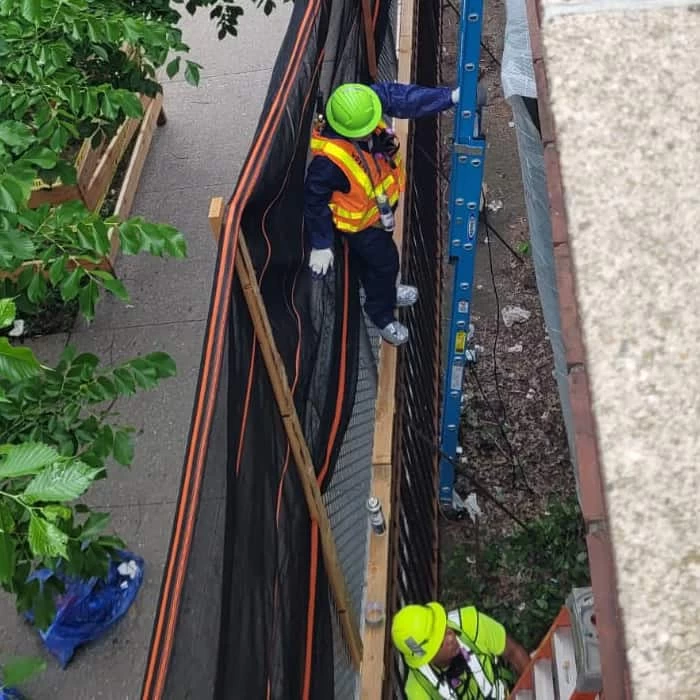
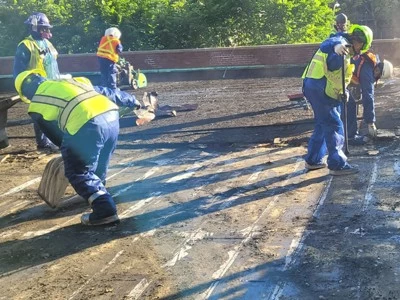
More than half of the residential buildings in Chinatown were built before 1940. That means when a wall gets opened up during restoration, there’s a real chance of finding asbestos pipe insulation or lead paint underneath. Most restoration companies have to stop work, refer out, and leave you coordinating multiple contractors. We hold the NYS DOL Asbestos, NYS DOL Mold, and USEPA Lead certifications so when something turns up behind that wall, the job doesn’t stop. It continues, legally and safely, under one contract.
For landlords and building owners specifically, that matters beyond just convenience. HPD doesn’t pause enforcement timelines because you’re waiting on a second contractor. Getting the full scope handled by one licensed crew from water extraction through mold remediation and reconstruction keeps your building in compliance and your tenants in their units.
Built for New York, Licensed for What Chinatown Actually Requires
We’re an independent, New York-based restoration and environmental remediation contractor. Not a national franchise. Not a call center routing your job to whoever’s available. A real company, built specifically for the New York market, with the license stack to prove it NYC General Contractor, NYC BIC Trade Waste, NYS DOL Asbestos, NYS DOL Mold, USEPA Lead, and USEPA RRP certifications, all held simultaneously.
That combination matters in a neighborhood like Chinatown, where the buildings along Mott Street, East Broadway, and the Canal Street corridor are among the oldest occupied residential structures in Manhattan. Work that’s routine in a newer building becomes a multi-hazard job here, and the contractor you hire needs to be legally qualified for every layer of it.
We serve residential, commercial, and municipal clients across Manhattan, Queens, and Long Island. Our 4.7-star rating across verified reviews reflects a track record built on showing up fast, communicating clearly, and finishing what was started without handing the job off halfway through.
From First Call to Finished Work No Handoffs, No Gaps
It starts with the call. We operate 24 hours a day, seven days a week, and our documented response time to Lower Manhattan is around two hours. When our crew arrives, the first priority is stopping the source if it hasn’t been addressed and assessing the full scope of moisture migration not just what’s visible, but what’s moved into adjacent walls, ceiling cavities, and the unit below.
From there, extraction and structural drying begin. In Chinatown’s older buildings, this step takes longer than it does in modern drywall construction. Lathe-and-plaster walls absorb and retain water differently, and drying protocols have to account for that. Industrial air movers and dehumidifiers are placed strategically, and moisture readings are tracked throughout the drying period so there’s a documented record the kind insurance adjusters require before closing a claim.
Once the structure is dry, any necessary demolition and reconstruction happens under the same contract. If asbestos or lead materials are disturbed during that process, we handle it in-house under our NYS DOL and USEPA certifications no subcontracting, no delays, no gap in liability coverage. For buildings in the Two Bridges and Chinatown area where NYC DOB permits are required for structural repairs, our NYC General Contractor license covers that too. The job ends when the space is fully restored, not just dried out.
Every Hazard This Neighborhood Can Throw at a Building
Water damage restoration in Chinatown isn’t a single-service job. It rarely is in a neighborhood where the median building is nearly 80 years old, the plumbing systems are aging cast iron and galvanized steel, and the combined sewer system under Canal Street backs up during heavy rain events. Our scope covers the full range emergency water extraction, structural drying, mold assessment and remediation, asbestos abatement, lead hazard management, sewage backup cleanup, and full reconstruction all under one roof, one contract, and one set of NYC-specific licenses.
For residential building owners, that means no coordinating between a water mitigation company, a separate mold remediator, and a general contractor. For restaurant operators and commercial tenants on the ground floors of Chinatown’s mixed-use buildings, it means a crew that understands the urgency of getting a kitchen or retail space back to operational and has the commercial restoration experience to work efficiently without cutting corners on documentation.
Sewage backup cleanup a real and recurring issue in the low-lying blocks around Canal Street when the city’s combined sewer system overflows is handled under proper biohazard protocols, including containment, disinfection, and NYC BIC-compliant waste disposal. That’s not something every restoration company in this area is actually licensed to do. We are.
How quickly can a water damage crew reach Chinatown, NY?
Our average response time to Lower Manhattan is approximately two hours, and that’s based on actual customer experience not a marketing estimate. We dispatch from a New York base, not through a national franchise dispatch system, which means you’re not waiting on someone driving in from Nassau County or beyond.
In a Chinatown apartment building, two hours is the difference between water damage that stays in one unit and water damage that has migrated through the floor joists into the unit below. The faster extraction starts, the smaller the drying footprint, and the lower the total cost of the job. If you’re dealing with an active water event burst pipe, roof leak, sewage backup call immediately. Every hour matters in a building this old and this densely occupied.
Does water damage restoration in older Chinatown buildings require special licensing?
Yes and this is one of the most important questions you can ask before hiring anyone. Over half of the residential buildings in Chinatown predate 1940, which means virtually any water damage job that involves opening walls, disturbing pipe insulation, or replacing flooring carries a realistic risk of encountering asbestos-containing materials or lead paint. Under New York State law, disturbing asbestos requires a separate NYS DOL Asbestos Handling License. Mold remediation requires a NYS DOL Mold License. Lead paint work in pre-1978 buildings requires USEPA Lead and USEPA RRP certification.
We hold all of these simultaneously, along with the NYC General Contractor license required to pull permits for structural repairs in the five boroughs. If a contractor you’re considering doesn’t hold these specific licenses, they are not legally authorized to handle the full scope of a water damage job in a pre-war Chinatown building and hiring them exposes you to HPD violations, DOB enforcement, and potential tenant liability. Ask for license numbers before anyone touches a wall.
What's the risk of mold after water damage in a Chinatown apartment?
Mold can begin growing within 24 to 48 hours of water exposure and in Chinatown’s older buildings, the risk is higher than in modern construction. Lathe-and-plaster walls, original wood floor joists, and decades of accumulated moisture behind surfaces create conditions where mold establishes quickly and spreads further than you’d expect. By the time you see it, it’s usually been growing for a while.
The other factor specific to this neighborhood is that water rarely stays in one unit. When a pipe fails in a fourth-floor apartment along East Broadway, moisture migrates down through shared structural elements and can appear in second and third-floor units days later. A proper mold assessment after any significant water event should include moisture mapping of adjacent units and common walls not just the unit where the visible damage occurred. Our NYS DOL Mold License covers both assessment and remediation, so if mold is found during the restoration process, it gets handled on the spot rather than flagged and left for a separate contractor.
Will my insurance cover water damage restoration in my Chinatown building?
Most standard property insurance policies cover sudden and accidental water damage a burst pipe, an appliance failure, a roof leak from a storm. What they typically don’t cover is damage resulting from long-term neglect, gradual leaks, or flood events from external water sources. That last point matters in Lower Manhattan: standard homeowner and landlord policies generally exclude flood damage from storm surge or sewer backup unless you carry a separate flood insurance rider or NFIP policy.
New York County has recorded over 1,492 NFIP flood insurance claims since 1978, totaling more than $120 million in payouts a reflection of real, recurring flood exposure in this area. If your building was affected during an event like the September 2023 storms that triggered a citywide state of emergency, whether your claim is covered depends on your specific policy terms. We document every job with the moisture mapping, drying logs, and itemized scoping that insurance adjusters require. That documentation is what gets a legitimate claim paid correctly and it’s something a less experienced contractor will often get wrong.
What happens if sewage backs up into my ground-floor space near Canal Street?
Sewage backup is a Category 3 water event meaning the water entering your space is contaminated, and the cleanup requires biohazard-level protocols, not standard water damage mitigation. This is not a job for a shop vac and a fan. Proper sewage backup cleanup involves containment of the affected area, removal and disposal of all contaminated porous materials, disinfection of hard surfaces, and air quality verification after the work is complete.
Canal Street and the surrounding blocks sit over New York City’s aging combined sewer system, which handles both stormwater and sewage in the same pipes. During heavy rainfall the kind that’s becoming more frequent as the city’s climate shifts that system backs up, and the water that enters basement and ground-floor spaces is sewage-contaminated. We handle sewage backup cleanup under proper biohazard protocols and hold the NYC BIC Trade Waste certification required to legally remove and dispose of contaminated debris in New York City. Not every company advertising water damage services in this area holds that certification. It’s worth confirming before you hire.
How do I know if a water damage contractor is actually licensed to work in New York City?
Every license a contractor claims to hold in New York is publicly verifiable and in a city with as much regulatory oversight as New York, it’s worth taking five minutes to check before you sign anything. The NYC Department of Buildings maintains a searchable database for contractor licenses. The NYS Department of Labor maintains a registry for asbestos and mold licenses. USEPA lead certifications are searchable through the EPA’s own database.
For Chinatown building owners, the licenses that matter most are the NYC General Contractor license (required to pull permits for structural repairs), NYS DOL Asbestos (required to disturb asbestos in pre-1980 buildings), NYS DOL Mold (required for mold remediation under New York’s 2015 Mold Law), and NYC BIC Trade Waste (required to remove demolition debris in the five boroughs). We hold all of these. The reason this matters beyond compliance is liability: if an unlicensed contractor disturbs lead paint or asbestos in your building without proper certification, the legal and financial exposure lands on you as the property owner not the contractor. In a neighborhood where HPD enforcement is active and tenants are protected by some of the strongest housing codes in the country, that’s not a risk worth taking.