SoHo's Lofts and Cast-Iron Buildings Need More Than a Shop Vac
When water gets into a converted loft or a century-old cast-iron building on Prince Street, the damage moves fast and the wrong contractor can make it worse. We respond with the licenses, equipment, and NYC-specific credentials to handle it right.
I needed a professional consultation explanation of procedure for safe removal of Asbestos in my apartment complex. Without having an account yet, I was very impressed with the caring, knowledgeable and generous advice offered by Jessica, and will look forward to doing business in the future. Thank you so much! I feel much more informed about a sometimes scary endeavor. Peace. Nancy Silva Mineola, NY.
Mia Munoz
Used this company to clean up some water flood in my house. They were fast and easy to work with.very professional, Would recommend to anyone!
Nini Valle
Great company, had a flood and they responded quickly and efficiently. Billed my insurance company directly. I highly recommend this company!
joe colapietro, jr
I had pipe freeze in my basement right before a snow storm and they made to within an hour to help start the clean up process. They we by our side throughout the entire process and even helped with the insurance company. They did such a great job with the cleanup, repair, remidiation, I contracted them to perform the repairs and finishes in the basement. They came with enough manpower and material to get the job done. Leo and Jessica were nothing but a pleasure to deal with!!
Cristian Arredondo c
I had some water damage in my home and Green Island was able to take care of my issue quickly and effectively. I am very pleased with the work they did. They responded quickly and were very professional.
Michael M
Outstanding service! From the office to the field crew everyone was friendly, helpful and responsive. I highly recommend Green Island Group.
Water damage in a SoHo loft isn’t the same problem it is in a suburban split-level. You’re dealing with open floor plans that can spread moisture across thousands of square feet before anyone notices, flat roofs that pool standing water, and skylights that have been quietly leaking through old flashing for longer than you’d want to know. The stakes are higher here, and so is the complexity.
What you actually need after a water event isn’t just extraction and fans. You need someone who can map moisture behind original cast-iron columns and under wide-plank floors, identify whether the building’s pre-1978 materials mean asbestos or lead is now in play, and document everything thoroughly enough to support a real insurance claim not just close the job out fast.
When the work is done correctly, you get back a dry, safe space with no hidden moisture pockets waiting to become a mold problem two weeks later. You also get the paperwork moisture readings, scope documentation, material records that your insurance adjuster, co-op board, or building manager will ask for. That part matters more than most people realize until they don’t have it.
We hold the NYC General Contractor license, NYC BIC Trade Waste permit, NYS DOL Asbestos certification, NYS DOL Mold certification, and USEPA Lead and RRP certifications. In Manhattan, that’s not a bonus it’s the baseline for doing this work legally. Your co-op board’s alteration agreement will ask for these credentials before anyone touches a wall. We already have them.
The buildings along Prince Street and throughout the SoHo-Cast Iron Historic District are some of the most architecturally significant and most regulated structures in New York City. Working in them requires more than a general contractor who’s done some flood jobs. It requires someone who understands the NYC DOB permit process, knows when Landmarks Preservation Commission approval is needed for exterior work, and won’t leave you holding a stop-work order because they skipped a step.
We serve residential, commercial, and public-sector clients across Manhattan and the broader New York area. That range of experience means the documentation standards, insurance requirements, and compliance protocols your building demands aren’t new to us. For residents and building managers in Prince and the surrounding SoHo neighborhood, we’ve handled water damage in the exact type of cast-iron lofts and converted industrial spaces that define the area.
What Actually Happens From First Call to Final Clearance
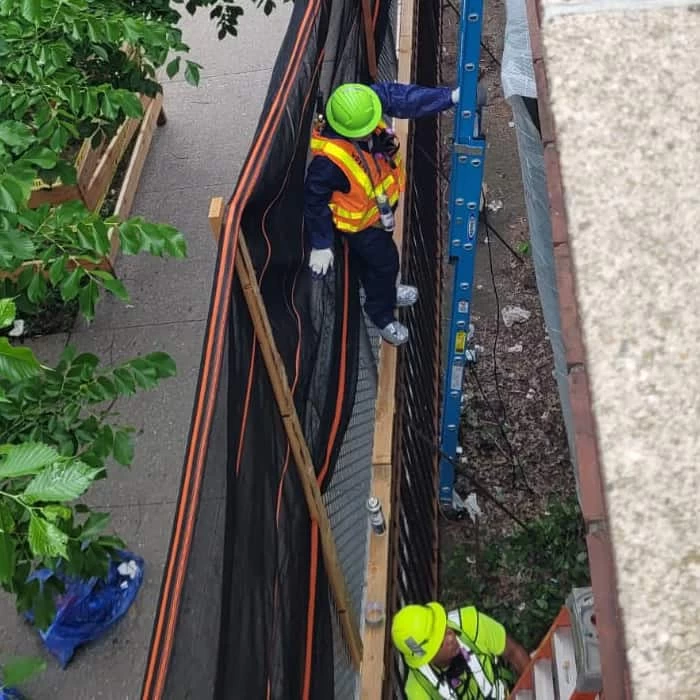
The first step is getting eyes on the damage quickly. Water doesn’t wait, and in a large open loft, moisture spreads laterally across subfloors and into wall cavities faster than it does in smaller, compartmentalized spaces. When we arrive, we do a full moisture assessment thermal imaging, moisture meters, and a visual inspection of the areas most likely to hide saturation in a converted industrial building: pipe chases, ceiling bays, skylight curbs, and the perimeter walls where flat roofs drain.
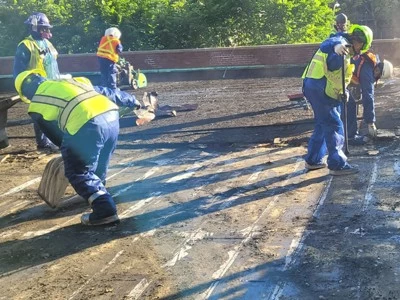
From there, we determine whether any pre-remediation testing is needed. In a pre-1978 building which covers virtually every cast-iron structure in SoHo disturbing walls or flooring without checking for asbestos or lead isn’t just risky, it’s illegal. If testing is required, we handle it. We don’t stop work and hand you a referral. Once the scope is clear, we pull the necessary NYC DOB permits, set up containment where required, and begin extraction and structural drying with industrial-grade equipment sized for the actual square footage involved.
Throughout the process, we document every stage moisture readings before and after, photographic evidence, materials removed, and a complete record of the remediation scope. That documentation goes to you, and it’s built to hold up with your insurance carrier. When the drying is complete and clearance testing confirms the space is back to normal moisture levels, the job is done not just closed.
Water damage restoration in the Prince Street corridor covers a lot of ground depending on what happened and what kind of building you’re in. Burst pipes in retrofitted plumbing systems, roof membrane failures on flat roofs, skylight intrusion during heavy rain, sewer backups from SoHo’s aging combined sewer infrastructure these are the calls we get from this neighborhood, and each one has its own scope.
The service includes full water extraction, structural drying, moisture mapping, mold assessment and remediation where needed, and asbestos or lead evaluation for any pre-1978 materials that get disturbed in the process. Because we hold the required NYS DOL certifications for both asbestos and mold, and the USEPA credentials for lead work, none of that requires a separate contractor. It’s all handled under one scope, which means no coordination gaps and no delays while you wait for a second crew.
For residential loft owners, co-op shareholders, and building managers in the Prince area, we also handle the documentation side the moisture logs, damage reports, and scope records that co-op boards, property managers, and insurance adjusters require before approving work or processing a claim. If your building is within the SoHo-Cast Iron Historic District, we’re familiar with when LPC review applies and how to navigate that process without turning a restoration job into a months-long permitting situation.
Does water damage restoration in a SoHo loft require NYC permits?
Yes, in most cases. Any structural work resulting from water damage replacing drywall, repairing plumbing, or addressing damaged framing requires a NYC Department of Buildings permit in Manhattan. This applies regardless of whether the work is in a residential loft, a mixed-use building, or a commercial space. The permit requirement isn’t optional, and skipping it creates real problems: failed inspections, stop-work orders, and potential fines that fall on the property owner, not the contractor.
For buildings within the SoHo-Cast Iron Historic District, there’s an additional layer. If the damage or the restoration work touches the exterior of a landmarked building including facades, windows, or roofline elements Landmarks Preservation Commission review may be required before DOB filing. We hold the NYC General Contractor license needed to pull DOB permits directly and are familiar with when LPC review applies in the Prince Street area. You won’t be left figuring that out on your own mid-project.
How quickly can mold develop after water damage in an older Manhattan building?
Mold can begin germinating within 24 to 48 hours of water exposure under the right conditions and older Manhattan buildings tend to provide exactly those conditions. Cast-iron loft buildings in SoHo often have limited airflow in wall cavities, original wood framing that absorbs moisture readily, and large surface areas that stay damp longer than a smaller, more compartmentalized space would. A water event that looks contained can be feeding mold growth inside a wall or under a floor long before you see or smell anything.
The other factor specific to pre-1978 buildings is that mold remediation in these structures has to account for what else might be present. Disturbing a moldy wall in a building constructed before 1978 can expose asbestos-containing materials or lead paint at the same time. A restoration company that holds NYS DOL Mold certification but not NYS DOL Asbestos certification has to stop work the moment that situation arises. We hold both, which means the remediation doesn’t get interrupted and the timeline doesn’t stretch out while you wait for a separate crew.
What should I do immediately after discovering water damage in my Prince Street building?
The first thing is to stop the source if you can shut off the water supply to the affected area or contact your building super to do it. In a co-op or condo building, the super needs to know immediately regardless, because water traveling between units creates liability questions that your board will want documented from the start. Don’t wait to see if it dries on its own. In a loft with wide-plank floors and open framing, water moves laterally under the surface and into wall cavities quickly.
Once the source is controlled, call a restoration company before you call your insurance carrier. Getting professional moisture readings documented before any drying begins gives you the most accurate baseline for your claim. If you call the insurance company first and they send their own adjuster before any professional assessment, you’re relying on their documentation not yours. We can respond quickly to the Prince Street area, assess the full extent of the damage with thermal imaging and moisture meters, and give you a documented scope before anything gets touched. That record protects you throughout the claims process.
Does my co-op board need to approve water damage restoration work in SoHo?
It depends on the scope of the work, but in most cases, yes at least to some degree. Co-op and condo buildings in Manhattan typically have alteration agreements that govern any work beyond basic repairs. If the restoration requires opening walls, replacing flooring, touching plumbing, or doing anything that affects shared building systems, your board or managing agent will likely need to be notified and may need to approve the scope before work begins. Some buildings also require that the contractor carry specific insurance minimums and provide proof of NYC licensing before they’re allowed on the premises.
The practical implication is that showing up with an unlicensed or out-of-area contractor who doesn’t know the co-op process creates friction and delays sometimes significant ones. We carry the insurance coverage and hold the NYC General Contractor license that Manhattan co-op boards expect to see. We’re also used to coordinating with building supers and managing agents, which tends to make the approval process move faster than it does when a contractor is navigating it for the first time.
Is sewer backup damage covered by standard homeowners insurance in New York?
Standard homeowners or renters insurance policies typically do not cover sewer backup damage unless you’ve added a specific sewer backup rider or endorsement to your policy. This is a meaningful gap for Prince residents, because the neighborhood’s aging combined sewer infrastructure which carries both stormwater and sanitary sewage in the same pipes is documented as a chronic overflow problem during heavy rain events. The area around Grand Street and Thompson Street has experienced recurring sewer backups for years, and the risk is real for ground-floor and basement spaces throughout the neighborhood.
If you do have a sewer backup endorsement, the claim process still requires thorough documentation: the source of the backup, the extent of contamination, materials affected, and the remediation scope. Sewage backup isn’t treated the same as clean water damage it involves Category 3 contaminated water, which requires proper containment, extraction, and disinfection under specific protocols. We handle sewage backup cleanup as part of our water damage restoration service, with full documentation built into the process so your claim has what it needs regardless of which carrier you’re working with.
Why does water damage restoration cost more in SoHo than in other parts of New York?
A few things drive the cost difference, and most of them come down to the buildings themselves. SoHo’s cast-iron loft conversions are large units commonly run 2,000 to 5,000 square feet of open floor plan, which means more surface area to dry, more equipment running longer, and more square footage to assess and document. The pre-1978 construction also means asbestos and lead testing is frequently required before walls or floors can be opened, which adds scope that doesn’t exist in newer buildings. Typical restoration projects in SoHo range from around $8,000 on the lower end to $80,000 or more for larger lofts with significant structural involvement.
There’s also the regulatory side. Pulling NYC DOB permits, navigating co-op board approval processes, and for buildings within the SoHo-Cast Iron Historic District potentially coordinating with the Landmarks Preservation Commission all add time and process that don’t exist in a suburban job. That said, the cost of doing it wrong is substantially higher. A water damage job that skips the permit, misses the asbestos test, or leaves hidden moisture in the wall ends up costing far more to fix the second time and that’s before you factor in any regulatory fines or insurance complications that come with it.