When a Pipe Bursts 20 Floors Up, Every Hour Costs You
In Wall Street’s converted towers and pre-war buildings, water damage doesn’t stay where it starts. We respond fast, work licensed, and handle everything so you’re not coordinating three contractors while the ceiling caves in.
I needed a professional consultation explanation of procedure for safe removal of Asbestos in my apartment complex. Without having an account yet, I was very impressed with the caring, knowledgeable and generous advice offered by Jessica, and will look forward to doing business in the future. Thank you so much! I feel much more informed about a sometimes scary endeavor. Peace. Nancy Silva Mineola, NY.
Mia Munoz
Used this company to clean up some water flood in my house. They were fast and easy to work with.very professional, Would recommend to anyone!
Nini Valle
Great company, had a flood and they responded quickly and efficiently. Billed my insurance company directly. I highly recommend this company!
joe colapietro, jr
I had pipe freeze in my basement right before a snow storm and they made to within an hour to help start the clean up process. They we by our side throughout the entire process and even helped with the insurance company. They did such a great job with the cleanup, repair, remidiation, I contracted them to perform the repairs and finishes in the basement. They came with enough manpower and material to get the job done. Leo and Jessica were nothing but a pleasure to deal with!!
Cristian Arredondo c
I had some water damage in my home and Green Island was able to take care of my issue quickly and effectively. I am very pleased with the work they did. They responded quickly and were very professional.
Michael M
Outstanding service! From the office to the field crew everyone was friendly, helpful and responsive. I highly recommend Green Island Group.
When the water is gone and the drying equipment is out, what you want is simple: no hidden moisture, no mold starting behind the drywall, and no permit issues coming back to bite you six months later. That’s what a properly executed water damage restoration looks like and in Wall Street, the bar for “properly executed” is higher than most places.
The buildings here aren’t suburban ranch homes. A lot of what lines these walls pipe insulation, floor tiles, fireproofing materials was installed before 1978. That means before anyone starts tearing out saturated drywall, someone licensed needs to assess what’s behind it. Skipping that step doesn’t save time. It creates asbestos exposure liability, stops DOB permits cold, and turns a manageable restoration into a legal problem.
The other reality of living or operating in a high-rise on or near Wall Street is that water travels. A bathtub overflow or a burst supply line on a higher floor can reach three units below it before the building super even gets the call. When that happens, you need documentation that holds up across multiple insurance carriers not just a drying crew with fans. That’s the difference between a claim that gets paid and one that doesn’t.
Licensed Water Restoration Companies, Wall Street NY
Every License This Neighborhood Actually Requires
We’re a New York-based environmental restoration and contracting company serving residential, commercial, and municipal clients across New York City and Long Island. In the Financial District around Wall Street, our licensing stack matters more than it does almost anywhere else.
We hold the NYC General Contractor license, NYS DOL Mold Remediation license, NYS DOL Asbestos license, NYC BIC Trade Waste license, USEPA Lead certification, and USEPA RRP certification. That’s not a list of credentials for a brochure it’s the reason we can walk into a building like One Wall Street or 40 Exchange Place, assess what’s actually in the walls, and complete the full scope of work without stopping to bring in a separate licensed subcontractor for every phase.
For building managers overseeing converted office towers near Broad Street, or condo owners dealing with damage from a unit above them, that single-contractor capability is what keeps a water damage event from becoming a months-long coordination nightmare.
What Actually Happens From First Call to Final Inspection
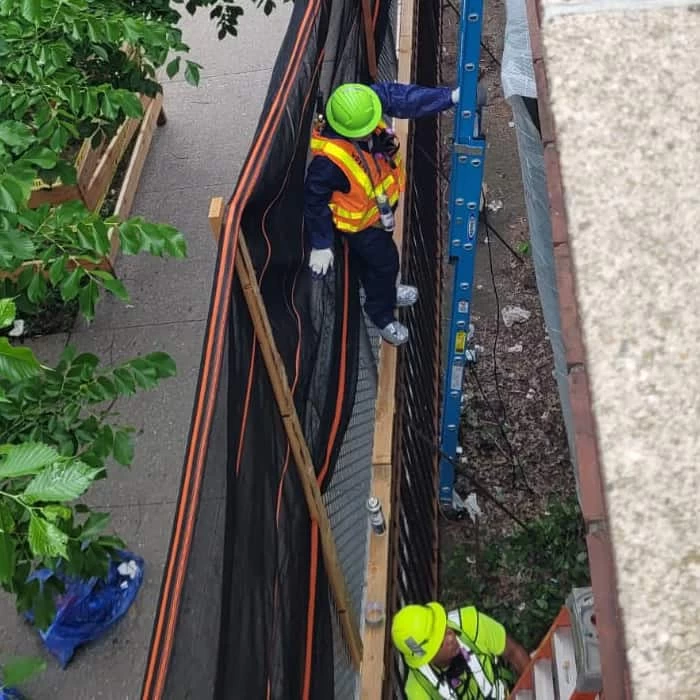
The first call triggers an emergency response. Our team arrives on-site documented by customers as within two hours and the first priority is stopping active water intrusion and protecting adjacent units. In a high-rise environment, that means working with building management immediately, not around them.
From there, the assessment phase begins. In Wall Street’s older building stock, this isn’t just moisture mapping it includes identifying whether any disturbed materials require asbestos or lead assessment before demolition or drying work can proceed. This step protects you from DOB stop-work orders and from creating a hazardous condition during the restoration itself. It’s a step a lot of restoration companies skip because they’re not licensed to handle it. We are.
Once the scope is clear, extraction and structural drying begin using industrial-grade equipment not consumer fans. Moisture readings are logged throughout the process, which matters when you’re filing an insurance claim and the adjuster wants documentation. After drying is confirmed, damaged materials are removed and reconstruction begins under our NYC General Contractor license, with permits pulled where required. You get one point of contact from the water event to the finished wall not a handoff chain.
Water damage restoration in Wall Street isn’t a single-service job. The age of the building stock, the density of the high-rise environment, and the city’s regulatory requirements mean that a complete restoration typically involves several interconnected scopes and they all need to be handled by someone licensed to do each one.
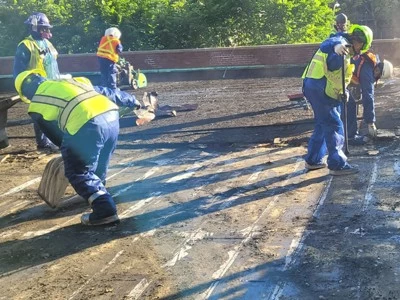
We offer emergency water extraction, structural drying with industrial dehumidification, full moisture mapping behind walls and under flooring, mold assessment and NYS DOL–licensed remediation where needed, asbestos and lead assessment for pre-1978 materials, licensed debris removal under the NYC BIC Trade Waste license, and full reconstruction under our NYC General Contractor license with DOB permits where required. Insurance documentation moisture logs, photo evidence, scope of work is prepared throughout the process to support claims across multiple carriers when more than one unit or policy is involved.
For the office-to-residential conversions currently reshaping the Wall Street corridor buildings like 25 Water Street, now home to over 1,300 residential units, or 40 Exchange Place currently mid-conversion we also handle construction-phase water intrusion and post-occupancy pipe failures as new plumbing systems get stress-tested under residential load for the first time. If your building is newer to residential use, that’s a specific vulnerability worth knowing about.
Does water damage restoration in Wall Street buildings require NYC permits?
Yes, in most cases. Any structural repair that follows water damage replacing drywall, repairing framing, modifying plumbing requires a permit from the NYC Department of Buildings. This applies whether you’re in a converted office tower on Exchange Place or a historic building closer to Broad Street. The DOB is active in Lower Manhattan, and unpermitted work can result in stop-work orders, fines, and mandatory remediation at the property owner’s expense.
The practical implication is that you need a restoration contractor who holds a valid NYC General Contractor license not just a remediation certification. We pull the required permits as part of the restoration process, so the work is documented correctly from the start and won’t create a compliance problem when you go to sell, refinance, or lease the unit later.
How fast does mold actually start growing after water damage occurs?
Mold can begin developing within 24 to 48 hours of water exposure under the right conditions and in Wall Street’s waterfront environment, those conditions are often present. The Financial District sits between the East River and the Hudson River, which means baseline humidity levels in basements, mechanical rooms, and ground-floor spaces tend to run higher than in inland neighborhoods. That compressed timeline makes response speed genuinely critical, not just a marketing point.
What most people don’t realize is that visible mold is rarely the whole picture. Moisture that migrates behind walls, under flooring, or into insulation can support mold growth for weeks before it’s visible or detectable by smell. We use industrial moisture detection equipment to map saturation in areas that look dry on the surface which is the only way to confirm that the remediation is actually complete and that you won’t be dealing with an air quality problem three months later.
My upstairs neighbor caused the flood whose insurance pays for my damage in Wall Street?
This is one of the most common and most contested questions in Manhattan water damage situations, and the answer depends on several factors: the source of the leak, whether negligence was involved, the terms of your individual HO-6 policy, and the building’s master insurance policy. In a condo or co-op building which describes most of the residential stock in the Financial District the line between what the building’s policy covers and what your unit policy covers is often not obvious, and carriers don’t always agree.
The most important thing you can do immediately after a water damage event is document everything thoroughly before any work begins. Our process includes detailed moisture mapping, photographic documentation, and a written scope of work that is specifically designed to support multi-carrier insurance claims. That documentation is what gives your adjuster and the upstairs neighbor’s adjuster a clear, defensible record of where the water came from, where it traveled, and what it damaged. Without it, you’re negotiating from a weak position.
Does water damage restoration in older Wall Street buildings require asbestos testing first?
If the building was constructed before 1978 which covers the majority of the historic building stock along Wall Street, Exchange Place, and Broad Street then yes, any work that disturbs building materials should be preceded by an asbestos assessment. Asbestos-containing materials were commonly used in pipe insulation, floor tiles, ceiling tiles, and fireproofing throughout buildings of that era. When water saturates those materials, or when drying and reconstruction requires removing them, you’re in regulated territory under both New York State DOL rules and federal EPA standards.
This is where a lot of restoration companies create problems without meaning to. They’re licensed for water damage and mold work, but they’re not licensed for asbestos so they either skip the assessment entirely or stop work and refer out, adding days or weeks to the timeline. We hold the NYS DOL Asbestos license and USEPA certifications, which means we can assess, abate if necessary, and continue restoration under one contract without the work stopping mid-project.
How do storm surge and flooding affect water damage risk for Wall Street properties?
Wall Street sits on some of the lowest-lying land in Manhattan. During Hurricane Sandy in October 2012, the storm surge at the Battery reached 14.1 feet above mean lower low water the highest recorded in the area’s history and drove water into building basements, parking garages, and mechanical rooms throughout the Financial District. More than a decade later, some buildings in the neighborhood are still dealing with moisture issues, mold colonies, and compromised structural elements that were never fully remediated after that event.
Looking forward, the risk isn’t decreasing. NYC climate projections indicate the Financial District could face monthly tidal flooding by the 2050s, and the city’s Financial District and Seaport Climate Resilience Master Plan projected at $5 to $7 billion won’t be complete until around 2040 to 2050. Until those protections are in place, every significant storm season carries real flood risk for properties in this corridor. If your building has a basement, a parking garage, or ground-floor mechanical systems, storm surge is a scenario worth having a restoration plan for before it happens.
What should a Wall Street building manager do immediately after discovering water damage?
The first 30 minutes matter more than most people realize. The immediate priorities are: identify and stop the water source if possible, notify building management and your insurance carrier, and document everything with photos and video before anything is moved or cleaned up. Do not let anyone start pulling out wet materials until a licensed contractor has assessed whether asbestos or lead is present especially in pre-1978 buildings, which make up a significant portion of the Financial District’s residential and commercial stock.
From there, call a licensed water damage restoration company that can respond the same day. In a high-rise environment like the buildings along Wall Street or near the South Street Seaport waterfront, water migrates quickly through shared walls, elevator shafts, and ceiling assemblies. The longer extraction and drying are delayed, the more units are affected and the larger the eventual claim. We’re available around the clock for emergency response, and our team is equipped to work within the operational protocols of occupied high-rise buildings coordinating with building management, protecting common areas, and documenting the damage in a way that supports a clean insurance claim from day one.