When Newtown Creek Backs Up, You Need Someone Who Knows What That Water Carries
Blissville sits in one of Queens’ most vulnerable spots wedged between the Long Island Expressway, Calvary Cemetery, and a Superfund waterway. When Newtown Creek backs up and your basement fills, you need someone who actually knows what that water is carrying and what to do about it. We do.
I needed a professional consultation explanation of procedure for safe removal of Asbestos in my apartment complex. Without having an account yet, I was very impressed with the caring, knowledgeable and generous advice offered by Jessica, and will look forward to doing business in the future. Thank you so much! I feel much more informed about a sometimes scary endeavor. Peace. Nancy Silva Mineola, NY.
Mia Munoz
Used this company to clean up some water flood in my house. They were fast and easy to work with.very professional, Would recommend to anyone!
Nini Valle
Great company, had a flood and they responded quickly and efficiently. Billed my insurance company directly. I highly recommend this company!
joe colapietro, jr
I had pipe freeze in my basement right before a snow storm and they made to within an hour to help start the clean up process. They we by our side throughout the entire process and even helped with the insurance company. They did such a great job with the cleanup, repair, remidiation, I contracted them to perform the repairs and finishes in the basement. They came with enough manpower and material to get the job done. Leo and Jessica were nothing but a pleasure to deal with!!
Cristian Arredondo c
I had some water damage in my home and Green Island was able to take care of my issue quickly and effectively. I am very pleased with the work they did. They responded quickly and were very professional.
Michael M
Outstanding service! From the office to the field crew everyone was friendly, helpful and responsive. I highly recommend Green Island Group.
When water damage gets handled the right way, you stop worrying about what’s hiding inside your walls. Mold doesn’t get a foothold. Your floors don’t warp six weeks later. Your insurance claim doesn’t stall because the documentation was incomplete. That’s the difference between a real restoration and someone just running fans for a few days.
In Blissville, the stakes are a little higher than in most Queens neighborhoods. The residential buildings clustered between 34th and 37th Streets are mostly pre-war construction plaster walls, aging pipe joints, foundations that weren’t built to handle the kind of pressure that comes from a tidal waterway sitting at your back door. When water gets in, it moves fast through those older materials. Getting it out completely, and quickly, is what keeps a manageable repair from turning into a gut renovation.
There’s also the question of what that water actually is. Flooding near Newtown Creek a federally designated Superfund site isn’t the same as a clean pipe burst in a newer building. Combined sewer overflow events are a documented reality in Blissville, and when that water backs up into your basement, it brings more than moisture. Proper restoration here means decontamination, not just drying. When it’s done right, your home is genuinely safe again not just dry on the surface.
Water Restoration Companies Serving Blissville, NY
We Know Blissville and That Actually Matters Here
We serve Blissville and the Long Island City area, and the difference between us and a national franchise dispatching from a call center is straightforward: we know what we’re walking into before we arrive. We know the building stock here is old. We know Newtown Creek is a Superfund site. We know that sewer backups in this ZIP code carry a different level of risk than a standard water loss in a newer development.
Blissville is one of the most overlooked neighborhoods in Queens roughly 1,100 residents wedged between the expressway, the cemetery, and the creek, with a small residential community that doesn’t always get the same attention as larger neighborhoods. We serve it anyway, and we serve it the same way we’d serve anyone else: thoroughly, honestly, and with the documentation your insurance company actually needs to process your claim.
When you call us, you’re not getting a subcontractor who’s never heard of Greenpoint Avenue. You’re getting a team that understands Blissville’s specific risks and responds accordingly.
Water Restoration Process for Blissville Properties
No Guesswork Here's Exactly How We Work Through It
The first call matters. When you reach out, we’re not scheduling you for next week we’re asking what happened, how long ago, and whether there’s any chance the water source involves sewage or creek-adjacent flooding. That last question changes the response protocol significantly in Blissville, and we ask it upfront because most companies don’t.
Once we’re on-site, the first step is assessment not just what’s visible, but what’s hidden. Thermal imaging lets us find moisture inside wall cavities and under flooring before it becomes a mold problem. In pre-war buildings like the ones on Blissville’s residential blocks, water wicks into plaster and masonry quickly and quietly. We map it all before we start any drying work.
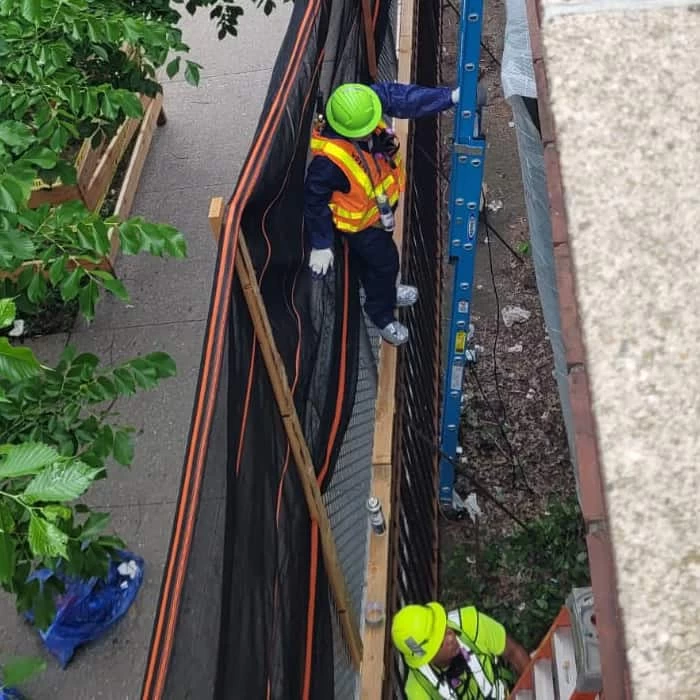
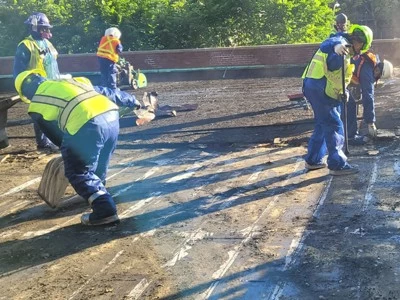
From there, we extract standing water, set industrial drying equipment, and monitor moisture levels until the structure reads dry not just surface dry. If the water involved sewage or contaminated creek water, we follow biohazard decontamination protocols before any restoration work begins. Throughout the process, we document everything: photos, moisture readings, scope-of-loss reports. That documentation goes directly to your insurance adjuster so the claim moves forward without you having to chase anyone. In New York City, certain repairs require DOB permits or trigger NYS mold remediation licensing requirements we handle that compliance as part of the job, not as an afterthought.
Water Damage Restoration Service in Blissville, NY
Built for Old Buildings, Contaminated Water, and Real Insurance Claims
Water damage restoration in Blissville isn’t a one-size-fits-all job, and we don’t treat it like one. Our service covers water extraction, structural drying, moisture mapping, mold assessment, and full documentation for insurance purposes. If mold is found and the affected area exceeds 10 square feet, our work falls under New York State’s mold remediation licensing requirements under Labor Law Article 32 and we hold that license, which matters when you’re dealing with an older building that’s been holding moisture in its walls for days.
For properties near the creek or in areas affected by combined sewer overflow, we add a full decontamination layer to the restoration process. That means appropriate protective protocols, biocidal treatment of affected surfaces, and proper disposal of contaminated materials. It’s not standard practice for every restoration company, but in a neighborhood sitting next to a Superfund waterway, it should be. If your property also involves lead paint common in Blissville’s pre-war housing stock we follow NYC Local Law 31 lead-safe work practices to make sure the restoration doesn’t create a new hazard in the process of fixing the original one.
We also handle commercial properties. Warehouses, auto shops, and small manufacturers along Review Avenue and Railroad Avenue are just as vulnerable to roof failures and burst pipes as the residential blocks, and we respond to both.
Does flooding near Newtown Creek in Blissville require special cleanup procedures?
Yes, and it’s one of the most important distinctions to understand before you hire anyone. Newtown Creek is a federally designated Superfund site, and floodwater that originates from or is influenced by the creek can carry industrial contaminants, petroleum byproducts, and combined sewer overflow material. That’s a very different situation from a clean pipe burst, and it requires a very different response.
When water in your Blissville home may have come into contact with the creek or a CSO event, the restoration process needs to include full biohazard decontamination not just extraction and drying. That means using appropriate protective equipment, applying biocidal treatments to all affected surfaces, and disposing of contaminated materials according to proper protocols. Skipping those steps and just drying the space out doesn’t make it safe it just makes it look dry. If you’re in a low-lying area of Blissville near the creek’s banks, this is a conversation worth having with us before we start work.
How quickly does mold start growing after water damage in an older Queens home?
Mold can begin developing within 24 to 48 hours of water exposure, and in Blissville’s pre-war building stock, that timeline can feel even shorter. Older plaster walls, wood framing, and masonry absorb moisture quickly and hold it in ways that newer construction materials don’t. By the time you can see mold, it’s usually been growing for a while.
The humidity levels near Newtown Creek add another layer to this. Tidal waterways create ambient moisture in the surrounding area, and that baseline humidity gives mold spores a more hospitable environment to land in. The right response is to start drying immediately and to conduct a thorough mold assessment as part of the water damage restoration process not as a separate job you schedule later. Under New York State law, any mold remediation project affecting more than 10 square feet requires a licensed contractor. We hold that license, and we build the assessment into the restoration from the start so nothing gets missed.
Will my homeowner's insurance cover water damage from a basement flood in Blissville?
It depends on the cause, and that distinction matters more than most people realize. Standard homeowner’s insurance typically covers sudden and accidental water damage a burst pipe, a failed appliance, a roof leak from a storm. It generally does not cover flooding from an external source, which would fall under a separate flood insurance policy through the National Flood Insurance Program or a private carrier.
For Blissville specifically, this is worth paying close attention to. The neighborhood sits in a low-lying area adjacent to a tidal waterway, and federal flood planning has specifically identified the risk of the East River pushing water up Newtown Creek toward Blissville. If your basement flooded during a storm surge or tidal event, that may be classified as flood damage rather than water damage and the coverage rules are different. If you’re not sure what caused the flooding or which policy applies, document everything immediately and call us before you call your adjuster. We help you understand what you’re dealing with first, then build the documentation that gives your claim the best possible foundation regardless of which policy is in play.
What happens if water damage in my Blissville home involves sewage backup?
Sewage backup is classified as a Category 3 water loss the most serious category because it involves water that contains bacteria, pathogens, and other contaminants that pose real health risks. In Blissville, this is a more common scenario than in many other neighborhoods because the combined sewer system here is under documented strain. When heavy rain overwhelms the system, raw sewage and stormwater can discharge directly into Newtown Creek and back up into basement drains and low-lying properties.
The cleanup process for a sewage backup goes well beyond standard water damage restoration. Affected materials that can’t be fully decontaminated drywall, insulation, carpet, certain flooring typically need to be removed and disposed of properly. Surfaces that remain are treated with appropriate biocidal agents. The space is then dried, tested, and cleared before any reconstruction begins. From an insurance standpoint, sewage backup coverage is sometimes a separate rider on your homeowner’s policy, so it’s worth checking your policy documents before assuming it’s included. We document the cause and extent of the damage thoroughly so your claim reflects exactly what happened.
How long does the water damage restoration process typically take for a Blissville property?
The honest answer is that it varies, and anyone who gives you a firm timeline before seeing the property is guessing. For a straightforward water loss a burst pipe caught quickly, limited to one area the drying process typically takes three to five days once water is extracted and equipment is in place. Restoration work after that depends on what was damaged.
In Blissville’s older buildings, the timeline often runs longer than it would in newer construction. Plaster walls and masonry take more time to dry than modern drywall. Hidden moisture in wall cavities and under old flooring can extend the drying phase if it isn’t caught early with thermal imaging. If the water involved contamination from the creek or a sewer backup, the decontamination phase adds time before any drying or reconstruction can begin. We give you a realistic estimate after the initial assessment not before because an accurate timeline is more useful to you than a fast answer that turns out to be wrong.
Why should I hire a local water restoration company instead of a national franchise for my Blissville property?
The practical difference comes down to what we know before we show up. A national franchise dispatching from a regional call center doesn’t know that Blissville sits next to a Superfund waterway. They don’t know that the residential blocks between 34th and 37th Streets are mostly pre-war construction with the specific challenges that come with that building stock. They don’t know that flooding here can involve Newtown Creek contamination, or that the combined sewer system in this neighborhood has a documented overflow problem.
That knowledge changes how the job gets done. It changes the questions we ask when you call. It changes the protocols we bring to the site. It changes how we assess risk and document the loss for your insurance claim. Blissville is a small neighborhood roughly 1,100 residents and it doesn’t always get the same level of attention as larger Queens communities. When you hire someone who actually knows the area, you’re not just getting a crew with equipment. You’re getting a team that understands what your specific property is up against and responds to that reality, not a generic template.