When the Sewer Backs Up in East Elmhurst, Every Hour Costs You More
East Elmhurst floods differently than most of Queens and you already know that. We respond 24/7 with the equipment and training to stop the damage before it gets worse.
I needed a professional consultation explanation of procedure for safe removal of Asbestos in my apartment complex. Without having an account yet, I was very impressed with the caring, knowledgeable and generous advice offered by Jessica, and will look forward to doing business in the future. Thank you so much! I feel much more informed about a sometimes scary endeavor. Peace. Nancy Silva Mineola, NY.
Mia Munoz
Used this company to clean up some water flood in my house. They were fast and easy to work with.very professional, Would recommend to anyone!
Nini Valle
Great company, had a flood and they responded quickly and efficiently. Billed my insurance company directly. I highly recommend this company!
joe colapietro, jr
I had pipe freeze in my basement right before a snow storm and they made to within an hour to help start the clean up process. They we by our side throughout the entire process and even helped with the insurance company. They did such a great job with the cleanup, repair, remidiation, I contracted them to perform the repairs and finishes in the basement. They came with enough manpower and material to get the job done. Leo and Jessica were nothing but a pleasure to deal with!!
Cristian Arredondo c
I had some water damage in my home and Green Island was able to take care of my issue quickly and effectively. I am very pleased with the work they did. They responded quickly and were very professional.
Michael M
Outstanding service! From the office to the field crew everyone was friendly, helpful and responsive. I highly recommend Green Island Group.
A Dry Home, Documented Damage, and a Handled Claim
When the water recedes, the real work starts. Wet framing, saturated subfloors, and moisture trapped behind plaster walls don’t dry on their own and in East Elmhurst’s older Tudor and brick two-family homes, what stays wet becomes a mold problem within 24 to 48 hours. Getting the job done right the first time means your home doesn’t end up with a hidden mold issue three weeks later.
East Elmhurst sits on what was historically tidal marshland, and that low-lying geology means groundwater intrusion is a real factor here not just surface flooding. The high water table, combined with an aging municipal sewer system that gets overwhelmed by ordinary rainstorms, creates conditions where basement flooding isn’t a one-time event. It’s a pattern. Our restoration approach here has to account for that, not just treat the visible water and leave.
What you’re left with after a proper restoration is a home that’s structurally dry, sanitized, and documented. That last part matters more than most people realize. Your insurance company needs a clear scope of loss to process your claim accurately, and the difference between a thorough damage report and a vague one can be thousands of dollars. You shouldn’t have to figure that out on your own in the middle of a flood.
We Know East Elmhurst And We Know This Neighborhood's Flooding Problem
We’ve been serving Queens County and the surrounding New York metro area long enough to know that East Elmhurst’s water damage challenges are specific. The sewer backup events that hit 77th Street and the blocks near Astoria Boulevard after Hurricane Ida in 2021 and again after Tropical Storm Ophelia in 2023 weren’t freak accidents. They were the result of aging infrastructure meeting modern rainfall volumes, and the families on those blocks needed a restoration company that understood the difference between a clean water leak and Category 3 sewage contamination.
We’re IICRC-certified, licensed for mold remediation under New York State Labor Law Article 32, and equipped to handle the full scope of water damage work from emergency extraction to final drying clearance. We also help you navigate the insurance process, because most homeowners in East Elmhurst shouldn’t be absorbing a $15,000 restoration bill out of pocket when their policy may cover it.
What Actually Happens From Your First Call to Final Clearance
When you call, you reach a real person not a voicemail or an answering service that logs your number for a morning callback. We dispatch a crew to your address in East Elmhurst, and the first thing we do on-site is assess the full scope of what you’re dealing with. That means identifying the water source, classifying the contamination level (clean water from a burst pipe is handled very differently than sewage backup, which requires full Category 3 protocols), and mapping moisture levels throughout the affected space using professional meters and thermal imaging.
From there, we extract standing water, set up industrial drying equipment dehumidifiers and air movers sized for the actual square footage, not consumer-grade fans and begin the drying process. In East Elmhurst’s older homes, we pay close attention to plaster walls, hardwood subfloors, and basement masonry, because moisture hides differently in these materials than it does in modern drywall construction. Drying timelines typically run three to five days depending on the severity, and we monitor moisture readings throughout to confirm the structure is reaching safe levels.
Before we close out the job, we document everything photos, moisture logs, a written scope of work in a format your insurance company can actually use. If your damage involves structural repairs that require an NYC Department of Buildings permit, we’ll walk you through what’s needed. Nothing gets left ambiguous.
Water Damage Restoration Services in East Elmhurst, NY
From Sewage Backup to Burst Pipes Here's What We Handle in East Elmhurst
Water damage in East Elmhurst tends to show up in a few specific ways: sewer backup through floor drains and basement toilets after heavy rain, burst pipes in older plumbing systems during winter cold snaps, and water intrusion through flat roofs a common architectural feature in this neighborhood that creates ponding risk when drainage is inadequate. We handle all of them.
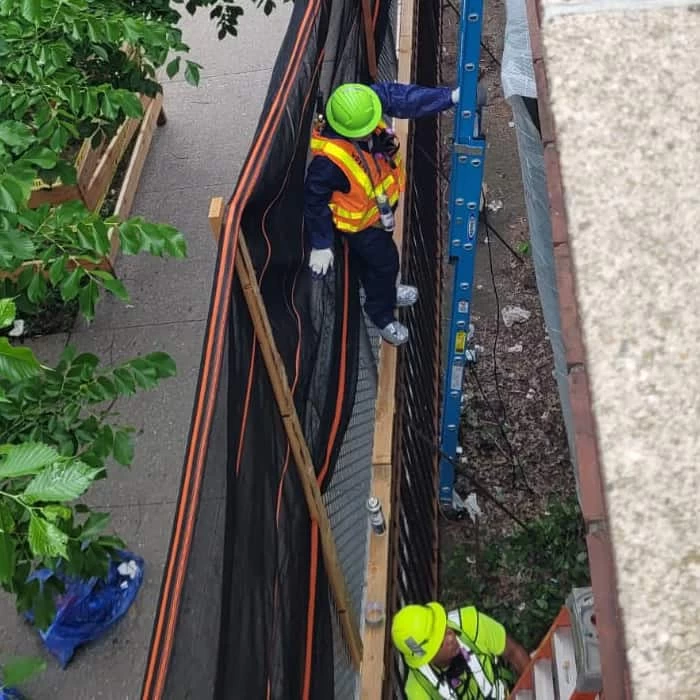
For sewer backup jobs which are the most common call we get from the 11369 and 11370 ZIP codes the work includes Category 3 contamination protocols: full PPE, EPA-compliant disposal of affected materials, and antimicrobial treatment of all surfaces that contacted sewage water. This isn’t optional. Sewage backup leaves behind pathogens that won’t go away with a mop and bleach, and any company that doesn’t treat it as a biohazard situation is cutting a corner that puts your family’s health at risk.
For burst pipe and roof leak jobs, the process focuses on rapid extraction, structural drying, and mold prevention. New York State requires licensed contractors for mold remediation work exceeding 10 square feet a threshold that’s easy to cross in a flooded basement. We hold that license. We also handle full insurance documentation for every job, which is especially relevant for East Elmhurst homeowners who may have already filed Ida- or Ophelia-related claims and understand how much the paperwork matters.
Does homeowners insurance cover sewer backup flooding in East Elmhurst, NY?
Standard homeowners insurance policies typically do not cover sewer backup damage unless you’ve added a specific sewer backup rider or endorsement to your policy. This is one of the most common surprises East Elmhurst homeowners face after a flooding event they assume they’re covered, file a claim, and find out their base policy excludes it. If you’re not sure what your policy includes, the first step is to pull out your declarations page and look for language around “water backup” or “sewer and drain backup” coverage.
That said, even if your base policy doesn’t cover sewer backup, there may be other coverage angles worth exploring damage caused by a municipal sewer failure, for example, can sometimes be addressed through a claim against the city. The NYC Department of Environmental Protection has been actively involved in investigating the sewer infrastructure on streets like 77th Street in East Elmhurst, and in some cases homeowners have pursued reimbursement through that channel. We document damage in a way that supports all of these options, so you’re not starting from scratch when you make the call to your insurer or an attorney.
How quickly does mold start growing after a basement flood?
Mold can begin developing within 24 to 48 hours of a water intrusion event under the right conditions and a flooded basement in East Elmhurst during a warm-weather storm provides exactly those conditions. Humidity, warmth, and organic materials like wood framing, drywall, and carpet give mold everything it needs to establish itself quickly. The visible signs (discoloration, musty odor) often don’t appear until the mold colony is already well-established, which is why waiting to see something before acting is a mistake.
For homes in East Elmhurst that have experienced repeated flooding which is a documented reality for many blocks near Astoria Boulevard the risk is compounded. Each flooding event that isn’t fully dried and treated leaves residual moisture in wall cavities, subfloors, and masonry that feeds subsequent mold growth. Industrial drying equipment brings structural moisture down to safe thresholds; a box fan in the corner does not. If you’re not sure whether your home was dried properly after a previous flood, a moisture assessment can tell you what’s actually going on inside the walls.
What is Category 3 water damage and why does it matter for sewer backup cleanup?
Water damage is classified into three categories based on contamination level. Category 1 is clean water a supply line break or an overflowing sink. Category 2 involves gray water with some contamination, like a washing machine overflow. Category 3 is black water, which includes sewage, floodwater that has contacted the ground, and sewer backup. It contains bacteria, pathogens, and other biological hazards that pose a real health risk if not handled correctly.
Sewer backup the most common flooding scenario in East Elmhurst is always Category 3. That means the cleanup requires full personal protective equipment, proper disposal of porous materials that absorbed contaminated water (drywall, carpet, insulation), and antimicrobial treatment of all affected surfaces. It also means that any materials left in place need to be confirmed free of contamination before the space is reoccupied. A crew that shows up with a wet vac and treats sewage backup like a clean water spill is not doing the job correctly and the health consequences of that shortcut can show up weeks later when your family is breathing in what was left behind.
How long does the water damage restoration process take from start to finish?
The honest answer is that it depends on the severity of the damage and the type of water involved. For a straightforward burst pipe situation with limited affected area, the drying phase alone typically takes three to five days with proper industrial equipment running continuously. Sewage backup jobs that require Category 3 protocols material removal, sanitization, and full structural drying can run longer, particularly in East Elmhurst’s older homes where moisture penetrates differently into plaster, masonry, and hardwood than it does in newer construction.
The drying phase is complete when moisture readings confirm that structural materials have returned to acceptable levels not when things look dry to the eye. After drying, any necessary repairs (replacing drywall, flooring, or damaged framing) add time depending on scope. If permits are required for structural work under NYC Department of Buildings rules, that can add additional time to the timeline. We give you a realistic estimate upfront and keep you updated throughout the process so you’re never guessing where things stand.
Can water damage restoration work be done while I'm still living in the home?
In most cases, yes but it depends on the type and extent of the damage. For jobs involving clean water or limited gray water damage to a contained area, the restoration work can typically proceed while the home is occupied. The equipment is loud and the process requires access to the affected space, but it doesn’t usually require the family to leave. We work around your schedule and communicate clearly about what areas are off-limits and why.
For Category 3 sewage backup jobs, the answer is more nuanced. If the contamination is limited to a basement or a single area that can be fully isolated, occupying the rest of the home is generally fine. If the contamination has spread to living areas or HVAC systems, temporary relocation may be the safer option while remediation is underway. This is something we assess on-site and discuss with you directly we’re not going to tell you to leave if it isn’t necessary, and we’re not going to tell you it’s fine to stay if it isn’t.
Why do so many East Elmhurst homes flood repeatedly, and what can actually prevent it?
The core issue is infrastructure. East Elmhurst’s municipal sewer system was not designed to handle the rainfall volumes that the New York metro area now regularly receives, and the neighborhood’s low-lying geography built on what was historically tidal marshland feeding into Flushing Bay makes drainage naturally difficult. The NYC DEP has acknowledged that sewer main repairs in affected areas like 77th Street could take years to complete. That’s not a satisfying answer for homeowners who flood every time it rains, but it’s the reality.
What can actually reduce your risk in the meantime: a properly installed backwater valve on your main sewer line prevents sewage from backing up into your home when the municipal system surges it’s one of the most effective single interventions available and requires an NYC DOB permit for installation. A sump pump with a battery backup handles groundwater intrusion during heavy rain. For homes with flat roofs, ensuring downspouts are directed away from the foundation and that drainage paths are clear reduces the volume of water hitting your foundation. None of these eliminate the underlying infrastructure problem, but they significantly reduce how much of it ends up in your basement.