Forest Hills Homes Deserve More Than a Quick Dry-Out
When water gets into a pre-war co-op or a century-old Tudor in the Gardens, the damage runs deeper than what you can see. We handle water damage restoration in Forest Hills, NY from first response through full rebuild so nothing gets missed.
I needed a professional consultation explanation of procedure for safe removal of Asbestos in my apartment complex. Without having an account yet, I was very impressed with the caring, knowledgeable and generous advice offered by Jessica, and will look forward to doing business in the future. Thank you so much! I feel much more informed about a sometimes scary endeavor. Peace. Nancy Silva Mineola, NY.
Mia Munoz
Used this company to clean up some water flood in my house. They were fast and easy to work with.very professional, Would recommend to anyone!
Nini Valle
Great company, had a flood and they responded quickly and efficiently. Billed my insurance company directly. I highly recommend this company!
joe colapietro, jr
I had pipe freeze in my basement right before a snow storm and they made to within an hour to help start the clean up process. They we by our side throughout the entire process and even helped with the insurance company. They did such a great job with the cleanup, repair, remidiation, I contracted them to perform the repairs and finishes in the basement. They came with enough manpower and material to get the job done. Leo and Jessica were nothing but a pleasure to deal with!!
Cristian Arredondo c
I had some water damage in my home and Green Island was able to take care of my issue quickly and effectively. I am very pleased with the work they did. They responded quickly and were very professional.
Michael M
Outstanding service! From the office to the field crew everyone was friendly, helpful and responsive. I highly recommend Green Island Group.
Water damage in Forest Hills rarely looks the way people expect. It’s not always a flooded basement you can see from the doorway. It’s moisture that crept into the original plaster walls of a Queens Boulevard co-op three floors above where the pipe burst. It’s a slow leak behind the slate roof of a Forest Hills Gardens home that’s been feeding mold for weeks before anyone noticed the stain on the ceiling. When the job is done right, that hidden damage gets found, documented, and fixed not covered up and handed back to you.
For co-op owners in Forest Hills especially, there’s a real difference between a company that pumps out water and leaves, and one that actually maps the moisture, dries the structure to IICRC standards, and gives you documentation your adjuster can work with. Forest Hills has thousands of pre-war co-op units where a single water event can affect multiple floors and trigger disputes between unit owners and the building’s managing agent. That’s not a situation where a surface-level dry-out is good enough.
By the time we’re done, you know exactly what was damaged, what was restored, and what your insurance covered. You’re not left guessing whether the walls are actually dry or whether mold is growing somewhere you can’t see. That’s what a complete job looks like and it’s the only kind we do.
We Know This Neighborhood and What's Behind Its Walls
We’ve been doing water damage restoration work across Queens for years, and Forest Hills is a neighborhood we know well not just as a service area on a map, but as a place with a specific kind of housing stock, a specific kind of flooding history, and homeowners who expect the work to be done properly the first time.
We’ve worked in Forest Hills Gardens homes where the building materials are over a hundred years old and the Forest Hills Gardens Corporation has covenants that govern even repair work. We’ve responded to sewer backup calls along the Queens Boulevard corridor after storms overwhelmed the city’s combined sewer system the same system that failed so visibly when Ida hit in 2021 and left basements across Forest Hills under contaminated water. We know what that damage actually looks like, and we know how to fix it.
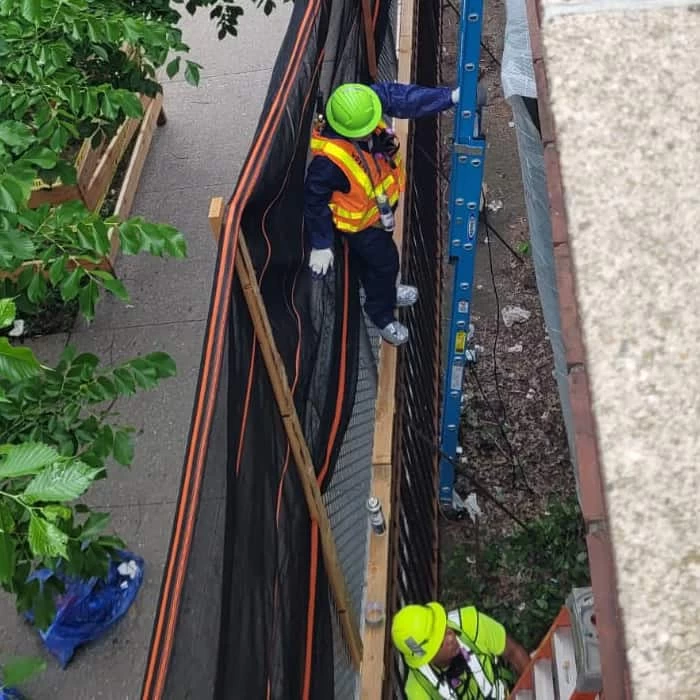
Our technicians are IICRC-certified and licensed under New York State’s mold remediation requirements. When you call us, you’re getting a crew that’s equipped and credentialed for the work not a general contractor who added water damage to their service list.
When you call, we respond fast because water damage compounds quickly, and in an older building, every hour matters. Mold can begin developing within 24 to 48 hours of water intrusion, and in a pre-war structure with original wood framing and plaster walls, that window is unforgiving. We’ll get someone to your Forest Hills property quickly to assess what you’re dealing with and stop the damage from spreading.
From there, we extract standing water, set up industrial drying equipment, and use moisture mapping to find water that’s moved into walls, subfloors, and ceilings the stuff that doesn’t show up until it’s already a bigger problem. If your property is in a co-op building, we coordinate with your managing agent and document everything in a format that works for both your individual HO-6 policy and the building’s master policy. If you’re in Forest Hills Gardens and the restoration involves any exterior work, we understand the architectural sensitivity that the Gardens Corporation requires.
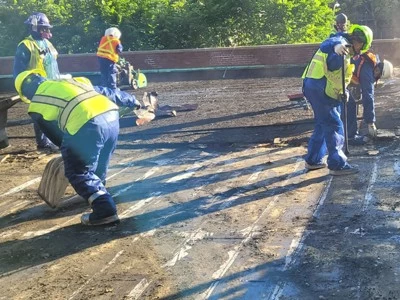
Once the structure is dry and cleared, we move into the rebuild phase. That means replacing damaged drywall, flooring, insulation, or structural elements whatever the damage requires. You don’t need to find a second contractor to finish the job. We take it from emergency response to move-in ready, with documentation at every step.
Water damage restoration in Forest Hills covers a wide range of situations and the service needs to match the actual scope of the damage, not a one-size checklist. Burst pipes in the middle of winter are common in this neighborhood’s older building stock, where exterior walls and unheated basement spaces weren’t insulated to modern standards. Sewer backups during heavy storms are a recurring reality along the Queens Boulevard corridor, and that type of damage involves contaminated water that requires proper containment and disinfection not just extraction. Roof leaks on the Tudor and Georgian homes in Forest Hills Gardens, where slate and clay tile are standard, require a different approach than a modern flat roof leak in a mid-rise building.
What you get with us is a full-scope restoration service: emergency water extraction, structural drying with moisture mapping, mold assessment and remediation, removal of unsalvageable materials, and complete reconstruction of affected areas. We also handle the insurance documentation process written damage reports, moisture readings, photographs, and direct communication with your adjuster because in a neighborhood where co-op insurance situations are genuinely complicated, that support matters.
If the damage involves mold remediation above the threshold defined under New York State Labor Law Article 32, we’re licensed to do that work legally and properly. A lot of operators in this market aren’t. That distinction protects you legally and gives you a paper trail that holds up if questions arise later.
Does homeowners insurance cover water damage from sewer backup in Forest Hills?
It depends on your policy, and this is one of the most common sources of confusion for Forest Hills homeowners especially after a storm like Ida. Standard homeowners insurance policies typically do not cover sewer backup damage unless you’ve added a specific sewer backup rider or endorsement. If you have that endorsement, you’re generally covered for the cleanup, drying, and restoration of affected areas. If you don’t, you’re likely paying out of pocket.
For co-op owners in Forest Hills, the situation is more layered. Your individual HO-6 policy covers damage to your unit and your personal property, but the building’s master policy covers structural elements. When a sewer backup affects multiple units which happens frequently in the pre-war buildings along Queens Boulevard sorting out which policy covers what requires clear documentation from the restoration company. We provide that documentation as part of the job, which makes the claims process significantly less painful.
How quickly does mold start growing after water damage in an older home?
Mold can begin developing within 24 to 48 hours of water intrusion under the right conditions and Forest Hills’ older building stock creates exactly those conditions. Pre-war co-op buildings and century-old homes in Forest Hills Gardens have original wood framing, plaster walls, and decades of accumulated organic material behind their finishes. Once moisture gets into those materials, mold has everything it needs to establish itself quickly, often in areas you can’t see from the surface.
That’s why the speed of the response matters, but so does the thoroughness of the drying process. Extracting standing water is only the first step. The structure needs to be dried to industry standards using calibrated equipment, and moisture levels need to be verified with readings not just a visual check. If a restoration company leaves before the walls and subfloor are confirmed dry, you’re likely dealing with a mold problem within weeks. We don’t close out a job until the moisture readings say it’s done.
What does water damage restoration actually cost in Forest Hills, NY?
The honest answer is that it varies significantly based on the scope of damage, the size of the affected area, and what materials need to be replaced. A straightforward pipe burst with limited water spread in a single room will cost considerably less than a basement sewer backup that’s soaked through flooring, framing, and drywall across several hundred square feet. In the Forest Hills market, where properties range from pre-war co-op units to historic single-family homes in Forest Hills Gardens, the variables are wide.
What you should expect from any reputable restoration company is a clear written estimate before work begins, with a breakdown of what’s included. Be cautious of extremely low estimates that don’t account for structural drying or moisture mapping those are the steps that prevent mold, and skipping them to lower the price is a short-term saving that often becomes a long-term problem. If your damage is covered by insurance, we work directly with your adjuster to document the full scope so your settlement reflects what the job actually requires.
How does water damage restoration work in a Forest Hills co-op building?
Co-op water damage situations in Forest Hills have more moving parts than a standard single-family home claim, and it’s worth understanding the process before you’re in the middle of one. When water damage occurs in a co-op unit whether from a burst pipe, a leak from the unit above, or a sewer backup you’re dealing with a situation that may involve your unit, your neighbor’s unit, shared building infrastructure, and both your individual HO-6 policy and the building’s master policy.
The first practical step is notifying your building’s managing agent, because the co-op board typically needs to be informed and may need to approve certain aspects of the restoration work. We’re experienced working within that process we document damage in a format that satisfies both insurance carriers, coordinate with managing agents, and ensure that the scope of work we perform is clearly defined so there’s no ambiguity about what was done to common building elements versus your individual unit. In the dense pre-war buildings along Queens Boulevard and Yellowstone Boulevard, that coordination is often what keeps a manageable water event from turning into a prolonged dispute.
Can water damage from a burst pipe in winter be covered by insurance?
Yes, in most cases a sudden and accidental pipe burst is covered under standard homeowners insurance and this is one of the more common winter water damage scenarios in Forest Hills. The neighborhood’s older building stock, particularly the pre-war co-ops and historic homes in Forest Hills Gardens, includes original or aging plumbing in exterior walls and unheated basement spaces that are vulnerable to freezing during cold snaps. When those pipes freeze and burst, the resulting water damage is typically considered a covered peril under most policies.
The important caveat is documentation. Insurance companies can deny or reduce claims if they determine the damage resulted from a long-term maintenance issue rather than a sudden event for example, if a pipe had been showing signs of deterioration for years. That’s why having a professional restoration company on-site quickly, with moisture readings and photographs taken before cleanup begins, protects your claim. We document the damage thoroughly from the moment we arrive, which gives your adjuster a clear, defensible record of what happened and when.
Is Green Island Group licensed to handle mold remediation in New York?
Yes. New York State requires that contractors performing mold remediation above a certain project threshold hold a license under NYS Labor Law Article 32, issued by the Department of Labor. We hold that license. It’s a requirement that a meaningful number of operators in the Queens restoration market quietly ignore which creates real legal and health exposure for homeowners who hire them.
This matters in Forest Hills specifically because the neighborhood’s housing stock pre-war co-ops, century-old homes in Forest Hills Gardens, mid-century apartment buildings creates conditions where mold is a genuine secondary risk after any water event. Buildings with original plaster, wood framing, and limited ventilation in basement spaces are particularly susceptible. If mold remediation is part of your restoration job and the contractor performing it isn’t licensed under Article 32, the work may not be legally compliant, and your insurance company may have grounds to question the claim. Hiring a licensed contractor isn’t a technicality it’s protection for you, your property, and your ability to sell or refinance down the road.