When Your Middle Village Basement Floods, Every Hour Counts
When your basement floods in 11379, every hour of standing water is working against you. We respond fast, dry it right, and handle the whole job so you’re not coordinating three different contractors while your floors buckle.
I needed a professional consultation explanation of procedure for safe removal of Asbestos in my apartment complex. Without having an account yet, I was very impressed with the caring, knowledgeable and generous advice offered by Jessica, and will look forward to doing business in the future. Thank you so much! I feel much more informed about a sometimes scary endeavor. Peace. Nancy Silva Mineola, NY.
Mia Munoz
Used this company to clean up some water flood in my house. They were fast and easy to work with.very professional, Would recommend to anyone!
Nini Valle
Great company, had a flood and they responded quickly and efficiently. Billed my insurance company directly. I highly recommend this company!
joe colapietro, jr
I had pipe freeze in my basement right before a snow storm and they made to within an hour to help start the clean up process. They we by our side throughout the entire process and even helped with the insurance company. They did such a great job with the cleanup, repair, remidiation, I contracted them to perform the repairs and finishes in the basement. They came with enough manpower and material to get the job done. Leo and Jessica were nothing but a pleasure to deal with!!
Cristian Arredondo c
I had some water damage in my home and Green Island was able to take care of my issue quickly and effectively. I am very pleased with the work they did. They responded quickly and were very professional.
Michael M
Outstanding service! From the office to the field crew everyone was friendly, helpful and responsive. I highly recommend Green Island Group.
There’s a difference between a basement that looks dry and one that actually is. In Middle Village, where a lot of homes were built before 1950 on what used to be Juniper Swamp, moisture doesn’t just sit on the surface it gets into concrete block walls, under tile, and behind plaster. If it’s not pulled out completely and the structure dried properly, you’re looking at mold within 24 to 48 hours. That’s just how it works in older Queens construction.
When the job is done right, you get your space back without the lingering smell, the soft floors, or the worry that something was missed. You also get documentation photos, moisture readings, a full account of what was found and what was done which matters a lot if you’re filing an insurance claim. A lot of Middle Village homeowners have dealt with sewer backups or storm flooding before and learned the hard way that a quick dry-out isn’t the same as a complete restoration.
The goal isn’t just to remove the water. It’s to leave your home in the same condition it was in before this happened or better. For a neighborhood where families have owned the same brick row house for two or three generations, that matters more than it does almost anywhere else.
We’re based in Queens and know Middle Village specifically. Not a national franchise with a local phone number an actual Queens operation that understands the difference between a Maspeth row house and a Rego Park co-op, and knows why the blocks near Juniper Valley Park drain the way they do. That local knowledge shows up in how we assess a job, how we scope the work, and how fast we can get to you.
We’ve worked on the kind of pre-war brick housing that defines Middle Village finished basements, shared walls, galvanized pipes, the whole picture. We know what to look for in these homes because we’ve been in them. We’re IICRC-certified, licensed for mold remediation under New York State requirements, and we work directly with insurance adjusters so you’re not navigating that process alone.
When you call us, you’re talking to people who actually know your neighborhood. That’s not something a national brand can replicate, and it’s not something we take lightly.
The first call gets someone on the line right away day or night. We ask a few quick questions to understand what you’re dealing with, and then we get moving. For most Middle Village jobs, we’re on-site within hours. When we arrive, the first thing we do is assess the full scope of the damage. That means moisture readings in the walls, the floor, and any adjacent spaces because in attached and semi-attached homes, water migrates. What started in your basement can already be in the wall you share with your neighbor.
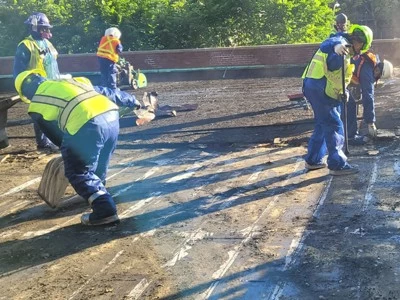
Once we know what we’re working with, we start extraction. Industrial pumps and vacuums pull standing water out fast. Then we set up drying equipment air movers and dehumidifiers positioned specifically for the layout of your space. In older Middle Village homes with plaster walls and concrete block foundations, drying takes longer than it does in newer construction, and we account for that in our timeline rather than rushing the process and leaving moisture behind.
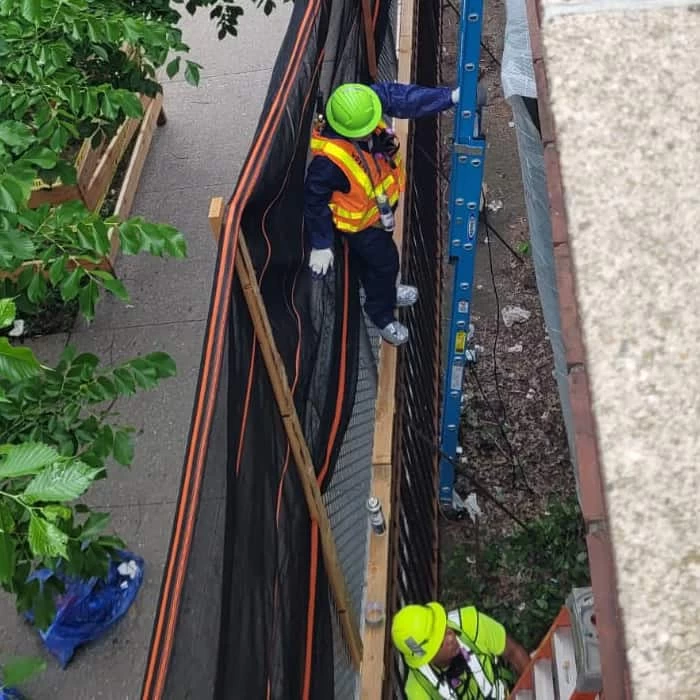
If there’s any sign of mold or if conditions are right for it to develop we handle remediation in-house, licensed under New York State Labor Law. We also document everything as we go, which gives you a clean record for your insurance claim. By the time we’re done, you’ll have a dry, treated, documented home not just a space that looks dry.
Water damage restoration in Middle Village isn’t a one-size job. The neighborhood’s housing stock mostly brick semi-attached and attached row houses, the majority built before 1950 comes with specific vulnerabilities. Aging supply lines. Finished basements that turn into living-space losses when a pipe lets go. Shared walls that carry water laterally into adjacent units. And a combined sewer system that, during heavy rain, has a documented history of pushing water back into basements along streets like Penelope Avenue and 77th Avenue. We’ve seen all of it, and our service is built around it.
What we handle: emergency water extraction, structural drying, dehumidification, content protection, antimicrobial treatment, mold assessment, and full mold remediation when needed. We also handle the documentation required for NYC Department of Buildings compliance and work within New York State’s mold remediation licensing framework which matters because NYS is one of the stricter states in the country on this. If your home was built before 1978, we’re also mindful of lead paint protocols when disturbing surfaces during restoration.
If your damage involves a sewer backup which is Category 3 contamination, meaning it carries health risks beyond just water we treat it differently than a clean water pipe burst. The sanitation process, the antimicrobial treatment, and the odor remediation all go deeper. Middle Village residents who’ve dealt with sewer flooding before know the difference. We do too.
Does homeowner's insurance cover basement flooding from a sewer backup in Middle Village?
This is one of the most common questions we get from Middle Village homeowners, and the honest answer is: it depends on your policy, and most standard policies don’t cover it automatically. Standard homeowner’s insurance typically covers sudden and accidental water damage from internal sources a burst pipe, a failed washing machine hose, that kind of thing. But flooding caused by sewer backup or external water intrusion is usually excluded unless you’ve added a specific sewer backup rider or a separate flood policy.
This matters a lot in Middle Village, where the combined sewer system has a well-documented history of overflowing during heavy rain events. If your basement flooded because the street drain backed up into your house, that’s likely a sewer backup event and without that rider, you may be paying out of pocket. The good news is that we document everything thoroughly from the moment we arrive, which gives you the strongest possible paper trail if you’re disputing a claim or working with an adjuster to determine the source of the water. We can also help you understand what category of water damage you’re dealing with, which affects both the remediation process and the insurance conversation.
How quickly can mold develop after a basement flood, and how do I know if it's already there?
Mold can begin developing within 24 to 48 hours of a water event sometimes faster in warm, humid conditions. In Middle Village’s older housing stock, where basements often have concrete block walls, wood framing, and finished drywall, the materials that mold loves most are right there waiting. You won’t always see it right away. It can start behind drywall, under flooring, or inside wall cavities before it ever becomes visible on the surface.
Signs to watch for include a musty odor that doesn’t go away after things dry out, discoloration on walls or ceilings, or any soft or warped areas in drywall or wood. If your basement has flooded before and wasn’t fully remediated, there may already be dormant mold that a new water event reactivates. We use moisture meters and conduct a thorough inspection during every job not just a visual check because in pre-war construction, moisture hides in places that look dry on the surface. If mold is found or conditions indicate it’s likely to develop, we handle remediation in-house as a licensed contractor under New York State Labor Law, so you’re not left coordinating a separate company.
What's the difference between water extraction and full water damage restoration?
Water extraction is one step in the process it’s the part where standing water gets pumped or vacuumed out of your space. It’s necessary, but it’s not the same as restoration. After extraction, there’s still moisture in your walls, your subfloor, your framing, and your concrete. In a Middle Village brick row house with a finished basement, that moisture doesn’t just evaporate on its own. Without proper structural drying industrial air movers and dehumidifiers running for days, with moisture readings taken regularly to confirm progress you can end up with a space that feels dry but isn’t.
Full water damage restoration covers the complete chain: extraction, structural drying, dehumidification, antimicrobial treatment, mold prevention or remediation if needed, content protection, and final documentation. It also means addressing whatever caused the water intrusion in the first place, or at minimum flagging it so you can get it fixed before it happens again. A company that only does extraction and leaves is not doing restoration they’re doing cleanup. Those are different things, and the difference shows up a few weeks later when the mold does.
My neighbor's pipe caused water damage to my Middle Village home who is responsible?
This situation comes up more often than you’d think in Middle Village, where attached and semi-attached homes share walls and a water event in one unit can migrate into the adjacent property through shared framing, block walls, or even through the floor. The short answer is that liability depends on the source and the circumstances generally, if your neighbor’s negligence caused the damage (a pipe they knew was failing, a leak they ignored), they may be liable. But proving that and navigating it through insurance is a separate process.
What you should do immediately is document the damage on your side photos, video, moisture readings if possible and contact your own insurance company to open a claim. Your insurer can then pursue subrogation against your neighbor’s policy if liability is established. We can help by providing detailed documentation of the damage in your unit, including where the water appears to have originated based on the moisture pattern. That kind of professional documentation carries weight in an insurance dispute. The most important thing is not to wait the longer the moisture sits in a shared wall, the more damage accumulates on both sides, and the harder it becomes to establish a clear source.
How long does water damage restoration take for a flooded basement in Queens?
The honest answer is that it varies, and anyone who gives you a firm number before seeing the job is guessing. A straightforward clean-water event in a finished basement a burst supply line, caught quickly might be fully dried and documented within three to five days. A sewer backup, a long-standing slow leak that went undetected, or a flood event that affected multiple rooms and materials can take significantly longer, especially if mold remediation is involved.
In Middle Village specifically, the age of the housing stock is a factor. Concrete block foundations, plaster walls, and older wood framing hold moisture differently than modern materials, and drying times reflect that. We take moisture readings throughout the process and don’t consider the job done until the numbers confirm it not just when things look dry. We’ll give you a realistic timeline after the initial assessment, and we’ll update you as the job progresses. If your situation is urgent for insurance or habitability reasons, we factor that into how we sequence the work.
Why does water damage restoration in older Queens homes tend to cost more than expected?
It’s a fair question, and it usually comes down to what’s actually inside the walls. In Middle Village, where nearly half the housing stock was built before 1949, you’re often dealing with materials and conditions that add complexity to the job. Plaster walls take longer to dry than drywall. Concrete block foundations absorb and hold moisture in ways that poured concrete doesn’t. And because many of these homes have had previous owners, previous repairs, and previous water events, there can be existing damage or hidden mold that only becomes visible once the restoration work begins.
There are also regulatory factors specific to New York City and New York State. Homes built before 1978 require lead paint protocols when disturbing surfaces. Pre-1980 construction may contain asbestos in floor tiles or pipe insulation, which requires a survey and proper handling before any demolition work. Mold remediation projects over 10 square feet must be performed by a licensed contractor under New York State Labor Law. These aren’t optional steps they’re legal requirements, and skipping them creates liability for you as a homeowner. We build compliance into every job from the start, which means no surprises mid-project and no corners cut that come back to cost you more later.