Richmond Hill's Older Homes Don't Wait Neither Do We
When water is moving through your walls or rising in your basement, every hour matters. We respond fast to Richmond Hill, NY with the crew, equipment, and local knowledge to stop the damage before it gets worse.
I needed a professional consultation explanation of procedure for safe removal of Asbestos in my apartment complex. Without having an account yet, I was very impressed with the caring, knowledgeable and generous advice offered by Jessica, and will look forward to doing business in the future. Thank you so much! I feel much more informed about a sometimes scary endeavor. Peace. Nancy Silva Mineola, NY.
Mia Munoz
Used this company to clean up some water flood in my house. They were fast and easy to work with.very professional, Would recommend to anyone!
Nini Valle
Great company, had a flood and they responded quickly and efficiently. Billed my insurance company directly. I highly recommend this company!
joe colapietro, jr
I had pipe freeze in my basement right before a snow storm and they made to within an hour to help start the clean up process. They we by our side throughout the entire process and even helped with the insurance company. They did such a great job with the cleanup, repair, remidiation, I contracted them to perform the repairs and finishes in the basement. They came with enough manpower and material to get the job done. Leo and Jessica were nothing but a pleasure to deal with!!
Cristian Arredondo c
I had some water damage in my home and Green Island was able to take care of my issue quickly and effectively. I am very pleased with the work they did. They responded quickly and were very professional.
Michael M
Outstanding service! From the office to the field crew everyone was friendly, helpful and responsive. I highly recommend Green Island Group.
There’s a difference between a floor that looks dry and a home that actually is dry. In Richmond Hill’s Victorian-era and prewar frame houses many built before 1940, with wood framing, horsehair plaster, and old-growth lumber throughout moisture doesn’t just sit on the surface. It moves into the structure, and if it isn’t pulled out completely, mold follows within 24 to 48 hours.
When the job is done right, you’re not just dealing with the visible damage. You’re walking away knowing the walls are dry, the subfloor is dry, and there’s no hidden moisture feeding mold growth behind the drywall or under the flooring. For families living in multigenerational households which describes a lot of Richmond Hill that matters more than most people realize. More people under one roof means more exposure if something is left behind.
Richmond Hill also sits on a combined sewer system that has a documented history of backing up into basements during heavy rain. When that happens, what comes through the floor drain isn’t just water it’s Category 3 contamination, and it requires a specific remediation process, not a shop vac and a fan. The outcome you want is a home that’s been properly assessed, properly dried, and properly cleared not just mopped up and left to chance.
Local Knowledge Backed by Real Restoration Experience
We’re a Queens-based water damage restoration company that actually knows Richmond Hill. The neighborhoods, the housing stock, the drainage problems we’ve worked in them. From the Victorian blocks north of Jamaica Avenue to the denser streets of South Richmond Hill and Little Guyana, we understand what these homes are built from and what they need when water gets in.
We’re IICRC-certified, which means our technicians are trained to industry standards for water damage assessment, structural drying, and mold remediation not just showing up with equipment and guessing. We work directly with homeowners insurance carriers, handle the documentation, and walk you through the claims process so you’re not navigating that alone.
Richmond Hill is a working community where trust is earned. When we show up to your home, we treat it like it matters because to you, it does.
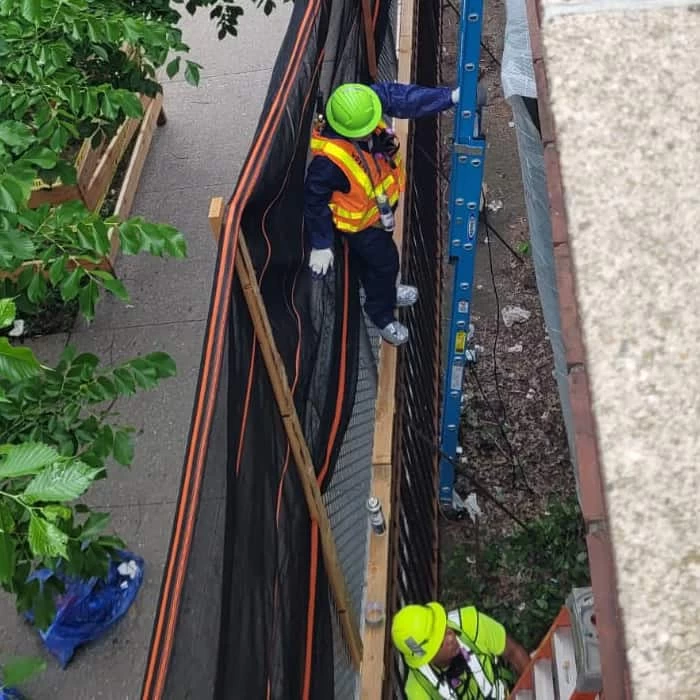
The first thing that happens when we arrive is an assessment. We’re not just looking at what’s visible we’re using moisture meters and thermal imaging to find where water has traveled inside the structure. In Richmond Hill’s older homes, that often means checking inside wall cavities, under original hardwood floors, and in basement ceiling assemblies where water from a sewer backup or burst pipe can sit undetected for days.
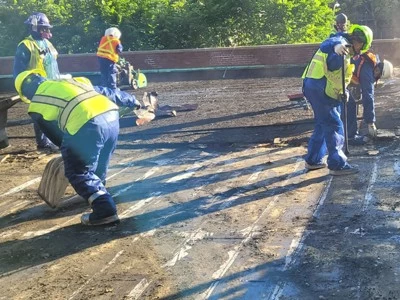
Once we know the full picture, extraction starts immediately. Industrial pumps and wet vacs pull standing water out fast. Then we set up the drying system air movers and commercial dehumidifiers positioned specifically for the layout of your space and monitor moisture levels daily until the structure hits the target readings. We document everything as we go, which matters when you’re filing an insurance claim with a carrier that requires detailed scope-of-work records.
If the damage involves sewage backup which is common in Richmond Hill given the combined sewer system we follow Category 3 remediation protocols, including containment, antimicrobial treatment, and proper disposal of contaminated materials. Before we close out the job, we verify that moisture readings are within acceptable range and provide documentation you can use for your insurance file or, if needed, to clear an HPD mold violation. Any structural repairs that require NYC Department of Buildings permits are handled with the appropriate filings nothing gets skipped.
Water damage restoration isn’t one thing it’s a sequence of steps that each have to be done correctly for the next one to hold. We handle the full scope: emergency water extraction, structural drying, dehumidification, mold prevention, content assessment, and final repairs. You don’t have to find a separate contractor to finish what we started.
For Richmond Hill properties specifically, that means being prepared for what this neighborhood’s homes actually present. Converted multi-family Victorians with added kitchens and bathrooms on upper floors. Basement apartments some occupied, some not to code that flood from below during heavy rain events. Older plumbing systems with galvanized steel supply lines and clay sewer laterals that fail without warning. We’ve seen all of it, and our process accounts for it.
We also handle the insurance side directly. We document damage with photos, moisture readings, and a detailed scope of work that meets the standards insurance carriers require. For homeowners in Richmond Hill who may be going through this process for the first time, that support makes a real difference. We bill your carrier directly where possible, and we explain every step so you’re never left wondering what’s covered or what comes next. If there’s an HPD mold violation involved, we provide the remediation documentation needed to clear it because in New York City, that paperwork matters.
Does homeowners insurance cover basement flooding in Richmond Hill, NY?
It depends on what caused the flooding, and this is where a lot of Richmond Hill homeowners get caught off guard. Standard homeowners insurance typically covers sudden and accidental water damage a burst pipe, an appliance failure, a roof leak from a storm. What it usually doesn’t cover is flooding from an external source, like stormwater rising from outside the home. That type of event requires a separate flood insurance policy, typically through FEMA’s National Flood Insurance Program.
Here’s where it gets specific to Richmond Hill: when the combined sewer system backs up into your basement which happens during heavy rain events in this neighborhood coverage depends on whether your policy includes a sewer backup rider. Many standard policies exclude sewer backup by default, but it can be added as an endorsement. If you’re not sure what your policy includes, that’s one of the first things we help you figure out when we arrive. We’ve worked with enough Queens homeowners on insurance claims to know how to document the damage in a way that supports your case and gives you the best shot at a full recovery.
How quickly can mold develop after water damage in an older home?
Mold can begin growing within 24 to 48 hours of water intrusion under the right conditions and Richmond Hill’s older housing stock creates those conditions easily. Wood-framed walls, original hardwood subfloors, horsehair plaster, and the general construction style of homes built before 1940 all absorb and hold moisture in ways that newer materials don’t. Once moisture gets into the structure, it doesn’t evaporate on its own especially in below-grade spaces like basements where air circulation is limited.
The part that catches people off guard is that mold doesn’t have to be visible to be a problem. It can be growing inside a wall cavity or under a floor for weeks before it shows up as a stain or odor. That’s why the drying process matters as much as the extraction and why we use moisture meters and thermal imaging rather than just eyeballing it. If you’re in a multigenerational household with kids or elderly family members, getting this right isn’t optional. Respiratory issues from mold exposure are a real consequence of water damage that wasn’t fully remediated.
What is Category 3 water damage and does it apply to sewer backups?
Yes sewer backup is the most common source of Category 3 water damage, and it’s a recurring issue in Richmond Hill specifically because of the neighborhood’s aging combined sewer system. Category 3, sometimes called “black water,” refers to water that carries sewage, bacteria, or other biological contaminants. It’s the most serious classification of water damage, and it cannot be handled the same way as a clean water leak from a burst pipe.
When Category 3 water enters a basement, anything it contacts flooring, drywall, insulation, stored belongings has to be assessed for contamination. Porous materials that absorbed the water typically need to be removed and properly disposed of rather than dried in place. The affected area has to be treated with EPA-approved antimicrobial agents, and the space needs to be contained during remediation to prevent cross-contamination. This isn’t something you can clean up with household products and call it done. Beyond the health risk, improper remediation of a sewage backup can create ongoing mold and odor problems that are far more expensive to fix later than doing it correctly the first time.
How long does the water damage restoration process take from start to finish?
The honest answer is that it varies, and anyone who gives you a flat number without seeing the property first isn’t being straight with you. The drying phase alone which is the most critical part typically takes three to five days for a contained water loss in a standard room. Larger losses, or situations where water has migrated into multiple areas of the home, can take longer. In Richmond Hill’s older frame houses, where water can travel through wall cavities and under original hardwood floors in ways that aren’t immediately obvious, the assessment phase is especially important for setting realistic expectations.
After drying is complete and moisture readings confirm the structure is within acceptable range, any necessary repairs replacing drywall, refinishing floors, repainting add additional time depending on scope. If the job requires permits from the NYC Department of Buildings, that timeline gets factored in as well. We give you a clear picture of the expected timeline after the initial assessment, and we update you throughout the process so you’re never left guessing where things stand.
What should I do immediately after discovering water damage in my Richmond Hill home?
The first thing is to stop the source if you can safely do so shut off the water supply valve if it’s a burst pipe, or stop using any fixtures connected to the affected line. If the water is coming from a sewer backup or an external source and you can’t stop it, don’t wade through it Category 3 water is a health hazard. Get out of the affected area and call for help immediately.
Once the source is controlled, document everything before anything is moved or cleaned up. Photos and video of the damage as it exists are critical for your insurance claim and the more thorough your documentation, the stronger your position with the carrier. Don’t throw anything away yet, even if it looks ruined, because your adjuster may need to see it. Then call a restoration company that can respond quickly. In Richmond Hill, where the housing stock is older and water moves through structures fast, the window between manageable damage and serious structural or mold issues is shorter than most people expect. Getting a crew on-site within the first few hours makes a measurable difference in the outcome.
Is water damage restoration in Richmond Hill, NY covered by insurance if a pipe bursts in winter?
In most cases, yes a burst pipe from freezing is considered sudden and accidental water damage, which falls within the coverage of a standard homeowners insurance policy. That said, insurance carriers do look at whether the homeowner took reasonable steps to prevent the freeze. If a home was left without heat for an extended period, or if the pipe that burst was in an area that had been flagged as a known risk, the carrier may dispute the claim. Documentation of your heating system being operational and the home being maintained is useful to have.
Richmond Hill’s older Victorian and prewar frame houses are particularly vulnerable to frozen pipes in winter because many have uninsulated exterior walls, attics, and crawl spaces where supply lines run. Pipes in these locations are exposed to outside temperatures in a way that newer construction typically isn’t. When those pipes fail, they can release a significant volume of water quickly and because the homes have multiple floors and older plaster walls that hold water, the damage can spread fast. Getting a restoration crew on-site quickly, with proper documentation from the start, is the most important thing you can do to protect both your home and your insurance claim.