Elwood's Older Homes Don't Hide Water Damage Forever
When a pipe lets go or your basement takes on water, every hour you wait makes the damage worse. We respond 24/7 across Elwood and the Town of Huntington with the equipment and expertise to stop the damage before it becomes something far more expensive.
I needed a professional consultation explanation of procedure for safe removal of Asbestos in my apartment complex. Without having an account yet, I was very impressed with the caring, knowledgeable and generous advice offered by Jessica, and will look forward to doing business in the future. Thank you so much! I feel much more informed about a sometimes scary endeavor. Peace. Nancy Silva Mineola, NY.
Mia Munoz
Used this company to clean up some water flood in my house. They were fast and easy to work with.very professional, Would recommend to anyone!
Nini Valle
Great company, had a flood and they responded quickly and efficiently. Billed my insurance company directly. I highly recommend this company!
joe colapietro, jr
I had pipe freeze in my basement right before a snow storm and they made to within an hour to help start the clean up process. They we by our side throughout the entire process and even helped with the insurance company. They did such a great job with the cleanup, repair, remidiation, I contracted them to perform the repairs and finishes in the basement. They came with enough manpower and material to get the job done. Leo and Jessica were nothing but a pleasure to deal with!!
Cristian Arredondo c
I had some water damage in my home and Green Island was able to take care of my issue quickly and effectively. I am very pleased with the work they did. They responded quickly and were very professional.
Michael M
Outstanding service! From the office to the field crew everyone was friendly, helpful and responsive. I highly recommend Green Island Group.
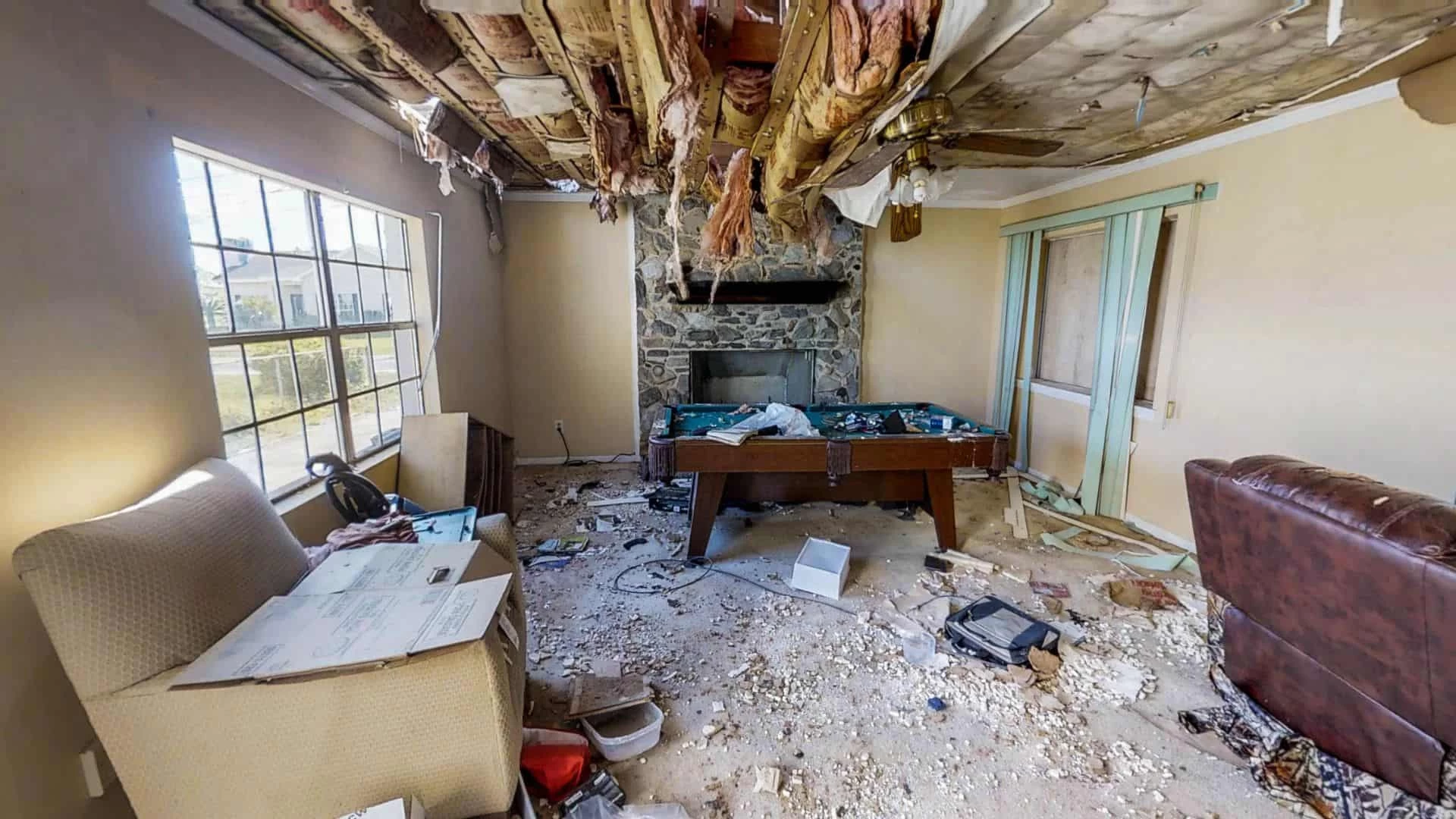
Most homeowners think water damage ends when the puddle disappears. It doesn’t. In Elwood’s Cape Cods, hi-ranches, and ranch-style homes the majority of which were built in the 1950s and 1960s moisture hides inside wood-framed subfloors, behind plaster walls, and underneath aging insulation long after the surface looks dry. That’s where mold starts. That’s where structural damage quietly compounds. And that’s exactly what professional drying equipment is designed to find and fix.
When the job is done right, you get your home back not a version of it with a ticking clock underneath. Rooms that were soaked are structurally dry, not just surface-dry. The air quality is clean. The subfloor isn’t quietly rotting. For families in Elwood with kids in the Elwood Union Free School District, that peace of mind matters nobody wants to send their kids to school from a house with hidden mold working its way through the walls.
There’s also the financial reality. With median home values in Elwood sitting around $695,000 and property taxes near $10,000 a year, you have a significant asset to protect. Incomplete remediation doesn’t just feel wrong it shows up in inspection reports, affects resale value, and can trigger disclosure obligations that follow you out the door. Getting it done correctly the first time is the only version that actually protects what you’ve built here.
We’re a Long Island-based environmental and restoration company not a franchise, not a national brand routing calls through a regional hub. When you call the 631 number, you’re talking to people who actually work here, know the housing stock in Elwood and Huntington, and have handled restoration jobs in homes just like yours.
What makes the difference for Elwood homeowners specifically is our full-service scope. Most water damage companies handle the water and leave. They’re not equipped for what comes next mold remediation, asbestos abatement in pre-1978 construction, lead paint concerns, air quality testing. In Elwood, where most homes were built before 1978, those aren’t edge cases. They’re real possibilities on almost any job that involves opening up walls or pulling up floors. We handle all of it in-house, which means no waiting on a second contractor, no coordination headaches, and no gaps in the work.
Our reviews back it up customers regularly name individual staff members by name, which tells you something about how we operate.
From First Call to Fully Dry Here's What to Expect
It starts with the call. Whether it’s 2am after a burst pipe or a Saturday afternoon when your sump pump gave out during a storm, the response is the same someone picks up and gets a team moving toward Elwood. The first thing on-site is a full assessment: not just what’s visible, but what’s hiding. Moisture meters and thermal imaging equipment identify saturation inside walls, under floors, and in ceiling assemblies that look fine from the outside. In Elwood’s older homes, that step is non-negotiable wood-framed construction from the 1950s holds water in ways that modern builds don’t.
Once the scope is confirmed, extraction begins immediately. Commercial-grade water removal equipment pulls standing water fast, and then the drying phase starts industrial dehumidifiers and air movers positioned according to IICRC S500 standards to dry the structural assembly, not just the surface. This isn’t the same as renting fans from a hardware store. The equipment runs continuously, and moisture readings are tracked throughout to confirm the structure is actually reaching dry standard, not just feeling dry.
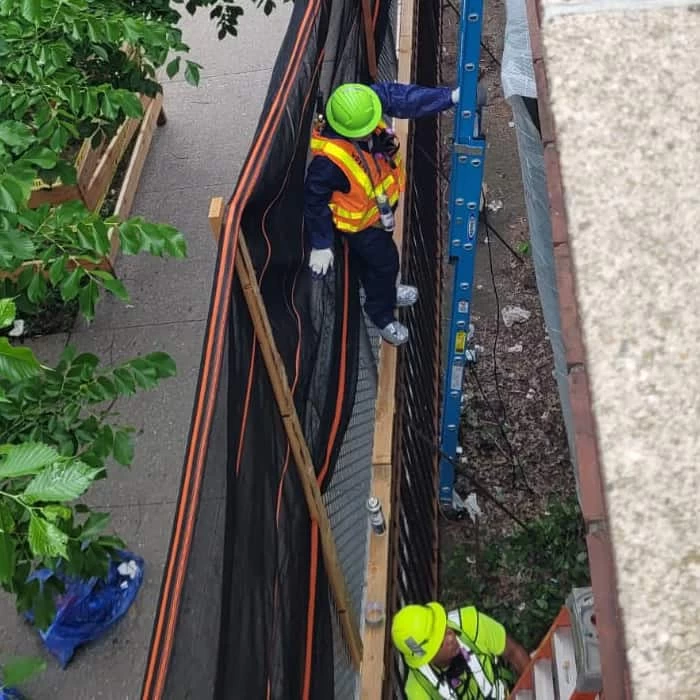
If the work involves opening walls or disturbing flooring in a pre-1978 home, we check for asbestos-containing materials before any demolition begins. That’s a New York State Department of Labor requirement, and it’s one we handle in-house with licensed abatement staff no separate contractor, no delay. From there, any reconstruction or repairs go through the Town of Huntington’s permitting process, which we’re already familiar with. You don’t have to figure that out yourself.
Water damage restoration with us isn’t a single-service transaction. We offer the full scope of what’s needed from emergency response through full structural restoration water extraction, structural drying, dehumidification, mold remediation, asbestos abatement, lead paint services, air quality testing, and reconstruction. For Elwood homeowners dealing with a water event in a home that’s 60 or 70 years old, that range of capability isn’t a bonus. It’s the difference between a complete fix and a job that gets handed off halfway through.
Insurance is part of the process, not an afterthought. We document damage thoroughly, communicate directly with adjusters, and handle billing to your insurer. If you’ve never filed a water damage claim before most people haven’t that support takes a significant amount of pressure off an already stressful situation. You’re not left trying to interpret policy language or chase down documentation on your own.
We also understand what Suffolk County’s seasonal patterns mean for Elwood homes. Burst pipes in January, basement seepage during March snowmelt, sump pump failures during summer storms these aren’t abstract risks here. They’re the calls that actually come in. Whether the source is a corroded galvanized pipe that finally gave out, a backed-up drain line, or a foundation wall that’s been seeping for years, our approach is the same: find all the water, dry the structure completely, and make sure nothing is left behind to become a problem six months from now.
How quickly does mold actually start growing after water damage in an Elwood home?
The IICRC the governing body for water damage restoration standards documents that mold can begin colonizing within 24 to 48 hours of water exposure under the right conditions. In Elwood’s older Cape Cod and ranch-style homes, those conditions are often already present: wood framing, limited airflow in enclosed wall cavities, and insulation that retains moisture long after the surface dries. That 24-hour window isn’t theoretical it’s the reason emergency response time actually matters.
The practical implication is that waiting until Monday morning, or waiting to see if things dry out on their own, is genuinely risky in a home built in the 1950s or 1960s. The faster professional drying equipment gets running, the better the odds that mold remediation never becomes part of the conversation at all. When it does become necessary, we handle mold remediation in-house so there’s no gap between the water work and the mold work, and no window for the problem to spread while you’re waiting on a second contractor.
Does homeowners insurance cover water damage from a burst pipe in New York?
Generally, yes sudden and accidental water damage from a burst pipe is covered under most standard homeowners insurance policies in New York. What’s typically not covered is gradual damage: a slow leak behind a wall that went undetected for months, or a foundation seepage issue that’s been ongoing. The distinction matters, and insurance adjusters will look at the source and timeline carefully when the claim comes in.
For Elwood homeowners, this is worth understanding before you call your insurer. Homes with 60-plus-year-old galvanized steel plumbing are at higher risk for sudden failures, and those events are typically covered. What affects your claim outcome is the quality of documentation how thoroughly the damage is recorded, what the adjuster sees when they arrive, and whether the restoration company can clearly demonstrate the scope and cause. We handle that documentation process directly and communicate with your adjuster as part of the job, which tends to produce cleaner, faster claim outcomes than homeowners trying to manage that process on their own.
Can water damage restoration disturb asbestos in my older Elwood home?
Yes, and this is one of the most important questions Elwood homeowners can ask before any restoration work begins. Most homes in Elwood were built before 1978, which means there’s a real possibility of asbestos-containing materials in floor tiles, pipe insulation, textured ceiling finishes, or wall assemblies. Under New York State Department of Labor regulations, any demolition or disturbance of those materials requires a licensed asbestos contractor and specific notification and disposal procedures this isn’t optional, and violations carry serious consequences.
The practical risk is that a water damage company without asbestos abatement capability will either skip the testing putting you at regulatory and health risk or stop the job when asbestos is found and leave you to coordinate a separate licensed contractor. We hold the licensing to handle asbestos abatement in-house. When demolition is required as part of the water damage restoration scope, we test first, follow NYSDOL protocols, and complete the abatement without stopping the job or handing it off. For Elwood, where the majority of the housing stock predates 1978, that in-house capability is directly relevant not a hypothetical.
How long does it take to fully dry out a flooded basement in an Elwood home?
The honest answer is that it depends on how much water came in, how long it sat, what materials absorbed it, and how the space is configured. A basement that flooded during a spring storm and was caught within a few hours is a very different job from one that had standing water for two or three days. Generally, professional structural drying in a residential basement takes anywhere from three to five days under continuous equipment operation sometimes longer if the concrete block walls or wood framing absorbed significant moisture.
In Elwood specifically, the basement configurations common to post-war construction poured concrete or concrete block walls without modern waterproofing membranes tend to hold moisture in the wall assembly itself, not just on the floor surface. That means drying the visible space isn’t enough. Moisture readings need to confirm that the walls and any adjacent framing are reaching dry standard before equipment comes out. Pulling equipment too early because the floor feels dry is one of the most common reasons mold shows up weeks later. The drying timeline is driven by data, not by how things look or feel.
Do I have to use the water damage contractor my insurance company recommends?
No. In New York, you have the right to choose your own licensed contractor for water damage restoration your insurer cannot legally require you to use their preferred vendor. That said, insurers will often recommend or even push their preferred contractors, and it’s worth understanding why: preferred contractors typically work within pricing frameworks that benefit the insurer’s cost objectives, not necessarily your restoration outcome.
Choosing your own contractor means choosing someone whose job is to restore your home completely not to keep the claim cost within a preferred vendor’s rate schedule. The documentation your contractor produces, the scope they recommend, and the quality of the work they complete all affect both the claim outcome and the long-term condition of your home. For a property in Elwood worth $695,000 or more, that distinction has real financial weight. We work directly with your insurer and adjuster, handle the documentation, and bill the claim so you get the benefit of a contractor working for you, without having to manage the insurance process yourself.
What's the difference between water mitigation and full water damage restoration in Elwood?
Water mitigation is the emergency phase stopping the damage from getting worse. That includes water extraction, structural drying, and removing materials that can’t be saved. It’s the first response, and it’s critical. But mitigation alone doesn’t put your home back together. Water damage restoration is the full scope: mitigation plus mold remediation if needed, repair or replacement of damaged structural components, reconstruction of walls, floors, and ceilings, and returning the space to its pre-loss condition.
In Elwood, where most homes are 60 to 70 years old and a water event can involve multiple layers of complexity aging materials, potential asbestos, wood-framed assemblies that held moisture the gap between mitigation-only and full restoration matters more than it might in a newer home. A company that only does mitigation will dry the structure and leave. You’re then responsible for finding a separate mold contractor, a separate abatement company if asbestos is involved, and a general contractor for reconstruction. Every handoff adds time, and time is exactly what you don’t have when moisture is sitting in a structure. We cover the full scope in-house, from the first extraction through final reconstruction, so nothing falls through the cracks between phases.