When Your Basement Floods in Manorville, Every Hour Counts
Manorville’s wooded lots, private septic systems, and large homes create water damage risks that move fast. We respond faster with the full capability to handle what’s behind the walls, not just what’s on the floor.
I needed a professional consultation explanation of procedure for safe removal of Asbestos in my apartment complex. Without having an account yet, I was very impressed with the caring, knowledgeable and generous advice offered by Jessica, and will look forward to doing business in the future. Thank you so much! I feel much more informed about a sometimes scary endeavor. Peace. Nancy Silva Mineola, NY.
Mia Munoz
Used this company to clean up some water flood in my house. They were fast and easy to work with.very professional, Would recommend to anyone!
Nini Valle
Great company, had a flood and they responded quickly and efficiently. Billed my insurance company directly. I highly recommend this company!
joe colapietro, jr
I had pipe freeze in my basement right before a snow storm and they made to within an hour to help start the clean up process. They we by our side throughout the entire process and even helped with the insurance company. They did such a great job with the cleanup, repair, remidiation, I contracted them to perform the repairs and finishes in the basement. They came with enough manpower and material to get the job done. Leo and Jessica were nothing but a pleasure to deal with!!
Cristian Arredondo c
I had some water damage in my home and Green Island was able to take care of my issue quickly and effectively. I am very pleased with the work they did. They responded quickly and were very professional.
Michael M
Outstanding service! From the office to the field crew everyone was friendly, helpful and responsive. I highly recommend Green Island Group.
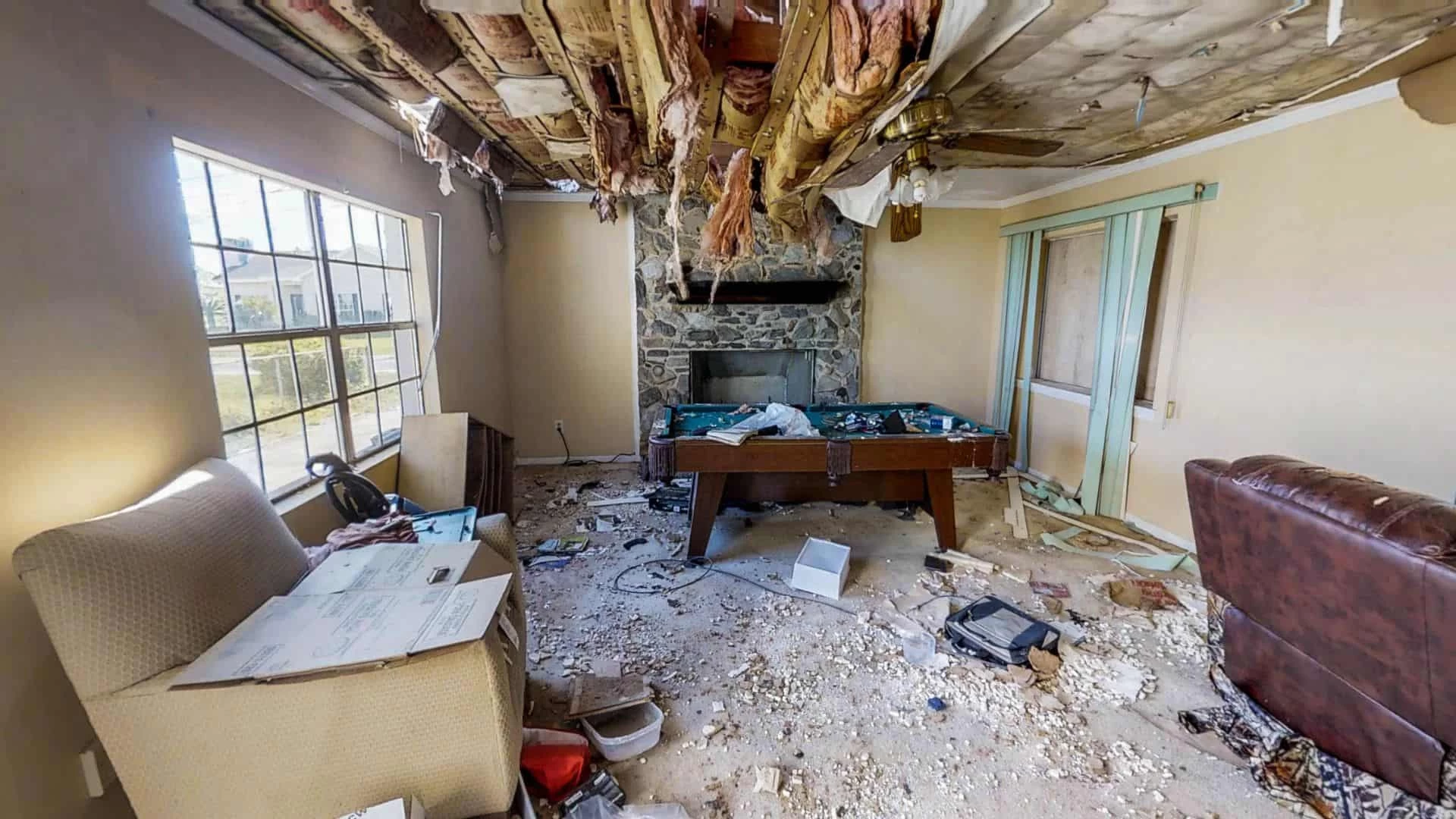
Water has a way of going where you can’t see it. It gets into subfloor framing, sits behind drywall, and settles into crawl spaces that don’t get checked until the smell shows up weeks later. By then, what started as a manageable cleanup has turned into a mold situation and a much bigger bill.
In Manorville, this problem runs deeper than it does in most Long Island communities. Homes here are large four to six bedrooms, full basements, significant square footage and many sit on wooded lots where the surrounding pitch pine and scrub oak drop enough debris to clog gutters and drive water into fascia boards and wall cavities before you even notice it’s happening. The northern section of the hamlet, near the Peconic River headwaters, also sits in areas with higher groundwater influence. After a heavy rain or a spring snowmelt, that water doesn’t just run off it pushes up.
What you need after a water event isn’t just extraction and a few fans running for a couple of days. You need moisture readings taken at the wall, the subfloor, and the framing. You need equipment calibrated to pull humidity out of the air at a structural level. And you need someone who will come back and verify the numbers before calling the job done. That’s what a complete water damage restoration actually looks like and that’s what changes the outcome for your home.
Water Restoration Companies Serving Manorville, NY
One Call Covers the Whole Job No Handoffs
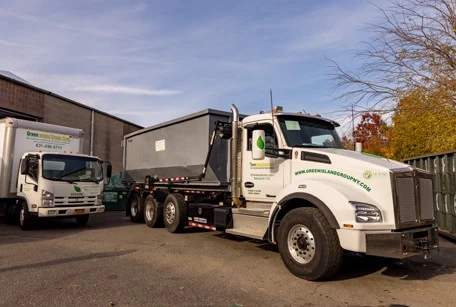
Green Island Group is a Long Island-based environmental and property restoration company serving Suffolk County homeowners, including Manorville and the surrounding eastern Suffolk communities. We handle water damage restoration, mold remediation, asbestos testing and abatement, sewage cleanup, air quality testing, and lead paint removal all under one roof.
That matters more in Manorville than in most places. When a water event disturbs older building materials, or when a backed-up septic line creates gray water contamination inside the home, you don’t want to coordinate three separate contractors while the clock runs on mold growth. We handle it from start to finish with the licensing, equipment, and field experience to address whatever the job uncovers.
We operate with real local Suffolk County numbers, real local crews, and real familiarity with the conditions specific to Manorville from the Town of Brookhaven’s permit requirements to the property profiles you’ll find along Eastport Manor Road and throughout the 11949 ZIP code.
What Actually Happens From First Call to Final Clearance
When you call, someone picks up day or night. We operate with genuine 24/7 availability, which matters when you’re dealing with a sump pump failure at 2am during a nor’easter on a large wooded lot in Manorville with no neighbors close enough to notice. The first priority is getting a crew to your property fast, because the 24-to-48-hour window before mold colonization begins is not a marketing line it’s a biological fact documented by the IICRC.
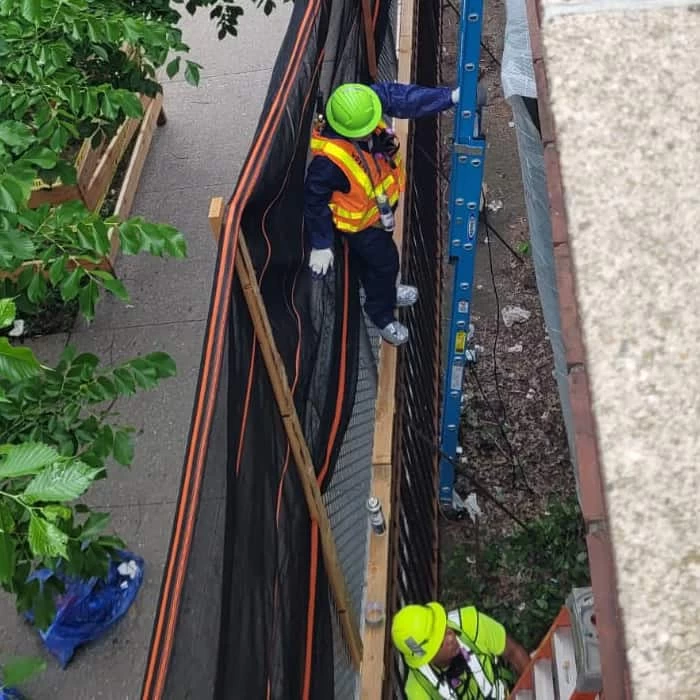
Once on site, our team does a full assessment before touching anything. That means moisture readings taken at multiple points walls, subfloor, framing, and any crawl space or basement area where water may have traveled. Thermal imaging is used to find saturation that isn’t visible to the eye. From there, water is extracted, commercial-grade drying systems are deployed, and the space is monitored throughout the drying process with documented readings not just a visual check.
If the job involves structural materials that need to come out drywall, subfloor, framing and the home is older, we account for the possibility of asbestos-containing materials or lead paint before any demolition begins. This is a legal requirement under New York State Department of Labor guidelines, and we handle it in-house. For properties that fall within the Town of Brookhaven’s jurisdiction, any structural repair work is coordinated with applicable permit requirements so nothing gets skipped. The job isn’t complete until the moisture readings confirm it not when the equipment gets picked up.
Most water damage restoration companies stop at extraction and drying. Our scope goes further because in Manorville, the job often requires it. Large homes with finished basements, private septic systems, and wooded surroundings face a wider range of secondary damage scenarios than the average suburban property. A septic backup isn’t just a water problem it’s a Category 3 contamination event that requires biohazard protocols, not just fans and dehumidifiers. A flooded basement in a home with older construction may involve asbestos floor tiles or pipe insulation that can’t be disturbed without proper abatement procedures.
The full scope of what we provide in Manorville includes emergency water extraction, structural drying with commercial-grade equipment, moisture mapping and thermal imaging, mold testing and remediation, sewage and gray water cleanup, asbestos testing and abatement, lead paint assessment, and air quality testing. Insurance documentation and direct adjuster communication are handled by our team which is especially valuable when you’re filing a claim on a large Manorville property with finished living space, hardwood floors, or custom materials that need to be properly scoped to get full coverage.
The community along the I-495 corridor and throughout the 11949 ZIP code has seen what happens when water damage gets addressed on the surface but not at the structure. Our process is built around getting it right the first time with the documentation to prove it.
How quickly can water damage lead to mold in a Manorville home?
Mold can begin colonizing within 24 to 48 hours of water exposure and that timeline doesn’t slow down for weekends or holidays. In Manorville, where many homes have large finished basements and crawl spaces that don’t get regular airflow, moisture can sit undetected long enough to create a serious mold problem before anyone realizes there’s more than a drying job on their hands.
The humidity levels that build up in basements during summer months compounded by Manorville’s wooded surroundings and the natural moisture retention of Pine Barrens-adjacent terrain make conditions particularly favorable for mold growth after a water event. This is why professional moisture detection matters as much as extraction. If the drying process doesn’t reach the wall cavity and subfloor framing, you may have surface-dry walls with active mold growth behind them. Our process includes full moisture mapping and post-drying verification to confirm the job is actually complete.
Does homeowner's insurance cover water damage restoration in Manorville, NY?
It depends on the source of the water. Most standard homeowner’s insurance policies in New York cover sudden and accidental water damage a burst pipe, an appliance failure, or a roof breach from a storm. What they typically don’t cover is flooding from external groundwater, which requires a separate flood insurance policy through the NFIP or a private carrier.
For Manorville homeowners, this distinction matters. If your basement floods because a sump pump failed during a heavy rain, that’s generally covered under most policies. If water entered your home because the ground around your foundation became saturated after a significant storm event which can happen in the northern section of the hamlet near the Peconic River wetlands that may fall under flood coverage instead. We work directly with insurance adjusters, handle all damage documentation, and can help you understand what’s within scope before you file. On a large Manorville property with significant finished square footage, getting the claim scoped correctly from the start makes a real difference in what gets covered.
What should I do immediately after water damage before the restoration crew arrives?
The most important thing is to stop the source if you safely can shut off the water supply, flip the breaker for the affected area if there’s any risk of electrical contact, and don’t walk through standing water if you’re unsure about what’s in it. If the water came from a sewage backup or a drain line, treat it as contaminated and keep people and pets out of the space entirely.
Beyond that, resist the urge to start pulling up carpet or running box fans on your own. Consumer-grade fans can actually spread moisture to unaffected areas and accelerate mold spread if the air isn’t being properly dehumidified at the same time. Document everything with photos before anything gets moved your insurance claim will depend on it. In Manorville, where homes often have large basements with finished living areas, personal belongings, and stored items, a quick photo walkthrough before the crew arrives can protect thousands of dollars in claim value. Then call us and let the process work from there.
My Manorville home has a private septic system does that change how sewage backup is handled?
Yes, and it’s an important distinction. In Manorville, where most properties rely on private septic systems rather than municipal sewer connections, a sewage backup event is handled differently than it would be in a more urbanized Long Island community. The source of the contamination whether it’s a backed-up drain line, an overwhelmed septic tank, or a failing drain field affects both the remediation approach and the health risk level.
Sewage backup from a private septic system is classified as Category 3 water damage, meaning it carries bacteria, pathogens, and biological contaminants that require full biohazard remediation protocols not just extraction and drying. This includes proper containment, disposal of contaminated porous materials, antimicrobial treatment, and air quality verification after the cleanup is complete. We handle this in-house with the appropriate licensing and equipment. If the septic system itself needs repair or inspection, that falls under Suffolk County Department of Health Services jurisdiction, and we can help coordinate that piece of the process as well.
How long does water damage restoration typically take for a large home?
The honest answer is that it depends on how much water was involved, how long it sat before remediation began, and what materials were affected. For a straightforward burst pipe situation with limited spread, the drying process alone typically takes three to five days using commercial-grade equipment with daily moisture monitoring. Add in material removal, structural drying of framing and subfloor, and any mold remediation, and the full process can extend to one to two weeks or more.
In Manorville, where homes commonly run four to six bedrooms with full basements and significant crawl space square footage, the affected area in a major water event can be substantial. A finished basement alone with drywall, framing, flooring, and insulation represents a significant drying challenge that consumer equipment simply cannot handle at the speed needed to prevent secondary damage. The drying timeline is driven by science, not scheduling convenience. We use documented moisture readings at every stage, so you’re not guessing when the job is done the numbers confirm it.
Does water damage restoration in Manorville require any permits from the town?
It depends on the scope of the work. Water extraction and drying the mitigation phase typically do not require a building permit. But if the restoration involves structural repairs like replacing drywall, repairing or replacing subfloor framing, or any work that touches the structural envelope of the home, a permit may be required.
Manorville sits across two town jurisdictions: most of the hamlet falls under the Town of Brookhaven, while the northeast corner falls within the Town of Riverhead. Permit requirements and processes differ between the two, which is something an out-of-area contractor may not account for. Our familiarity with Long Island’s municipal landscape means this gets handled correctly from the start the right permits pulled from the right town, with no delays or re-work down the line. For older homes in the 11949 ZIP code where restoration work may disturb existing materials, New York State Department of Labor licensing is also required for any asbestos or lead paint abatement both of which we handle in-house.