When Water Hits a North Bellport Home, Minutes Matter
When water gets into a North Bellport home, the clock starts immediately. We respond 24/7 with the equipment, credentials, and local knowledge to stop the damage before it becomes something far worse. The South Shore’s shallow water table and aging housing stock mean water damage here moves fast and hides deep and we know exactly what to look for.
I needed a professional consultation explanation of procedure for safe removal of Asbestos in my apartment complex. Without having an account yet, I was very impressed with the caring, knowledgeable and generous advice offered by Jessica, and will look forward to doing business in the future. Thank you so much! I feel much more informed about a sometimes scary endeavor. Peace. Nancy Silva Mineola, NY.
Mia Munoz
Used this company to clean up some water flood in my house. They were fast and easy to work with.very professional, Would recommend to anyone!
Nini Valle
Great company, had a flood and they responded quickly and efficiently. Billed my insurance company directly. I highly recommend this company!
joe colapietro, jr
I had pipe freeze in my basement right before a snow storm and they made to within an hour to help start the clean up process. They we by our side throughout the entire process and even helped with the insurance company. They did such a great job with the cleanup, repair, remidiation, I contracted them to perform the repairs and finishes in the basement. They came with enough manpower and material to get the job done. Leo and Jessica were nothing but a pleasure to deal with!!
Cristian Arredondo c
I had some water damage in my home and Green Island was able to take care of my issue quickly and effectively. I am very pleased with the work they did. They responded quickly and were very professional.
Michael M
Outstanding service! From the office to the field crew everyone was friendly, helpful and responsive. I highly recommend Green Island Group.
What Complete Water Damage Handling Looks Like for North Bellport Homes
Water damage in North Bellport isn’t just a wet floor problem. The South Shore’s shallow water table means groundwater can push up through a foundation during a single heavy storm. Homes along the Montauk Highway corridor and the streets running off Atlantic Avenue sit on soil that holds moisture long after the rain stops and older homes without updated drainage systems feel that pressure first.
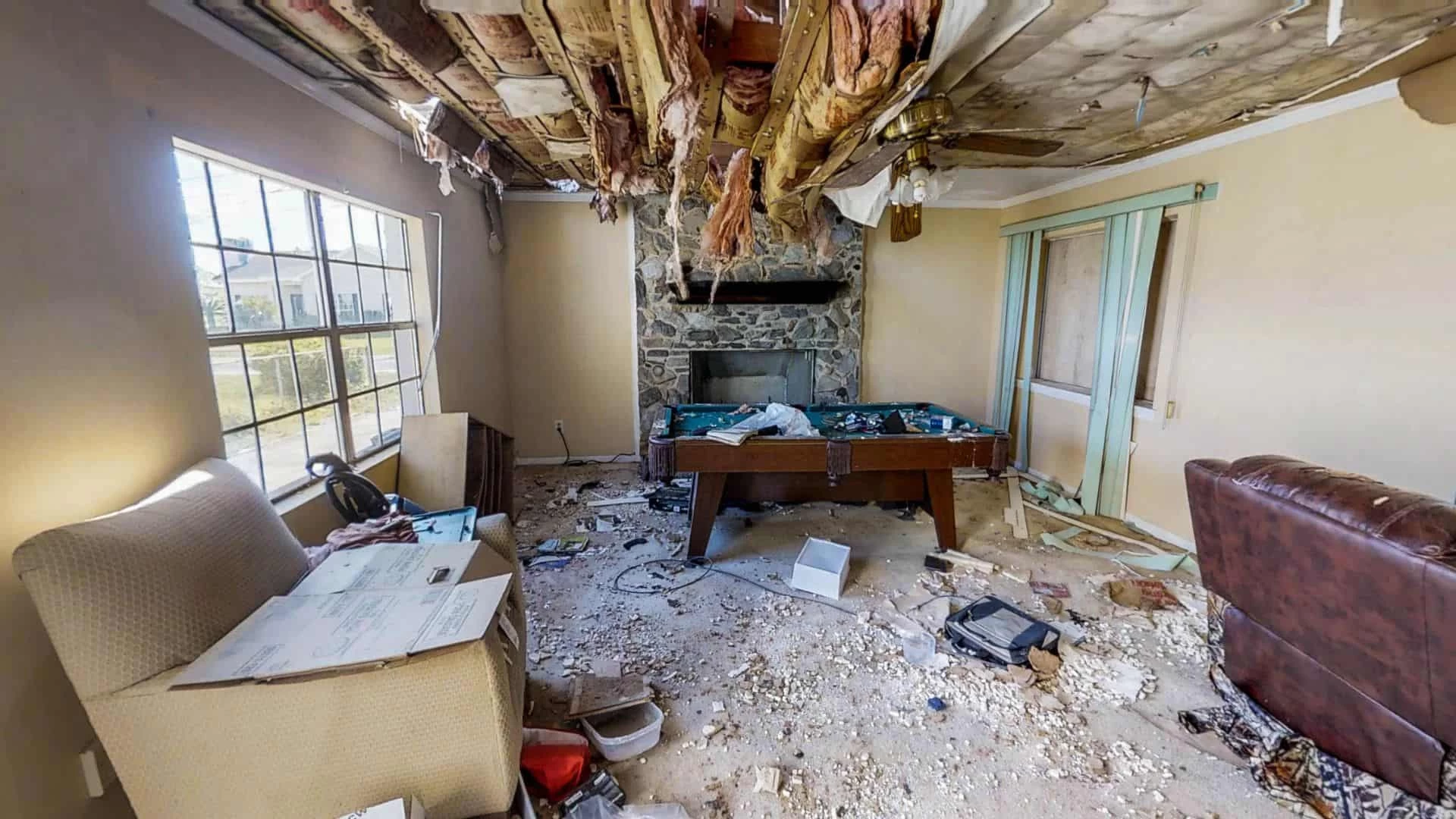
Most of the housing stock here was built in the 1950s and 1960s. That means plaster walls, original subfloors, and in many cases, insulation and pipe wrap that contain asbestos. When water gets into those walls, you can’t just dry the surface and call it done. Hidden moisture stays trapped in cavities where consumer fans never reach, and within 24 to 48 hours, mold has the conditions it needs to take hold.
What a properly handled job looks like is this: the visible water is gone, the hidden moisture is mapped and eliminated, the air quality is confirmed clean, and your insurance claim is documented so you’re not fighting for your own money while your home sits. That’s the full picture not just extraction, but a complete return to safe, dry, livable conditions.
One Call Covers the Whole Problem Local Knowledge Included
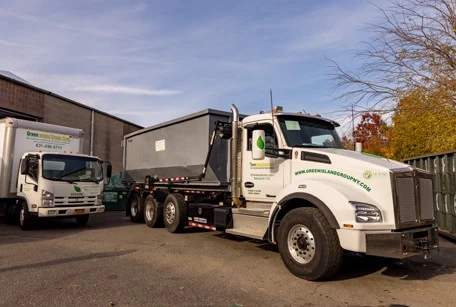
We’re a Long Island-based restoration and environmental company not a franchise, not a call center routing jobs to whoever’s available. When you call us, you reach a local team that knows Suffolk County, knows the South Shore, and knows exactly what aging homes in North Bellport and the surrounding communities are dealing with beneath the surface.
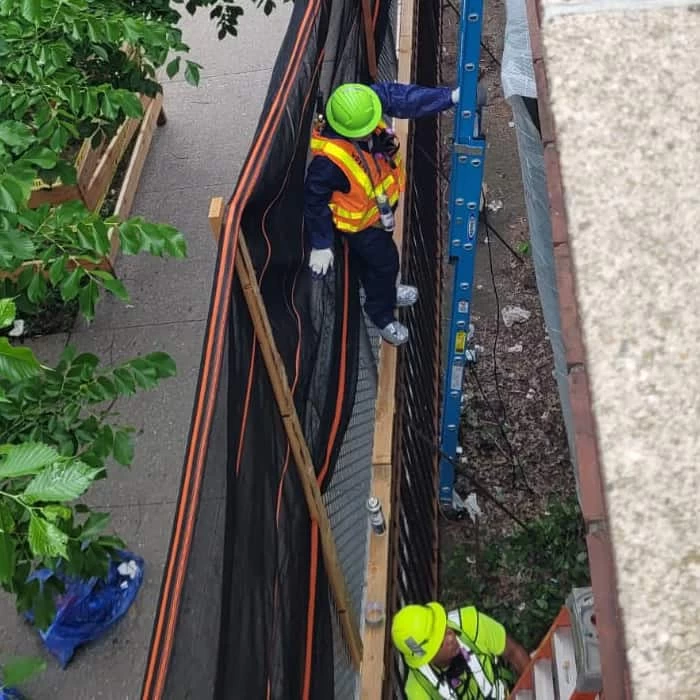
What sets us apart isn’t just the water extraction equipment. We also handle mold remediation, asbestos testing and abatement, and air quality clearance all under one roof. For a pre-1980 home in North Bellport, that matters enormously. Any restoration work that opens walls or disturbs original materials requires someone qualified to handle what’s inside them. We are.
Our customers consistently mention specific team members by name in reviews not because we ask them to, but because the experience is personal enough that it leaves an impression. That’s something that builds over years of working in the same community, not something a national franchise can manufacture.
Here's Exactly What Happens When We Handle Your Water Damage
The first step is always assessment and in North Bellport, that means going beyond what’s visible. We use thermal imaging cameras and calibrated moisture meters to map where water has traveled inside walls, under floors, and into structural cavities. In a 1950s or 1960s home, water moves in ways that surface inspection completely misses. We need to know what’s actually wet before we can dry anything correctly.
Once the scope is confirmed, extraction and structural drying begin. We deploy industrial-grade equipment and monitor it not drop it off and forget about it. Drying timelines are tracked against daily moisture readings, because our goal isn’t just “looks dry,” it’s confirmed dry according to IICRC S500 standards. If the work requires opening walls or disturbing original materials, we handle asbestos testing before demolition, as required for pre-1978 construction under New York State regulations.
While the physical work is underway, we handle your insurance documentation in parallel. That means photos, moisture logs, scope of work, and direct communication with your adjuster so the claim moves forward while the restoration does, not after. By the time the job is complete, you have a dry home, a documented claim, and a clear record of everything we did.
Water Damage Restoration Service near North Bellport
Built for What North Bellport Homes Actually Face
We handle the full range of water damage restoration that South Shore homeowners run into basement flooding from sump pump failure, burst pipes in under-insulated older homes during a hard winter, storm surge from events that push water up through Great South Bay and into low-lying neighborhoods, and slow leaks behind walls that go undetected until the damage is significant. Each of these situations requires a different response, and we’re equipped for all of them.
For North Bellport’s older housing stock, our service goes beyond standard water mitigation. Because so many homes in this area predate 1978, asbestos testing is often a required first step before walls are opened and we hold the credentials to handle that in-house rather than bringing in a separate contractor. The same applies to mold: if moisture has been present long enough, remediation is part of the restoration, not a separate job you have to schedule with someone else.
The insurance side is fully supported as well. Most water damage events are covered under standard homeowners policies, and the average claim in this category runs between $11,000 and $13,000. We document everything required for a clean submission and communicate directly with your insurer so you’re not left translating technical reports or chasing your adjuster while your home is still drying out.
How quickly does mold start growing after water damage in North Bellport?
Mold can begin colonizing within 24 to 48 hours of water exposure and in North Bellport, the conditions accelerate that timeline. The South Shore’s naturally elevated humidity, combined with the shallow water table and the older, less-ventilated construction common in this area, creates an environment where mold doesn’t need much of an invitation. A flooded basement in a 1960s North Bellport home with original drywall and minimal airflow is one of the faster scenarios for mold establishment.
This is why response time isn’t just about convenience it’s about whether you’re dealing with a water damage job or a water damage and mold remediation job. The faster extraction and structural drying begin, the more likely you are to stay on the right side of that line. If you’ve already noticed a musty smell or visible discoloration after a water event, that’s worth flagging immediately so the assessment can include a mold evaluation from the start.
Does homeowners insurance cover water damage restoration in New York?
In most cases, yes but the coverage depends on the cause. Standard homeowners insurance policies in New York typically cover sudden and accidental water damage, like a burst pipe, an appliance failure, or an overflowing fixture. What they generally don’t cover is flooding from an outside water source, like storm surge or groundwater intrusion that requires a separate flood insurance policy, which is relevant for some lower-lying areas of North Bellport given its proximity to Great South Bay.
The average water damage insurance claim runs between $11,000 and $13,000 nationally, and the claims process can feel overwhelming when you’re also managing a damaged home. One thing many homeowners in New York don’t realize is that you have the legal right to choose your own restoration contractor you’re not required to use whoever your insurer recommends. We handle the documentation, scope of work, and direct adjuster communication so the claim process doesn’t fall entirely on your shoulders.
My North Bellport home was built in the 1950s does that affect the restoration process?
It does, and it’s important to understand why before any restoration work begins. Homes built before 1978 which covers the majority of North Bellport’s housing stock, developed largely by the Hagerman Land Company in the postwar era commonly contain asbestos in insulation, floor tiles, pipe wrap, and joint compound. They may also have lead paint on walls, trim, and window frames. Any restoration work that requires opening walls, removing flooring, or disturbing original materials must account for these hazards.
Under New York State Department of Labor regulations, asbestos handling and abatement requires licensed contractors. The EPA’s RRP Rule also governs work that disturbs lead-painted surfaces in pre-1978 homes. A restoration company that isn’t qualified to address these materials either has to stop work and bring in separate contractors adding days to your timeline or worse, proceeds without the proper credentials. We handle water damage, asbestos testing and abatement, and lead paint compliance in-house, which keeps the process continuous and compliant from start to finish.
What's the difference between water damage restoration and water damage repair?
Restoration and repair are related but distinct phases of the same process. Water damage restoration refers to the mitigation side extraction, structural drying, moisture mapping, and returning the property to a dry, stable condition. Water damage repair is what comes after: replacing drywall, repairing flooring, addressing any structural elements that were compromised, and restoring the space to its pre-loss condition.
In practice, the two phases often overlap, and having a single company handle both is a significant advantage. When the team doing the drying is also the team doing the rebuild, there’s no handoff gap where hidden moisture gets missed or documentation gets lost between contractors. For North Bellport homeowners dealing with a significant event like a basement flood from a failed sump pump during a nor’easter having that continuity from wet to finished means the job gets done faster and the insurance claim covers the full scope without gaps.
Can I stay in my home during water damage restoration?
It depends on the extent of the damage and where it’s located. For contained events a single room, an isolated pipe leak, a section of basement most homeowners can remain in the home while drying equipment runs. The equipment is loud and takes up space, but it’s not typically a displacement situation. We’re honest with you about what’s realistic based on the actual scope.
For more significant events involving Category 2 or Category 3 water which includes sewage backup, floodwater, or any source that may carry contaminants temporary relocation is often the safer and more practical choice. This is especially relevant in parts of North Bellport where older homes may still rely on private septic systems, as sewage-related water damage carries health risks that make occupancy during remediation inadvisable. If relocation is necessary, your homeowners insurance policy may cover additional living expenses another reason to have someone in your corner who understands how to document and submit a complete claim.
Why does water damage restoration cost what it does, and what am I actually paying for?
The cost of water damage restoration reflects the equipment, the credentials, the time, and the thoroughness of the work not just the labor hours on-site. Industrial drying equipment, thermal imaging cameras, moisture meters, HEPA air scrubbers, and the daily monitoring required to confirm a structure is genuinely dry all factor into the cost. For North Bellport homes with pre-1978 construction, asbestos testing and proper handling protocols add a layer that less-equipped companies simply skip and skipping it creates legal and health liability that lands back on the homeowner.
The reason most homeowners don’t feel the full weight of that cost is that the majority of legitimate water damage events are covered by homeowners insurance. A well-documented restoration job with proper moisture logs, scope of work, and photo documentation is what gets that claim approved cleanly. What you’re really paying for, beyond the physical work, is a team that knows how to do the job completely and document it correctly so your insurance actually covers what it should.