When the Carmans River Rises, Your Yaphank Home Needs More Than Fans and a Dehumidifier
Water damage in Yaphank moves fast and so does mold. We respond 24/7 with real equipment, real technicians, and a process that actually dries your home down to the framing.
I needed a professional consultation explanation of procedure for safe removal of Asbestos in my apartment complex. Without having an account yet, I was very impressed with the caring, knowledgeable and generous advice offered by Jessica, and will look forward to doing business in the future. Thank you so much! I feel much more informed about a sometimes scary endeavor. Peace. Nancy Silva Mineola, NY.
Mia Munoz
Used this company to clean up some water flood in my house. They were fast and easy to work with.very professional, Would recommend to anyone!
Nini Valle
Great company, had a flood and they responded quickly and efficiently. Billed my insurance company directly. I highly recommend this company!
joe colapietro, jr
I had pipe freeze in my basement right before a snow storm and they made to within an hour to help start the clean up process. They we by our side throughout the entire process and even helped with the insurance company. They did such a great job with the cleanup, repair, remidiation, I contracted them to perform the repairs and finishes in the basement. They came with enough manpower and material to get the job done. Leo and Jessica were nothing but a pleasure to deal with!!
Cristian Arredondo c
I had some water damage in my home and Green Island was able to take care of my issue quickly and effectively. I am very pleased with the work they did. They responded quickly and were very professional.
Michael M
Outstanding service! From the office to the field crew everyone was friendly, helpful and responsive. I highly recommend Green Island Group.
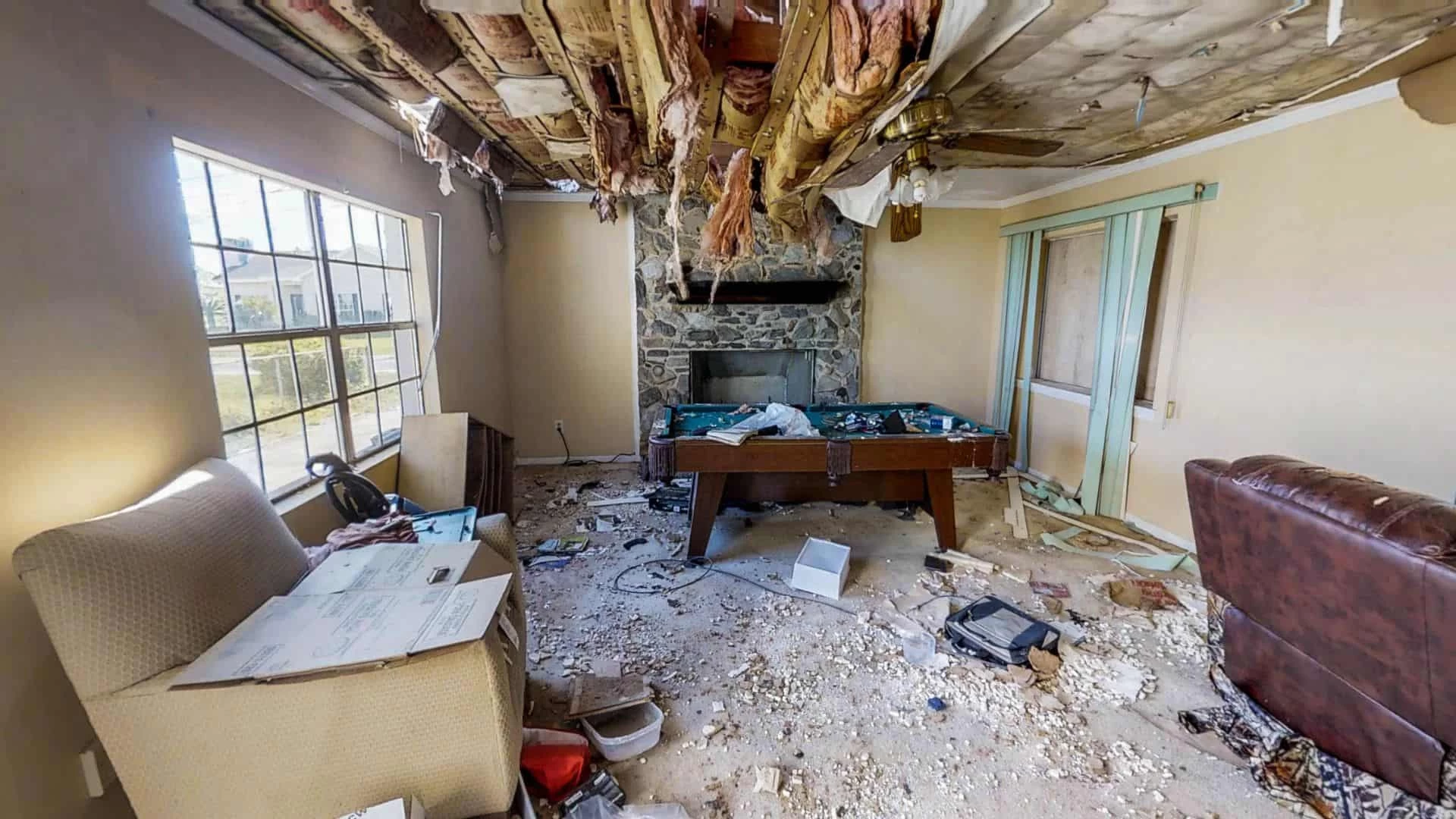
There’s a difference between a floor that looks dry and a floor that is dry. In Yaphank, where groundwater sits high and the Carmans River watershed keeps the soil saturated after heavy rain, water doesn’t just pool on the surface it wicks into subfloor, insulation, and wall framing before you’ve even had a chance to call anyone. By the time it’s visible, it’s already deeper than it looks.
When water damage is handled correctly, you’re not just cleaning up a mess. You’re stopping a chain reaction. Mold can begin developing within 24 to 48 hours of water contact and in a Yaphank home with paper-faced drywall, wood framing, and the kind of organic insulation common in 1980s-era housing stock, that window closes fast. A proper restoration stops that process before it starts, not after the smell arrives.
For homeowners near Country Pointe Meadows, the historic hamlet core, or anywhere along the William Floyd Parkway corridor, the outcome you’re actually paying for is certainty. Certainty that the moisture readings are back to baseline. Certainty that nothing is growing inside your walls. Certainty that your home’s value and your family’s air quality aren’t quietly being compromised behind drywall you can’t see through.
One Company That Handles What Comes After the Water
We’re a Long Island-based environmental and restoration company not a franchise, not a call center, not a crew dispatched from three counties away. When you call our 631 number, you’re reaching people who know where Yaphank Avenue is, who understand the Town of Brookhaven’s permit process, and who have worked in homes throughout the Longwood School District community for years.
What separates us from most water damage companies in Suffolk County is what happens when the drying equipment comes out. If opening a water-damaged wall in your Yaphank home reveals asbestos-containing materials common in homes built before 1980 or if mold has already taken hold, we handle it in-house. No second contractor. No three-week gap while you wait for someone else to get scheduled. Mold remediation, asbestos abatement, air quality testing it’s all under one roof, one contract, and one point of accountability.
That matters in a community like Yaphank, where the housing stock ranges from pre-war homes near the historic hamlet core to newer condominiums at Country Pointe Meadows, and where no two jobs look exactly the same.
From the First Call to Dry Walls Here's What Actually Happens
It starts with a call any time, day or night. We dispatch to Yaphank 24/7, and because our technicians are coming from a real Long Island operation, response times reflect that. The first thing that happens on-site isn’t guesswork. Our technicians use moisture meters and thermal imaging to map exactly where the water has traveled because in Yaphank’s older construction, water rarely stays where it entered. It migrates. Into the subfloor. Up into wall cavities. Across into adjacent rooms.
Once the full scope is mapped, extraction begins. Industrial-grade equipment removes standing water, and then the drying process is set up based on psychrometric readings not on how the floor feels underfoot. This is the part most homeowners don’t see, and it’s the part that matters most. Drying equipment is placed based on airflow science, not convenience, and moisture levels are monitored throughout until every affected material returns to its baseline reading.
If the job requires permits through the Town of Brookhaven for structural repairs, drywall replacement, or any work that touches the building’s systems we handle that process. And if the assessment uncovers mold, asbestos, or other environmental concerns common in Yaphank’s pre-1980 homes, those are addressed as part of the same continuous scope, not handed off to a separate company weeks later.
Water damage restoration isn’t a single service it’s a sequence. Our process covers the full range: emergency water extraction, structural drying, moisture mapping, mold prevention, and where needed, mold remediation and environmental abatement. For Yaphank homeowners, that full-service capability isn’t a bonus it’s a practical necessity given the age and variety of the local housing stock.
Homes near the historic hamlet core, some built before 1940, regularly present with cast-iron drain lines, original-era foundations, and pre-1978 construction materials that require careful handling when walls are opened. Newer units at Country Pointe Meadows present different challenges shared plumbing systems, rooftop HVAC units, and multi-unit configurations where one unit’s leak becomes a neighbor’s ceiling damage. We work in both environments with the documentation and insurance coordination that each requires.
Speaking of insurance we work directly with your insurance company. That means providing the moisture readings, photographs, and scope documentation that adjusters require, and handling the billing process so you’re not managing a claim while simultaneously managing a flooded home. For most water damage scenarios in Yaphank burst pipes, appliance failures, basement flooding from groundwater intrusion homeowner’s insurance covers the restoration. We help make sure you actually get what you’re owed.
How quickly can water damage cause mold in a Yaphank home?
Mold can begin developing within 24 to 48 hours of water exposure and in Yaphank’s climate, that window is not theoretical. Long Island’s humid summers and wet springs create ambient conditions where any residual moisture left in drywall, insulation, or wood framing after a flooding event becomes a mold risk almost immediately. Homes in Yaphank with paper-faced drywall and organic insulation materials common in the 1980s construction that makes up a large portion of the hamlet’s housing stock are particularly vulnerable because mold feeds on those materials readily.
This is why surface drying isn’t enough. If the moisture inside your wall cavity or subfloor isn’t brought back to baseline, mold will grow whether the floor feels dry or not. We use moisture meters to verify that every affected material has actually dried not just the surface you can touch. If mold is already present when we arrive, remediation is handled as part of the same process, not scheduled as a separate job weeks later.
Does homeowner's insurance cover water damage restoration in New York?
In most cases, yes but the specifics matter. Standard homeowner’s insurance policies in New York typically cover sudden and accidental water damage, which includes burst pipes, appliance failures, and HVAC system leaks. What most policies do not cover is flooding from an external source, like rising groundwater or surface water from the Carmans River entering your home. That type of flooding requires a separate flood insurance policy, typically through FEMA’s National Flood Insurance Program.
For the most common water damage scenarios in Yaphank a pipe that fails overnight, a washing machine supply line that gives out, a water heater that leaks into the basement your homeowner’s policy is likely to cover the restoration. We work directly with insurance adjusters, provide the documentation they require, and handle billing on your behalf. The goal is to remove the claims process from your plate entirely so you can focus on getting your home back to normal, not on navigating paperwork.
My Yaphank basement flooded after heavy rain is that covered, and what do I do first?
The first thing to do is stop the water source if it’s still active shut off the sump pump breaker if the pump has failed, or locate the main shutoff if a pipe is involved. Then call a restoration company immediately. The longer water sits in contact with your basement’s concrete, framing, and drywall, the deeper it penetrates and the harder it becomes to dry completely without removing materials.
Whether your insurance covers it depends on the cause. If your basement flooded because a sump pump failed during a storm, some policies cover that under equipment breakdown or water backup endorsements but not all. If the water came in through the foundation walls or floor drain due to rising groundwater, that typically falls under flood coverage rather than a standard homeowner’s policy. Yaphank’s position in Suffolk County’s groundwater recharge zone means this scenario is genuinely common after sustained rain events, particularly in spring when the water table is at its annual high. We can assess the source, document the damage, and help you understand what your policy is likely to cover before the claim is filed.
What happens if water damage reveals asbestos or mold inside my walls?
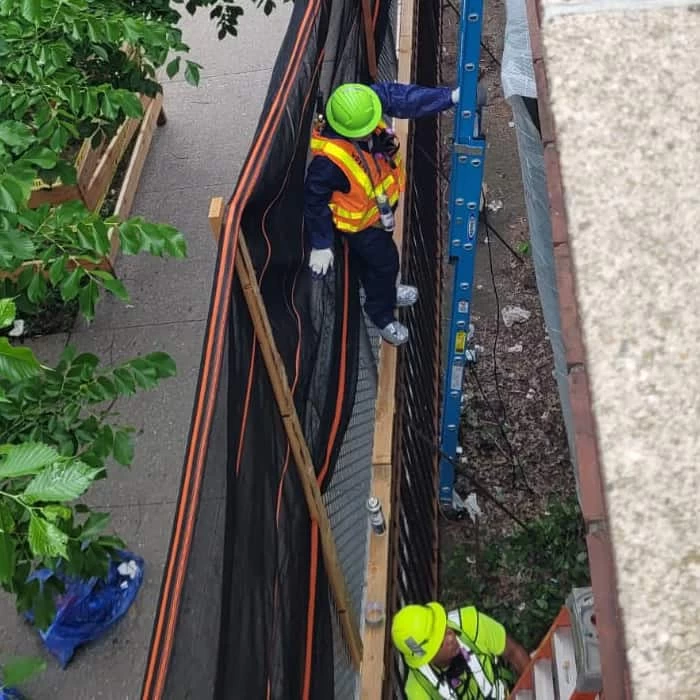
It depends on the age of your home. In Yaphank, homes built before 1980 particularly those in the historic hamlet core near the LIRR station and Yaphank Avenue commonly contain asbestos in floor tiles, pipe insulation, drywall joint compound, and roofing materials. When water damage restoration requires opening walls or removing flooring in these homes, there’s a real possibility of encountering asbestos-containing materials that cannot legally be disturbed without a licensed abatement contractor.
We hold the New York State Department of Labor licensing required to perform asbestos abatement which means if the restoration crew opens a wall and finds it, the job doesn’t stop while you search for a separate contractor. The same applies to mold. If active mold growth is discovered during the drying process, our AMRT-trained technicians handle remediation as part of the same scope. One company, one contract, no handoffs, no delays. For Yaphank homeowners with older properties, this is one of the most practical reasons to choose a multi-discipline environmental company over a standard water damage franchise.
How long does water damage restoration typically take to complete?
The drying phase alone typically takes three to five days, depending on how much material was affected and how deeply the water penetrated. Structural drying is not something that can be rushed moisture meters have to confirm that every affected material has returned to its baseline reading before equipment is removed. Pulling equipment early to close a job faster is one of the most common ways that mold problems develop after a restoration that initially seemed successful.
After drying is complete, any repairs drywall replacement, flooring installation, or structural work are scheduled based on what the assessment found. In Yaphank, jobs that require permits through the Town of Brookhaven Building Department add some lead time to the repair phase, though we manage that process directly. Total timelines from initial emergency response to completed repairs typically range from one to three weeks for standard residential jobs, though larger losses or jobs involving environmental abatement take longer. You’ll have a clear scope and timeline before work begins no surprises.
Can water damage lower my home's value in Yaphank, and how do I protect against that?
Yes and in New York State, it’s not just a financial concern, it’s a legal one. New York requires sellers to disclose known water damage and mold history on the property condition disclosure statement. A homeowner who had a flooded basement, dried it out with consumer equipment, and never addressed the hidden moisture in the walls is carrying a disclosure liability that can affect the sale price, delay closing, or trigger legal exposure after the sale.
In Yaphank, where median home values sit near $450,000, the stakes of improperly handled water damage are significant. Professional restoration completed to IICRC standards, documented with before-and-after moisture readings, and supported by a written record of what was done creates a paper trail that protects your property’s value. If a buyer’s inspector finds evidence of past water damage, you can demonstrate that it was professionally remediated and verified dry. That documentation is worth far more than the cost of doing the job right the first time. We provide that documentation as a standard part of every completed restoration.