When Hook Creek Backs Up, Your Bellerose Terrace Basement Pays the Price
Basements in Bellerose Terrace flood — and when they do, the clock starts immediately. We respond 24/7 with licensed flooded basement cleanup that goes from water out to walls back in.
I needed a professional consultation explanation of procedure for safe removal of Asbestos in my apartment complex. Without having an account yet, I was very impressed with the caring, knowledgeable and generous advice offered by Jessica, and will look forward to doing business in the future. Thank you so much! I feel much more informed about a sometimes scary endeavor. Peace. Nancy Silva Mineola, NY.
Mia Munoz
Used this company to clean up some water flood in my house. They were fast and easy to work with.very professional, Would recommend to anyone!
Nini Valle
Great company, had a flood and they responded quickly and efficiently. Billed my insurance company directly. I highly recommend this company!
joe colapietro, jr
I had pipe freeze in my basement right before a snow storm and they made to within an hour to help start the clean up process. They we by our side throughout the entire process and even helped with the insurance company. They did such a great job with the cleanup, repair, remidiation, I contracted them to perform the repairs and finishes in the basement. They came with enough manpower and material to get the job done. Leo and Jessica were nothing but a pleasure to deal with!!
Cristian Arredondo c
I had some water damage in my home and Green Island was able to take care of my issue quickly and effectively. I am very pleased with the work they did. They responded quickly and were very professional.
Michael M
Outstanding service! From the office to the field crew everyone was friendly, helpful and responsive. I highly recommend Green Island Group.
Most homeowners think the job is done once the standing water is gone. It isn’t. What’s left behind inside your walls, under your floors, and inside the concrete block foundation of your 1940s home is the part that becomes mold six weeks later. That’s the part most companies miss — and the part that costs you the most.
Bellerose Terrace sits within the Hook Creek Watershed, and the loss of the creek’s natural wetlands over the decades has left the surrounding area with less natural flood absorption than it used to have. When a nor’easter or a heavy spring storm hits western Nassau County, that water has to go somewhere. For a lot of homeowners here, it goes into the basement — through the foundation walls, up through the floor, or back through the drain. Getting your basement truly dry means addressing all of it, not just what’s visible.
And because the majority of homes in Bellerose Terrace were built in the 1940s, there’s another layer most restoration companies aren’t equipped to handle. Original flooring, pipe insulation, and wall materials from that era frequently contain asbestos. Disturbing those materials during cleanup without the right licensing isn’t just a code violation — it’s a health risk. When the job is done right, you get a basement that’s dry, structurally sound, and safe to use again — with documentation your insurance carrier will actually accept.
Every License the Job Actually Requires — We Hold Them
We are a full-service disaster restoration and environmental remediation company serving Nassau County, Suffolk County, and the New York City metro area. For Bellerose Terrace specifically — a community right on the Queens-Nassau county line — our dual-jurisdiction capability matters. We hold General Contractor licenses for both Nassau County and New York City, so the county line doesn’t create gaps in what we can legally do or permit.
Beyond the contractor license, we hold the NYS Department of Labor Mold Remediator License, the NYS DOL Asbestos License, USEPA Lead and RRP certifications, and IICRC Water Damage Restoration certification. New York State legally requires a mold remediation license for this work — most companies operating in the Bellerose Terrace area don’t have one. We do, and it’s verifiable.
What that means for you is simple: one company handles everything from water extraction through structural rebuilding, with no handoffs, no permit confusion, and no unlicensed work happening inside your home.
Basement Flooding Remediation Process, Nassau County
What Actually Happens From the First Call to the Final Walkthrough in Bellerose Terrace
When you call, we pick up — any hour, any day. The first thing we do is get someone to your Bellerose Terrace home quickly, because the 72-hour window before mold becomes a real risk starts the moment the water arrives. On arrival, we assess the source of the flooding, the water category, and the extent of the damage before anything else. In a community where basements frequently flood from hydrostatic pressure through aging concrete block walls — not just from a burst pipe — knowing the source changes the entire approach.
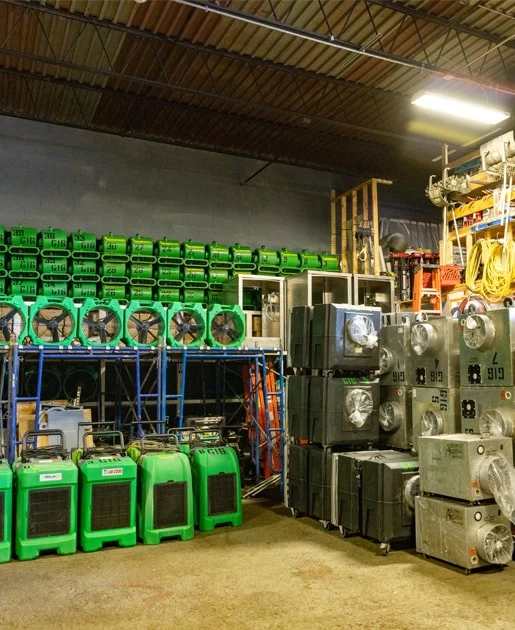
Once the assessment is done, water extraction begins using industrial-grade equipment. After extraction, we deploy professional dehumidifiers, air movers, and moisture meters that detect what’s hidden inside your walls and under your flooring — the moisture your eyes won’t catch and a box fan won’t fix. In homes built in the 1940s, we assess for asbestos and lead before disturbing any original materials, because that step isn’t optional here — it’s required by New York State law.
If the flooding involved sewage backup — which can happen in this area during heavy storms due to aging infrastructure near the Hook Creek corridor — we treat it as the Category 3 biohazard it is, with full decontamination protocols. Once the space is dry and safe, we handle all structural repairs under our Nassau County General Contractor license, pull any required permits through the Nassau County Building Department, and walk you through the finished job before we leave.
Flooded Basement Cleaning Services, Bellerose Terrace NY
Built for What Bellerose Terrace Basements Actually Deal With
Flooded basement cleanup in Bellerose Terrace isn’t a one-size job. The combination of 1940s housing stock, a high water table in western Nassau County, and the area’s position within the Hook Creek Watershed creates a specific set of conditions that a standard water extraction company isn’t built to handle. We are.
Our scope covers the full range: emergency water extraction, structural drying with industrial dehumidification, moisture mapping, mold prevention treatment, asbestos and lead assessment where required, sewage backup decontamination for Category 3 events, and complete structural restoration — drywall, flooring, framing — whatever the flood damaged. We also assist with insurance documentation from the start, which matters because a lot of Bellerose Terrace homeowners don’t realize until it’s too late that standard homeowners insurance covers sudden and accidental events like burst pipes, but typically does not cover natural flooding from storms or groundwater. Knowing that distinction before you file saves you from a claim denial.
Because we hold both the Nassau County General Contractor license and all applicable NYS and USEPA environmental licenses, we’re one of the few companies in this area that can legally take a flooded basement from raw emergency to fully restored space without subcontracting a single step. For homeowners in Bellerose Terrace and the surrounding area, we know what these basements deal with, and we’re equipped to handle it completely.
Does homeowners insurance cover basement flooding in Bellerose Terrace, NY?
This is one of the most important things to understand before you file a claim, and the answer depends entirely on what caused the flooding. Standard homeowners insurance typically covers sudden and accidental water damage — a burst pipe, a failed water heater, an appliance that malfunctions. It does not typically cover flooding caused by natural events like heavy rain, groundwater rising, or stormwater backing up from outside. That distinction matters a lot in Bellerose Terrace, where the Hook Creek Watershed and the area’s high water table mean that a significant portion of basement flooding events are driven by storm conditions, not internal plumbing failures.
If your basement flooded during a nor’easter or after a heavy rain saturated the ground, you may be looking at a gap in your standard policy. Separate flood insurance through FEMA’s National Flood Insurance Program would cover that scenario — but only if you had it in place before the event. We assist with damage documentation and insurance communication regardless of coverage type, and we’ll help you understand what your specific policy does and doesn’t cover before you submit anything to your carrier.
How quickly does mold start growing after a basement floods?
Mold can begin developing within 24 to 48 hours of water exposure, and the 72-hour mark is the critical threshold. If a basement is fully dried within 72 hours of flooding, the risk of mold growth is significantly reduced. If drying is delayed past that window — whether because cleanup was postponed, equipment was inadequate, or hidden moisture was missed — mold becomes much more likely and the remediation scope grows substantially.
This urgency is exactly why running a box fan for a few days isn’t a real solution. In a Bellerose Terrace home with concrete block foundation walls and original 1940s flooring, moisture hides in places you can’t see. Professional moisture meters and industrial drying equipment are what actually find and eliminate it. The cost difference between a cleanup that beats the 72-hour window and one that doesn’t isn’t small — mold remediation on top of water damage cleanup can add thousands of dollars to the total. Acting fast, with the right equipment, is what prevents that.
My basement flooded during a storm — could there be asbestos in the materials I need to remove?
If your home was built before 1980 — and most homes in Bellerose Terrace were built in the 1940s — there is a real possibility that some of your basement materials contain asbestos. Floor tiles from that era, pipe and duct insulation, and certain joint compounds were commonly manufactured with asbestos. When those materials get wet and need to be removed during cleanup, disturbing them without proper testing and licensed abatement procedures can release fibers into the air.
New York State requires a NYS Department of Labor Asbestos License to legally handle asbestos-containing materials during renovation or remediation work. Most water damage restoration companies in Nassau County do not hold this license, which means they either skip the assessment entirely or stop the job when they encounter suspect materials. We hold the NYS DOL Asbestos License and the USEPA Lead/RRP certification, so we can assess, test, and legally handle whatever your 1940s home contains — without stopping the job or calling in a third party to finish it.
What's the difference between clean water flooding and sewage backup in my basement?
Water damage is categorized by the type of water involved, and the category determines the entire cleanup approach. Category 1 is clean water — from a supply line, a water heater, or rainfall that hasn’t been contaminated. Category 2 is gray water — from washing machines, dishwashers, or sump pump overflow. Category 3 is black water — sewage backup, floodwater that has traveled through the ground, or any water that carries biological contaminants. Category 3 is a biohazard.
In Bellerose Terrace and the surrounding western Nassau County area, aging sewer infrastructure combined with the drainage challenges near the Hook Creek corridor means that heavy rain events can cause sewage to back up through basement floor drains. That’s a Category 3 event, and it requires full decontamination — not just drying. Any porous materials that came into contact with the water typically need to be removed and disposed of properly. Treating a sewage backup like a clean water event isn’t just ineffective — it leaves pathogens and bacteria behind in your home. We handle all three categories and respond to each one with the appropriate protocol.
Do I need a permit for basement repairs after flooding in Nassau County?
It depends on the scope of the work. Minor repairs — patching a small section of drywall, replacing a damaged floor tile — generally don’t require a permit. But if the flooding caused significant structural damage that requires replacing framing, substantial sections of drywall, or flooring across a larger area, Nassau County Building Department permits are typically required before that work can begin. Skipping the permit process can create problems when you sell the home or try to close out an insurance claim.
Because we hold a Nassau County General Contractor license, we can pull the necessary permits, complete the structural restoration, and close out the job in full compliance with Nassau County Building Department requirements. For homeowners in Bellerose Terrace — which sits right on the Queens-Nassau county line — there can sometimes be confusion about which jurisdiction governs a specific address. We hold General Contractor licenses for both Nassau County and New York City, so that ambiguity doesn’t affect your job or create delays in getting the work permitted and completed correctly.
Why does basement flooding keep happening in Bellerose Terrace even when it's not a major storm?
The short answer is hydrostatic pressure. Bellerose Terrace sits on a glacial outwash plain with a relatively shallow water table, and after sustained rain — even moderate rain that wouldn’t cause flooding elsewhere — the water table in western Nassau County rises. When it rises high enough, it pushes water directly through the porous concrete block walls and floor joints of older basement foundations. You don’t need a burst pipe or a major storm to end up with water on your basement floor. You just need enough sustained ground saturation.
This is especially common in homes built in the 1940s, which predate modern waterproofing standards and were often constructed without sump pumps. The homes throughout Bellerose Terrace and into neighboring Floral Park and Elmont share this vulnerability. If your basement floods repeatedly with no obvious internal cause, the answer is almost certainly groundwater pressure — and the fix involves more than cleanup. It involves understanding how water is entering and addressing the source, not just the symptom. That’s part of what we assess on every job, so you’re not calling us back for the same problem three months later.