When Your Bethpage Basement Floods, the Clock Starts Immediately
When Nassau County drops nine inches of rain overnight, your basement doesn’t care what time it is. We respond 24/7 with licensed crews who know exactly what’s inside a Grumman-era home — and what it takes to dry it out right. We’ve handled flooded basements across Bethpage, from the neighborhoods near Stewart Avenue to the residential areas west of Route 135, and we understand the specific challenges that come with homes built in the 1950s and 60s.
I needed a professional consultation explanation of procedure for safe removal of Asbestos in my apartment complex. Without having an account yet, I was very impressed with the caring, knowledgeable and generous advice offered by Jessica, and will look forward to doing business in the future. Thank you so much! I feel much more informed about a sometimes scary endeavor. Peace. Nancy Silva Mineola, NY.
Mia Munoz
Used this company to clean up some water flood in my house. They were fast and easy to work with.very professional, Would recommend to anyone!
Nini Valle
Great company, had a flood and they responded quickly and efficiently. Billed my insurance company directly. I highly recommend this company!
joe colapietro, jr
I had pipe freeze in my basement right before a snow storm and they made to within an hour to help start the clean up process. They we by our side throughout the entire process and even helped with the insurance company. They did such a great job with the cleanup, repair, remidiation, I contracted them to perform the repairs and finishes in the basement. They came with enough manpower and material to get the job done. Leo and Jessica were nothing but a pleasure to deal with!!
Cristian Arredondo c
I had some water damage in my home and Green Island was able to take care of my issue quickly and effectively. I am very pleased with the work they did. They responded quickly and were very professional.
Michael M
Outstanding service! From the office to the field crew everyone was friendly, helpful and responsive. I highly recommend Green Island Group.
Most Bethpage homes were built in the 1950s and 60s to house the families of Grumman workers. That’s not a knock on the housing stock — it’s just reality. Poured concrete and concrete block foundations from that era develop cracks over time. Waterproofing degrades. And when the ground gets saturated — which it does fast in flat, central Nassau County — water finds its way in through walls and floors before your sump pump even registers it.
What you want after a flooded basement isn’t just a dry floor. You want to know the walls are dry behind the drywall, that nothing is growing in the insulation, and that the structure itself wasn’t compromised. That’s the difference between a cleanup and a real remediation.
When the job is done right, you’re not left wondering if you missed something. We provide documentation — moisture readings, drying logs, a clear record of what was found and what was done. That matters for your insurance claim, and it matters if you ever sell this home in one of Nassau County’s most competitive school districts.
Licensed Basement Flooding Remediation in Bethpage
Every License This Job Requires — Under One Roof
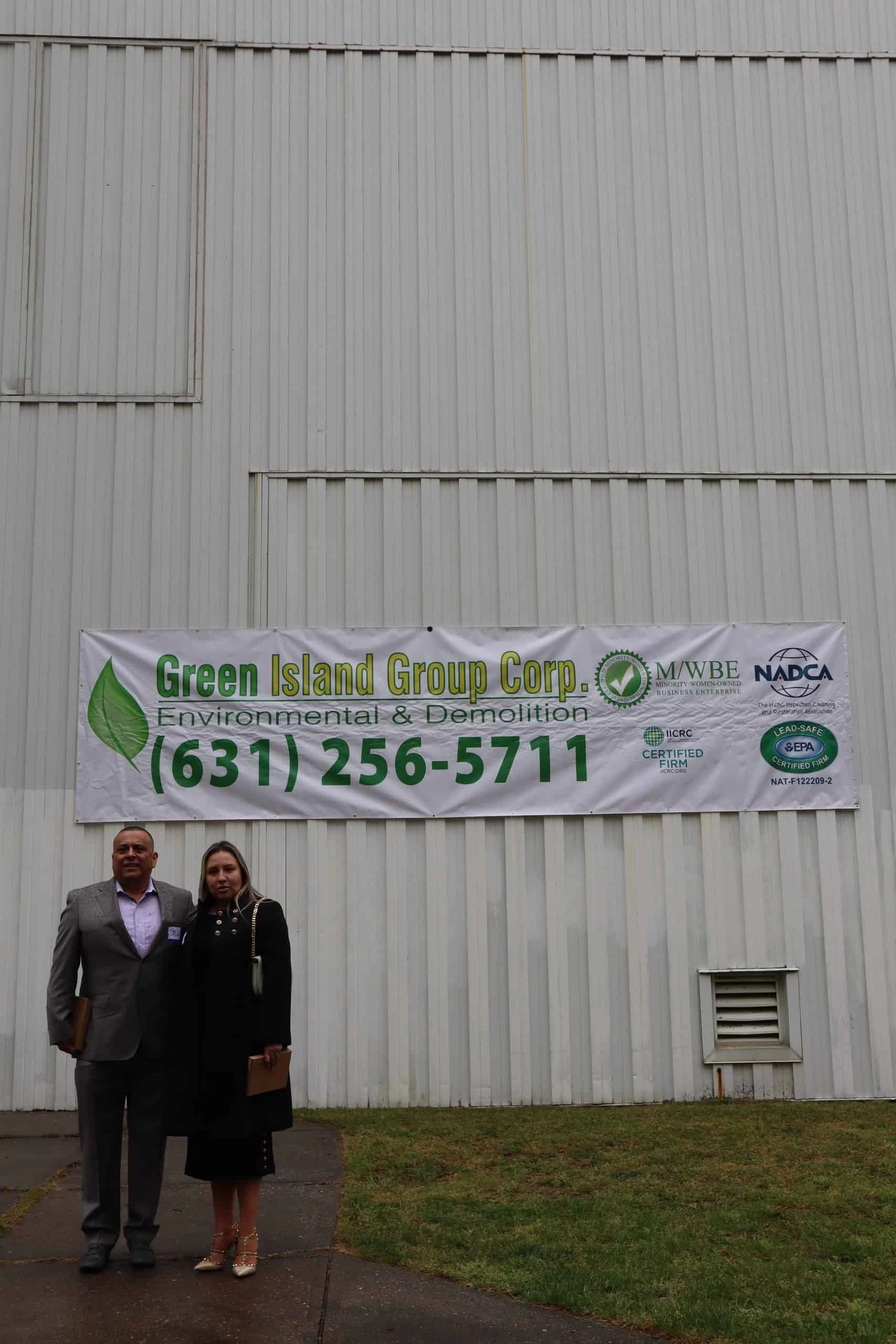
We hold a NYS DOL Mold License, NYS DOL Asbestos certification, USEPA Lead and RRP certifications, IICRC Water Damage certification, and a Nassau County General Contractor license. That’s not a list for show. In a community where most of the housing was built before 1975, a flooded basement in Bethpage can disturb asbestos floor tiles or expose lead paint in wall systems. Most restoration companies can’t touch those hazards legally — they have to stop work and call someone else. We handle the entire scope without handing you off.
Bethpage sits above Long Island’s sole-source aquifer and directly above the Northrop Grumman groundwater contamination plume — the largest in Nassau County. Residents here have always been more aware of what’s in the ground than most. When water enters your basement, you deserve a company that takes that seriously and has the credentials to back it up.
What Actually Happens From Your First Call to Final Walkthrough
When you call, you reach a real person — not a call center routing you to a franchise hub. From there, we dispatch a crew to your Bethpage address. Whether you’re off Stewart Avenue near the LIRR station, in the Bethpage West residential area, or closer to Bethpage State Park, our teams reach you via Route 135 or Hempstead Turnpike without delay.
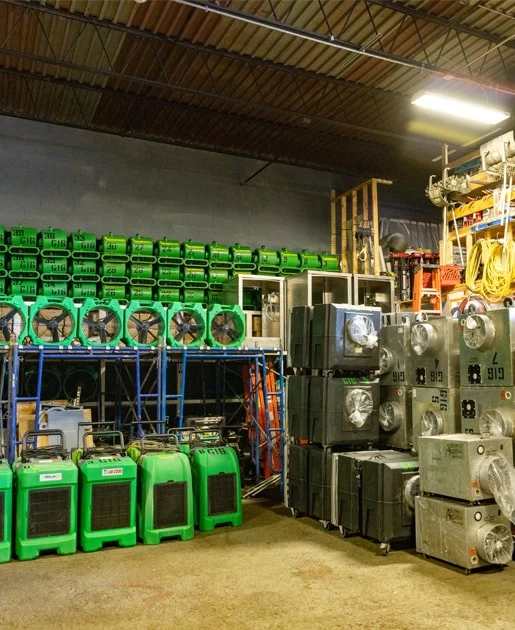
On arrival, the first step is water category assessment. Clean water from a burst pipe is handled differently than gray water from a backed-up drain or Category 3 black water from a sewage backup — which happens in Bethpage when Nassau County storm drains get overwhelmed during major rain events. Knowing what you’re dealing with before touching anything is non-negotiable. From there, standing water is extracted, affected materials are assessed, and we deploy industrial drying equipment to hit the 72-hour threshold that keeps mold from taking hold.
Once the structure is dry, we take moisture readings throughout — walls, subfloor, framing — and document everything. If mold, asbestos, or lead hazards are identified during the process, we handle them directly under the appropriate licenses. No subcontractors, no scheduling gaps. If structural repairs or rebuilding are needed after remediation, our Nassau County General Contractor license means we can pull permits and complete the work legally within the Town of Oyster Bay’s jurisdiction — start to finish, one company.
Built for Older Homes, Contaminated Water, and Nassau County Storms
Flooded basement cleanup in Bethpage isn’t a one-size situation. A finished basement in a 1962 ranch on the west side of town that took on two inches of groundwater seepage is a different job than an unfinished basement that got hit with sewage backup during the August 2024 flash flooding. We assess each situation on its own terms and scope the work accordingly — water extraction, structural drying, mold prevention, hazmat assessment, and full documentation for insurance purposes.
For Bethpage homes specifically, the hazmat layer matters more than it does in newer construction. Homes built before 1980 commonly contain asbestos in floor tiles, pipe insulation, and ceiling materials. Lead paint is standard in wall systems from that era. If your basement flooded and disturbed any of those materials, the cleanup requires licensed abatement — not just wet-vac and fans. We hold the NYS DOL Asbestos and USEPA Lead certifications to handle that work legally and safely without stopping the job to bring in a separate contractor.
Insurance documentation is part of our service. We provide the damage reports, moisture logs, and remediation records that insurance adjusters need to process a claim. Given that standard homeowners insurance covers sudden events like burst pipes but typically doesn’t cover natural groundwater flooding, having clean documentation of the cause and scope of damage is often what determines whether a claim gets approved.
Does homeowners insurance cover a flooded basement in Bethpage, NY?
It depends on what caused the flooding — and this is where a lot of Bethpage homeowners get caught off guard. Standard homeowners insurance typically covers sudden, accidental water damage: a burst pipe, a failed water heater, an appliance leak. What it generally does not cover is flooding from outside the home — storm surge, rising groundwater, or water backing up through a floor drain because the municipal system was overwhelmed.
Nassau County experienced more than nine inches of rain in a single day in September 2023, and record flash flooding in August 2024. Both events overwhelmed storm drains across the county, and a significant number of Bethpage homeowners discovered their standard policy had a gap right when they needed it most. Separate flood insurance through FEMA’s National Flood Insurance Program covers natural flooding, but it has to be purchased in advance — it can’t be added after the water is already in your basement. If you’re not sure what your current policy covers, we can help you document the damage in a way that gives your adjuster everything they need to evaluate your claim accurately.
How quickly does mold start growing after a basement floods?
Mold can begin developing within 24 to 48 hours in the right conditions — and a wet basement in a post-war Bethpage home gives it exactly what it needs: moisture, organic material like wood framing and drywall, and limited airflow. The 72-hour window is real. If the structure is dried out within that timeframe, mold growth is unlikely. Past it, you’re often looking at a more involved remediation on top of the water damage cleanup.
This is why response time matters as much as it does. During a major storm event — the kind that saturates central Nassau County’s flat terrain and overwhelms sump pumps across entire neighborhoods simultaneously — the window is the same for everyone on your block. The homeowner who gets a crew on-site first is the one who avoids a mold problem. We operate 24/7 for exactly this reason. When the September 2023 storm hit and dozens of Nassau County homeowners were calling at the same time, availability wasn’t a courtesy — it was the difference between a cleanup and a remediation.
What if the water in my basement might contain hazardous materials?
It’s a fair question to ask in Bethpage, and not an overreaction. The hamlet sits above Long Island’s largest groundwater contamination plume — the Northrop Grumman/NWIRP site, which has been the subject of a $104 million state cleanup settlement. Volatile organic compounds entered the groundwater through the former Grumman plant’s operations over decades. While the contamination plume is primarily in the deeper aquifer and the risk to individual basements from that specific source is not direct, the broader point stands: Bethpage residents have good reason to ask what’s in the water before handling it themselves.
Beyond the groundwater context, the more immediate hazard in most flooded basements is sewage contamination. When Nassau County storm drains back up during heavy rain events, sewage can enter basements through floor drains and sump pits. That’s classified as Category 3 black water — a biohazard that requires full decontamination, not just drying. We assess water category on arrival and apply the appropriate protocols. If there’s any indication of contamination, our team works in proper PPE and follows licensed disposal procedures. You don’t have to figure out what category your water is — that’s part of what the assessment is for.
My Bethpage home was built in the 1960s — does that change the cleanup process?
Yes, and it’s one of the most important things to understand before any work begins. Homes built before 1980 — which describes the vast majority of Bethpage’s housing stock — were commonly constructed with asbestos-containing materials: floor tiles, pipe insulation, ceiling tiles, and joint compound. Lead-based paint was standard in wall systems through the mid-1970s. A flooded basement that disturbs any of these materials creates a hazmat situation, not just a water damage situation.
A restoration company without NYS DOL Asbestos certification and USEPA Lead/RRP certification cannot legally perform abatement work in New York State. Many companies will start a cleanup, discover a potential asbestos tile or lead paint concern, and have to stop — leaving you to find a separate licensed contractor and wait for scheduling. We hold both licenses and can continue the work without interruption. For a Bethpage homeowner dealing with a flooded basement in a 1960s home, having one company that can handle water damage, mold, asbestos, and lead under the same roof isn’t a luxury — it’s how the job gets done legally and completely.
How much does flooded basement cleanup typically cost in Nassau County?
The range is wide because the variables are wide. For a straightforward clean-water event — a burst pipe, a failed sump pump — in a smaller unfinished basement, professional cleanup can run $1,600 to $3,500. Once you add contaminated water, a larger finished space, mold remediation, or hazmat abatement, costs can climb to $8,000–$12,000 or more. An unfinished basement that took on sewage backup and sat for more than 72 hours before cleanup began can reach $20,000 or higher when full decontamination and structural drying are factored in.
The number that reframes the cost conversation quickly: one inch of standing water in a home causes an average of $25,000 in property damage. In Bethpage, where median home values are around $623,000 and the school district ranking drives buyer competition, the cost of an incomplete cleanup — hidden moisture, mold behind walls, structural damage that shows up on an inspection report — is almost always higher than the cost of doing it right the first time. We provide a clear scope of work and cost estimate before anything starts, so you’re not getting a surprise invoice at the end.
What causes basements to flood in Bethpage even when it's not a major storm?
Bethpage’s geography plays a bigger role than most residents realize. The hamlet sits in the flat central Nassau County plain — there’s very little natural elevation to direct stormwater away from foundations. The soil is primarily glacial outwash, which drains reasonably well under normal conditions but saturates quickly during sustained rainfall. When the ground is already holding water from a previous storm or spring snowmelt, even a moderate rain event can raise the water table enough to push hydrostatic pressure against basement walls and floors.
Most Bethpage homes have aging poured concrete or concrete block foundations. Over 60-plus years, mortar joints crack, waterproofing membranes fail, and small gaps that weren’t a problem in 1962 become entry points today. Add an aging sump pump that wasn’t designed for current rainfall intensity, and you have a basement that floods not because of a catastrophic storm, but because of a Tuesday in April. This is why basement flooding in Bethpage tends to be a recurring seasonal issue — not a one-time event — and why addressing the underlying moisture conditions after a flood matters as much as extracting the standing water.