When the Rockaways Flood Again, We Handle Everything From Water Out to Walls Rebuilt
Far Rockaway basements don’t just flood during hurricanes they flood from half an inch of rain hitting at high tide. We handle flooded basement cleanup from water extraction to walls rebuilt, so you’re not chasing three contractors while the mold clock runs.
I needed a professional consultation explanation of procedure for safe removal of Asbestos in my apartment complex. Without having an account yet, I was very impressed with the caring, knowledgeable and generous advice offered by Jessica, and will look forward to doing business in the future. Thank you so much! I feel much more informed about a sometimes scary endeavor. Peace. Nancy Silva Mineola, NY.
Mia Munoz
Used this company to clean up some water flood in my house. They were fast and easy to work with.very professional, Would recommend to anyone!
Nini Valle
Great company, had a flood and they responded quickly and efficiently. Billed my insurance company directly. I highly recommend this company!
joe colapietro, jr
I had pipe freeze in my basement right before a snow storm and they made to within an hour to help start the clean up process. They we by our side throughout the entire process and even helped with the insurance company. They did such a great job with the cleanup, repair, remidiation, I contracted them to perform the repairs and finishes in the basement. They came with enough manpower and material to get the job done. Leo and Jessica were nothing but a pleasure to deal with!!
Cristian Arredondo c
I had some water damage in my home and Green Island was able to take care of my issue quickly and effectively. I am very pleased with the work they did. They responded quickly and were very professional.
Michael M
Outstanding service! From the office to the field crew everyone was friendly, helpful and responsive. I highly recommend Green Island Group.
There’s a difference between a basement that looks dry and one that actually is. In Far Rockaway’s older housing stock bungalows, colonials, and Victorians built before 1980 water doesn’t just sit on the floor. It wicks into concrete block foundations, soaks into wood framing, and hides in wall cavities where it quietly feeds mold growth for weeks before you ever smell it. Getting the water out is step one. Confirming it’s truly gone is what actually protects your home.
The other reality specific to Far Rockaway: a lot of basement floods aren’t just water. The peninsula’s aging combined sewer system regularly surcharges during high tide events, which means raw sewage backs up through floor drains. That’s a Category 3 contamination situation and it requires licensed contractors following specific disposal protocols, not a shop vac and a fan. Handling it wrong doesn’t just leave a smell. It leaves a health hazard.
When the job is done right, you get a basement that’s been extracted, dried to confirmed moisture readings, tested for air quality, and cleared for safe use. If mold was present, it’s gone not painted over. If hazardous materials were disturbed, they were handled by someone licensed to do it. That’s what a real flooded basement cleanup looks like in Far Rockaway.
Certified for What Far Rockaway Basements Actually Contain
We’ve been doing environmental remediation and restoration work in the New York metro area for over 30 combined years. That includes the Rockaway Peninsula through Sandy, through the nor’easters that followed, and through every sewage backup event that doesn’t make the news but still wipes out someone’s finished basement on a Tuesday night in Far Rockaway.
What separates us from most companies showing up in your search results isn’t a tagline. It’s the license stack. We hold the NYS DOL Mold License, NYS DOL Asbestos License, USEPA Lead certification, and USEPA RRP which means when we open up a wall in a pre-war bungalow near Bayswater or a mid-century colonial in Edgemere and find asbestos pipe insulation, we don’t stop and refer you out. We handle it, legally and completely, as part of the same job.
We also hold an active NYC General Contractor license and Nassau County General Contractor license which matters in Far Rockaway, where the Queens and Nassau County line runs right through the community. One contractor, both sides of the line, start to finish.
Basement Flooding Remediation Process, Far Rockaway
From Sewage Backup to Finished Space Here's What We Do
The first thing we do when we arrive is assess what you’re actually dealing with. Not all basement floods are equal, and in Far Rockaway, a lot of them involve sewage contamination from the combined sewer system which changes the entire scope of work. We identify the water category, locate the source, and use thermal imaging to find moisture that’s already migrated into walls and framing that you can’t see with the naked eye. That assessment drives everything that follows.
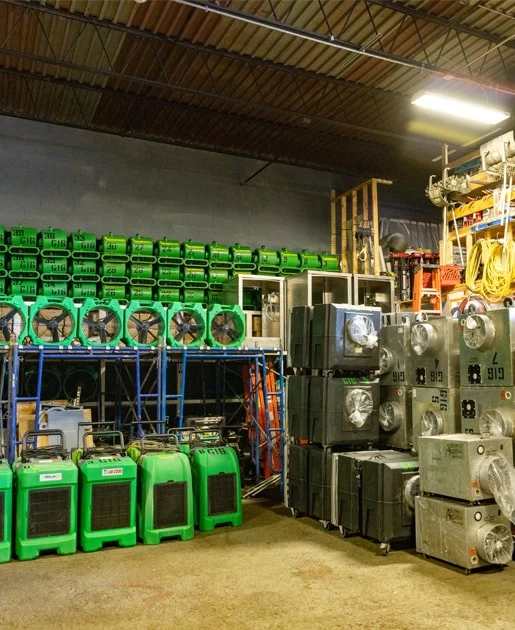
Once we know the full picture, extraction and structural drying begin. We use industrial-grade equipment to pull standing water fast, and then drying systems run until moisture readings confirm the structure is genuinely dry not just surface dry. If hazardous materials like asbestos insulation or lead paint are present in the affected area, those get addressed under our NYS DOL and USEPA certifications before any reconstruction work starts. In Far Rockaway, where roughly one in four homes was built before modern building codes, this step comes up more often than people expect.
From there, mold remediation if needed is completed under our active NYS DOL Mold License. Then reconstruction begins. Flooring, drywall, insulation, electrical, plumbing whatever the water took out, we rebuild it. We also handle direct insurance billing and communicate with your adjuster throughout, whether you’re filing under a standard homeowners policy, an NFIP flood policy, or both. You don’t have to manage that piece while you’re managing everything else.
Flooded Basement Cleaning Services, Far Rockaway NY
Every License Needed for What Far Rockaway Floods Actually Leave Behind
Far Rockaway sits in one of the highest flood-risk zones in all of Queens County, with FEMA Special Flood Hazard Area designations covering a significant portion of the peninsula. That means the homes here face a specific combination of risks that most restoration companies aren’t fully equipped to handle: tidal surge flooding, sewage contamination from combined sewer overflow, and hazardous materials in aging pre-war and mid-century construction. We’re built to handle all of it under one roof.
Our flooded basement cleanup service covers emergency water extraction, structural drying with thermal imaging verification, Category 3 sewage decontamination, mold remediation under NYS DOL licensing, asbestos and lead abatement under NYS DOL and USEPA certifications, and full basement reconstruction under our NYC and Nassau County General Contractor licenses. We also carry NYC BIC licensing for regulated waste removal required when disposing of sewage-contaminated materials from properties in the five boroughs.
For homeowners in the 11691 and 11693 ZIP codes who carry NFIP flood insurance alongside a standard homeowners policy, we document and submit to both carriers. We’ve helped Far Rockaway homeowners navigate the exact insurance complexity that left a lot of residents in limbo after Sandy separate policies, separate adjusters, separate timelines. We consolidate that process so your claim moves forward while your basement gets fixed, not after.
Does my flood insurance actually cover basement cleanup in Far Rockaway?
It depends on which policy you’re filing under and what caused the flooding and in Far Rockaway, that distinction matters more than almost anywhere else in Queens. If water entered your basement from outside the structure due to storm surge or tidal flooding, that’s typically a flood insurance claim under your NFIP policy. If it came from a burst pipe or internal failure, that usually falls under your standard homeowners policy. The complication is that many Far Rockaway basement floods involve both storm surge from the bay side and sewage backup from an overwhelmed sewer system happening simultaneously.
NFIP flood policies have specific coverage limitations for basement contents and finishing, and they require documentation from a licensed contractor to process correctly. We handle direct insurance billing and communicate with adjusters on your behalf for both policy types. We know the documentation requirements that NFIP carriers look for, and we make sure the scope of work is submitted in a way that gives your claim the best chance of being fully processed not kicked back for missing paperwork.
How quickly does mold start growing after a basement flood?
Mold can begin colonizing within 24 to 48 hours of water exposure and in Far Rockaway, the conditions accelerate that timeline. The combination of Atlantic Ocean humidity, Jamaica Bay moisture, and the limited ventilation common in older basement construction means that wet framing and drywall don’t dry out on their own. They stay damp, and mold follows fast. Waiting even a few days to start cleanup can turn a straightforward water extraction job into a full mold remediation project, which adds significant cost and time to the recovery.
The 72-hour window is real. Acting within it typically keeps the job contained to extraction and drying. Missing it often means tearing out more material, running air scrubbers longer, and dealing with a mold remediation process that requires its own NYS DOL-licensed scope of work. If your basement flooded last night or this morning, the most expensive thing you can do right now is wait. Call and get someone out to assess even if you’re not sure how bad it is yet.
My Far Rockaway basement flooded with sewage backup is that different from regular water damage?
Yes, significantly. Sewage-contaminated water is classified as Category 3, or black water the most hazardous category in water damage remediation. It contains bacteria, pathogens, and waste that can cause serious illness if not properly contained and removed. This isn’t a situation where you run a pump and a fan and call it done. It requires full decontamination of all affected surfaces, proper disposal of contaminated materials under NYC DEP protocols, and air quality testing to confirm the space is safe before anyone uses it again.
In Far Rockaway, sewage backup flooding is common not rare. The peninsula’s combined sewer system was built to handle a certain volume of flow, and during high tide events combined with even moderate rainfall, it surcharges and forces sewage back up through basement floor drains. This happens in homes that have never had a flood before. If your basement has a sewage smell after a storm, treat it as a contamination event, not just a wet floor. We’re licensed and equipped to handle Category 3 remediation from containment through clearance testing.
What happens if my Far Rockaway home has asbestos and the basement floods?
This is one of the most important questions for Far Rockaway homeowners to understand, and it’s one that most cleanup companies quietly avoid. Approximately 18% of homes in Far Rockaway were built before 1940, and the median construction year in the neighborhood is 1969. Homes built before 1980 frequently contain asbestos pipe insulation in basements the gray or white wrap around older heating pipes and ductwork. When a basement floods, that insulation gets wet, disturbed, and potentially friable, which is when it becomes a serious inhalation hazard.
Most water damage companies are not licensed to handle asbestos. They’ll either ignore it which is a legal violation and a health risk or stop the job and tell you to find someone else. We hold an active NYS DOL Asbestos License, which means we can identify, contain, and remove asbestos materials as part of the same cleanup project. We also carry USEPA Lead and USEPA RRP certifications for lead paint, which is another common issue in Far Rockaway’s pre-war housing stock. You don’t need a second contractor. We handle it all.
How long does flooded basement cleanup typically take from start to finish?
The honest answer is that it depends on what we find and in Far Rockaway, the scope of what we find varies more than in most neighborhoods. A straightforward clean water flood in a finished basement might take three to five days for extraction and structural drying to reach confirmed moisture levels. Add sewage contamination, and decontamination and clearance testing extend that by several days. Add mold remediation, and you’re typically looking at one to two weeks before reconstruction can begin. Add asbestos or lead abatement, and that phase has its own timeline with regulatory requirements.
The variables that affect timeline most in this area: how long the water sat before cleanup started, whether the flooding involved sewage contamination, the age and construction type of the home, and whether hazardous materials are present. Older homes in Bayswater, Edgemere, and the Far Rockaway Beach Bungalow Historic District tend to have more complexity than newer construction. We give you a realistic scope and timeline after the initial assessment not a number pulled from a brochure so you can plan accordingly and communicate accurately with your insurance carrier.
Why should I choose Green Island Group over other cleanup companies serving Far Rockaway?
The straightforward answer is completeness and licensing. Most restoration companies that serve Far Rockaway can extract water and run dryers. Fewer can legally remediate mold under the NYS DOL Mold License that New York State requires. Even fewer hold NYS DOL Asbestos and USEPA Lead certifications which are not optional extras in a neighborhood where a significant share of homes predate modern building codes. And almost none hold both NYC and Nassau County General Contractor licenses, which matters when your property sits near the Queens-Nassau border that runs through this community.
Beyond credentials, the post-Sandy experience in the Rockaways taught a lot of homeowners what it looks like when restoration is done in pieces one company for water, another for mold, another for reconstruction, with insurance disputes at every handoff and months of unfinished work. We handle the entire job: extraction, drying, contamination remediation, hazardous material abatement, and full reconstruction, with direct insurance billing throughout. If you’ve been through a Rockaway flood before, you already know how much that matters. If this is your first time, take it from the residents who’ve been through it more than once having one licensed contractor manage the whole recovery is not a luxury. It’s the thing that actually gets your home back.