North Wantagh Basements Don't Wait — Neither Do We
When the Wantagh Parkway corridor gets hammered by a nor’easter and your sump pump gives out at 2 a.m., you don’t need a brochure. You need someone licensed, local, and ready to move — before the 72-hour mold window closes on you.
I needed a professional consultation explanation of procedure for safe removal of Asbestos in my apartment complex. Without having an account yet, I was very impressed with the caring, knowledgeable and generous advice offered by Jessica, and will look forward to doing business in the future. Thank you so much! I feel much more informed about a sometimes scary endeavor. Peace. Nancy Silva Mineola, NY.
Mia Munoz
Used this company to clean up some water flood in my house. They were fast and easy to work with.very professional, Would recommend to anyone!
Nini Valle
Great company, had a flood and they responded quickly and efficiently. Billed my insurance company directly. I highly recommend this company!
joe colapietro, jr
I had pipe freeze in my basement right before a snow storm and they made to within an hour to help start the clean up process. They we by our side throughout the entire process and even helped with the insurance company. They did such a great job with the cleanup, repair, remidiation, I contracted them to perform the repairs and finishes in the basement. They came with enough manpower and material to get the job done. Leo and Jessica were nothing but a pleasure to deal with!!
Cristian Arredondo c
I had some water damage in my home and Green Island was able to take care of my issue quickly and effectively. I am very pleased with the work they did. They responded quickly and were very professional.
Michael M
Outstanding service! From the office to the field crew everyone was friendly, helpful and responsive. I highly recommend Green Island Group.
Here’s what most North Wantagh homeowners don’t realize until it’s too late: the water you can see isn’t the whole problem. It’s what’s sitting inside your walls, underneath your flooring, and soaking into the concrete behind your 1950s-era drywall that creates the mold problem two weeks from now. By the time you smell it, you’re already dealing with a much bigger job than you started with.
North Wantagh sits on a high water table. The drainage infrastructure running beneath these streets was built for a different era — not for the kind of rainfall that comes with a modern nor’easter or a summer storm that drops three inches in an hour. When that system gets overwhelmed, water doesn’t just pool in the yard. It pushes up through basement floors, seeps through foundation walls, and backs up through floor drains. That’s not a freak event here. That’s just how this neighborhood is built.
What you get when this is handled right — and fast — is a basement that’s structurally dry, not just surface dry. No lingering odor. No hidden moisture feeding a mold colony behind your paneling. And because most homes in North Wantagh were built before 1978, you also get the peace of mind that comes from knowing whoever touched those floors and walls was actually licensed to do it.
We hold the NYS Department of Labor Mold Remediation License, IICRC Water Damage Certification, USEPA Lead and RRP Certifications, NYS DOL Asbestos Certification, and a Nassau County General Contractor License. That’s not a list for show — it means one company can legally take your North Wantagh basement from standing water to finished walls without handing you off to a second or third contractor.
That matters specifically in North Wantagh, where the majority of homes were built between the 1940s and 1960s. Asbestos floor tiles, lead paint on basement walls, aging pipe insulation — these aren’t hypothetical concerns in a home of that vintage. They’re likely present. And disturbing them without the right certifications isn’t just risky, it’s illegal under New York State law.
We already serve North Wantagh and the surrounding communities of Wantagh, Seaford, Levittown, and Bellmore. This isn’t a company routing calls through a national dispatch center. When you call, you get a team that already knows this area — the housing stock, the drainage conditions, and the specific flooding patterns that come with living on the South Shore.
Basement Flooding Remediation Process North Wantagh
What Actually Happens From First Call to Final Walkthrough
When you call, someone answers — not a form, not a callback queue. You describe what you’re dealing with, and our team gets dispatched. Given North Wantagh’s direct access via the Wantagh State Parkway, response time is real, not a marketing estimate.
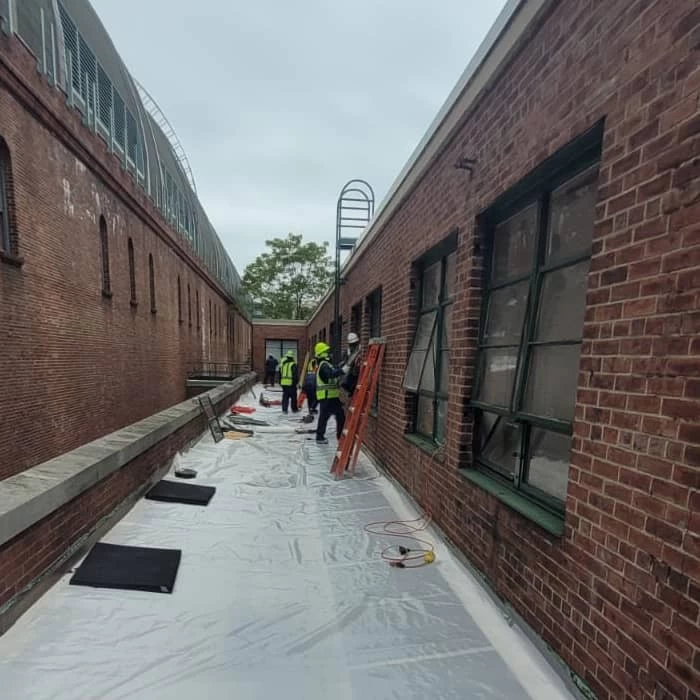
On arrival, the first step isn’t grabbing a pump. It’s assessment. Moisture meters go into walls, floors, and concrete to map where the water actually traveled — because in a home built in the postwar era, water doesn’t stay where you can see it. If there’s any indication of asbestos-containing materials or lead paint in the affected area, those are identified and handled under proper protocol before any demolition or removal begins. This is where the licensing actually matters in practice, not just on paper.
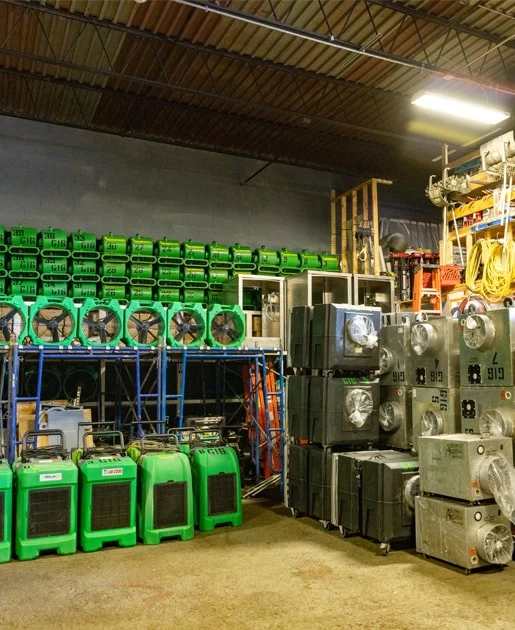
From there, industrial extraction equipment removes standing water, followed by commercial-grade dehumidifiers and air movers that bring structural moisture levels down to safe thresholds — not just surface dry. Every reading is documented. If mold is present or begins to develop, we handle remediation under the same roof, under the same NYS DOL Mold License, by the same team. Once the space is clear, structural restoration — drywall, flooring, framing — is completed under our Nassau County General Contractor license. No subcontractors. No coordination on your end. One final walkthrough confirms everything is where it needs to be before anyone leaves.
Flooded Basement Cleaning Service North Wantagh NY
Built for North Wantagh Homes — Not Generic Basements
The flooded basement cleanup service we provide in North Wantagh is built around what’s actually in these homes and what actually causes them to flood. That means our process accounts for groundwater intrusion from the South Shore’s high water table, stormwater backup through aging Town of Hempstead drainage systems, sump pump failure during power outages, and the specific hazmat considerations that come with pre-1978 construction.
Water extraction uses industrial pumps — not rental equipment. Drying is measured with calibrated moisture meters, not guesswork. If sewage backup is involved, Category 3 biohazard protocols are followed, because gray and black water aren’t the same as a burst pipe and shouldn’t be treated that way. Mold assessment, mold remediation, asbestos handling, lead-safe work practices, and full structural restoration are all available under one license stack — meaning you’re not managing multiple vendors while your North Wantagh basement sits damaged.
For homeowners dealing with insurance claims, we document damage thoroughly in the format carriers need to see. Coverage for basement flooding varies significantly depending on the cause — groundwater intrusion and storm drainage backup are typically excluded from standard homeowners policies — and understanding that distinction early affects how your claim gets filed and whether it gets paid.
How quickly does mold start growing after my North Wantagh basement floods?
Mold can begin developing within 24 to 48 hours of a flooding event, and the EPA considers growth a near-certainty if the space isn’t fully dried within 72 hours. That window sounds generous until you realize that “dried” means structurally dry — not just surface dry. In a North Wantagh home built in the 1950s or 1960s, water that gets into wall cavities, underneath original flooring, or behind basement paneling can stay trapped for days without any visible sign on the surface.
The 72-hour clock starts the moment water enters the space, not the moment you call us. That’s why response time matters as much as the quality of the work itself. If you’re seeing water in your basement right now, the best thing you can do is call immediately — not tomorrow, not after the storm fully passes. Every hour of delay narrows your window and increases the likelihood of a mold remediation job being added on top of an already expensive cleanup.
Does homeowners insurance cover basement flooding caused by heavy rain in Nassau County?
This is one of the most common — and most painful — surprises North Wantagh homeowners face after a flooding event. Standard homeowners insurance typically covers sudden, accidental water damage, like a burst pipe or a washing machine that fails. What it generally does not cover is groundwater intrusion, storm drainage backup, or natural flooding from heavy rainfall — which happen to be the most common causes of basement flooding in North Wantagh.
Flood insurance through the National Flood Insurance Program (NFIP) is a separate policy that covers rising water from external sources, but it has its own exclusions and waiting periods. Sewer or water backup coverage is sometimes available as a rider on a homeowners policy, and that’s worth reviewing with your carrier before you need it. When we respond to a flooded basement, damage is documented in a format that supports the claims process — but understanding what your policy actually covers is a conversation worth having with your insurance agent now, not after the water is already in your basement.
My North Wantagh home was built in the 1950s — is asbestos a concern during basement cleanup?
Yes, and it’s one of the most important questions you can ask before hiring anyone to work in your basement. Homes built between roughly 1940 and the late 1970s commonly contain asbestos in floor tiles, pipe insulation, ceiling tiles, and joint compound — all of which are frequently found in basements. When those materials get saturated with floodwater, they can become friable, meaning they break apart and release fibers into the air. At that point, you’re not just dealing with a water damage problem.
In New York State, disturbing asbestos-containing materials without a NYS Department of Labor Asbestos License is illegal. That applies to contractors as well as homeowners. We hold that license and identify suspect materials during the initial assessment — before any demolition or removal begins. If asbestos is present, it’s handled under proper containment and disposal protocols, documented correctly, and removed in compliance with state and federal regulations. Hiring a company that skips this step doesn’t just create a health risk — it creates legal liability for you as the property owner.
What's the difference between water extraction and actually drying out a flooded basement?
Water extraction removes the standing water you can see. Drying removes the moisture you can’t. These are two separate steps, and skipping or rushing the second one is exactly how a basement that looks fine after cleanup develops a mold problem three weeks later.
After extraction, commercial dehumidifiers and high-velocity air movers are used to pull moisture out of the air, walls, flooring, and concrete. But the only way to know when the job is actually done is with moisture meters — instruments that read moisture content inside building materials, not just on the surface. In a North Wantagh home with original 1950s or 1960s construction, concrete block walls and original flooring hold moisture differently than modern materials, which means the drying process has to be monitored carefully and adjusted based on actual readings, not a standard timeline. A basement that reads dry on the surface but still has elevated moisture inside the wall cavity is a basement that’s going to have a mold problem — and that problem will cost significantly more to fix than getting the drying done right the first time.
What causes basement flooding in North Wantagh even when there's no pipe burst or visible damage?
North Wantagh’s flooding risk is largely geological and infrastructural. The South Shore of Nassau County sits on a naturally high water table. During prolonged or intense rainfall — the kind that comes with a nor’easter or a summer storm that dumps two to three inches in a short window — the water table rises close enough to the surface that it pushes through basement floors and foundation walls via hydrostatic pressure. You didn’t have a pipe burst. Your basement still flooded.
The other common cause is stormwater drainage backup. The drainage infrastructure in North Wantagh was built out during the postwar development boom of the 1940s through 1960s. It wasn’t designed for modern storm intensities. When those systems get overwhelmed, water backs up through floor drains and window wells into basements throughout the neighborhood. Sump pump failure during a power outage — which frequently accompanies the same storms that cause flooding — removes the last line of defense. Understanding which of these mechanisms caused your flooding matters, because it affects how the cleanup is approached and what your insurance policy may or may not cover.
How do I know if a basement cleanup company in North Wantagh is actually licensed to do the work?
New York State has some of the strictest contractor licensing requirements in the country for this type of work, and they’re worth understanding before you hire anyone. Mold remediation on projects involving more than 10 square feet requires a NYS Department of Labor Mold Remediation License — a dedicated credential that is separate from a general contractor license and cannot be self-issued. Asbestos work requires a separate NYS DOL Asbestos License. Work that disturbs painted surfaces in pre-1978 homes — which is virtually every home in North Wantagh — requires USEPA Lead and RRP Certification under federal law.
You can verify a company’s NYS DOL Mold License directly through the New York State Department of Labor’s online license lookup. For asbestos, the same department maintains a searchable contractor database. USEPA RRP certification can be verified through the EPA’s contractor search tool. We hold all of these credentials, along with IICRC Water Damage Certification and a Nassau County General Contractor License. If a company you’re considering can’t point you to their license numbers or show up in those databases, that’s a significant red flag — and in New York, it means they’re operating outside the law on any job involving mold or hazardous materials.