When NYC's Sewers Back Up, Your Basement Pays the Price
In a city where one heavy storm can push raw sewage through your floor drain, flooded basement cleanup isn’t just about getting the water out it’s about knowing exactly what that water brought with it. We respond 24/7 across all five boroughs, handle everything from extraction to mold remediation to asbestos compliance, and bill your insurance directly.
I needed a professional consultation explanation of procedure for safe removal of Asbestos in my apartment complex. Without having an account yet, I was very impressed with the caring, knowledgeable and generous advice offered by Jessica, and will look forward to doing business in the future. Thank you so much! I feel much more informed about a sometimes scary endeavor. Peace. Nancy Silva Mineola, NY.
Mia Munoz
Used this company to clean up some water flood in my house. They were fast and easy to work with.very professional, Would recommend to anyone!
Nini Valle
Great company, had a flood and they responded quickly and efficiently. Billed my insurance company directly. I highly recommend this company!
joe colapietro, jr
I had pipe freeze in my basement right before a snow storm and they made to within an hour to help start the clean up process. They we by our side throughout the entire process and even helped with the insurance company. They did such a great job with the cleanup, repair, remidiation, I contracted them to perform the repairs and finishes in the basement. They came with enough manpower and material to get the job done. Leo and Jessica were nothing but a pleasure to deal with!!
Cristian Arredondo c
I had some water damage in my home and Green Island was able to take care of my issue quickly and effectively. I am very pleased with the work they did. They responded quickly and were very professional.
Michael M
Outstanding service! From the office to the field crew everyone was friendly, helpful and responsive. I highly recommend Green Island Group.
What Gets Fixed When You Call the Right Company First
Most property owners in New York City don’t realize how fast a flooded basement becomes a mold problem. The EPA puts it at 24 to 48 hours. In NYC’s summer humidity the kind that sits heavy in Brooklyn basements and Bronx boiler rooms from June through September that window can feel even shorter. By the time you’ve called your insurance company and waited for a callback, the conditions for mold growth are already in place.
Then there’s what the water actually is. NYC runs a combined sewer system, meaning stormwater and raw sewage share the same pipes. When a storm overwhelms that system like the remnants of Hurricane Ida did in September 2021, or the storms that flooded neighborhoods across Queens and Brooklyn in the summer of 2024 what backs up through your floor drain isn’t just water. It’s Category 3 contamination. Sewage. Pathogens. That’s a completely different cleanup than a burst pipe, and it requires a contractor who knows the difference and is licensed to handle it.
What you get on the other side of a proper remediation is simple: a dry, tested, documented space that your insurance adjuster can sign off on, your tenants can safely return to, and your building inspector won’t flag. No hidden moisture left in wall cavities. No mold behind the drywall six weeks later. No second call to a second company to finish what the first one couldn’t legally do. One job, done completely.
Licensed Basement Flooding Remediation Company NYC
The License Stack That Most NYC Contractors Can't Match
We hold active New York State Department of Labor licenses for asbestos abatement, mold remediation, lead abatement, and water damage restoration simultaneously. In New York City, where the DEP’s Asbestos Control Program requires an ACP-5 assessment before any renovation work begins in pre-1987 buildings, that matters more than it does almost anywhere else in the country. The vast majority of NYC’s housing stock brownstones in Bed-Stuy, pre-war apartment buildings in Harlem, row houses in Ozone Park falls under that threshold.
What that means for you is that we can legally complete the full scope of what a serious flooded basement job in this city actually requires. No referrals to a separate asbestos firm. No stopping mid-job because the contractor you hired can’t touch the pipe insulation in your boiler room. We’ve been doing this work across Manhattan, Brooklyn, Queens, the Bronx, and Staten Island long enough to know every building type, every borough-specific access challenge, and every regulatory requirement that comes with it.
No Guesswork Here's Exactly How the Job Gets Done in NYC
The first thing that happens when we arrive is an assessment not just of how much water is present, but of what category that water falls into and what hazardous materials may have been disturbed. In a city where most residential buildings predate 1987, that second question is not optional. If your basement has pipe insulation, floor tiles, or ceiling materials that could contain asbestos, our team identifies that before demolition begins. That’s not a delay that’s the ACP-5 compliance process that NYC DEP requires, and it’s what protects you from a regulatory violation on top of a water problem.
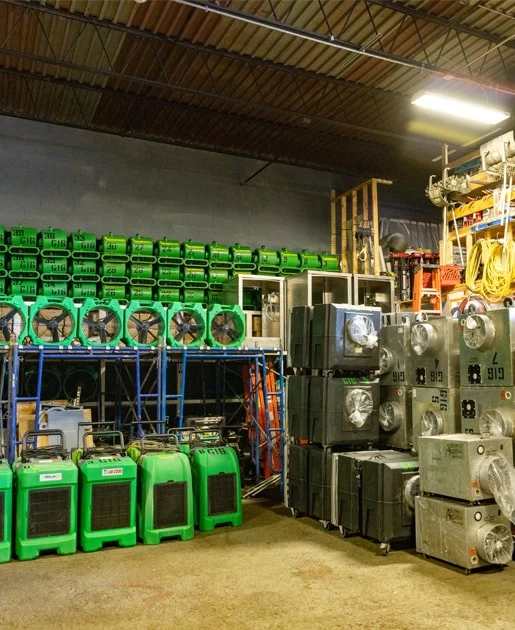
Once the assessment is complete, water extraction and structural drying begin. Industrial extractors remove standing water, and calibrated drying equipment air movers, dehumidifiers is set based on psychrometric readings, not guesswork. Thermal imaging identifies moisture that’s migrated into wall cavities and floor assemblies, which is common in NYC’s dense, multi-story buildings where water doesn’t stay where it lands. In a brownstone, water in the basement framing can affect the floors above if it isn’t caught and addressed.
From there, mold testing determines whether remediation is needed, and if it is, that work is performed under our active NYS DOL mold remediation license. The job closes with post-remediation air quality testing and written clearance documentation the kind your insurance adjuster, your building management company, or an HPD inspector would actually accept. That documentation isn’t a formality. In New York City, it’s the difference between a closed claim and a reopened one.
Every Borough, Every Building Type, Every Hazard Covered
Flooded basement cleanup in New York City isn’t a single service it’s a sequence of interconnected ones, and the building you’re in determines exactly what that sequence looks like. A pre-war co-op in the Upper West Side presents different challenges than a two-family row house in Howard Beach or a mixed-use building in Bushwick. Our scope covers all of it: water extraction and emergency drying, sewage backup cleanup and Category 3 decontamination, mold testing and licensed mold remediation, asbestos assessment and abatement for pre-1987 buildings, lead paint compliance under NYC Local Law 1, demolition of damaged materials, and direct insurance billing throughout.
The sewage backup piece deserves specific attention for NYC property owners. Because the city’s combined sewer system regularly overwhelms during heavy rain events, basement flooding in neighborhoods like Canarsie, Red Hook, Springfield Gardens, and Co-op City often involves contaminated water not just clean stormwater. That requires full Category 3 protocols: protective equipment, antimicrobial treatment, proper disposal of porous materials that cannot be safely dried and reused. A company that doesn’t distinguish between water categories is leaving you with a health risk, not a solution.
Every job ends with written clearance documentation moisture readings, air quality results, and a record of the work completed. For landlords managing multi-unit buildings, that documentation protects you in tenant disputes and HPD inspections. For homeowners, it’s what your insurance carrier needs to close the claim cleanly. We handle the insurance billing directly, including navigating the sewer backup coverage gap that catches a lot of NYC property owners off guard when they discover their standard policy doesn’t cover it without a specific rider.
Does homeowner's insurance cover flooded basement cleanup in NYC?
Standard homeowner’s insurance policies in New York typically do not cover basement flooding caused by sewer backup unless you’ve added a specific endorsement to your policy. This is one of the most common surprises NYC property owners face after a flooding event especially after storms that overwhelm the city’s combined sewer system and push contaminated water up through floor drains. If you have a sewer backup rider on your policy, that coverage should apply to the cleanup costs, and we bill insurance directly so you’re not managing that process alone.
If you don’t have that rider, you’re not necessarily out of options. Depending on the cause and timing of the flooding, FEMA assistance programs and NYC’s CDBG-DR funding pathways may be available particularly after federally declared disaster events like Hurricane Ida. The first step is getting the damage properly documented, which is something we handle from the moment we arrive. Accurate, detailed documentation is what makes a claim viable, whether you’re filing with an insurance carrier or applying for assistance through a city or federal program.
How fast does mold start growing after a basement floods in New York?
Mold can begin growing on wet building materials within 24 to 48 hours of a flooding event, according to EPA guidance. In New York City, that timeline is especially relevant during the summer months June through September when humidity levels in basement spaces can accelerate the conditions mold needs to take hold. A basement that floods on a Tuesday night and isn’t professionally dried by Thursday is already in mold territory, and at that point, what could have been a drying job becomes a remediation job.
The practical implication is that speed matters more than almost anything else when your basement floods. Getting extraction and drying equipment in place within the first 24 hours is what separates a contained water damage situation from one that spreads into wall cavities, floor assemblies, and structural framing. We operate 24/7 specifically because flooding doesn’t happen on a schedule, and in a city where Notify NYC was sending emergency push notifications during the 2023 summer storms urging basement residents to seek higher ground, waiting until morning isn’t a realistic option.
Do I need an asbestos assessment before basement cleanup in a NYC building?
If your building was constructed before April 1, 1987 which describes the majority of residential buildings across all five boroughs the NYC Department of Environmental Protection requires an asbestos assessment before any renovation or demolition work begins. This is the ACP-5 process, and it applies directly to flooded basement cleanup when that work involves removing flooring, opening walls, or disturbing ceiling materials. Skipping this step isn’t just a regulatory violation; it’s a health risk for everyone in the building and a legal liability for the property owner.
We hold active NYS DOL asbestos abatement licenses and work within the NYC DEP Asbestos Control Program framework as a standard part of our process in pre-1987 buildings. If an assessment confirms no asbestos-containing materials will be disturbed, the job proceeds. If abatement is required, we handle that too under the same contract, with the same crew, without referring you to a separate company. In a city where pre-war brownstones, mid-century apartment buildings, and post-war multi-family housing all fall under this threshold, this isn’t an edge case. It’s the norm.
Who is responsible for sewer backup damage in an NYC basement the city or the property owner?
New York City DEP policy draws a clear line: the city is responsible for the sewer main running under the street, but the lateral connection from your property to that main is the property owner’s responsibility. When a storm overwhelms the combined sewer system and sewage backs up through that lateral into your basement, the cleanup cost falls on you not the city even if the root cause was the city’s infrastructure being overwhelmed.
This is a frustrating reality for a lot of NYC property owners, particularly those in neighborhoods like Jamaica, Mott Haven, or Brownsville where aging sewer infrastructure and high impervious surface cover make combined sewer overflow a recurring issue during heavy rain. Understanding this responsibility is important because it affects how you approach both the cleanup and the insurance claim. If your policy includes a sewer backup endorsement, that coverage is triggered by this exact scenario. If it doesn’t, it’s worth adding before the next storm season and worth talking to us about what your documentation needs to look like regardless of your coverage situation.
Can I stay in my apartment or home during flooded basement cleanup in NYC?
It depends on the scope of the damage and what the water brought with it. If the flooding involved sewage backup which is common in NYC given the combined sewer system the contamination risk is significant enough that the affected space should be restricted until decontamination is complete. For basement apartments or cellar-level units, temporary displacement is often necessary. For upper-floor units in a multi-story building where the basement flooded but living spaces weren’t directly affected, staying in place is usually possible as long as the HVAC system isn’t distributing air from the affected area throughout the building.
We assess occupancy safety as part of the initial evaluation. In buildings where multiple units share the same air handling system common in NYC’s older apartment buildings and pre-war co-ops that assessment includes whether the remediation work poses any risk to residents above the affected space. We’ll give you a straight answer about what’s safe and what isn’t, and if temporary displacement is necessary, that information gets documented in a way that supports any tenant relocation claims through your insurance carrier.
How long does flooded basement cleanup and drying typically take in New York City?
A straightforward water damage job clean water source, no hazardous materials, no mold typically takes three to five days from extraction through final drying verification. That timeline extends when the job involves sewage contamination, asbestos assessment and abatement, mold remediation, or significant structural material removal. In NYC’s older building stock, where pre-war construction and decades of layered renovation materials are the norm, it’s not unusual for a thorough job to run seven to ten days or longer depending on what’s uncovered once the water is out and the walls are opened.
The honest answer is that the timeline is determined by the actual conditions in your specific building not a standard estimate applied to every job. We use moisture readings and drying logs to track progress against established drying goals, so the job doesn’t end because a certain number of days have passed. It ends when the numbers confirm the space is dry, the air quality is clear, and the documentation is complete. In a city where buildings are inspected, tenants have legal rights, and HPD violations are real consequences, that verification step isn’t optional it’s what makes the work defensible.