When Auburndale's Combined Sewers Back Up, Your Basement Pays the Price
We respond 24/7 to flooded basement cleanup in Auburndale extracting water, stopping mold, and restoring your home from start to finish under one roof.
I needed a professional consultation explanation of procedure for safe removal of Asbestos in my apartment complex. Without having an account yet, I was very impressed with the caring, knowledgeable and generous advice offered by Jessica, and will look forward to doing business in the future. Thank you so much! I feel much more informed about a sometimes scary endeavor. Peace. Nancy Silva Mineola, NY.
Mia Munoz
Used this company to clean up some water flood in my house. They were fast and easy to work with.very professional, Would recommend to anyone!
Nini Valle
Great company, had a flood and they responded quickly and efficiently. Billed my insurance company directly. I highly recommend this company!
joe colapietro, jr
I had pipe freeze in my basement right before a snow storm and they made to within an hour to help start the clean up process. They we by our side throughout the entire process and even helped with the insurance company. They did such a great job with the cleanup, repair, remidiation, I contracted them to perform the repairs and finishes in the basement. They came with enough manpower and material to get the job done. Leo and Jessica were nothing but a pleasure to deal with!!
Cristian Arredondo c
I had some water damage in my home and Green Island was able to take care of my issue quickly and effectively. I am very pleased with the work they did. They responded quickly and were very professional.
Michael M
Outstanding service! From the office to the field crew everyone was friendly, helpful and responsive. I highly recommend Green Island Group.
A Dry Basement, a Clean Bill of Health, and No Loose Ends
When the water is gone, what you’re left with matters just as much as how fast someone showed up. A properly remediated basement means no hidden moisture trapped inside your walls, no mold colony forming behind the drywall, and no contractor handoff that leaves you managing three separate companies while your finished basement sits gutted.
Auburndale’s housing stock tells a specific story. Homes here were built largely between the 1920s and 1960s Tudor and Dutch Colonial styles with original framing, plaster walls, and basement construction that was never designed to handle what northeastern Queens storms now deliver. When the Clearview Expressway at Northern Boulevard floods to the point of submerging vehicles, as it did in July 2025, the water table around residential foundations in this neighborhood rises fast. Older homes absorb that moisture quickly, and the clock on mold growth starts the moment the water does.
What you get from a proper cleanup is more than a dry floor. It’s documented moisture readings, thermal imaging that catches what your eyes miss inside wall cavities, and a basement that’s actually safe not just surface-level dry. For Auburndale homeowners with significant equity in their properties, that distinction is the difference between a $4,000 cleanup and a $40,000 reconstruction down the road.
Licensed for What Other Companies Can't Legally Touch
We’ve been handling environmental remediation and restoration across the New York metro area for over 30 years. That experience matters here in Auburndale, where nearly one in four homes was built before 1940 and the basements we’re called into regularly contain asbestos pipe insulation, asbestos floor tiles, and lead-based paint all of which can be disturbed and spread the moment floodwater moves through a space.
Most water damage companies operating in Queens are not licensed to handle those materials. We are. We hold NYS DOL Mold, NYS DOL Asbestos, USEPA Lead, USEPA RRP, and IICRC Water Damage certifications along with an NYC General Contractor license that lets us take your basement from flooded to fully restored without handing you off to someone else mid-project.
We also hold MBE, WBE, and MWBE certifications, which means we’re qualified to work on residential, commercial, and public sector properties throughout Queens Community Board 11. When you call us, you’re not getting a franchise template. You’re getting a team that knows Auburndale, knows these buildings, and knows exactly what to look for.
What Actually Happens From the First Call to a Finished Basement
When you call, we dispatch immediately 24 hours a day, seven days a week. The first thing we do on arrival is assess the full scope of the damage, not just what’s visible. We use moisture meters, thermal imaging cameras, and a check for hazardous materials before any work begins. In Auburndale’s older homes, that last step isn’t optional it’s legally required, and it protects you, your family, and anyone working in the space.
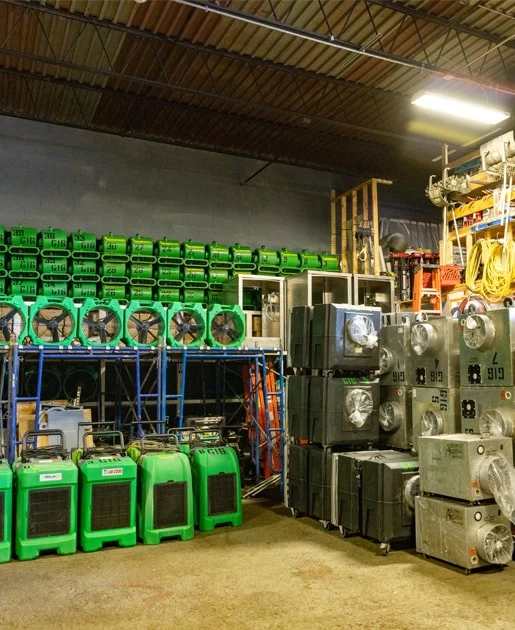
Once the assessment is complete, we move into extraction. Industrial-grade pumps and water extraction equipment remove standing water as quickly as possible, because every hour that passes accelerates mold growth and deepens structural absorption. After extraction, we set up commercial drying equipment dehumidifiers and air movers positioned based on the specific layout and construction of your basement, not a generic setup. We monitor moisture levels throughout the drying process and adjust as needed until readings confirm the space is genuinely dry.
From there, we handle any mold remediation, structural repairs, and reconstruction under the same contract. If your basement requires NYC DOB permits for structural work, we pull them. If your insurance company needs documentation, we provide it and we communicate directly with your adjuster so you’re not stuck in the middle. The goal is a finished basement that’s clean, safe, and properly documented, not a job that stops at mitigation and leaves you to figure out the rest.
One Contract Covers Everything From Flood to Finished Floor
Flooded basement cleanup in Auburndale isn’t a single task it’s a sequence of decisions that either protect your home or leave it vulnerable. We handle the entire sequence. Water extraction and emergency drying. Mold testing and remediation under our NYS DOL Mold License. Hazardous material identification and removal under our NYS DOL Asbestos and USEPA Lead certifications, which matter enormously in a neighborhood where the median construction year is 1952. Structural drying, content evaluation, and full basement reconstruction under our NYC General Contractor license.
Sewage backup events which happen in Auburndale when the combined sewer system overflows during heavy rain require licensed biohazard cleanup, not just a wet-vac and bleach. We’re equipped and certified for that category of cleanup, which most residential water damage companies in Queens are not.
We also bill your insurance company directly. We document the damage, prepare the claim file, and advocate with your adjuster for full coverage of what’s owed. Whether your flooding came from a burst pipe, a failed sump pump, or a storm event that overwhelmed the drainage system along Francis Lewis Boulevard, we know how to document it correctly and get the claim moving. You focus on your family. We handle the paperwork, the process, and the restoration.
Does homeowners insurance cover a flooded basement in Auburndale, NY?
It depends on the cause of the flooding, and this is where a lot of Auburndale homeowners get caught off guard. Standard homeowners insurance typically covers sudden internal water damage a burst pipe, a failed appliance, or an overflowing water heater. What it generally does not cover is flooding caused by external storm events, rising groundwater, or sewer backup unless you’ve added a specific endorsement or carry a separate flood insurance policy through the National Flood Insurance Program.
Given that Auburndale sits in northeastern Queens with documented flooding along the Clearview Expressway corridor and a combined sewer system that has historically backed up during heavy rain, knowing what your policy actually covers before an event happens is worth a conversation with your insurance agent. When you work with us, we review the cause of loss with you, document everything correctly for the claim, and communicate directly with your adjuster which often results in more coverage than homeowners who file on their own. The documentation we provide is built around what insurance companies need to approve a claim, not just what looks thorough on the surface.
How quickly does mold start growing after a basement flood?
Mold can begin growing within 24 to 48 hours of a flooding event under the right conditions and basements in Auburndale’s older homes create exactly those conditions. Original wood framing, plaster walls, and pre-war building materials absorb moisture faster than modern construction, which means the mold timeline in a 1940s Tudor or Dutch Colonial is compressed compared to a newer build.
The 72-hour window is real. After that point, what might have been a $3,000 to $5,000 extraction and drying job can escalate significantly once mold colonies are established inside wall cavities. That’s why our response time matters we dispatch immediately, not the next business day. When you call us, we’re moving. The faster the water comes out and the drying equipment goes in, the more of your basement and your budget stays intact.
My Auburndale home was built in the 1940s is there asbestos in my flooded basement?
It’s a legitimate question, and in a neighborhood where nearly 23% of homes were built before 1940 and the median construction year is 1952, it’s one worth taking seriously. Asbestos was commonly used in pipe insulation, floor tiles, ceiling tiles, and joint compound in homes built through the mid-1970s. When a basement floods, the water movement and cleanup process can disturb those materials and release fibers into the air which is a health hazard and a legal issue if not handled correctly.
New York State requires specific licensing to assess and remove asbestos. We hold NYS DOL Asbestos certification, which means we can legally test for and remove asbestos materials encountered during a flooded basement cleanup something the majority of water damage companies in Queens cannot do. If you’re in an older Auburndale home and your basement has flooded, don’t let an unlicensed contractor start tearing out materials before anyone checks. We assess first, document what’s there, and handle it properly from the start.
What's the difference between water mitigation and full basement restoration?
Water mitigation is the emergency phase extracting the water, running drying equipment, and stopping the immediate damage from getting worse. Most water damage companies in the area stop there. They hand you a dry-out report and a referral to a general contractor, and you’re left coordinating a second project on your own while your basement sits partially demolished.
Full basement restoration picks up where mitigation ends. It includes mold remediation, structural repairs, drywall replacement, flooring, and any reconstruction needed to return your basement to its pre-loss condition. We hold an NYC General Contractor license, which means we can legally perform and permit the full scope of work in Auburndale. For homeowners who’ve invested in finished basements which in this neighborhood can represent $30,000 to $80,000 in improvements on a home worth $650,000 or more having one company manage the entire process isn’t just convenient. It’s the only way to make sure the restoration is done to a consistent standard from start to finish.
How do I know if my basement is actually dry after cleanup, or just looks dry?
This is one of the most important questions you can ask, and the honest answer is that you can’t tell by looking. Moisture hides inside wall cavities, under subfloors, and within the framing of older homes in ways that surface inspection simply won’t catch. A basement that looks and feels dry to the touch can still have active moisture levels inside the walls that will produce mold within days.
We use moisture meters and thermal imaging cameras as standard practice on every job not as an upsell. Thermal imaging detects temperature differentials that indicate moisture trapped behind surfaces, giving us a map of where the drying equipment needs to focus and when the space has actually reached safe moisture levels. We don’t call a job complete based on how it looks. We call it complete when the readings confirm it. That documentation also becomes part of your insurance claim file, which protects you if any moisture-related issues are discovered later.
What should I do in the first hour after my basement floods in Auburndale?
The first priority is safety. If there’s any chance the water has reached electrical outlets, your panel, or any wiring, don’t go into the basement until the power is off. Contact your utility or a licensed electrician if you’re unsure. Once it’s safe to enter, document everything with photos and video before moving or removing anything that documentation is the foundation of your insurance claim, and gaps in it can cost you coverage.
Call a licensed remediation company immediately. In Auburndale, where storms can back up the combined sewer system and push sewage-contaminated water through basement floor drains, you may be dealing with black water a biohazard category that requires licensed cleanup, not DIY removal. Don’t assume the water is clean just because it came up through the drain. The faster a professional assesses the situation, the better your outcome on both the health and financial side. We’re available 24/7, and we can typically be on-site within the hour. The sooner we’re there, the more we can protect.