When the Sewer Backs Up, Fresh Meadows Calls First
We respond to flooded basement emergencies in Fresh Meadows 24/7 fully licensed for water extraction, mold remediation, and complete restoration from start to finish.
I needed a professional consultation explanation of procedure for safe removal of Asbestos in my apartment complex. Without having an account yet, I was very impressed with the caring, knowledgeable and generous advice offered by Jessica, and will look forward to doing business in the future. Thank you so much! I feel much more informed about a sometimes scary endeavor. Peace. Nancy Silva Mineola, NY.
Mia Munoz
Used this company to clean up some water flood in my house. They were fast and easy to work with.very professional, Would recommend to anyone!
Nini Valle
Great company, had a flood and they responded quickly and efficiently. Billed my insurance company directly. I highly recommend this company!
joe colapietro, jr
I had pipe freeze in my basement right before a snow storm and they made to within an hour to help start the clean up process. They we by our side throughout the entire process and even helped with the insurance company. They did such a great job with the cleanup, repair, remidiation, I contracted them to perform the repairs and finishes in the basement. They came with enough manpower and material to get the job done. Leo and Jessica were nothing but a pleasure to deal with!!
Cristian Arredondo c
I had some water damage in my home and Green Island was able to take care of my issue quickly and effectively. I am very pleased with the work they did. They responded quickly and were very professional.
Michael M
Outstanding service! From the office to the field crew everyone was friendly, helpful and responsive. I highly recommend Green Island Group.
When the water is gone, the real work starts. Moisture hides inside wall cavities, under flooring, and behind the framing of your basement places you can’t see and a fan won’t reach. If it stays there, mold follows within 72 hours. That’s just how it works, and it’s exactly why how a cleanup gets done matters as much as how fast someone shows up.
Fresh Meadows has a specific flooding problem that most water damage companies don’t fully account for. When the sewer system backs up which happens here regularly because the city’s infrastructure can only handle about three-quarters of an inch of rain per hour, and summer storms routinely drop twice that what comes into your basement isn’t just water. It’s sewage. That’s a Category 3 contamination event, and it requires a different level of response than a burst pipe or an appliance leak.
What you should walk away with after a proper basement flooding remediation isn’t just dry walls it’s documented moisture readings, cleared contamination, treated surfaces, and a basement that’s genuinely safe for your family again. If your home was built in the 1940s, 50s, or 60s which describes most of Fresh Meadows you also need someone who can identify and properly handle asbestos or lead that a flood event may have disturbed. That’s a legal requirement in New York, not an upsell.
We are a full-service environmental remediation and restoration contractor serving Queens, Long Island, and New York City. What separates us from most companies that show up in a Fresh Meadows search isn’t marketing it’s the depth of what we’re actually licensed to do. NYS DOL Mold License. NYS DOL Asbestos. USEPA Lead. USEPA RRP. IICRC Water Damage. NYC General Contractor. That’s the stack required to legally handle what’s inside a 1940s home in Fresh Meadows when a flood hits.
Most water damage companies will extract water and run dehumidifiers. We can take a job from emergency extraction all the way through mold remediation, hazardous material abatement, and permitted reconstruction without you coordinating three separate contractors. For homeowners near the Fresh Meadows Houses complex, along Francis Lewis Boulevard, or anywhere in Community District 8 dealing with a sewer backup, that full-scope capability is the difference between a resolved problem and a lingering one.
From Standing Water to Finished Basement Here's What We Do
The first call triggers a 24/7 emergency dispatch. Given that we operate with direct access into Fresh Meadows, response times are fast and in a flooding event where basements have been documented filling with a foot of water in under ten minutes, fast matters. Our crew arrives equipped for whatever category of water they’re walking into, because in Fresh Meadows, it’s often not clean water.
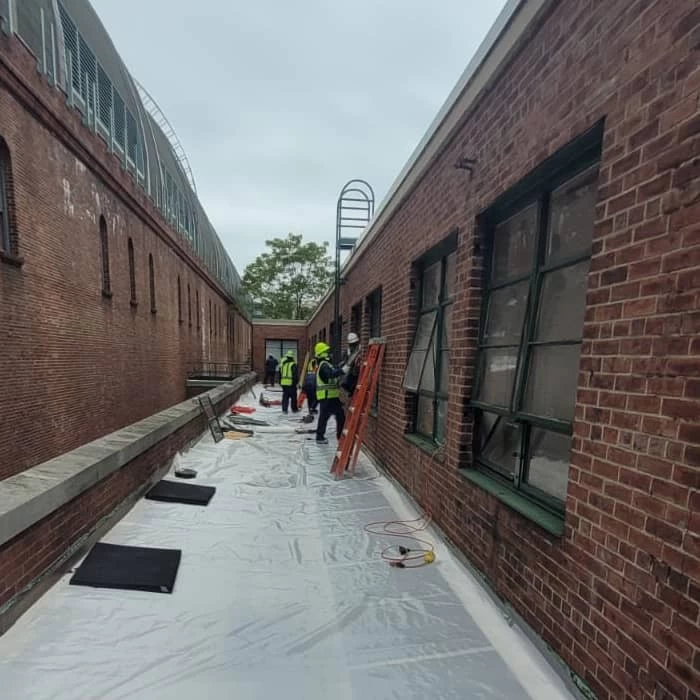
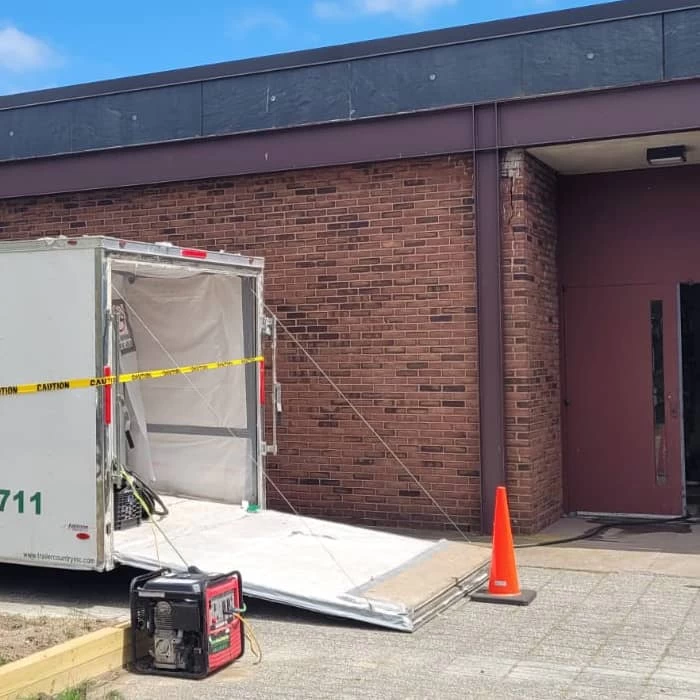
Once on-site, the first priority is assessment and containment. That means identifying the water source, categorizing the contamination level, and making sure the environment is safe before extraction begins. In homes built before 1980 which is essentially every home in this neighborhood our team also checks for asbestos pipe insulation, floor tiles, and other materials that a flood may have disturbed. If those materials are present, they’re handled under the proper NYS DOL Asbestos protocols before anything else moves forward.
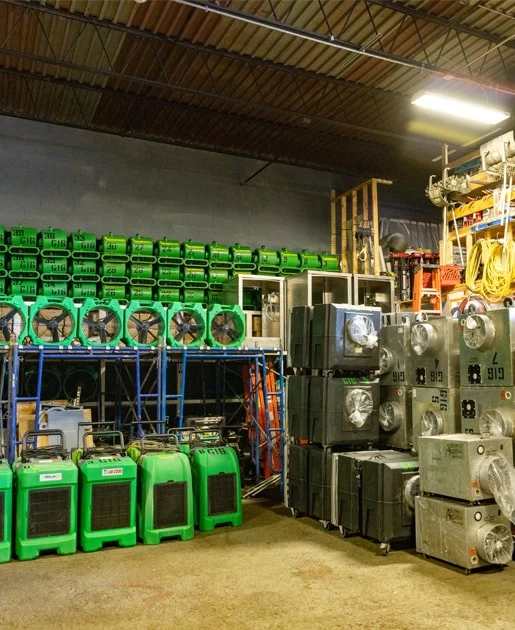
After extraction, industrial drying equipment goes in not just dehumidifiers, but thermal imaging to find moisture that’s already migrated behind walls or under subfloors. Drying is monitored and documented until moisture readings confirm the space is genuinely dry, not just surface-dry. If mold is found, remediation follows under the NYS DOL Mold License. If reconstruction is needed, we hold the NYC General Contractor license to pull permits and complete the build-back legally in Queens. One company, one call, start to finish.
Flooded basement cleanup in Fresh Meadows isn’t a single service it’s a sequence of them, and what you need depends on what happened. A sewer backup on a block near 164th Street and 71st Avenue where CBS News documented sewage shooting out of toilet bowls during a single rainstorm is a completely different job than a slow basement seepage event. Our scope covers both ends of that spectrum and everything between.
On the remediation side, that includes emergency water extraction, Category 3 sewage decontamination, antimicrobial treatment, structural drying with moisture documentation, mold assessment and remediation, and asbestos or lead handling for pre-1980 homes all performed under the appropriate New York State and federal licenses. Insurance documentation is built into the process: moisture readings, thermal imaging reports, photographs, and damage assessments formatted to satisfy adjuster requirements. We bill insurance directly and work with your adjuster so you’re not navigating that process alone.
On the reconstruction side, we hold a NYC General Contractor license, which means we can pull the permits required by the NYC Department of Buildings and complete the physical restoration of your basement flooring, drywall, framing without you needing to find a separate contractor for the build-back. For co-op owners in the Fresh Meadows Houses complex or homeowners throughout Queens Community District 8, that end-to-end capability means one point of contact from the moment the water comes in to the day the basement is finished and permitted.
Why does my Fresh Meadows basement flood every time it rains hard?
The short answer is that the sewer system under Fresh Meadows was built for a different era. The city’s infrastructure in this neighborhood can handle roughly three-quarters of an inch of rain per hour but summer storms here regularly dump two inches or more in that same window. When the system gets overwhelmed, water and sewage back up through the path of least resistance, which is often your basement drain, toilet, or bathtub. This isn’t a fluke. It’s a documented, recurring problem that State Assembly legislation has specifically named Fresh Meadows as one of the neighborhoods where heavy rainfall routinely overwhelms aging sewer systems.
The fix isn’t always simple, but understanding what’s causing it changes how you respond. If it’s a sewer backup event, you’re dealing with Category 3 contaminated water not just a wet floor. That requires licensed cleanup, not a shop vac and a fan. We can assess whether a backwater valve or sump pump installation would reduce your exposure to future events, and help you document the recurring nature of the flooding for insurance purposes.
Does homeowners insurance cover flooded basement cleanup in Queens, NY?
It depends on what caused the flooding, and this is where a lot of Fresh Meadows homeowners get caught off guard. Standard homeowners insurance typically covers sudden, internal water damage a burst pipe, a failed water heater, an appliance leak. What it usually does not cover is flooding caused by an external storm event or sewer backup, unless you have a separate flood policy or a sewer backup rider added to your existing policy. The distinction matters enormously, and it’s worth reviewing your policy before you’re standing in two inches of water.
That said, even when coverage exists, the documentation has to be right. Insurance adjusters work from specific standards, and a claim supported by moisture readings, thermal imaging reports, and a detailed damage assessment will hold up far better than one supported by a few photographs. We build that documentation into every job and bill insurance directly, which removes a significant burden from the homeowner during an already stressful situation. If you’re unsure what your policy covers, a quick call before or immediately after an event can save you from a denied claim down the road.
How quickly does mold start growing after a basement flood?
Mold can begin establishing itself within 48 to 72 hours of water intrusion and in a basement that’s been hit by a sewer backup, the organic material already present in the contaminated water accelerates that timeline. The 72-hour window isn’t a rough estimate; it’s the threshold the restoration industry uses to define when a water damage event transitions into a significantly more complex and expensive mold remediation situation. Once mold is established in wall cavities or behind flooring, remediation costs can increase by thousands of dollars compared to catching it early.
This is especially relevant in Fresh Meadows, where the housing stock is predominantly from the 1940s through 1960s. Older homes tend to have more organic building materials wood framing, older drywall compounds, natural fiber insulation that mold feeds on readily. Getting a licensed crew in quickly isn’t just about removing water; it’s about stopping a $3,000 cleanup from becoming a $10,000 one. Our 24/7 dispatch exists specifically to get ahead of that clock.
Is it safe to go into my basement after a sewer backup in Fresh Meadows?
No not without proper protective equipment, and not before the contamination level has been assessed. A sewer backup introduces Category 3 water, which contains raw sewage, bacteria, and pathogens that pose real health risks through direct contact or inhalation. This isn’t a situation where you can put on rubber boots and start mopping. The space needs to be assessed by a trained technician before anyone without full PPE goes in, and the cleanup needs to follow proper containment and disposal protocols.
In Fresh Meadows specifically, where sewer backups are a recurring event tied to infrastructure limitations rather than isolated incidents, it’s worth treating every backup as a contamination event until proven otherwise. If your basement has finished walls, carpeting, or stored belongings, the contamination assessment also needs to account for what porous materials absorbed the water because those materials often can’t be cleaned and need to be removed and disposed of properly. Our technicians are trained and equipped specifically for Category 3 events and will walk you through exactly what’s safe and what isn’t before any work begins.
Do I need to worry about asbestos if my Fresh Meadows home flooded?
If your home was built before 1980 which covers the vast majority of Fresh Meadows’ housing stock then yes, it’s a real consideration. Homes built between the 1940s and 1970s commonly contain asbestos in pipe insulation, floor tiles, ceiling tiles, and joint compounds. A flood event doesn’t just introduce water; it can disturb those materials, especially if water pressure has been significant or if flooring or walls have been damaged. Disturbed asbestos creates an airborne exposure risk that is completely separate from the water damage itself.
In New York State, contractors are legally required to hold a NYS DOL Asbestos license to assess and remediate asbestos-containing materials. We hold that license. Most water damage companies operating in Queens do not, which means they are legally prohibited from touching those materials and if they do anyway, you’re exposed to both a health risk and a legal liability. If you’re in a pre-1980 home and your basement has flooded, make sure the company you call is licensed to handle what’s actually inside your walls, not just the water on your floor.
How long does a full basement flood cleanup and restoration take in Fresh Meadows?
The timeline depends on the severity of the flooding, the category of water involved, and whether mold or hazardous materials are found during the assessment. For a straightforward water extraction and structural drying job with no contamination or mold, the drying phase alone typically takes three to five days and that’s using commercial-grade equipment monitored by moisture readings, not a visual check. Declaring a basement dry before the instruments confirm it is one of the most common mistakes in the industry, and it’s how hidden mold problems start.
For jobs that involve Category 3 sewage contamination which is common in Fresh Meadows given the neighborhood’s sewer backup history add time for proper decontamination and antimicrobial treatment before drying begins. If mold remediation is needed, that adds several more days depending on the extent of growth. And if reconstruction is part of the scope new drywall, flooring, framing the timeline extends further, though our NYC General Contractor license means that phase can begin without waiting on a separate contractor. Most complete restoration projects in this neighborhood run anywhere from one to three weeks, and a realistic timeline will be laid out clearly after the initial assessment.