When Jackson Heights' Combined Sewers Back Up, Here's Who to Call
Jackson Heights basements flood fast and when the combined sewer system backs up under your building, what comes up isn’t just water. We respond in under an hour, handle your insurance, and clean up the whole mess legally and completely.
I needed a professional consultation explanation of procedure for safe removal of Asbestos in my apartment complex. Without having an account yet, I was very impressed with the caring, knowledgeable and generous advice offered by Jessica, and will look forward to doing business in the future. Thank you so much! I feel much more informed about a sometimes scary endeavor. Peace. Nancy Silva Mineola, NY.
Mia Munoz
Used this company to clean up some water flood in my house. They were fast and easy to work with.very professional, Would recommend to anyone!
Nini Valle
Great company, had a flood and they responded quickly and efficiently. Billed my insurance company directly. I highly recommend this company!
joe colapietro, jr
I had pipe freeze in my basement right before a snow storm and they made to within an hour to help start the clean up process. They we by our side throughout the entire process and even helped with the insurance company. They did such a great job with the cleanup, repair, remidiation, I contracted them to perform the repairs and finishes in the basement. They came with enough manpower and material to get the job done. Leo and Jessica were nothing but a pleasure to deal with!!
Cristian Arredondo c
I had some water damage in my home and Green Island was able to take care of my issue quickly and effectively. I am very pleased with the work they did. They responded quickly and were very professional.
Michael M
Outstanding service! From the office to the field crew everyone was friendly, helpful and responsive. I highly recommend Green Island Group.
When the water is gone, the real work is just starting. Hidden moisture inside century-old plaster walls, saturated floor framing, and waterlogged insulation are what cause mold to show up three months after a cleanup crew packed their fans and left. The outcome you’re actually paying for is a basement that stays dry, stays clean, and doesn’t come back to haunt you.
Jackson Heights has some of the oldest residential buildings in Queens garden apartment co-ops and row houses built in the 1910s through 1940s that are now part of a nationally registered historic district. That means the walls, floors, and pipe insulation in your basement may contain asbestos or lead paint. A flood that disturbs those materials without proper handling isn’t just a water damage problem it’s a hazardous materials situation. You deserve a team that’s legally equipped to handle both, not just one.
The other reality here is Jackson Heights’ combined sewer system. When a heavy storm hits and after what Ida did to this neighborhood in September 2021, you know exactly what that looks like stormwater and raw sewage travel through the same pipes. When those pipes overflow, what backs up into your basement through the floor drain is black water. That requires a completely different level of cleanup than a burst pipe does, and most operators in this market aren’t certified to handle it. Getting that wrong doesn’t just leave you with a smell. It leaves you with a health hazard.
Licensed Basement Flooding Remediation in Jackson Heights
17 Certifications. One Call. No Second Contractor Needed.
We are a full-service environmental remediation and restoration company licensed to work in New York City, Nassau County, and Suffolk County. That last part matters more than it might sound. Most water damage companies can extract water and run dehumidifiers. What they can’t do is legally perform mold remediation in New York State without a NYS DOL Mold License and what they definitely can’t do is pull permits and rebuild your basement after the cleanup without a NYC General Contractor license. We hold both, along with NYS DOL Asbestos, USEPA Lead, and IICRC Water Damage certifications, among 17 total credentials.
That matters specifically in Jackson Heights, where the garden apartment buildings along the historic district between 76th and 88th Streets were built before World War II. These aren’t generic structures they’re landmarked buildings with aging infrastructure, and the materials inside them require a licensed, careful hand. When you call us, you’re not starting a relay race between a mitigation company and a general contractor. You’re getting one team that handles everything from emergency water extraction to finished reconstruction, under one license, one insurance claim, and one point of contact.
Emergency Flooded Basement Cleaning in Jackson Heights
From Sewage Backup to Finished Basement Here's the Process
It starts with a call, and we answer it 24 hours a day. Once you reach out, a crew is typically on-site within an hour which matters in Jackson Heights, where mold can begin colonizing inside wall cavities within 24 to 48 hours of a flood event, and where the cost of remediation jumps by thousands of dollars after the 72-hour mark.
When the team arrives, the first step is assessing the water category. That distinction clean water from a burst pipe versus gray water from an appliance failure versus black water from a sewage backup determines everything about how the cleanup is handled, what protective equipment is required, and what materials can be salvaged versus what needs to come out. In Jackson Heights, given the combined sewer infrastructure, sewage-contaminated water is a common finding, and the team is certified and equipped to handle it safely and legally under USEPA guidelines.
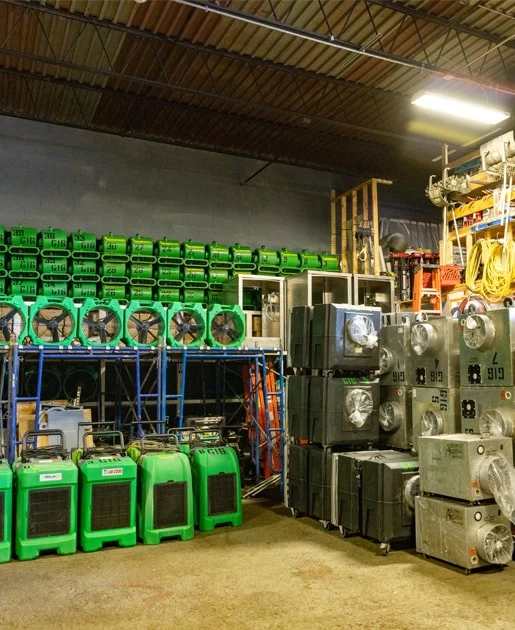
From there, the process moves through industrial water extraction, thermal imaging to locate hidden moisture inside walls and under flooring, and commercial-grade drying equipment that actually gets the job done not consumer fans that run for a week and leave moisture behind. If mold is present, licensed remediation follows. If the flood disturbed asbestos-containing materials in your pre-war building, our NYS DOL Asbestos certification covers that too. And because we hold a NYC General Contractor license, the final step structural repairs, framing, drywall, finished surfaces happens under the same roof, with permits pulled through the NYC Department of Buildings. No handoffs. No gaps in the work.
Basement Flooding Remediation Services in Queens, NY
What's Actually Included When You Call Us
Flooded basement cleanup in Jackson Heights isn’t a one-size job, and we don’t treat it like one. Every situation gets assessed on its own terms the water source, the building age, the materials involved, and the extent of the damage all shape what the response looks like. What stays consistent is the scope: this isn’t a company that extracts water and hands you a dehumidifier rental receipt.
The full service covers emergency water extraction, sewage backup cleanup and decontamination, thermal imaging for hidden moisture detection, industrial drying and dehumidification, mold testing and licensed mold remediation under New York State’s DOL Mold Program, and hazardous material handling for asbestos and lead paint which is a real and common concern in the pre-war buildings that define the Jackson Heights Historic District. If your building’s basement pipe insulation or floor tiles date back to the 1940s, they may very well contain asbestos, and a flood that disturbs those materials requires a licensed response that most restoration companies in Queens simply cannot legally provide.
Beyond the cleanup itself, we handle direct insurance billing and will work with your adjuster throughout the process. For property owners in Jackson Heights many of whom are managing multi-unit buildings, navigating a claim in a second language, or dealing with a landlord-tenant dispute over who’s responsible having a company that takes the insurance process off your plate is the difference between a manageable recovery and a months-long headache. The job isn’t finished until your basement is dry, safe, rebuilt, and documented.
Is the water in my Jackson Heights basement safe, or is it sewage?
This is the right question to ask first, and the honest answer is: you may not be able to tell by looking at it. Jackson Heights sits within New York City’s combined sewer zone, where stormwater and sanitary sewage travel through the same pipes. When heavy rain overwhelms that system which happens regularly during intense summer storms, and happened catastrophically during Hurricane Ida in September 2021 sewage-contaminated water backs up through basement floor drains, toilet connections, and foundation penetrations.
Black water, which is what sewage backup produces, carries bacteria, viruses, and pathogens that make it genuinely dangerous to be around without proper protective equipment. If your basement flooded during or after a rainstorm and the water came up through a drain rather than down from a pipe or appliance, treat it as sewage contamination until a certified professional assesses it. Do not wade through it without protective gear, and do not run HVAC systems that could spread contaminated air through the building. Call a licensed team immediately the health risk is real, and the cleanup protocol for black water is significantly more involved than for clean water flooding.
How quickly does mold grow after a basement flood in Jackson Heights?
Mold can begin growing inside wall cavities and under flooring within 24 to 48 hours of a flood event and in Jackson Heights’ warm, humid summers, that timeline can be even tighter. The dense, often poorly ventilated basement spaces in the neighborhood’s pre-war garden apartment buildings create ideal conditions for mold to spread quickly and quietly, well out of sight.
What makes this particularly costly is that mold remediation expenses increase significantly after the 72-hour mark. Industry data puts that jump at $2,000 to $8,000 or more depending on the extent of colonization. The mold you can see on a wall surface is often the smaller part of the problem the larger issue is what’s growing inside the wall, where no visual inspection reaches. We use thermal imaging to find those hidden moisture pockets before they become a mold problem, which is why speed of response matters as much as the quality of the cleanup itself. Calling within the first few hours is genuinely the most cost-effective decision you can make after a basement flood.
My Jackson Heights building was built in the 1930s does that change what's involved in cleanup?
Yes, significantly. Jackson Heights is home to the largest garden-apartment historic district in the United States, with over 200 original Queensboro Corporation buildings constructed between the 1910s and 1940s. These buildings are architectural landmarks, but they were also built with materials that are now classified as hazardous asbestos pipe insulation, asbestos floor tiles, and lead paint were all standard in construction of that era.
When a basement in a pre-war building floods, water can disturb those materials, creating a hazardous exposure risk on top of the water damage itself. Under New York State and federal regulations, disturbing asbestos-containing materials without a licensed abatement contractor is illegal and creates serious liability for property owners. We hold NYS DOL Asbestos certification and USEPA Lead certification, which makes us one of the only flooded basement cleanup providers in the Queens market legally equipped to handle what’s actually inside the walls and floors of a 1930s Jackson Heights building. If your building predates 1980, this isn’t a hypothetical concern it’s a real one that needs a licensed answer.
Will my homeowners insurance cover flooded basement cleanup in New York?
It depends on the source of the water, and that distinction is where a lot of Jackson Heights property owners get caught off guard. Standard homeowners insurance typically covers sudden and accidental internal water damage a burst pipe, a failed water heater, an appliance malfunction. What it generally does not cover is flooding caused by external stormwater or sewer backup, which is exactly the scenario that plays out in Jackson Heights during major rain events when the combined sewer system overflows.
Sewer backup coverage and flood insurance are separate policies that need to be added to a standard homeowners policy. If you don’t have them, you may be looking at out-of-pocket costs for a storm-driven basement flood. That said, the water source assessment matters if your flooding involved any internal component (a drain line failure, a sump pump that gave out under the pressure of the storm), there may be coverage available that isn’t obvious at first. We handle direct insurance billing and will help you communicate with your adjuster to make sure every eligible component of your claim is properly documented and submitted. That advocacy has made a real difference for property owners navigating their first major claim.
How long does flooded basement cleanup actually take from start to finish?
The honest answer is that it varies, and anyone who gives you a flat number without seeing your basement is guessing. The water extraction itself getting standing water out can often be completed within a few hours. The drying process is what takes time. In Jackson Heights’ pre-war buildings, where walls are often plaster over masonry and basement spaces may have limited airflow, reaching acceptable moisture levels throughout the structure can take anywhere from three to seven days of continuous commercial drying equipment running.
If mold remediation is required, that adds additional time depending on the extent of colonization and the materials involved. If structural repairs are needed replacing water-damaged framing, drywall, or flooring that phase follows remediation and can take additional days to a week or more depending on scope. The advantage of working with us is that all of those phases happen under one contractor, which eliminates the scheduling gaps and coordination delays that typically extend timelines when a property owner has to find a separate general contractor after the mitigation company leaves. From first call to finished basement, the process is as efficient as the damage allows and you’ll know what to expect at each stage.
Does Green Island Group handle basement flooding in multi-unit buildings along Roosevelt Avenue?
Yes, and multi-unit buildings are a significant part of the work we do in Jackson Heights. The neighborhood’s commercial corridors Roosevelt Avenue, 82nd Street, 37th Avenue are lined with mixed-use and residential buildings where a flooded basement affects not just one unit but potentially the heating system, electrical infrastructure, and storage areas serving the entire building. Landlords and small property managers in Jackson Heights often face the added pressure of restoring habitability quickly to avoid displacement of tenants and loss of rental income.
We are equipped to handle the scale and complexity of multi-unit building restoration. The NYC General Contractor license means permits can be pulled through the NYC Department of Buildings for any structural work required which is a legal requirement for reconstruction in New York City that many operators quietly skip, creating liability for the property owner down the line. We also understand the specific documentation requirements that matter when a landlord is coordinating with insurance, tenants, and potentially the NYC Department of Buildings simultaneously. If you’re managing a building in Jackson Heights and dealing with a flooded basement, the response process is the same as for a single-family home fast, licensed, and handled start to finish just scaled to what your building actually needs.