When Long Island City's Sewers Back Up, You Need More Than a Wet Vac
Long Island City’s sewer system wasn’t built for what this neighborhood has become. When the rain comes down hard and the water comes up through your drain, you need flooded basement cleanup that’s licensed for New York City and ready to move fast. We respond 24/7 and arrive in under an hour because we know that in Long Island City, the first few hours after a flood determine whether you’re dealing with water damage or a mold remediation job.
I needed a professional consultation explanation of procedure for safe removal of Asbestos in my apartment complex. Without having an account yet, I was very impressed with the caring, knowledgeable and generous advice offered by Jessica, and will look forward to doing business in the future. Thank you so much! I feel much more informed about a sometimes scary endeavor. Peace. Nancy Silva Mineola, NY.
Mia Munoz
Used this company to clean up some water flood in my house. They were fast and easy to work with.very professional, Would recommend to anyone!
Nini Valle
Great company, had a flood and they responded quickly and efficiently. Billed my insurance company directly. I highly recommend this company!
joe colapietro, jr
I had pipe freeze in my basement right before a snow storm and they made to within an hour to help start the clean up process. They we by our side throughout the entire process and even helped with the insurance company. They did such a great job with the cleanup, repair, remidiation, I contracted them to perform the repairs and finishes in the basement. They came with enough manpower and material to get the job done. Leo and Jessica were nothing but a pleasure to deal with!!
Cristian Arredondo c
I had some water damage in my home and Green Island was able to take care of my issue quickly and effectively. I am very pleased with the work they did. They responded quickly and were very professional.
Michael M
Outstanding service! From the office to the field crew everyone was friendly, helpful and responsive. I highly recommend Green Island Group.
A Dry Basement Isn't the Finish Line Mold Prevention Is
Most cleanup crews will pull the water, run a few fans, and hand you a bill. What they leave behind is moisture trapped inside walls, under floors, and inside the mechanical systems that keep your building running. In Long Island City, where a lot of the residential stock is converted industrial space former factories, old warehouses, buildings with deep below-grade rooms and brick foundation walls that hidden moisture doesn’t just sit there. It turns into mold, and it does it fast.
The 72-hour window is real. After that, you’re not just dealing with water damage anymore. You’re dealing with a mold remediation job on top of it, and in a dense building environment like Long Island City, mold doesn’t stay in one unit. It moves through shared wall cavities, HVAC systems, and common areas. That’s when a manageable cleanup becomes a building-wide problem and a potential HPD violation for landlords and property managers.
What the job actually looks like when it’s done right is this: the water is gone, the structure is dry down to the framing, the air quality is tested, and you have documentation your insurance company can actually use. If there’s mold, it’s remediated under an active NYS DOL Mold License not just wiped down and painted over. And if structural repairs are needed, they’re completed under a valid NYC General Contractor license, which is the only way to legally pull permits from the NYC Department of Buildings for reconstruction work in Queens.
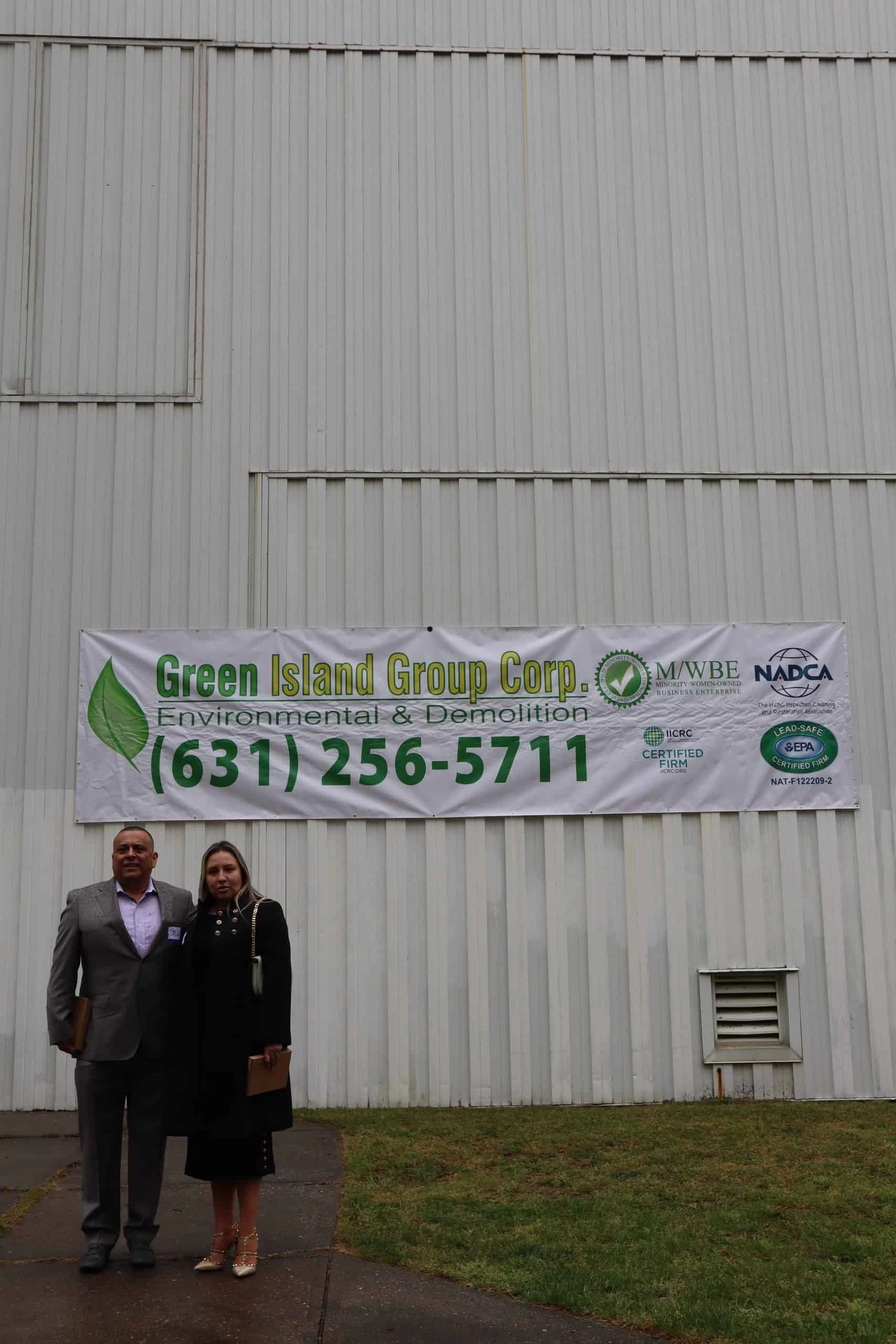
Green Island Group is a full-service environmental remediation and restoration company that has been operating across New York for decades. We hold over 17 active certifications including NYS DOL Mold, NYS DOL Asbestos, USEPA Lead, IICRC Water Damage, and General Contractor licenses for New York City, Nassau County, and Suffolk County. These aren’t marketing badges. They’re the licenses that determine whether a company can legally do the work in your building, in your borough, under New York State law.
For Long Island City specifically, the NYC General Contractor license matters more than most property owners realize. A lot of restoration companies operating in Queens are based on Long Island and hold Nassau or Suffolk licenses. Those licenses don’t authorize reconstruction work inside New York City. We can take a job from emergency water extraction all the way through finished reconstruction without handing you off to a second contractor to complete the work.
We’re available 24/7, we bill insurance directly, and we handle the adjuster communication so you don’t have to. From Hunters Point to Dutch Kills to Queensbridge, we know Long Island City and what it takes to work here.
Basement Flooding Remediation Process, Long Island City
From the First Call to a Finished Basement Here's What We Do
When you call, the response is immediate. We operate 24/7, and our documented response times run under an hour. For a Long Island City property, that means arriving via the Queens-Midtown Tunnel or across the Queensboro Bridge not sitting in a dispatch queue waiting for a truck to come from two counties away.
Once on-site, the first step is assessment. That means more than looking at standing water. We use thermal imaging to find moisture inside walls and subfloor assemblies especially important in Long Island City’s older converted buildings, where water can travel through brick and masonry in ways that aren’t visible to the eye. If the flooding came from a sewer backup, the water is classified as black water, which changes the handling protocol entirely. That’s not a cleanup job it’s a hazmat-level extraction, and it requires the proper licensing to do it legally and safely.
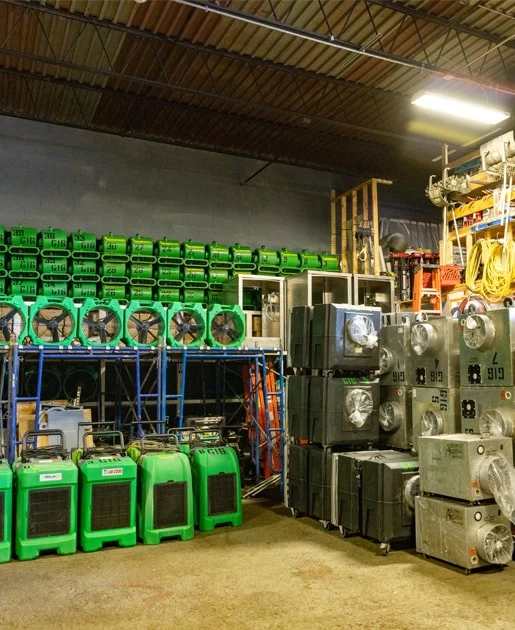
After extraction comes structural drying, which typically runs several days depending on the extent of saturation. Air movers, dehumidifiers, and moisture meters track the drying progress until readings confirm the structure is genuinely dry not just surface dry. From there, if mold is present, remediation happens under NYS DOL Mold licensing. If structural repairs are needed, permits are pulled from the NYC Department of Buildings and the reconstruction is completed under our NYC General Contractor license. One company, start to finish, no gaps in the chain.
The scope of what we handle goes well beyond water extraction. Emergency water removal, structural drying, moisture mapping, mold prevention, content assessment, mold remediation, hazardous material handling, and full structural reconstruction are all part of what we bring to a job. That full-scope capability matters in Long Island City because the buildings here aren’t simple. A flooded basement in a converted loft near Court Square might involve asbestos pipe insulation disturbed by water infiltration. A flooding event in a pre-war row house in Dutch Kills might uncover lead paint in the subfloor assembly. We hold NYS DOL Asbestos, USEPA Lead, and USEPA RRP certifications so when something unexpected turns up in the walls, we’re licensed to handle it on the spot rather than stopping the job.
For commercial property owners along Queens Boulevard or Jackson Avenue, we also carry MBE, WBE, and NYC MWBE certifications, which qualify us for government and municipal contracts. That’s relevant for building managers overseeing NYCHA-adjacent or mixed-use properties in Ravenswood or Queensbridge where the ownership and contracting structure is more complex.
We handle insurance billing directly. We work with your adjuster, document the damage thoroughly, and build the claim file so you’re not left trying to explain water damage categories to someone on the phone. If your building has a master policy and an individual unit owner policy which is common in Long Island City condos and co-ops we understand how those layers interact and can communicate with both sides of the claim.
Does my Long Island City condo insurance actually cover basement flooding?
It depends on the source of the water and how your policy is structured and in Long Island City, that question is more complicated than it sounds. Most condo and co-op owners in Long Island City have two layers of coverage: the building’s master policy and their individual unit owner policy. The master policy typically covers the building’s structure and common areas. Your individual policy covers your unit’s interior, personal property, and sometimes improvements you’ve made to the space.
What gets tricky is when flooding comes from a sewer backup or an overflowing drain which is one of the most common flooding scenarios in Long Island City given the neighborhood’s documented sewer infrastructure problems. Standard homeowner and condo policies often exclude sewer backup unless you’ve added a specific rider. Flood damage from storm surge or groundwater is typically only covered under a separate NFIP flood insurance policy. We document the source and category of water damage from the moment we arrive, which is exactly what your adjuster needs to process the claim correctly. Getting that documentation right from the start can be the difference between a covered claim and a denied one.
How quickly does mold start growing after a basement floods?
Mold can begin developing within 24 to 48 hours of a flooding event under the right conditions and basements in Long Island City tend to create those conditions quickly. High humidity, limited airflow, and organic materials like drywall, wood framing, and carpet give mold exactly what it needs to take hold. The 72-hour window you’ll see referenced is a general guideline, but in a below-grade space that stays warm and damp, growth can start even faster.
The bigger concern in Long Island City’s dense, attached building environment is where the mold goes once it starts. In a multi-unit building or a converted industrial space with shared wall cavities and a central HVAC system, mold doesn’t stay contained to the unit where the flooding happened. It moves. That’s why a cleanup that only addresses surface moisture without testing air quality and checking inside wall assemblies can leave a problem that grows back within weeks. We use thermal imaging and moisture meters to find what’s hiding behind the surface before calling the job done.
What's the difference between clean water and sewage backup flooding?
Water damage is categorized into three types, and the category determines everything about how the cleanup is handled. Category 1 is clean water a burst pipe, an overflowing sink, a supply line failure. Category 2 is gray water, which contains some contamination think washing machine overflow or a dishwasher leak. Category 3 is black water, which includes sewage, flood water from outside, and sewer backups. It’s the most dangerous and the most expensive to remediate.
In Long Island City, sewer backup flooding is one of the most frequently reported causes of basement flooding. The neighborhood’s sewer system is documented as severely overtaxed it was built for a fraction of the population and density that exists today, and new construction keeps adding load to century-old infrastructure. When heavy rain hits Long Island City, combined sewer overflows push contaminated water back up through basement drains. That’s black water. It contains bacteria, pathogens, and waste, and it requires licensed hazmat-level extraction, proper disposal, and full disinfection of every surface it touched. Treating it like a Category 1 cleanup isn’t just inadequate it’s a health risk.
How long does the full basement flood cleanup process take in Queens?
The honest answer is that it depends on the category of water, the size of the affected area, and whether mold is already present. For a straightforward clean water event in a smaller residential basement, structural drying typically takes three to five days once extraction is complete. For a larger space, a black water event, or a situation where moisture has penetrated masonry walls which is common in Long Island City’s older brick and concrete buildings the drying process can run seven to ten days or more.
Mold remediation, if needed, adds time on top of that. And if structural repairs are required, permitting through the NYC Department of Buildings adds a step that doesn’t exist in Nassau or Suffolk County projects. We handle the permit process as part of the job, but it’s worth knowing upfront that NYC reconstruction work has a required documentation and approval step that affects the timeline. We’ll give you a realistic estimate after the initial assessment not a number designed to get you to sign, but an actual projection based on what we find on-site.
My building has older pipes and walls could there be asbestos involved?
If your building was constructed before 1980, there’s a real possibility that asbestos-containing materials are present somewhere in the structure. In Long Island City, this is especially relevant given how much of the neighborhood’s residential stock consists of converted pre-war industrial buildings former factories, warehouses, and power plants that were repurposed into lofts and condos. These buildings commonly contain asbestos pipe insulation, floor tile adhesive, ceiling texture, and wall insulation that was standard construction practice at the time.
When water infiltrates walls and subfloor assemblies, it can disturb those materials. Disturbing asbestos without proper licensing isn’t just dangerous it’s illegal in New York State. We hold active NYS DOL Asbestos and USEPA Lead certifications, which means if we encounter hazardous materials during a basement flood cleanup in your Long Island City building, we’re licensed to handle it on-site without stopping the job or bringing in a separate contractor. That’s not a common capability in the restoration market, and it matters a lot in a neighborhood with the building stock that Long Island City has.
Why should I hire a company with an NYC contractor license instead of a Long Island company?
Long Island City is inside New York City it’s in Queens, which means it falls under NYC Department of Buildings jurisdiction. Any structural repair or reconstruction work done in your basement after a flooding event requires permits pulled from the NYC DOB. To pull those permits, the contractor performing the work needs an active New York City General Contractor license. A company that holds only a Nassau County or Suffolk County contractor license cannot legally pull those permits or complete reconstruction work in your building.
This matters more than most people realize when they’re in the middle of a crisis. A lot of restoration companies that market to Long Island City residents are based on Long Island and hold Long Island licenses. They can extract water and run drying equipment but when it comes time to repair the framing, replace the drywall, and restore the finished space, they either can’t do it legally in NYC or they hand you off to a separate contractor to finish the job. We hold an active NYC General Contractor license alongside our state and federal certifications. We can take the job from emergency extraction through permitted reconstruction without a gap in the chain which means one point of contact, one insurance claim, and no finger-pointing between companies when something doesn’t line up.