Malba Homes Are Too Valuable for a Half-Done Cleanup
When your basement floods in Malba, you need someone who can handle everything water out, mold stopped, and your home fully restored without handing you off to three different contractors.
I needed a professional consultation explanation of procedure for safe removal of Asbestos in my apartment complex. Without having an account yet, I was very impressed with the caring, knowledgeable and generous advice offered by Jessica, and will look forward to doing business in the future. Thank you so much! I feel much more informed about a sometimes scary endeavor. Peace. Nancy Silva Mineola, NY.
Mia Munoz
Used this company to clean up some water flood in my house. They were fast and easy to work with.very professional, Would recommend to anyone!
Nini Valle
Great company, had a flood and they responded quickly and efficiently. Billed my insurance company directly. I highly recommend this company!
joe colapietro, jr
I had pipe freeze in my basement right before a snow storm and they made to within an hour to help start the clean up process. They we by our side throughout the entire process and even helped with the insurance company. They did such a great job with the cleanup, repair, remidiation, I contracted them to perform the repairs and finishes in the basement. They came with enough manpower and material to get the job done. Leo and Jessica were nothing but a pleasure to deal with!!
Cristian Arredondo c
I had some water damage in my home and Green Island was able to take care of my issue quickly and effectively. I am very pleased with the work they did. They responded quickly and were very professional.
Michael M
Outstanding service! From the office to the field crew everyone was friendly, helpful and responsive. I highly recommend Green Island Group.
When the water is gone and the equipment is packed up, what you’re left with matters more than how fast someone showed up. A basement that looks dry but still has moisture trapped inside wall cavities or under the subfloor is a mold problem waiting to happen and in a home built in the 1950s or earlier, which describes a significant portion of Malba’s housing stock, that’s not a small risk.
Malba’s position on Powell’s Cove means waterfront flooding isn’t a hypothetical. Nor’easters, heavy rainfall events, and storm surge from the East River can push water into basements on the north end of the neighborhood in ways that require more than a shop vac and a dehumidifier. The cleanup has to go deep enough to actually work, or you’re back in the same situation within weeks.
What you should walk away with is a basement that’s been properly dried, tested for moisture, cleared of mold risk, and if reconstruction was needed finished to the standard your home deserves. On a property worth over a million dollars, anything less isn’t just disappointing. It’s a financial liability.
Licensed for Everything Your Malba Basement Might Be Hiding
We’ve been handling water damage, mold remediation, and full restoration across Queens County for over 30 years. We’re not a franchise, and we’re not a storm-chasing crew that shows up after a flood and disappears when the job gets complicated.
What separates us in a market like Malba is the depth of licensing we carry. New York State requires a specific DOL Mold License to legally perform mold remediation most contractors don’t have it. We do. We also hold NYS DOL Asbestos certification, USEPA Lead and RRP credentials, and a New York City General Contractor license. For homes in Malba where the median build year is 1957, that’s not a minor detail. Older basements frequently contain asbestos pipe insulation and lead-based paint that become serious hazards the moment flood water disturbs them.
We handle it all in one engagement no handoffs, no gaps, no “you’ll need to find someone else for that part.”
From Standing Water to Finished Space Here's What We Do
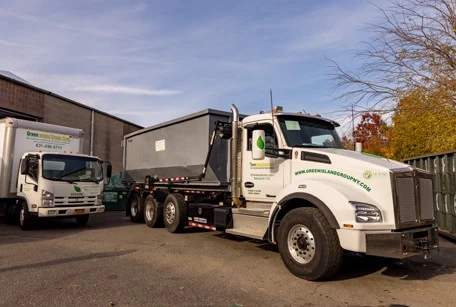
The first call triggers our 24/7 emergency response. We get to Malba fast customer reviews document arrivals within an hour, including during active storms. The first priority on-site is stopping the damage from spreading: water extraction, containment, and an immediate assessment of what you’re dealing with.
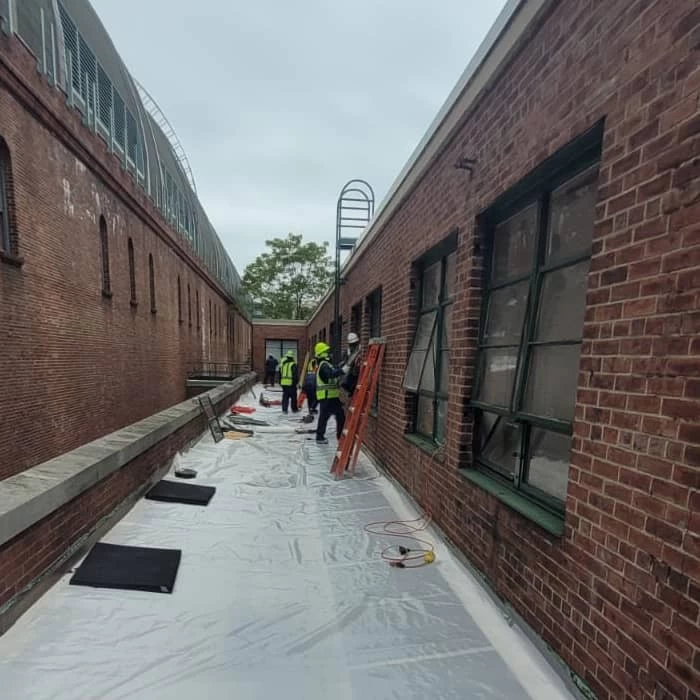
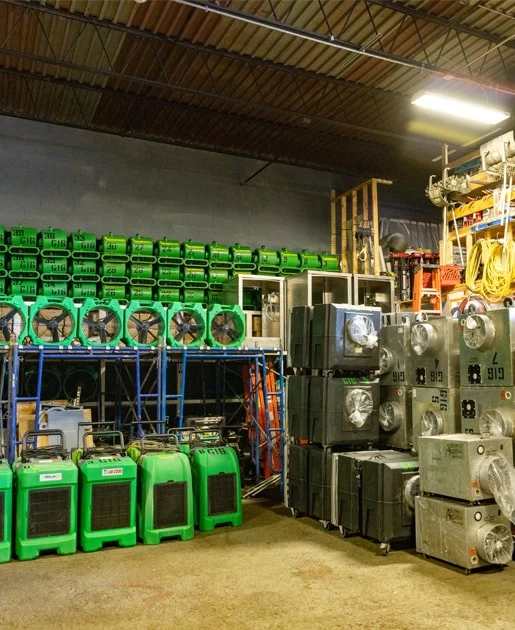
From there, the structural drying phase begins. This isn’t just running fans. We use thermal imaging equipment to locate moisture inside wall cavities, under flooring, and behind finishes that look dry to the eye but aren’t. In Malba’s older homes, this step is especially important mid-century construction creates hidden moisture traps that basic drying equipment never reaches. If mold is present or at risk of developing, remediation follows under our NYS DOL Mold License, which is a legal requirement in New York State and a prerequisite for most insurance claims.
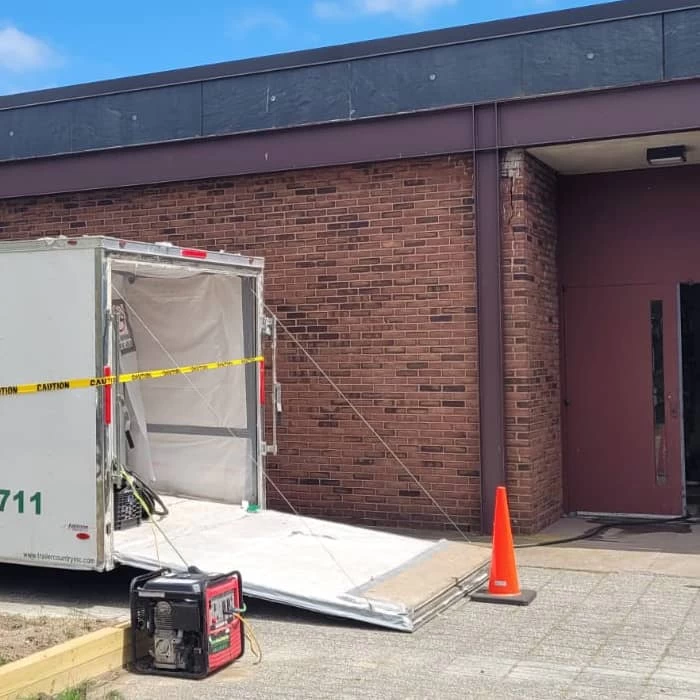
If the flood involved sewage backup which is common in Queens when the city’s combined sewer system gets overwhelmed during heavy rain that’s treated as a black water contamination event with proper containment and disposal. Once the space is clean and dry, reconstruction begins. Drywall, flooring, framing, finishes whatever the basement needs to be fully usable again. One company, start to finish, with direct insurance billing throughout.
This isn’t a mitigation-only service. We cover the full scope emergency water extraction, structural drying, mold remediation, hazardous material handling, reconstruction, and finished restoration. For Malba homeowners, that last part matters. Most water damage companies in Queens are licensed only for the cleanup phase. When it comes time to rebuild, you’re on your own. We hold the NYC General Contractor license required to complete reconstruction work inside the five boroughs, which means we can legally take your basement from gutted to finished without involving a second contractor.
For homes along the northern waterfront near Powell’s Cove, or anywhere in Malba with pre-1980 construction, the hazardous materials piece is just as important as the water removal. Asbestos floor tiles, pipe insulation, and lead-based paint are common in basements of this era. Disturbing those materials without licensed handling isn’t just dangerous it can void your insurance claim and create legal liability. Our NYS DOL Asbestos and USEPA Lead certifications cover that ground.
We also bill your insurance company directly and work with adjusters on your behalf throughout the process. On a high-value Malba property, having someone in your corner during the claims process isn’t a convenience it’s a real financial advantage.
How quickly can you respond to a flooded basement in Malba, NY?
We operate 24 hours a day, seven days a week, and our documented response times in Queens County run under an hour in most cases including during active storm conditions. For Malba specifically, our location and Queens County coverage means we’re not dispatching from Long Island or another borough and adding travel time to an already urgent situation.
Speed matters here because mold begins developing within 24 to 48 hours of water intrusion. Waiting even a few extra hours especially in an older Malba home where moisture can move quickly into wall cavities and subfloor assemblies can add thousands of dollars to the total cost of remediation. Getting someone on-site fast isn’t just about peace of mind. It’s about limiting how far the damage spreads before the real work begins.
Does my homeowner's insurance cover flooded basement cleanup in Queens, NY?
It depends on the source of the water. Standard homeowners insurance typically covers sudden and accidental water damage a burst pipe, a failed appliance, or an overflow. It generally does not cover flooding from outside sources like storm surge or groundwater, which is where a separate flood insurance policy through the National Flood Insurance Program (NFIP) becomes relevant.
For Malba homeowners near Powell’s Cove, this distinction is worth understanding before you need it. If your basement flooded during a major storm event and the water came from outside, your homeowners policy alone may not be enough. We work directly with insurance companies and adjusters on your behalf, and we can help you understand what your documentation needs to look like to support a claim. On a property valued over a million dollars, that advocacy during the claims process can make a meaningful difference in what you actually recover.
My Malba home was built in the 1950s does that affect the cleanup process?
Yes, and it’s one of the more important questions to ask before anyone starts work. Homes built before 1980 which covers a large portion of Malba’s housing stock, given the neighborhood’s median construction year of 1957 commonly contain asbestos pipe insulation, asbestos floor tiles, and lead-based paint in basement spaces. When flood water disturbs those materials, they become a regulated hazardous waste issue, not just a cleanup inconvenience.
Under New York State law, asbestos abatement requires a NYS DOL Asbestos license, and renovation work in pre-1978 homes that disturbs lead-based paint requires USEPA Lead-Safe Certification under the RRP Rule. We hold both. If a contractor shows up without those credentials and disturbs those materials during cleanup, you could be looking at legal liability and a voided insurance claim on top of the original flood damage. Asking about licensing before anyone touches the walls in an older Malba basement is the right call.
How long does flooded basement cleanup and restoration typically take?
A straightforward water extraction and drying job typically takes three to five days from start to finish. That’s assuming the water source was clean, the damage was caught quickly, and there’s no mold or structural involvement. In practice, many basement floods in Malba don’t fit that simple scenario especially when the water came from a sewage backup during a heavy rain event, which is common when the city’s combined sewer system gets overwhelmed.
If mold remediation is required, add time for that phase. If the basement needs reconstruction new drywall, flooring, or framing the timeline extends further depending on the scope. For Malba homes with older construction and potential hazardous materials, testing and abatement can add additional days before the rebuild can begin. We’ll give you a realistic timeline after the initial assessment, not a number designed to get you to sign on the spot.
What's the difference between water mitigation and full basement flood restoration?
Mitigation is the first phase water extraction, drying equipment, and documentation. A lot of companies stop there. They hand you a drying report, pack up their dehumidifiers, and leave you to figure out the rest. That means finding a separate mold remediator, then a licensed contractor for reconstruction, then someone to finish the space. In New York City, each of those phases requires different licensing, and coordinating between multiple vendors takes time you don’t have when mold is already a concern.
Full restoration means one company handles the entire arc from the emergency call through the finished basement. We do both phases under one roof, which matters practically because there are no gaps between contractors, no finger-pointing when something goes wrong, and no delays waiting for the next vendor to schedule. For Malba homeowners managing a significant claim on a high-value property, that single point of accountability is worth a lot.
What should I do immediately after my basement floods before help arrives?
The most important thing is to stay out of the water if you don’t know the source. If there’s any chance the flooding involved sewage backup which happens regularly in Malba and other Queens neighborhoods when storm drains and the combined sewer system back up during heavy rainfall that water carries bacteria and pathogens that make it genuinely unsafe to wade through without protective gear. Don’t assume it’s clean just because it doesn’t look discolored.
If it’s safe to do so, shut off the electricity to the basement at the breaker panel before entering. Don’t run standard household fans into a flooded space that can spread contaminants and actually accelerate mold spore distribution in some cases. Document everything with photos and video before anything is moved or touched. That documentation becomes your evidence for the insurance claim. Then call us. The sooner extraction starts, the smaller the mold window, and the lower your total restoration cost is likely to be.