When the Bay Pushes Back, Your Babylon Basement Pays the Price
Babylon sits in a FEMA flood zone, on the edge of the Great South Bay, where water comes from two directions at once. When it hits your basement, you need someone there fast not tomorrow. We respond within the hour for most Babylon and Town of Babylon properties, and we handle everything from water extraction through mold remediation and reconstruction under a single license.
I needed a professional consultation explanation of procedure for safe removal of Asbestos in my apartment complex. Without having an account yet, I was very impressed with the caring, knowledgeable and generous advice offered by Jessica, and will look forward to doing business in the future. Thank you so much! I feel much more informed about a sometimes scary endeavor. Peace. Nancy Silva Mineola, NY.
Mia Munoz
Used this company to clean up some water flood in my house. They were fast and easy to work with.very professional, Would recommend to anyone!
Nini Valle
Great company, had a flood and they responded quickly and efficiently. Billed my insurance company directly. I highly recommend this company!
joe colapietro, jr
I had pipe freeze in my basement right before a snow storm and they made to within an hour to help start the clean up process. They we by our side throughout the entire process and even helped with the insurance company. They did such a great job with the cleanup, repair, remidiation, I contracted them to perform the repairs and finishes in the basement. They came with enough manpower and material to get the job done. Leo and Jessica were nothing but a pleasure to deal with!!
Cristian Arredondo c
I had some water damage in my home and Green Island was able to take care of my issue quickly and effectively. I am very pleased with the work they did. They responded quickly and were very professional.
Michael M
Outstanding service! From the office to the field crew everyone was friendly, helpful and responsive. I highly recommend Green Island Group.
There’s a difference between a basement that looks dry and a basement that is dry. In a South Shore Babylon home especially one built before 1980, which describes most of Babylon Village water hides in places you won’t think to check. Inside wall cavities. Under subfloor materials. Behind pipe insulation that may have been there since the Eisenhower administration. By the time you can smell it, mold has already been growing for days.
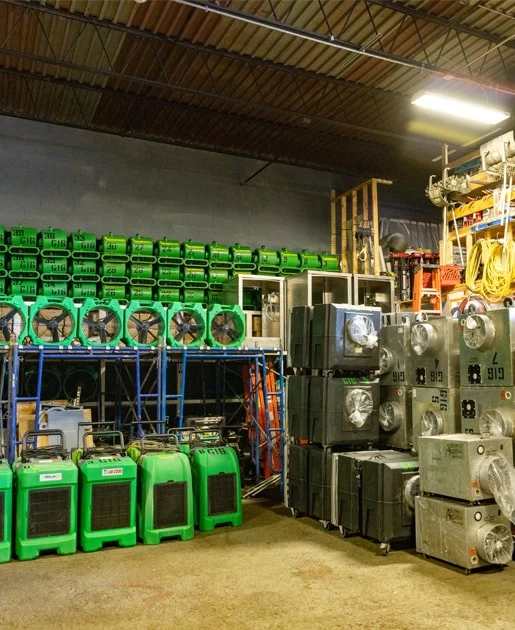
What professional flooded basement cleanup actually gives you is certainty. We use moisture meters and thermal imaging to find saturation that a visual check misses entirely. Our industrial drying equipment pulls moisture out of the structure itself, not just the surface. When the job is done right, you’re not crossing your fingers and hoping you have documentation that your home is dry, and you have it on record for your insurance carrier.
For Babylon homeowners in particular, that documentation matters. AE6 flood zone properties carry specific insurance requirements, and a properly documented remediation report is what separates a smooth claim from a disputed one. Getting the cleanup done right the first time isn’t just about the basement it protects the value of a home that, in Babylon, is likely worth well over $800,000.
Licensed for What's Actually Behind Your Babylon Walls
We’ve been handling water damage, mold remediation, and environmental restoration across Long Island and New York City for over 12 years. We hold NYS DOL Asbestos and Mold licenses, USEPA Lead and RRP certifications, and General Contractor licenses in Suffolk County which means when we open up a flooded wall in a pre-1940 Babylon Village home, we’re legally authorized and operationally equipped to handle whatever’s inside it. Most water damage companies aren’t.
We’re also an approved emergency response contractor for the New York State Office of General Services. That’s not a badge we put on a website it’s a public record that New York State vetted us and approved us to respond to emergencies on state properties. For a homeowner on the South Shore deciding who to let into their home at 11 PM on a Tuesday, that distinction is real.
We serve Babylon Village, West Babylon, North Babylon, Lindenhurst, Copiague, and the surrounding hamlets throughout the Town of Babylon. We know what flooding looks like here the bay surge, the backed-up catch basins, the mid-century construction because we’ve worked in these homes before.
From Standing Water to Dry and Documented Here's How We Do It
The first call gets a real person. Not a voicemail, not a callback queue someone who can dispatch a crew and give you a realistic arrival window. For most of Babylon and the surrounding Town of Babylon hamlets, that means boots on the ground within the hour.
When our crew arrives, the first step isn’t extraction it’s assessment. We use moisture meters and thermal imaging to map the full extent of the saturation before anything is touched. In older Babylon homes, that assessment also includes a check for asbestos-containing materials and lead paint in any areas where demolition will be required. This is not optional. Disturbing those materials without proper protocols is a health hazard and a legal violation and it’s exactly the step that most water damage franchises skip because they’re not licensed to address it.
From there: water extraction, structural drying with industrial equipment, air quality monitoring, and a final clearance reading before we close the job. If mold remediation or reconstruction is needed, we handle both under the same contract. We also handle the insurance documentation and communicate directly with your adjuster which, for a homeowner navigating an NFIP flood claim alongside a standard homeowners policy, removes the single most complicated part of the process.
Basement Flooding Remediation Services, Babylon NY
One Company Handles the Water, the Mold, and the Rebuild
Most water damage companies do one thing: extract water and set up fans. That’s fine for a clean water spill in a newer home. It’s not fine for a Great South Bay surge event in a 1952 Cape Cod on a street that the Town of Babylon DPW has already flagged as flood-prone. When the flooding involves saltwater backup through drainage pipes which is exactly what happens in Babylon’s south shore neighborhoods during heavy rain events you’re dealing with Category 3 contaminated water. That requires containment, proper PPE, licensed disposal, and a full decontamination protocol. It is not the same job.
We cover the complete scope: emergency water extraction, structural drying, mold testing and remediation, asbestos and lead abatement where required, and full general contractor reconstruction. Everything under one license, one contract, one point of contact. For homeowners in Babylon Village and the surrounding hamlets where the housing stock is old, the flood risk is documented, and the home values are high that single-contractor capability is what keeps a manageable flood from becoming a six-month construction project with three different companies pointing at each other.
We also carry NYC BIC Trade Waste licensing, which governs the proper disposal of contaminated materials. If your basement flood involved sewage backup another documented risk in Babylon’s south shore drainage system that licensing is what ensures the waste is handled legally and completely, not just hauled to the curb.
Does homeowners insurance cover a flooded basement in Babylon's AE6 flood zone?
This is one of the most common points of confusion for Babylon homeowners, and the answer depends entirely on the source of the water. Standard homeowners insurance typically covers sudden and accidental water damage from internal sources a burst pipe, a failed water heater, a washing machine overflow. It does not cover flooding from external sources, which includes storm surge from the Great South Bay, surface water entering through foundation walls, or water backing up through your drainage system during a heavy rain event.
For that type of flooding which is exactly what Babylon’s south shore neighborhoods experience regularly you need a separate NFIP flood insurance policy. The catch is that NFIP policies have a 30-day waiting period before they take effect, so if you don’t have one already, you can’t buy it when the storm is coming. If you’re in an AE6 flood zone and you’re not carrying flood insurance, that’s worth addressing before the next nor’easter. When you call us, we’ll help you identify what’s covered under which policy and handle the documentation your adjuster will need for the claim.
How quickly does mold actually start growing after a basement floods?
Mold begins colonizing within 24 to 48 hours of a flood event and in a South Shore environment like Babylon, where ambient humidity is already elevated from proximity to the Great South Bay, that window can be shorter. The problem is that the mold you need to worry about isn’t on the surface you can see. It’s inside wall cavities, behind insulation, and under subfloor materials where moisture lingers long after the visible water is gone.
This is why the 72-hour window matters so much. If professional drying equipment is deployed within the first day or two, the structure can often be dried before mold takes hold. Past 72 hours, the remediation scope and the cost increases significantly. A job that might have been a $3,000 cleanup at hour 24 can become a $10,000 or $15,000 mold remediation project by the end of the week. The mold clock doesn’t care that you’re busy or that you’re waiting to see if it dries out on its own. In a pre-1980 Babylon home with dense wall construction and limited airflow, it won’t.
My Babylon home was built in the 1950s does that change what needs to happen during cleanup?
Yes, and significantly. Nearly 78% of Babylon Village’s housing stock was built before 1980, and a large portion of that was built between the 1940s and 1960s. Homes from that era commonly contain asbestos in pipe insulation, floor tiles, ceiling tiles, and roofing materials, as well as lead paint on walls, trim, and window components. Under normal conditions, those materials are stable and don’t pose a health risk. A flood changes that.
When a basement floods and materials need to be removed drywall, insulation, flooring, pipe wrap those previously stable materials get disturbed. Asbestos fibers become airborne. Lead dust is generated. A water damage crew that isn’t licensed for asbestos abatement and lead remediation cannot legally or safely remove those materials, and doing so without proper protocols creates a hazmat situation that compounds your original problem. We hold NYS DOL Asbestos and Mold licenses and USEPA Lead and RRP certifications. We assess for these hazards before any demolition begins, and we handle them in-house no subcontractors, no gaps in the chain of responsibility.
What is Category 3 water damage, and is that what I have after a south shore flood?
Water damage is classified in three categories based on contamination level. Category 1 is clean water a burst supply line, a clean appliance overflow. Category 2 is gray water some contamination, like a dishwasher or washing machine discharge. Category 3 is black water grossly contaminated water that poses a serious health risk. This includes sewage, outside floodwater, and any water that has passed through a contaminated drainage system.
In Babylon’s south shore neighborhoods, flooding during heavy rain events frequently involves Category 3 water. The Town of Babylon’s own DPW has documented that when heavy rain hits the south shore, saltwater from the Great South Bay surges back through the underground drainage system and overflows into streets and properties. That water carries sewage, bacteria, and other contaminants. If your basement flooded during a storm event and the water came up through a floor drain or sump pit, there’s a strong chance you’re dealing with Category 3. That changes the entire cleanup protocol containment, PPE, licensed waste disposal, and full decontamination are all required. It is not a job for a shop vac and a box fan.
How long does it take to dry out a flooded basement in a Babylon home?
The honest answer is three to five days for a straightforward clean water loss in a basement with standard construction but that range shifts considerably based on several factors that are very common in Babylon. The age of the construction matters: older homes with dense plaster walls, original subfloor boards, and limited ventilation hold moisture longer than newer drywall construction. The source of the water matters: a Category 3 contaminated loss requires decontamination steps that add time before drying even begins. And the ambient conditions matter: Babylon’s proximity to the Great South Bay means baseline humidity is higher than inland Suffolk County communities, which slows the evaporation process.
We use industrial drying equipment not consumer-grade fans along with dehumidifiers calibrated to the specific moisture load in the space. We take daily moisture readings to track drying progress against a target, and we don’t call the job complete based on a visual check. We call it complete when the meter readings confirm the structure has returned to baseline moisture levels. That documentation also goes to your insurance carrier as part of the claim file, which matters for AE6 flood zone properties where adjusters look closely at remediation records.
Can I clean up a flooded basement myself instead of calling a professional in Babylon?
For a very minor, clean water event a small appliance leak caught within an hour or two, on a concrete floor with no wall involvement a capable homeowner can often manage the cleanup with a wet vac and good ventilation.
The problem is that most basement flooding events in Babylon don’t fit that description. If the water came from outside storm surge, a backed-up sump, drainage overflow it’s likely contaminated and requires proper handling. If it sat for more than a few hours before you found it, moisture has already wicked into wall materials and subfloor that a wet vac won’t reach. And if your home was built before 1978, any demolition you do to remove wet materials could disturb asbestos or lead which creates a hazmat situation that is both a health risk and a legal issue. Beyond the safety concerns, a DIY cleanup that leaves hidden moisture in the wall cavity voids your ability to make a successful insurance claim, because you won’t have the documentation an adjuster requires. For most Babylon homeowners dealing with a real flood event, the cost of doing it wrong mold remediation, structural repairs, a denied claim significantly outweighs the cost of calling a licensed crew from the start.