When the Bay Pushes Water Into Your Basement, Here's What Actually Helps
Bayport sits right on the Great South Bay and when a nor’easter or storm surge hits, that water doesn’t stay outside. We respond fast, handle the cleanup completely, and deal with your insurance directly so you’re not managing all of it alone.
I needed a professional consultation explanation of procedure for safe removal of Asbestos in my apartment complex. Without having an account yet, I was very impressed with the caring, knowledgeable and generous advice offered by Jessica, and will look forward to doing business in the future. Thank you so much! I feel much more informed about a sometimes scary endeavor. Peace. Nancy Silva Mineola, NY.
Mia Munoz
Used this company to clean up some water flood in my house. They were fast and easy to work with.very professional, Would recommend to anyone!
Nini Valle
Great company, had a flood and they responded quickly and efficiently. Billed my insurance company directly. I highly recommend this company!
joe colapietro, jr
I had pipe freeze in my basement right before a snow storm and they made to within an hour to help start the clean up process. They we by our side throughout the entire process and even helped with the insurance company. They did such a great job with the cleanup, repair, remidiation, I contracted them to perform the repairs and finishes in the basement. They came with enough manpower and material to get the job done. Leo and Jessica were nothing but a pleasure to deal with!!
Cristian Arredondo c
I had some water damage in my home and Green Island was able to take care of my issue quickly and effectively. I am very pleased with the work they did. They responded quickly and were very professional.
Michael M
Outstanding service! From the office to the field crew everyone was friendly, helpful and responsive. I highly recommend Green Island Group.
Your Basement Dry, Safe, and Documented Start to Finish
The moment water gets into your basement, the clock starts. Mold can begin growing within 24 to 48 hours and in Bayport’s coastal environment, where bay humidity is already part of the air, that window moves faster than it does inland. Getting a professional crew in quickly isn’t just about removing visible water. It’s about stopping what comes next.
For homeowners south of Middle Road in Bayport, there’s an added layer most cleanup companies don’t talk about. Bayport’s older homes many of them built 80 to 100 years ago can contain asbestos in pipe insulation and floor tiles, and lead paint behind walls that have been wet. When floodwater disturbs those materials, you’re no longer dealing with a simple cleanup. You need a contractor licensed to handle it, not one who’ll unknowingly make it worse.
What you should walk away with is a completely dried structure, a mold-free environment confirmed by proper assessment, and a documented damage report your insurance company will actually accept. Whether the flooding came from a burst pipe, a sump pump failure during a power outage, or storm surge off the bay, the outcome should be the same your home back to normal, with nothing left to discover later.
Licensed Basement Flood Cleanup, Suffolk County NY
The Licensing Stack That Actually Matters for Bayport Homes
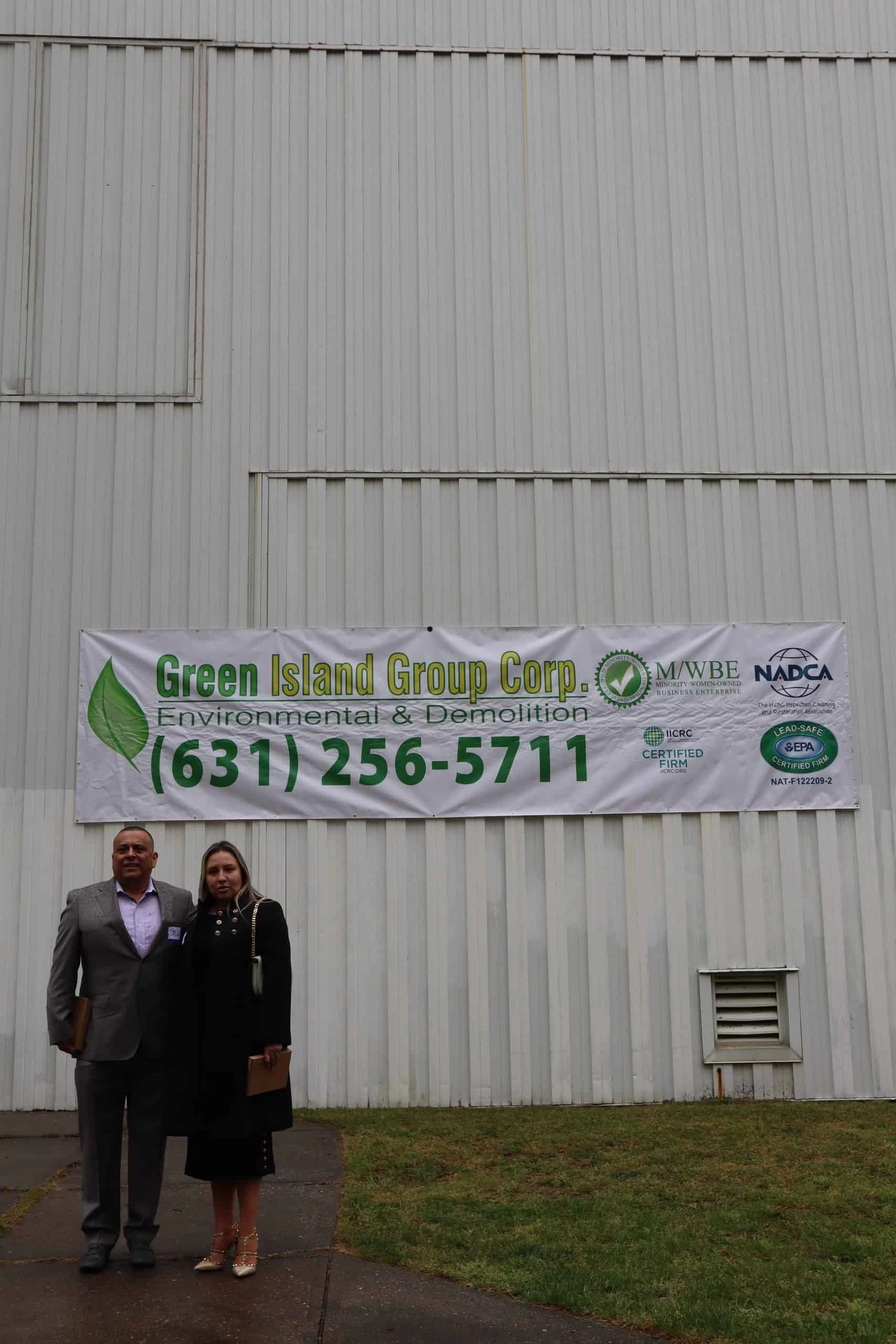
We are a New York State-licensed environmental restoration company serving homeowners and municipalities across Suffolk County, Nassau County, and New York City. With over 5,000 completed projects and more than 12 years operating across Long Island, we’re not a franchise location or a crew dispatched from a call center. Jessica Dussan and Leo Torres lead the company directly and our names show up in customer reviews because we’re actually involved in every project.
For Bayport specifically, the credentials that matter most go beyond a general contractor license. We hold NYS DOL Mold, NYS DOL Asbestos, USEPA Lead, and USEPA RRP certifications the exact licenses required when flooding disturbs hazardous materials in older homes like the ones concentrated near the bay side of the hamlet. We’re also an approved emergency response contractor for the New York State Office of General Services, which means the State of New York has independently vetted our capabilities.
If you’re in the Bayport-Blue Point area and you’re trying to figure out who to trust in the middle of an emergency, that combination of speed, licensing, and direct insurance billing is hard to find anywhere else on the South Shore.
What Happens From the First Call to the Final Walkthrough
When you call, the first thing that happens is a real conversation not a form submission or a callback window. We dispatch 24 hours a day, and customer reviews document arrival times under an hour, including during the kind of severe weather that tends to cause flooding in the first place. For a hamlet like Bayport, where you’re not sitting on a major service corridor, that response time matters.
Once on-site, our crew assesses the water source and categorizes it properly. This step is more important than most homeowners realize. Water from a burst pipe is handled differently than water that came in during a nor’easter or a Great South Bay surge event. Storm-driven and bay-influenced flooding is classified as Category 3 contaminated water that requires specific containment, protective protocols, and licensed disposal. Misclassifying it isn’t just a technical error; it’s a health risk.
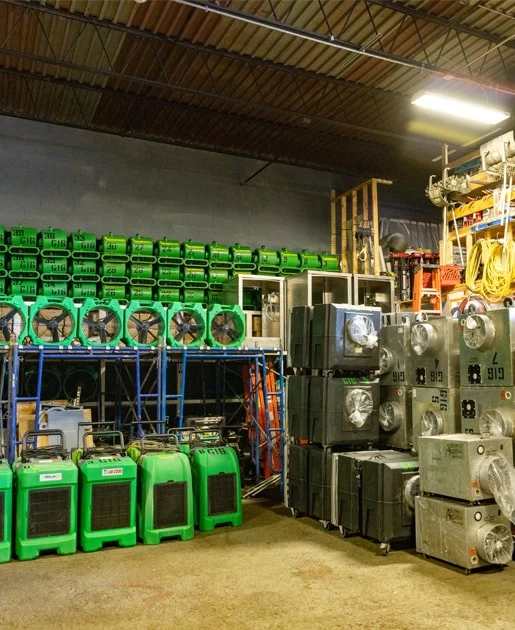
From there, the process moves through extraction, structural drying with industrial-grade equipment, and a full assessment for mold and, where relevant in older Bayport homes, asbestos or lead disturbance. Any necessary remediation is handled under the same contract no handoffs to separate subcontractors, no gaps in accountability. Before the job closes, you receive a complete damage report formatted for your insurance claim, whether that’s a standard homeowners policy, an NFIP flood policy, or both.
Full-Scope Cleanup Built for What Bayport Basements Actually Face
Flooded basement cleanup in Bayport isn’t a one-size situation. What’s in the water, how old your home is, and where the flooding came from all change what needs to happen. We handle the full scope: emergency water extraction, industrial drying and dehumidification, mold assessment and remediation, asbestos and lead evaluation where required, structural repairs, and complete reconstruction if needed all under one contract, permitted through the Town of Islip Building Department as required.
For homeowners closer to the bay particularly on the streets south of Middle Road where homes are older and the water table sits higher the risk profile is different than it is for a newer ranch home north of Montauk Highway. Storm surge events push Category 3 water into basements that may already have compromised waterproofing and materials that predate modern safety standards. That combination requires an environmental contractor, not just a restoration crew. The NYS DOL Asbestos and USEPA Lead certifications we carry aren’t credentials most competitors in this area hold and in an older Bayport home, they’re not optional.
Direct insurance billing is standard. We manage the documentation, communicate with adjusters, and handle the paperwork for both homeowners policies and NFIP flood policies which many Bayport residents carry separately given the hamlet’s coastal flood zone exposure.
Is the water in my flooded Bayport basement safe to walk through?
It depends entirely on where the water came from, and you shouldn’t assume it’s clean until someone categorizes it properly. Water from a burst pipe or failed appliance is typically Category 1 relatively clean at the source. But water that entered your basement during a storm, a nor’easter, or any event connected to outdoor flooding near the Great South Bay is almost certainly Category 3. That means it can carry bacteria, sewage from overwhelmed municipal lines, and bay sediment. Walking through it without protection, or letting children or pets near it, is a real health risk.
The safest move is to stay out of the basement until a professional has assessed the water source and classified it. If you can safely cut power to the affected area first, do that but don’t wade in to flip breakers if the water level is significant. Call for emergency response and let our crew make the determination on-site. It’s a five-minute conversation that can prevent a much larger problem.
Does homeowners insurance cover basement flooding from a storm in Bayport?
This is one of the most common points of confusion for South Shore homeowners, and the answer is: it depends on the cause. Standard homeowners insurance covers sudden, internal water damage a pipe that bursts, a water heater that fails, a washing machine that overflows. What it does not cover is water that enters your home from outside, including storm surge, bay flooding, or groundwater intrusion from a saturated water table. That type of flooding requires a separate NFIP flood insurance policy.
Many Bayport homeowners carry both, which is smart given the hamlet’s Great South Bay exposure and its position in a recognized coastal flood zone. The complication is that each policy has its own documentation requirements, deductibles, and coverage triggers and managing both simultaneously while also dealing with a flooded basement is genuinely stressful. We handle insurance billing directly and prepare the damage documentation both policy types require, so you’re not left figuring out the paperwork on your own while your basement is still wet.
My Bayport home is over 80 years old does that change how the cleanup works?
Yes, and significantly. Homes built before 1980 which includes most of the housing stock south of Middle Road in Bayport frequently contain asbestos in pipe insulation, floor tiles, ceiling materials, and joint compound. Homes built before 1978 may have lead-based paint on walls and trim. When flooding occurs in these homes, water intrusion can disturb those materials and create a regulated hazardous materials situation on top of the standard cleanup.
Most water damage restoration companies are not licensed to handle asbestos or lead. They can remove the water and dry the structure, but if they disturb a pipe wrapped in asbestos insulation or sand down lead-painted drywall without the proper certifications, they’ve created a health hazard that wasn’t there before. We hold NYS DOL Asbestos certification and USEPA Lead and RRP certifications specifically because this situation is common in older Long Island homes. If your home predates 1980, ask any contractor you’re considering for those specific licenses before they start work not after.
How quickly does mold start growing after a basement flood in Bayport?
Mold can begin colonizing within 24 to 48 hours of a flooding event under the right conditions and in Bayport, the conditions are often right. The hamlet’s coastal position along the Great South Bay means ambient humidity levels are already elevated compared to inland Suffolk County communities. That moisture in the air accelerates the drying timeline you’re working against. A basement that might take 48 hours to reach dangerous mold conditions in a drier environment can get there faster here.
The materials in your basement also matter. Fiberglass insulation, drywall, and wood framing all absorb moisture and hold it in ways that aren’t visible from the surface. Water can wick several feet up a wall from a flooded floor, meaning the damage zone is almost always larger than what you can see. Professional drying with industrial dehumidifiers and air movers not fans from a hardware store is what actually pulls moisture out of structural materials before mold establishes itself. The faster a professional crew gets in, the smaller the remediation scope tends to be.
What causes basement flooding in Bayport even when it hasn't rained that hard?
Bayport sits on Long Island’s South Shore coastal plain, where the water table runs naturally close to the surface. The sandy, permeable soil throughout this part of Suffolk County doesn’t hold water back the way denser soils do it lets groundwater move laterally and push against basement foundations from the outside. This is called hydrostatic pressure intrusion, and it doesn’t require a major storm to trigger. A sustained stretch of wet weather, rapid snowmelt in late winter, or even a period of unusually high tides in the Great South Bay can raise the water table enough to push water through foundation cracks, floor joints, or around sump pump pits.
Sump pump failure is one of the most common causes of basement flooding in Bayport, and it tends to happen at the worst possible time during a storm, when the power goes out. If your sump pump runs on standard electrical power without a battery backup, a nor’easter that knocks out the grid also knocks out your only line of defense against rising groundwater. That’s a combination Bayport homeowners on the south side of the hamlet deal with regularly, and it’s worth addressing before the next storm season rather than after.
How much does flooded basement cleanup typically cost in Bayport, NY?
The honest answer is that it varies based on what’s actually in front of our crew. A straightforward Category 1 water loss clean water from a burst pipe, caught quickly might run in the range of $2,000 to $4,000 for extraction, drying, and documentation. A Category 3 event involving storm surge or sewage backup, especially in an older home where asbestos or lead materials may be present, can push into the $6,000 to $12,000 range or higher depending on the scope of structural damage and remediation required.
What significantly affects the final number is timing. Every hour between when flooding occurs and when professional drying begins expands the moisture damage zone. Mold remediation, if it becomes necessary because cleanup was delayed, typically adds $2,000 to $8,000 on top of the base cleanup cost. In Bayport, where older homes have more surface area for water to wick into and coastal humidity slows natural drying, that delay cost compounds faster than it would in a newer, drier environment. Insurance coverage whether through a standard homeowners policy or a separate flood policy can offset a substantial portion of these costs, and we handle that billing and documentation directly as part of every job.