When the Bay Shore Storms Hit, East Islip Basements Pay the Price
East Islip sits right on the Great South Bay and when the rain comes fast, it doesn’t give you much warning. We provide emergency flooded basement cleanup in East Islip, NY, with licensed crews ready around the clock and direct insurance billing so you’re not buried in paperwork on top of everything else.
I needed a professional consultation explanation of procedure for safe removal of Asbestos in my apartment complex. Without having an account yet, I was very impressed with the caring, knowledgeable and generous advice offered by Jessica, and will look forward to doing business in the future. Thank you so much! I feel much more informed about a sometimes scary endeavor. Peace. Nancy Silva Mineola, NY.
Mia Munoz
Used this company to clean up some water flood in my house. They were fast and easy to work with.very professional, Would recommend to anyone!
Nini Valle
Great company, had a flood and they responded quickly and efficiently. Billed my insurance company directly. I highly recommend this company!
joe colapietro, jr
I had pipe freeze in my basement right before a snow storm and they made to within an hour to help start the clean up process. They we by our side throughout the entire process and even helped with the insurance company. They did such a great job with the cleanup, repair, remidiation, I contracted them to perform the repairs and finishes in the basement. They came with enough manpower and material to get the job done. Leo and Jessica were nothing but a pleasure to deal with!!
Cristian Arredondo c
I had some water damage in my home and Green Island was able to take care of my issue quickly and effectively. I am very pleased with the work they did. They responded quickly and were very professional.
Michael M
Outstanding service! From the office to the field crew everyone was friendly, helpful and responsive. I highly recommend Green Island Group.
Your Basement Dry, Safe, and Cleared for What Comes Next
East Islip has been through it. The August 2014 storm dropped over 13 inches of rain in a single day a New York State record and flooded homes from Babylon straight through to this hamlet. Sandy pushed bay water into bayfront streets before that. And the August 2024 flash floods hit without much warning at all. If you’ve lived here long enough, you already know your basement is one bad storm away from a real problem.
What most homeowners in East Islip don’t realize until it happens is how quickly a flooded basement stops being a cleanup job and starts being something more complicated. Mold can start growing within 24 to 48 hours of water sitting in a space. In a community where a significant portion of homes were built in the 1950s, 60s, and 70s, water damage that gets into walls or under flooring can also disturb materials that require licensed handling asbestos insulation, old floor tiles, pipe coverings. These aren’t hypothetical risks in East Islip. They’re real, documented ones.
When the job is done right, you get more than a dry floor. You get confirmation that nothing was missed no hidden moisture behind drywall, no mold starting in a corner, no hazardous material left disturbed and unaddressed. That’s what a complete basement water cleanup actually looks like, and that’s what this work requires.
Licensed Basement Flood Remediation, Suffolk County
One Company That Can Handle Everything Your East Islip Basement Uncovers
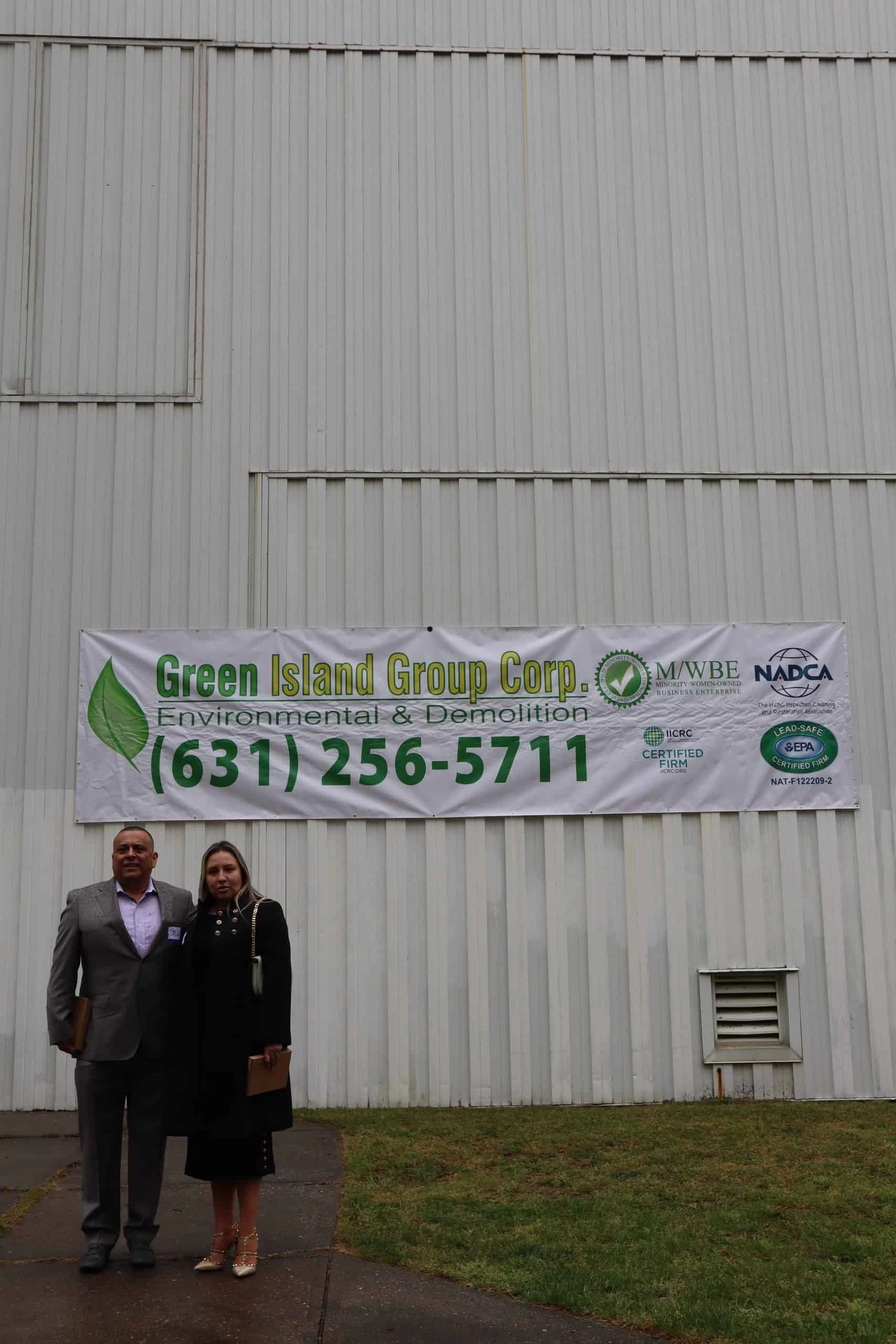
We’ve been completing environmental restoration and remediation projects across Long Island and New York City for over 12 years, with more than 5,000 jobs completed. We hold a Suffolk County General Contractor license, a NYS DOL Asbestos license, a NYS DOL Mold license, USEPA Lead and RRP certifications, and are an approved emergency response contractor for the NYS Office of General Services the same vetting standard New York State applies to public emergency work.
That licensing stack matters in East Islip specifically. When a flooded basement in a 1960s Cape Cod off Sunrise Highway requires more than water extraction when drywall comes down and something unexpected is behind it we’re already licensed to handle it. You don’t get handed off to a subcontractor or told to call someone else.
Our CEO Jessica Dussan and VP Leo Torres are named by customers in independent reviews real people who answered the phone and showed up. We’re also certified by New York State as both a Minority Business Enterprise and a Woman-Owned Business Enterprise, independently verified designations that no national franchise competitor serving East Islip currently holds.
Emergency Basement Flooding Remediation, East Islip
What Actually Happens From Your First Call to a Clean Basement
When you call, you reach someone who can make decisions not a scheduling queue. We operate 24/7/365, and response times confirmed in customer reviews run under an hour. In East Islip, where a summer thunderstorm can overwhelm drainage systems and push water into basements faster than most people expect, that response window isn’t just convenient it’s the difference between a manageable cleanup and a mold remediation job on top of it.
Once on-site, our crew assesses the water source and category first. That distinction matters. Clean water from a burst pipe is handled differently than Category 3 contamination from a sewage backup and East Islip’s older combined sewer infrastructure is a documented source of sewage backup events during heavy rain. If the water source is contaminated, the job requires proper containment, OSHA-compliant handling, and licensed disposal. That work starts immediately.
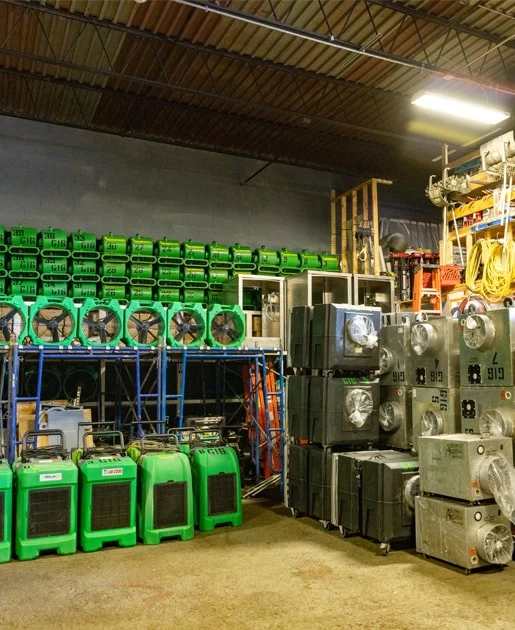
From there, extraction and drying equipment goes in, affected materials are evaluated, and anything requiring removal gets assessed for hazardous content before it comes out particularly relevant in homes built before 1980. We handle insurance documentation throughout the process and communicate directly with your adjuster. By the time the job is complete, you have a dry, tested, documented space and a claim that’s been properly supported from day one.
Full-Scope Cleanup Built for South Shore Homes and What's Inside Them
Flooded basement cleanup in East Islip isn’t a single-step job, and the scope varies based on what caused the flooding, how long the water sat, and what the home is made of. We cover the full range emergency water extraction, structural drying, moisture mapping, mold prevention treatment, contaminated material removal, and full reconstruction if needed. For homes in FEMA Zone AE flood areas along the bayfront, documentation is also part of the process, since Town of Islip permit requirements may apply to structural restoration work in designated flood zones.
For East Islip’s older housing stock the Cape Cods in Country Village, the split-levels near Beecher Estates, the Colonials throughout the hamlet’s established neighborhoods pre-1980 construction means the cleanup process includes a hazmat assessment before any demolition begins. That’s not an add-on. It’s built into how we do the job here, because skipping it creates liability and health risk that no homeowner should have to deal with after the fact.
Direct insurance billing is standard on every job. We document the damage, prepare the estimate, and work with your carrier so you don’t have to manage that process while also managing everything else a flooded basement brings with it. For major flood events on the South Shore where restoration costs can reach $16,000 to $40,000 depending on scope having a contractor who handles that process competently is not a small thing.
Does homeowners insurance cover flooded basement cleanup in East Islip, NY?
It depends on the source of the water, and that distinction matters more than most people realize. Standard homeowners insurance typically covers sudden, internal water damage a burst pipe, a failed water heater, an appliance leak. It generally does not cover flooding from outside the home, which includes storm surge from the Great South Bay, surface water backup from overwhelmed drainage systems, or groundwater intrusion from a saturated water table. For those events, coverage would need to come from a separate flood insurance policy through the National Flood Insurance Program.
East Islip has bayfront properties designated in FEMA Zone AE, and many homeowners in those areas carry NFIP flood insurance specifically because of that exposure. If you’re not sure what your policy covers, the fastest way to find out is to call your carrier and ask about the water source not just “flooding” in general. We handle insurance documentation and communicate directly with adjusters, which helps ensure your claim is supported with the right paperwork from the start.
How quickly does mold start growing after a basement floods?
Mold can begin developing within 24 to 48 hours of a flooding event, depending on temperature, humidity, and the materials involved. Finished basements with drywall, carpet, and wood framing give mold more to work with and faster. In East Islip’s summer months when temperatures are warm and humidity is already elevated that window can be on the shorter end.
The practical takeaway is that waiting to call is not a neutral decision. Every hour of delay is additional moisture sitting in materials that are harder to dry out the longer they stay wet. What starts as a water extraction job at hour one can become a water-and-mold job by hour 48, and the cost difference between those two scopes is significant. Getting crews in fast and getting drying equipment running immediately is the most direct way to prevent mold from becoming part of the conversation at all.
My East Islip basement flooded from what looks like sewage is that more serious?
Yes, and it needs to be treated differently from the start. Water that contains sewage is classified as Category 3 contamination it carries bacteria, pathogens, and biological hazards that make it a genuine health risk, not just a cleanup inconvenience. You cannot safely handle Category 3 water with standard cleaning products or household equipment. It requires OSHA-compliant containment, appropriate personal protective equipment, proper decontamination of affected surfaces, and licensed disposal of contaminated materials.
East Islip’s older combined sewer infrastructure which carries both stormwater and sewage in the same pipes is a documented cause of basement backup events during heavy rain. When those systems get overwhelmed, what comes up through floor drains or basement fixtures is Category 3 water. We’re licensed and equipped to handle this scope properly, including the decontamination and material removal that Category 3 events require. If you’re not certain what caused your basement to flood, our crew will assess the source on arrival before any work begins.
Should I be worried about asbestos in my flooded basement if my home is older?
If your East Islip home was built before 1980, it’s a reasonable question to ask and the honest answer is that it depends on what materials are present and whether the flood damage requires removing them. Asbestos-containing materials were commonly used in residential construction through the late 1970s in insulation, floor tiles, ceiling tiles, pipe coverings, and joint compounds. A flooded basement in a home of that era may have some of these materials, and water damage that requires demolition can disturb them.
The key point is that undisturbed asbestos-containing materials in good condition are not an immediate hazard. The risk comes when those materials are cut, broken, or removed without proper protocols. We hold a NYS DOL Asbestos license and already provide licensed asbestos abatement services in East Islip. Before any demolition work begins in an older home, the affected materials are assessed. If asbestos is present and needs to come out, it’s handled under the same roof no separate contractor, no gap in the process.
How much does flooded basement cleanup typically cost in East Islip?
The range is wide because the scope varies significantly depending on what caused the flooding, how long the water sat, how much of the basement is finished, and what materials need to come out. For a straightforward water extraction and drying job with limited structural damage, costs typically fall in the $2,000 to $5,000 range. When mold remediation is involved, or when contaminated water requires decontamination and material removal, that range moves up often into the $5,000 to $10,000 range or beyond.
For major flood events on the South Shore the kind East Islip has experienced during significant storms full restoration of a finished basement with structural damage, hazmat assessment, and reconstruction can reach $16,000 to $40,000 depending on scope. The most important cost factor you can control is response time. Getting extraction started quickly limits how far moisture spreads into walls and flooring, which directly limits how much material ultimately needs to come out. We document everything for insurance purposes, which helps ensure your carrier is covering what the policy allows.
Why does my East Islip basement keep flooding even when it's not a major storm?
East Islip sits on Long Island’s South Shore, where the water table is naturally shallow. During extended periods of rain even moderate rainfall spread over several days the soil saturates and groundwater can push upward into basement foundations from below. This is a chronic issue in South Shore communities, not just a major-storm problem, and it’s one reason basements in this area flood even when there’s no named storm and no dramatic weather event to point to.
There are a few other contributing factors specific to this area. East Islip’s older combined sewer system can back up during heavy rain, sending water into basements through floor drains. Low-lying areas near the Great South Bay are also subject to tidal influence during storm events, which can raise the local water table further. If your basement floods repeatedly, the cleanup addresses the immediate damage but understanding the source is what prevents the next event. During the assessment, our crew evaluates where the water is coming from, which gives you real information to work with rather than just a dry floor until the next rain.